
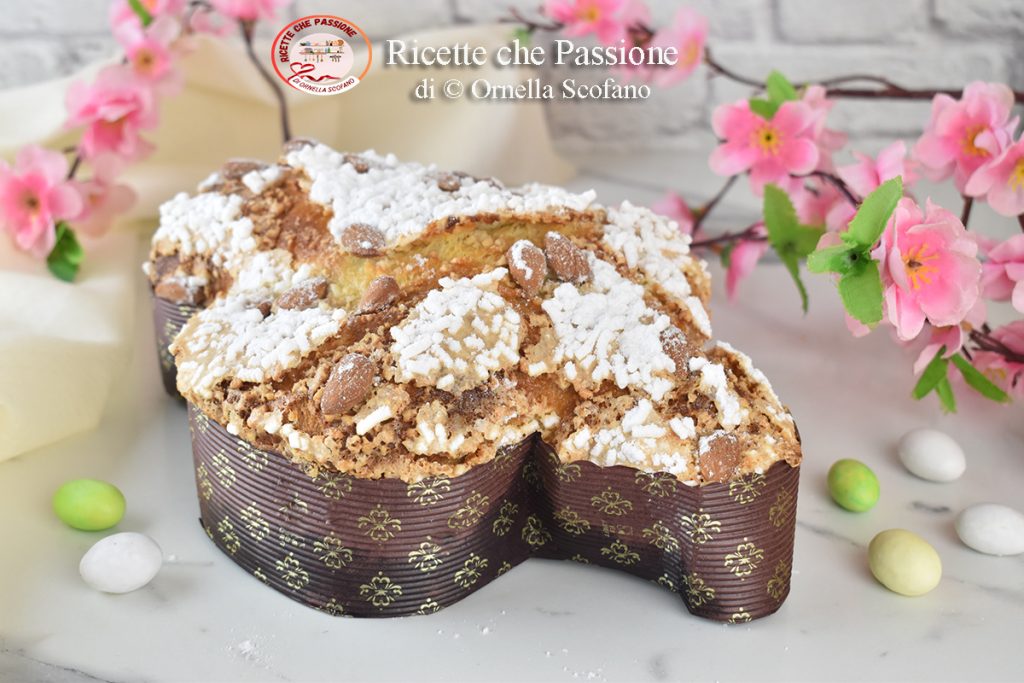
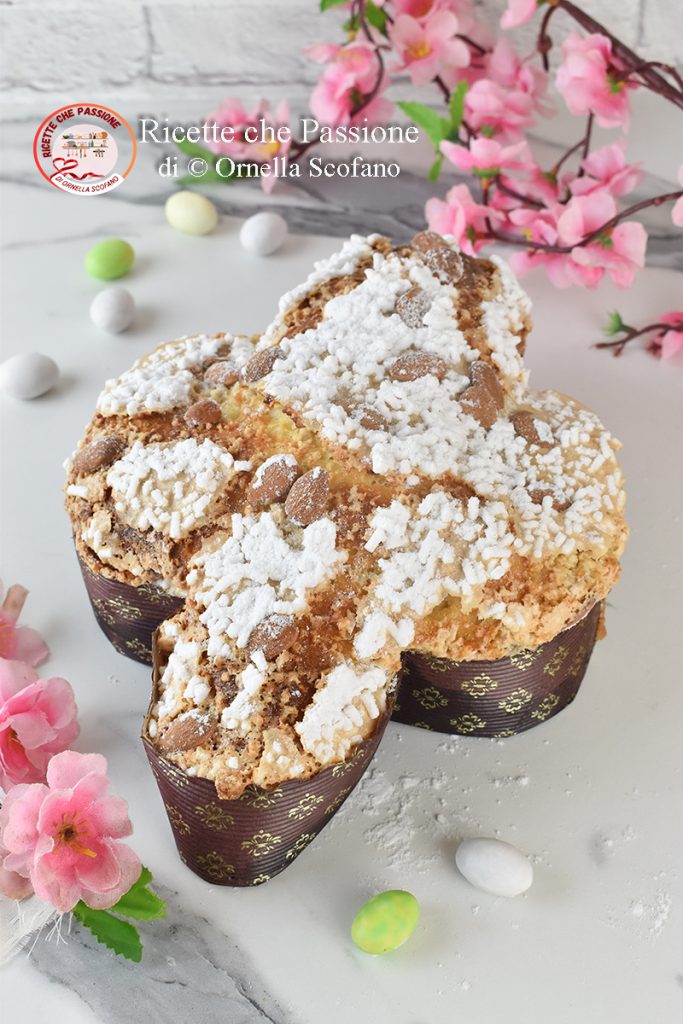
The Easter Colomba is a leavened cake that is the quintessential symbol of Easter in Italy, with an almond glaze, similar to panettone and pandoro at Christmas. The Easter Colomba symbolizes peace and reconciliation: giving a colomba at Easter is a sign of peace and love for the recipient, a clear reference to the story of the great flood. After the rain, Noah, after seven days, sent out a dove that returned in the evening with an olive branch, a sign of God’s forgiveness toward mankind, and from then on it became a symbol of peace. A symbol of peace so soft and delicious that we feast on it at Easter, but it’s even better to make it at home, with your own hands and in the flavors you love most. You can personalize it: omit raisins, as I did, skip candied fruit, add chocolate chips, or fill it with luscious creams. Today I share the classic colomba: a very fragrant leavened cake with orange in the dough and almonds on top. For this recipe I used dehydrated sourdough starter with brewer’s yeast, a great solution for those who don’t have fresh sourdough at hand; it’s available in most supermarkets. Let’s see how to make it, and please don’t rush — resting times are very important, as is the handling of the dough. Read my review of the Indesit oven I used for baking here.
- Difficulty: Medium
- Cost: Economical
- Rest time: 2 Days
- Preparation time: 1 Hour
- Portions: mold for 1.1 lb (500 g)
- Cooking methods: Electric oven
- Cuisine: Italian
- Seasonality: Easter
Ingredients for traditional Easter Colomba
- 2/3 cup Manitoba flour
- 1/3 cup (about 3 fl oz) milk
- 2 tsp dehydrated sourdough starter
- 1 tsp acacia or wildflower honey
- 1 tsp vanilla extract
- 2 zests of 2 organic oranges, grated
- 1 zest of 1 organic lemon, grated
- 0.5 fl oz rum
- Pre-ferment
- 1/2 cup + 1 tbsp Manitoba flour
- 2 tbsp + 1 tsp sugar
- 2 tbsp butter
- First dough
- 3 tbsp + 1 tsp sugar
- 3/4 cup + 1 tbsp Manitoba flour
- Flavoring for colomba
- 2 egg yolks
- 3 tbsp butter
- 1.75 oz candied orange peel (about 50 g)
- 2 egg whites
- 1 oz hazelnuts
- 2 oz almonds
- 3 tbsp flour
- 2.5 tbsp cornstarch (cornflour)
- 1/2 cup sugar
- as needed coarse sugar pearls
- as needed unpeeled almonds
- as needed powdered sugar
Tools to prepare the Easter Colomba
- 1 Bowl
- 1 Spoon
- 1 Small bowl
- 1 Teaspoon
- 1 Grater
- 1 Bowl
- 1 Small bowl
- 1 Stand mixer
- 1 Knife
- 1 Small bowl
- 1 Bowl
- 1 Mold
- 1 Spoon
Steps to prepare the classic Easter Colomba
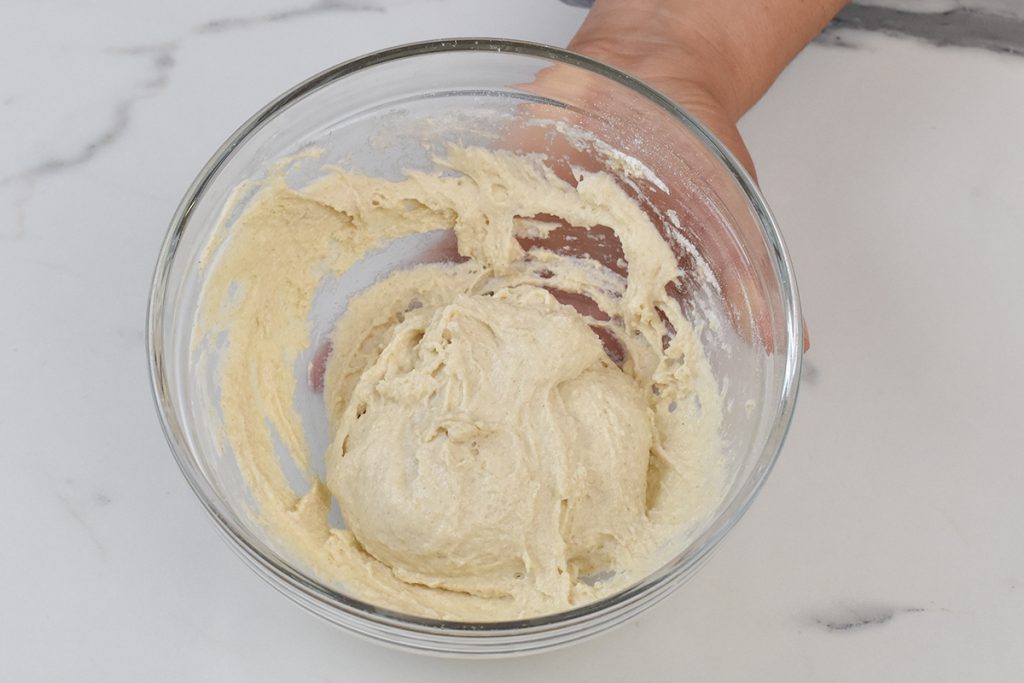
Let’s begin by preparing the pre-ferment. In a bowl, dissolve the starter in warm milk. Mix with a spoon and add the flour, stirring well to obtain a soft, sticky mixture. Work it well so it is lump-free and elastic; it will be ready in a couple of minutes. Cover and leave to rise. Let it rise until it has doubled in volume or you see bubbles on the surface. Times vary depending on room temperature, which can range from 82°F down to 59°F; the warmer the environment, the quicker the rise. I recommend a medium temperature in this phase as well.
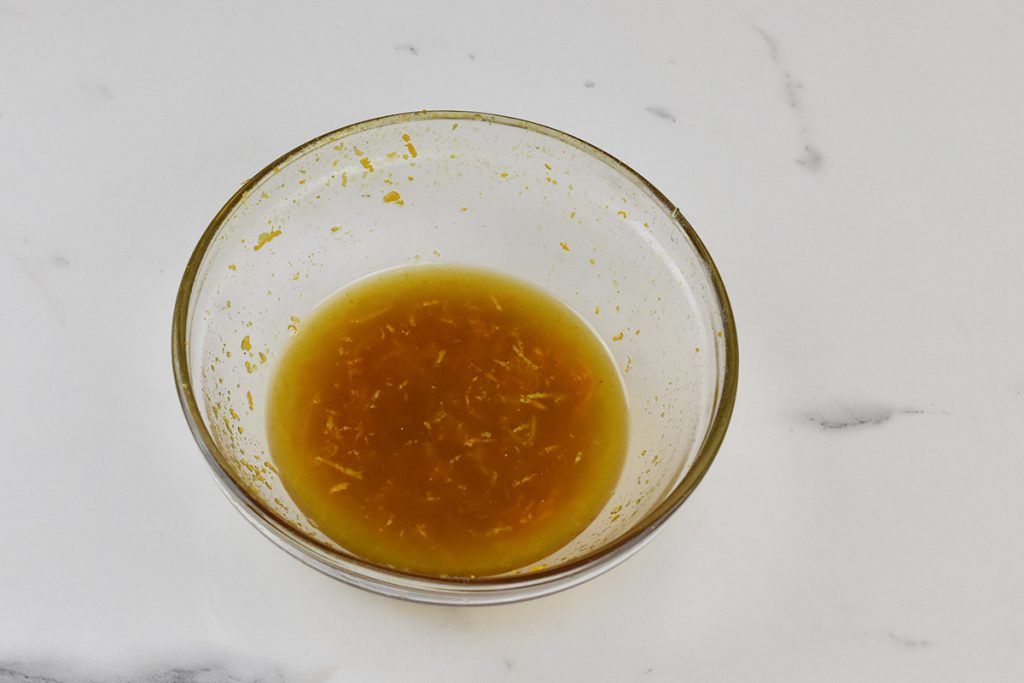
In a bowl, grate the zest of 2 oranges (only the orange part) and 1 lemon. Add the vanilla extract, honey and rum, mix and let macerate, even at room temperature.
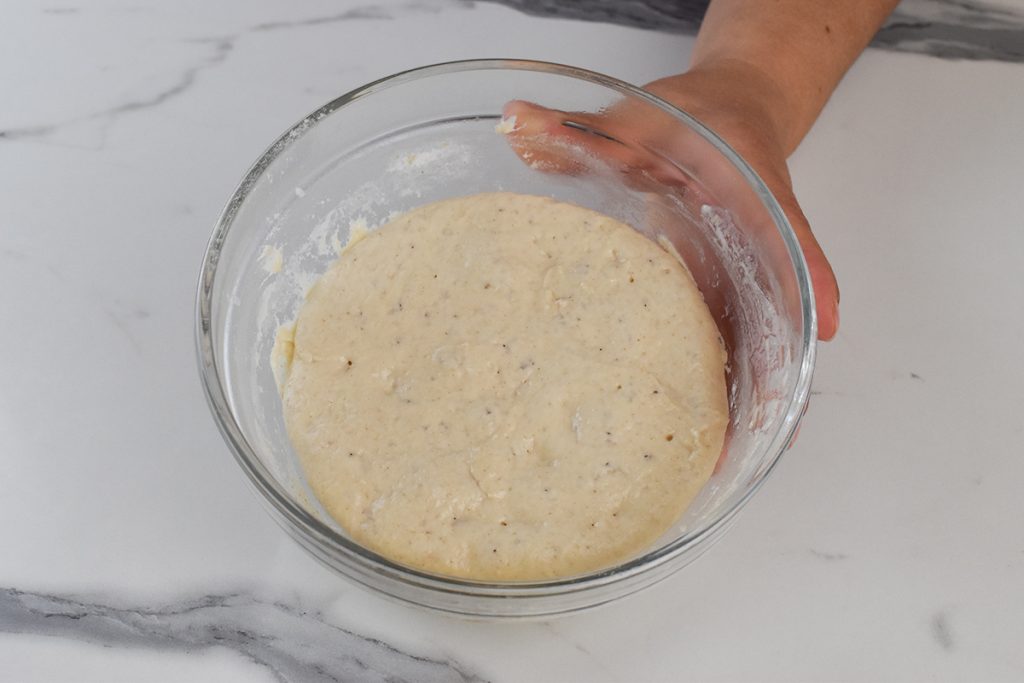
Take the risen pre-ferment; to it add the melted butter, sugar and flour and knead to obtain a smooth dough ball. Work well, with short breaks if necessary, to get an elastic dough. If you prefer you can use a stand mixer, but it’s quite simple by hand. Shape the dough into a nice smooth ball (pirlatura), cover and leave to rise until doubled. Again, times vary by temperature. I recommend letting it rise at least 6–12 hours in a sheltered spot away from drafts. Put it in the fridge for about an hour before proceeding to the second dough.
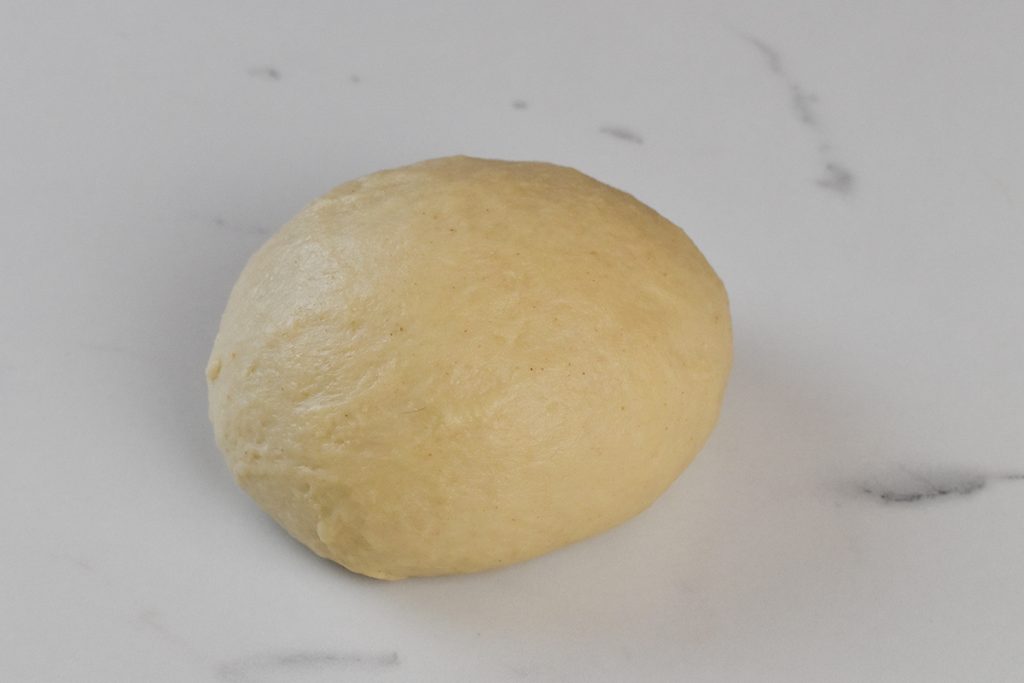
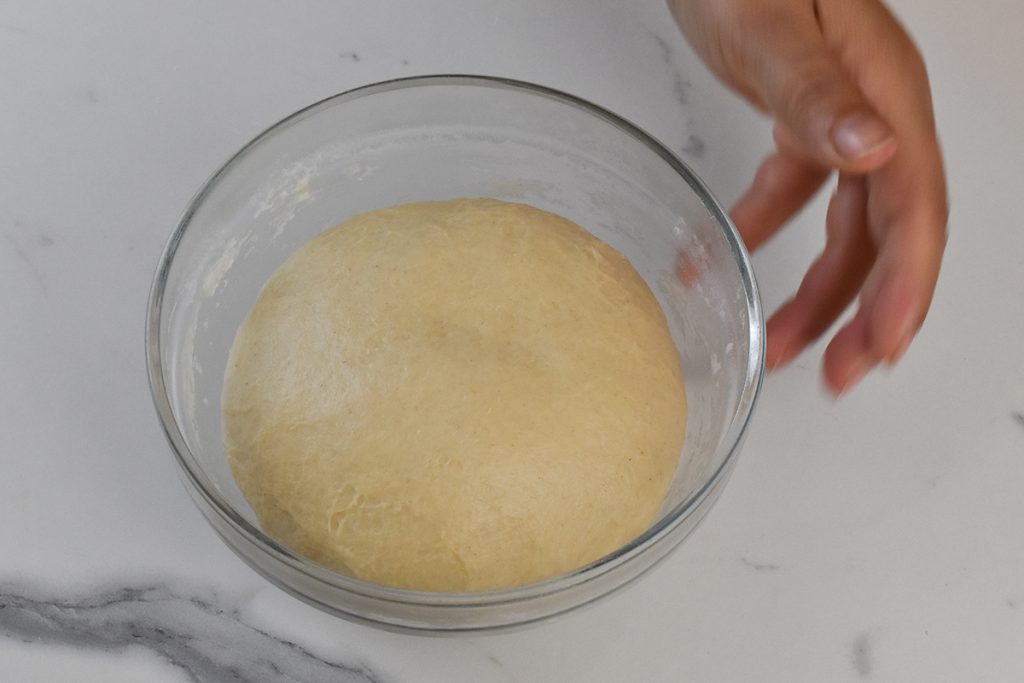
For the second dough, work with a stand mixer (you can also work by hand, it just takes more elbow grease). Put the well-risen first dough in the mixer, add the remaining flour, sugar, 2 egg yolks and the colomba flavoring we left to macerate. With the dough hook, start kneading at low speed. Pause occasionally to let the mixture cool a bit.
When you have a soft, homogeneous dough, begin adding the remaining butter little by little, in pieces; add the next piece only after the previous one has been incorporated. This takes a while, but correct handling in this phase is essential. Once all the butter is incorporated, continue working at higher speed so the dough becomes well-strung (incordatura).
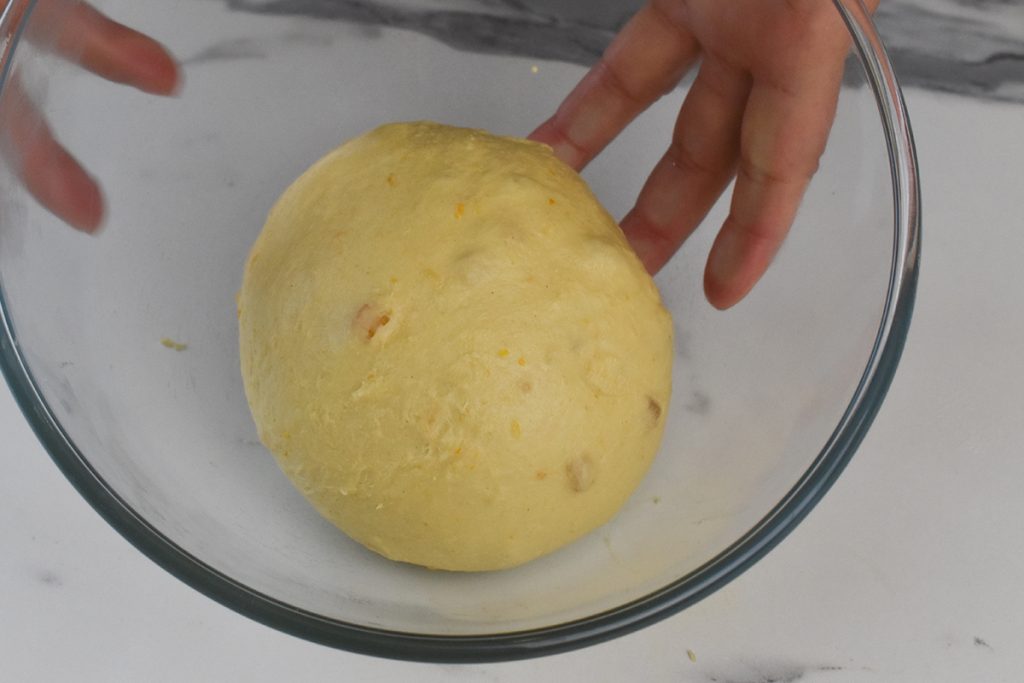
Only at the end add the candied orange peel and knead a little more. Work the dough well on a board and shape it into a smooth ball (pirlatura). Leave to rise in a bowl for at least 12–24 hours or more if needed, depending on the temperature; if it gets too warm and the dough becomes puffy after a few hours, put it in the fridge for at least 8–12 hours. Expect at least 2 days in total depending on temperature; sometimes an extra day is needed to achieve a light, airy leavening with the most natural rise possible — in short, for a truly perfect Easter Colomba.
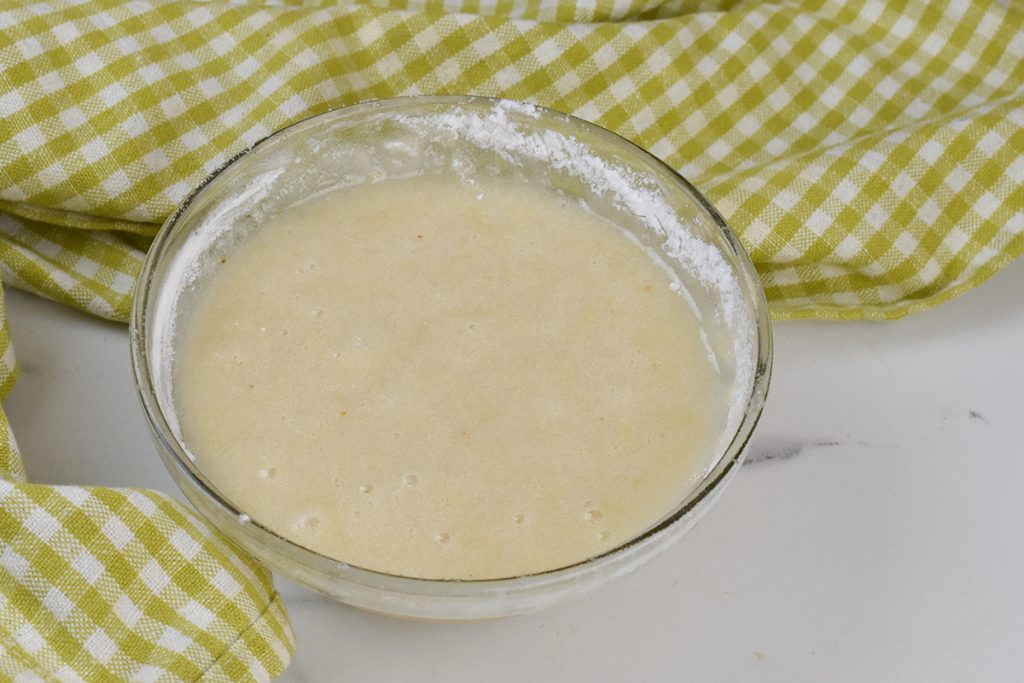
To make the almond glaze, add the sugar to the egg whites together with the flour and cornstarch (or cornflour), then add the finely chopped hazelnuts and almonds. Mix and keep in the fridge until needed.
When the dough has risen, deflate it and perform a couple of reinforcing folds, spreading the dough into a rectangle and folding it as in the reinforcing folds tutorial.
Divide the dough into 2 parts: a larger one for the central body and a smaller one for the wings.
From each piece, shape a rectangle and roll it tightly. Seal well. Place the body in the mold first, then the wings, thinning the central part of the wings that will overlap the body so they adhere well and form a single piece. Let the colomba rise on the oven baking sheet to avoid disturbing the dough when moving it. Let it rise in a warm corner until the colomba has expanded to about 3/8 inch (almost 1 centimeter) from the edge. If rising is slow, you can increase the temperature slightly by closing the oven with the light on and a cup of boiling water inside to create the right humidity.
When the colomba is risen, cover it with the almond glaze, taking care not to get too close to the edges so it doesn’t drip down. Then add the almonds and coarse sugar pearls generously and finally dust with powdered sugar.
Bake in a preheated static oven at 338°F for about 40–45 minutes. If it darkens too quickly, reduce the temperature a little, not below 320°F.
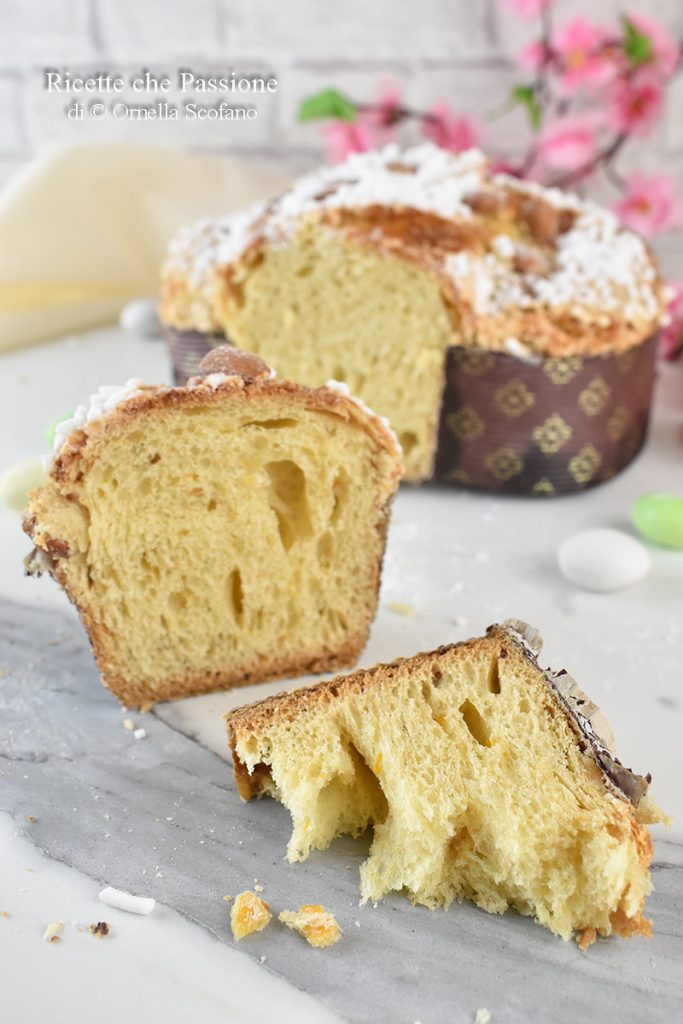
Remove from the oven and immediately, within a few seconds, skewer the cake with a couple of stainless-steel skewers and hang it upside down so it doesn’t deflate while cooling. Once fully cooled, place your homemade colomba in a sealed bag to keep it soft as when it was freshly baked. This homemade Easter Colomba will keep for a few days in a sealed bag.
