Eating vegetables – raw or cooked – before the meal was one of the first healthy habits acquired after being diagnosed with prediabetes.
Fiber-rich vegetables:
– promote a sense of fullness;
– slow down digestion and sugar absorption, helping to reduce blood sugar spikes after meals.
A fiber-rich meal always has a positive effect on blood sugar.
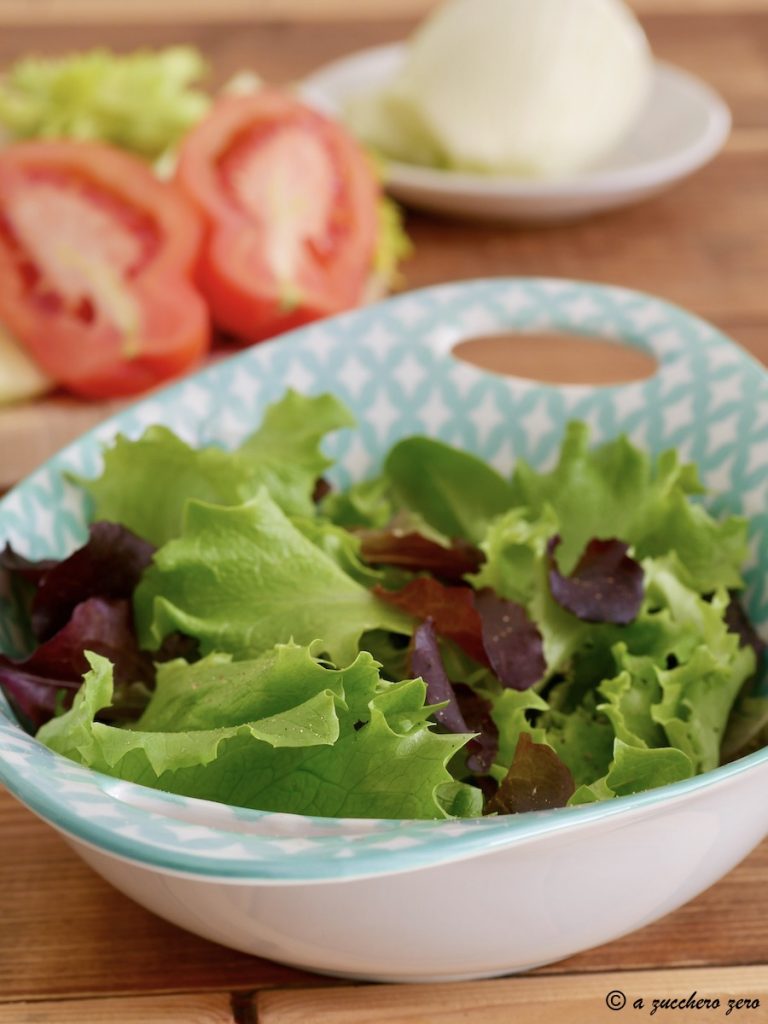
Ingredients
- as needed carrots
- as needed cucumbers
- as needed fennel
- as needed mixed greens
- as needed tomatoes (or cherry tomatoes)
- as needed celery
Suggested Tools
- Knife
- Cutting Board
Vegetables Before the Meal
Which vegetables to eat before meals?
Vegetables rich in water and fiber.
Raw or cooked vegetables before meals?
Both raw and cooked vegetables are fine.
Crunchy raw vegetables help you feel fuller.
Leafy or small leafy greens:
– lettuce, baby lettuce, arugula, lamb’s lettuce, baby spinach, and mixed greens.Vegetables:
– carrots, cucumbers, fennel, celery.
We consume the fruit of tomatoes, so it’s better to include them in a portion of vegetables rather than eating them alone.Wash the vegetables you have in the pantry or your favorites thoroughly.
Leave them whole or cut them according to the type of vegetable.
Place them in a colander to drain well.Your raw vegetable snacks for the table or on-the-go are ready, to be consumed before the meal – both at home and outside – without requiring cutlery.
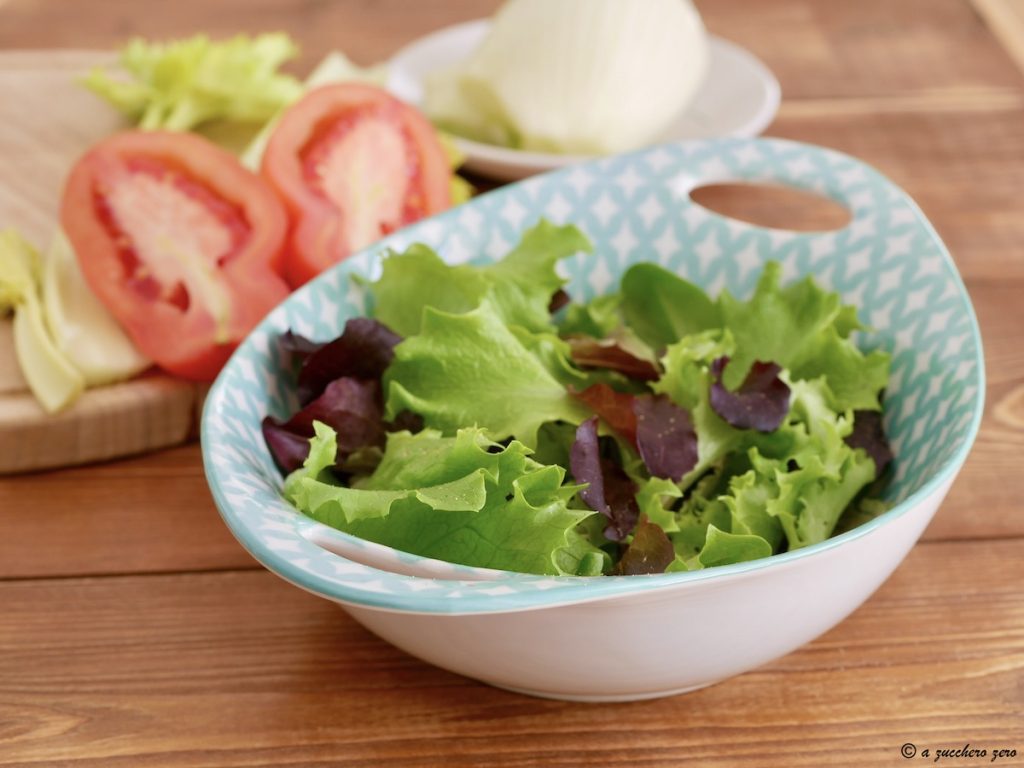
Store them in the fridge ready to use.
When I have guests, I arrange the raw vegetable snacks on the table in assorted colored bowls or the traditional fuscelle – in Sicilian vascede – used for ricotta.
So everyone can help themselves freely and… they literally disappear!From raw vegetable snacks to delicious mixed salad for every taste is just a step!
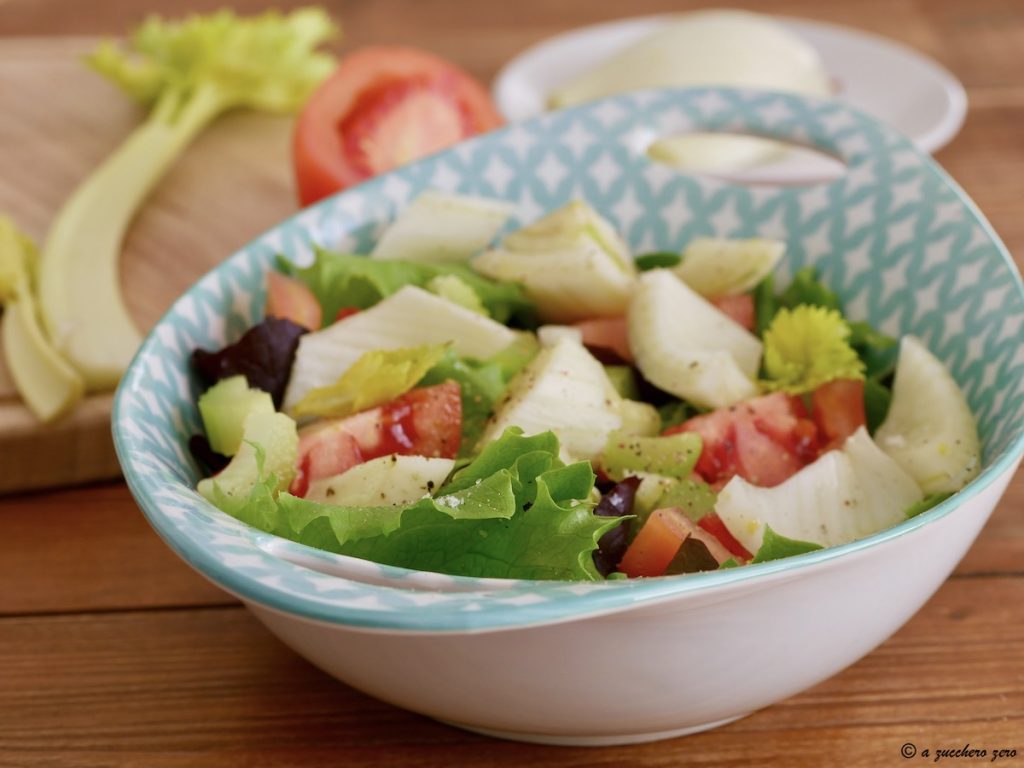
Start your meal OUTSIDE THE HOME too with a generous portion of vegetables.
You can order a salad as an appetizer or carry in your bag some ready-to-eat raw vegetable snacks to munch on, even without cutlery.
This habit often sparks curiosity among those dining with us but trust me: if you offer them, everyone will munch on them!
And I never miss the chance to explain the importance of our ritual.
Storage, Tips, and Variations
You can prepare the raw vegetable snacks in advance and store them in the refrigerator for 2-4 days.
Make sure they are well dried and place them in an airtight container with a sheet of paper towel at the bottom to absorb excess moisture.
If you notice signs of spoilage, use them immediately to avoid waste.
You can accompany them with a Greek yogurt sauce or dressing.

FAQ
Do vegetables contain carbohydrates?
Yes, vegetables contain carbohydrates.
Vegetables contain:
– a limited amount of simple carbohydrates usually with negligible impact on blood sugar;
– a portion of complex carbohydrates or dietary fibers [cellulose, lignin, some hemicelluloses] further divided into soluble and insoluble in water.
The fibers are not digested and transformed into glucose but reach the intestinal tract intact where:
– soluble fibers form a gel-like viscous substance that adheres to the intestinal walls modifying, regulating, and slowing down the absorption of sugars and fats;
– insoluble fibers facilitate intestinal transit.Do raw vegetables count towards meal carbohydrates?
Generally not, because their sugar content is very low and the fibers reduce their glycemic impact.
To explore the topic further, read the article by clicking on the following link: Do vegetables contain carbohydrates?Which leafy vegetables are the easiest to digest?
Among the most delicate and well-tolerated are baby lettuce, lamb’s lettuce, and – in many cases – young arugula or tender chicory.
They have thin leaves and less insoluble fiber compared to other leafy vegetables, making them lighter.Hyperglycemia and irritable colon or intestinal disorders
In cases of hyperglycemia, prediabetes, or diabetes along with an irritable colon or intestinal disorders, it is advisable to consult a nutritionist to find the right balance between fiber and personal tolerance.