The octopus salad is a typical dish of Mediterranean cuisine, fresh and light.
We often find it on the menus of seaside restaurants.
Preparing it at home is easier than it seems: a versatile recipe to enjoy with family and that can become an elegant appetizer or a refined main dish to serve during festive occasions and special events.
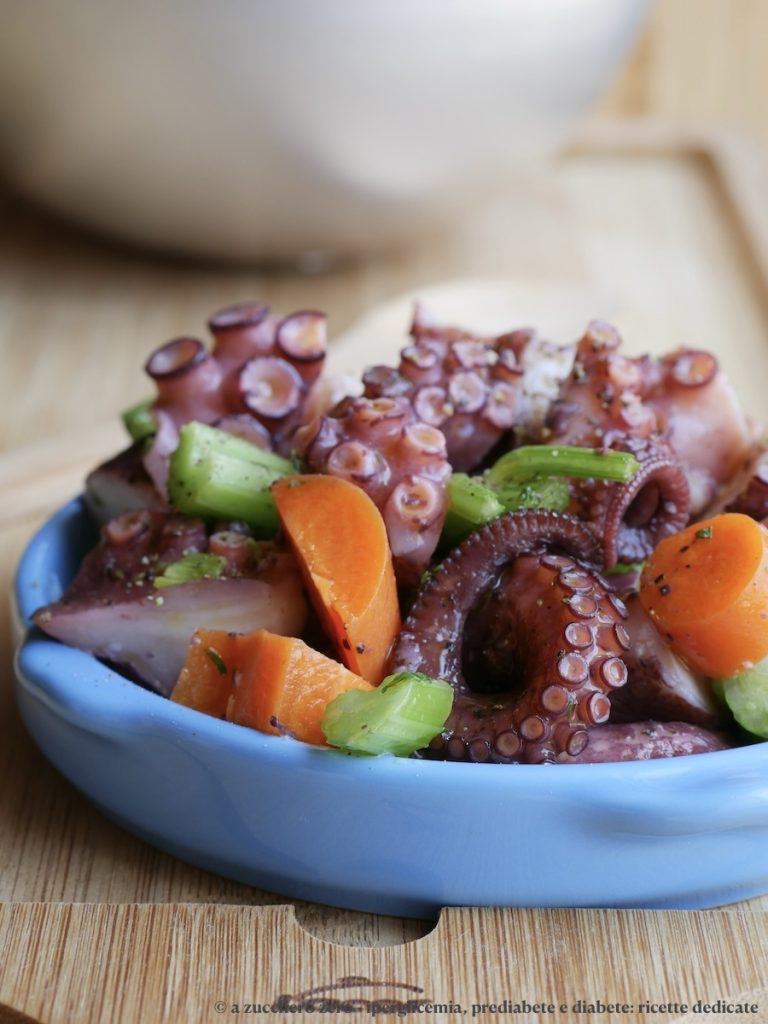
Today we’re preparing the octopus salad with raw and crunchy vegetables that enhance its flavor.
- Difficulty: Easy
- Cost: Medium
- Preparation time: 20 Minutes
- Portions: 2People
- Cooking methods: Boiling
- Cuisine: Italian
Ingredients
- octopus
- water (plentiful)
- 1 glass red wine
- leaves bay leaf (if available)
- 1 pinch salt
- 1 pinch mixed peppercorns (with grinder)
- as needed chopped parsley
- as needed lemon juice
- 1 drizzle extra virgin olive oil (raw)
- as needed carrot
- as needed celery
Suggested Tools
- 1 Pot IMCO or regular
- Knife
- Cutting Board
Preparation
I usually buy frozen octopuses – the ones sold at the supermarket’s freezer section – or defrosted at the fish counter.
If you bought a frozen octopus or froze it after purchase, defrost the octopus by moving it to the fridge the night before cooking.
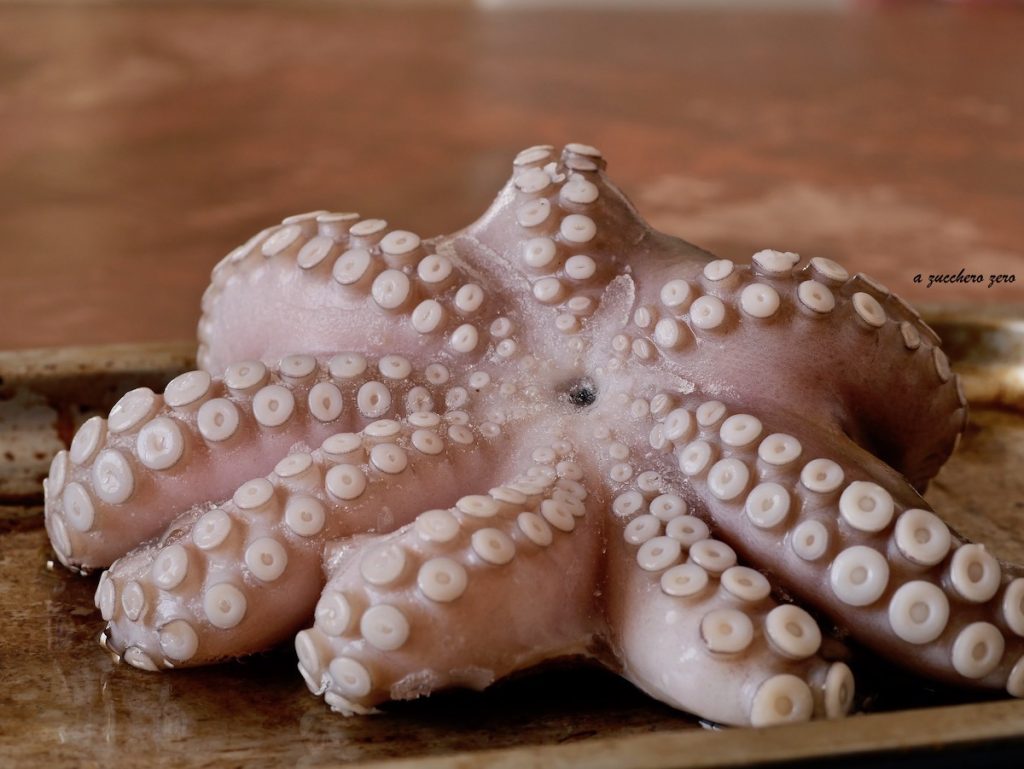
With frozen and defrosted octopuses, the head is already eviscerated, while with fresh octopus, the entrails must be removed.
Rinse the octopus under running water.
In an IMCO or regular pot, bring plenty of water to a boil: it should completely cover the octopus.
Dip the octopus 3-4 times in the boiling water: this step is to curl the tentacles.
Immerse the octopus completely in the water.
Add about one glass of red wine and – if available – a few bay leaves.With IMCO pot
Cover with the lid and bring to a boil.
When a thread of steam escapes, turn off the heat.With regular pot
Continue cooking on low heat.Whichever pot you use
Let it cook for 40 minutes – 1-1.2 kg octopus.
After 40 minutes, check the octopus’s doneness by piercing a tentacle with a fork.
Let the octopus cool in the cooking water so the skin remains firm.Remove the octopus from the pot.
Your octopus is tender and soft to the right point with whole skin is ready.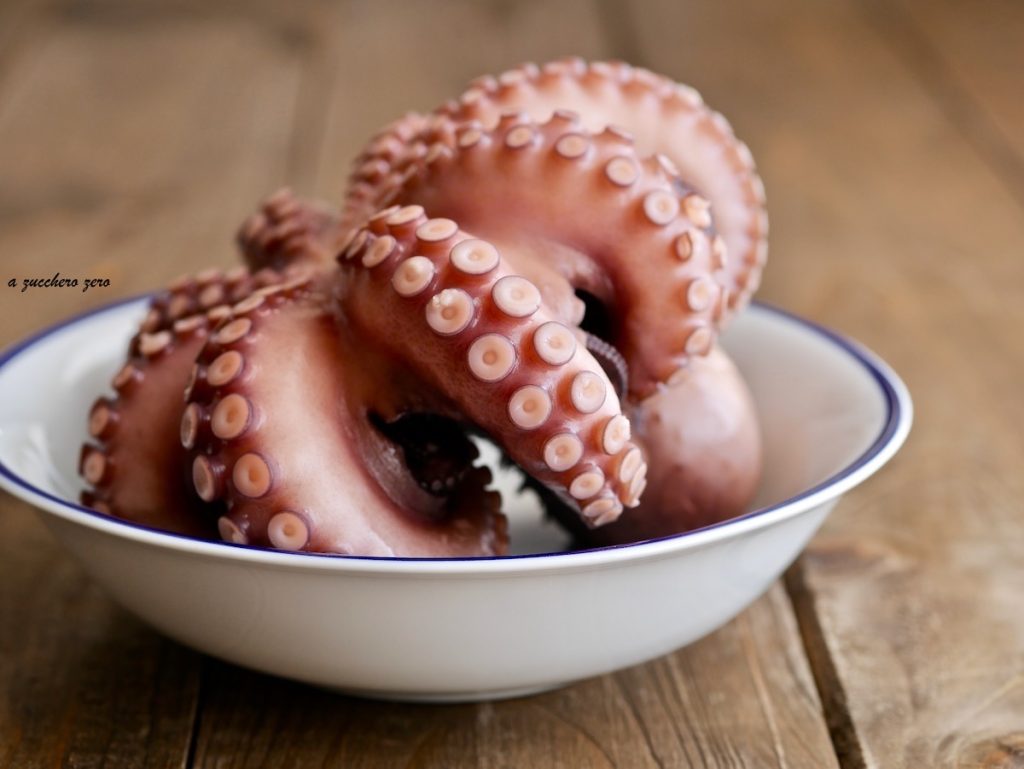
Cut the octopus into pieces and optionally remove some of the thicker skin, such as that at the tentacles’ base.
In a bowl, season with:
– a pinch of salt;
– a pinch of pepper;
– chopped parsley;
– lemon juice;
– a drizzle of extra virgin olive oil.You can enjoy it simple or add the vegetables.
Add the vegetables.
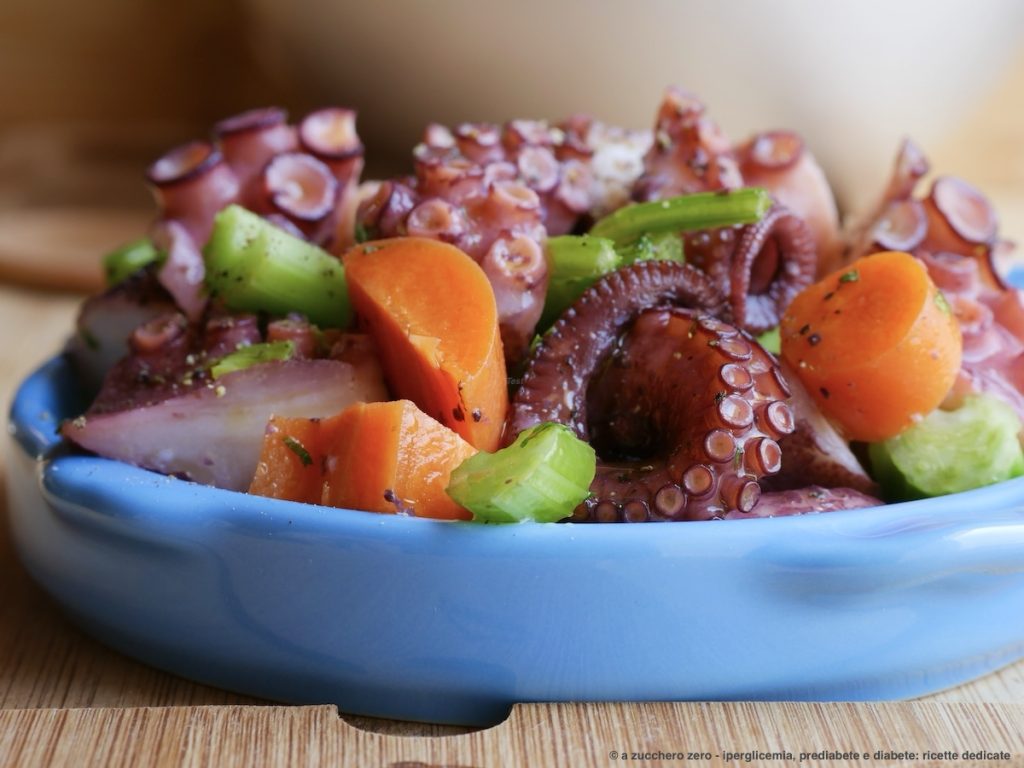
I prepared the classic version with carrot and celery pieces.Plate it.
Your octopus salad with vegetables is ready.
Enjoy your meal!
– Cooking octopus tender and soft to the right point with whole skin: tips on cooking octopus.
– Octopus Salad with Potatoes.
– Mediterranean Style Octopus.
Storage, Tips, and Variations
For a more refined seafood salad, add some shrimp to the octopus.
The octopus salad can be stored in the fridge in an airtight container for one day.
If you want to prepare it in advance, store the boiled octopus without dressing for up to 2 days and add vegetables and oil only when serving.
For a more flavorful variant, add capers and olives.
It’s perfect to take out of the house, in a thermal container or in a cooler bag.
FAQ (Frequently Asked Questions)
Should salt be added while cooking the octopus?
Salt can make the fibers tougher.
Add salt during seasoning.Shellfish and Cholesterol
In our dietary plan, squid and cuttlefish, octopus and sepia, are among the foods indicated as “to be consumed occasionally”.
Although they are mollusks with lean meat, they are a source of cholesterol whose intake should be limited.
Nutritional guidelines recommend a dietary cholesterol intake of less than 300 mg per day, which can decrease to 200 mg per day in cases of hypercholesterolemia and hyperglycemia.
Therefore, octopus does not directly affect blood sugar, but in cases of hyperglycemia, prediabetes, and type 2 diabetes, it should be consumed in moderation.