
Original Genovese Pasta: The Neapolitan Onion Ragù Recipe (The Secret to Creaminess)
Problem No. 1: Is your Genovese sauce too watery or the onion flavor too strong?
SOLVED!
The most common failure in Genovese is getting a liquid sauce instead of a thick, enveloping cream. Many cook too quickly or add unnecessary liquids, resulting in a pungent taste.
The solution is Slowness (Slow Cooking):
Low-Temperature Cooking: Genovese requires cooking over very low heat for at least 4 hours.
This allows the onions to break down and caramelize slowly in their own liquid, transforming into a sweet and thick cream (never add water or broth at the start).
Late Deglazing: The wine alcohol must evaporate completely. Deglazing only in the last hour helps concentrate the meat flavor without weighing it down.
With this attention to timing, your Genovese will be creamy, sweet, and unforgettable.
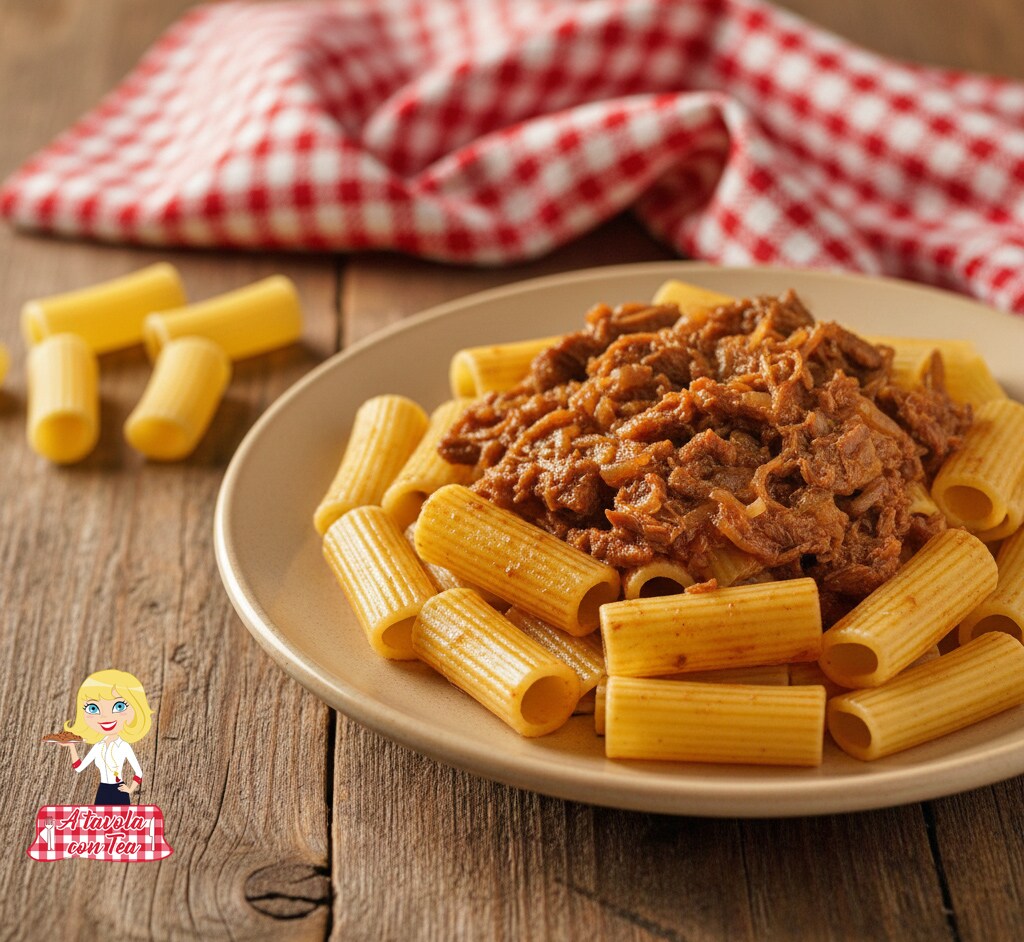
- Difficulty: Very easy
- Cost: Low cost
- Preparation time: 20 Minutes
- Portions: 4
- Cooking methods: Stovetop
- Cuisine: Italian
Ingredients for ORIGINAL GENOVESE PASTA
- 11 oz pasta (Mezze Maniche (or Ziti))
- 1.3 lbs beef (eye of round)
- 3.3 lbs golden onions (thinly sliced.)
- 1 cup celery
- 3/4 cup carrots
- 1 bunch parsley
- 1 leaf bay leaf
- 2/3 cup white wine (Dry, non-aromatic.)
- to taste extra virgin olive oil
- to taste fine salt
- grated Parmesan cheese (for serving)
- 1 pinch black pepper
Tools
- Food Scale
- Food Processor
- Pot
Step-by-Step Preparation: Genovese Masterpiece
Clean and thinly slice the onions.
Peel and finely chop the carrots and celery.
Tie the parsley bunch, celery bunch, and bay leaf together with kitchen twine to create an herb bouquet.
Trim the beef of any excess fat and cut into about 5 rough pieces.In a large pot, pour generous amounts of oil, then immediately add the sliced onions, chopped celery, and carrot.
Immediately add the beef pieces.
Add the herb bouquet and a pinch of salt. Stir.
Lower the heat to a minimum, cover with a lid, and cook for about 3 hours. Do not add water or broth. The onions will release the necessary liquid. Check and stir occasionally.After 3 hours, remove the herb bouquet.
Increase the heat and deglaze with half the white wine (about 1/3 cup). Stir and let it evaporate.
Continue cooking without a lid for another hour, deglazing with the remaining wine as the sauce dries and concentrates. The meat should fall apart, and the onions should reduce to a thick cream.Cook the pasta in plenty of salted boiling water.
Drain the pasta very al dente and return it to the pot with the sauce.
Mix well to combine with the sauce.
Serve immediately, sprinkled with black pepper and plenty of grated Parmesan.
Insights, Variations, and Storage
Insight: Why So Much Onion?
Genovese is, essentially, a sauce of stewed onions. The enormous quantity of onions (almost 2.5 times the weight of the meat) is necessary because their slow and prolonged cooking breaks down sugars and enzymes, eliminating bitterness and transforming them into a sweet and flavorful cream that needs no thickeners or tomato.
Variations and Chef’s Advice
The Meat: For a more intense flavor, a mix of beef and pork (e.g., rind or ham hock) can be used.
Wine: If you don’t want to use wine, you can deglaze with a tablespoon of white wine vinegar in the final cooking phase, but the acidity and flavor of wine greatly enrich the sauce.
Storage
Genovese sauce is perfect for making in advance. It keeps in the fridge in an airtight container for 3-4 days.
Freezing: It freezes beautifully: portion the ragù once cooled and use within 3 months.
FAQ (Questions and Answers)
What is the best cut of meat for Genovese?
The ideal beef cuts are those that benefit from long cooking times, like eye of round. These cuts break down easily, making the ragù creamy and easy to combine.
Can I use fewer onions?
Absolutely not. Genovese relies on the ratio Onions > Meat. The large quantity of onions (3.3 lbs for 1.3 lbs of meat) is essential for the sauce to transform into a dense, sweet cream without bitter residues. Reducing the amount would compromise the final texture.
How long should Genovese cook?
The minimum time is 4 hours (3 hours on low heat and 1 hour of concentration), but some chefs leave it even 5 or 6 hours. The slower and lower the cooking, the more the onions melt and the sauce becomes sweet and digestible.
Should tomato be added?
Traditionally, no. Genovese is a white ragù. Although some modern variants add a tablespoon for color, the original recipe does not include it.
Can it be prepared in advance?
Yes, it is actually recommended. Like all ragùs, Genovese is better if prepared the day before. It keeps in the fridge for 3-4 days and freezes perfectly.
