
Chocolate Pandoro: The Original Recipe to Create Your Christmas Masterpiece
The Pandoro. A name that immediately evokes the magic of Christmas and the scent of vanilla spreading throughout the house. If there’s a dessert that represents a challenge and, at the same time, the greatest satisfaction for those who love leavened doughs, it’s precisely this one.
I won’t hide that this recipe requires time, patience, and dedication. For my work, I have to create recipes well in advance: this Pandoro, for instance, I prepared it in August!
I thought about freezing it and bringing it out later, maybe in December, but it was so good and tempting that it lasted little more than a day. Here at home, we literally “devoured” it.
The chocolate Pandoro is an even more delicious version of this classic. The most common mistake in preparing a large leavened cake is the lack of “cording” or the dough overheating. This leads to a dough that does not rise, does not grow in height, or ends up dry.
My method guides you through all the stages and reveals the tricks for a professional result:
The Times: The Long Maturation: The key step to obtaining a soft Pandoro is the final rise in the fridge (at least 12 hours), which allows the dough to mature and develop complex aromas.
The Technique: The Butter in Pieces: You must incorporate the softened butter very slowly, in pieces, and only when the dough is already compact. This ensures that the dough is shiny, soft, and above all well-corded.
When your Pandoro then comes out of the oven, with that intense aroma and perfect shape, you’ll feel a satisfaction that no purchased cake can ever give you. Prepare the stand mixer and enjoy the magic of creating your Christmas dessert.
- QUICK AND FOOLPROOF PANDORO RECIPE TO MAKE IT AT HOME with VIDEO
- CREAMS FOR PANETTONE AND PANDORO easy and quick
- HOMEMADE GLUTEN-FREE PANDORO easy recipe with just 2 risings
- HOMEMADE PANETTONE simple recipe without mixer
- LOW GENOESE PANDOLCE ORIGINAL RECIPE with which I won the Pandolce Championship
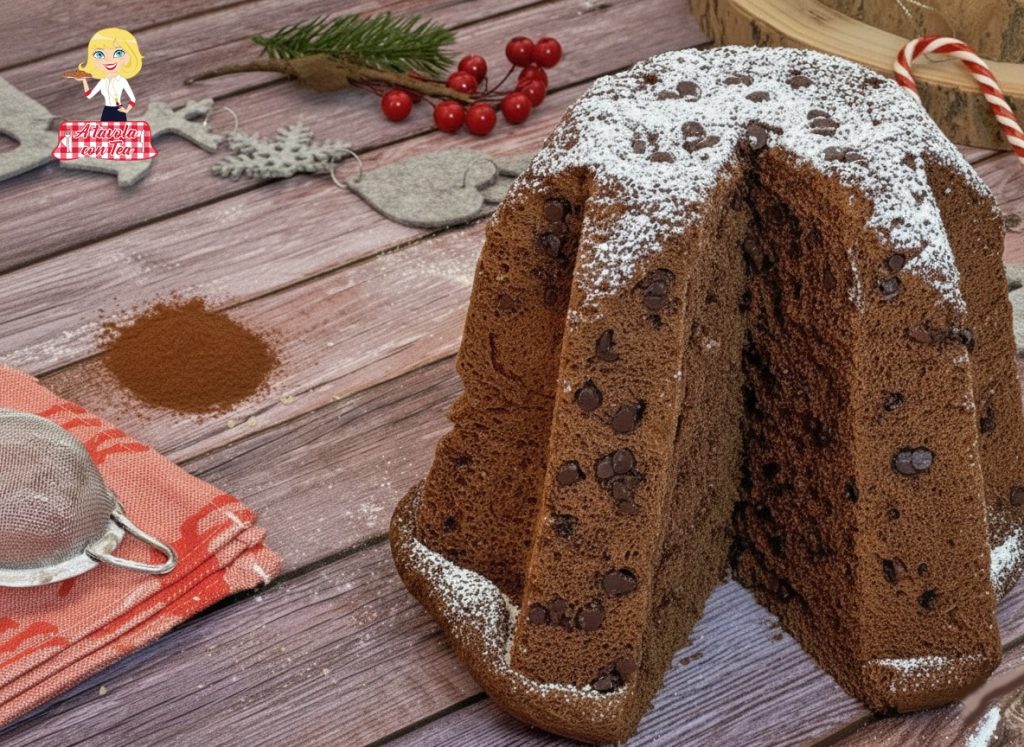
- Difficulty: Medium
- Cost: Economical
- Rest time: 12 Hours
- Preparation time: 1 Hour
- Portions: 1 pandoro (2.2 lbs)
- Cooking methods: Oven
- Cuisine: Italian
Chocolate Pandoro: Ingredients for a 2.2 lb mold
The ingredients listed below will allow you to make a 2.2 lb pandoro. If you have a 1.65 lb pandoro mold, see the notes at the bottom of the recipe
- 2 oz oz Manitoba flour
- 1 tablespoon sugar
- 1/4 cup cup water
- 8 g fresh brewer's yeast
- 7 oz oz Manitoba flour
- 1 tbsp + 2 tsp tbsp water
- 1 oz oz sugar
- 4 g fresh brewer's yeast
- 2 eggs (1 whole + 1 yolk)
- 1.75 oz oz butter (soft)
- 7 oz oz Manitoba flour
- 3.5 oz oz sugar
- 3 eggs (2 whole + 1 yolk)
- 1.4 oz oz unsweetened cocoa powder
- 4.5 oz oz butter (soft)
- 1.75 oz oz chocolate chips
- 8 g salt
- 2 tablespoons orange honey
- vanilla extract (1 teaspoon)
- 1 teaspoon rum (optional)
Tools
- Kitchen scale
- Small bowl
- Bowl
- Stand mixer
- Pandoro mold
Chocolate Pandoro Procedure
STARTER: Dissolve the crumbled fresh yeast and sugar in the water. Add the flour, mix, and let it rise in a covered bowl for about an hour, until it doubles in volume.
EMULSION: In a small bowl, mix the honey, vanilla extract, and rum. Cover and let it infuse in the fridge.
FIRST DOUGH: In the stand mixer bowl, dissolve 4g of yeast in water, add the starter, and mix with the flat beater. Add the flour and sugar, then the eggs (1 whole + 1 yolk). Switch to the dough hook and work the dough. When it starts to compact, add the softened butter in pieces, slowly. Work until you get a smooth and elastic dough. Form a ball, cover with cling film, and let it rise for about 3 hours, until doubled in volume.SECOND DOUGH: Deflate the dough and transfer it to the stand mixer. Add the flour and sugar. Start, then add the eggs (2 whole + 1 yolk). The dough will be soft and sticky, but it will continue to cord.
Add the emulsion and butter: Take the aromatic emulsion, add the cocoa, and add it all to the dough. Work until fully absorbed. Start adding the softened butter in pieces, working for about 40 minutes, until the dough is shiny, soft, and well-corded. Add the salt and continue to work.
Incorporate the chocolate and shaping: At the end of the processing, add the chocolate chips (which you kept in the freezer) and work again to distribute them. Shape the dough into a ball.
Final rise in the fridge: Place the dough in a bowl, cover, and let it rise for 3-4 hours at room temperature, then transfer it to the fridge for at least 12 hours (it can stay up to 24 hours).Fold and shape: Bring the dough back to room temperature. Transfer it to a work surface and spread it into a rectangle. Make three-folds, first from right to left, then from top to bottom. Shape the dough into a ball.
Rise in mold and baking: Place the dough into a greased and floured 2.2 lb pandoro mold with the closure upward. Let rise in a warm place until the dough reaches the edge (about 6 hours). Bake in a preheated static oven at 338°F (170°C) for 50-60 minutes. Do the toothpick test.
Cooling: Remove the pandoro from the oven and let it cool in the mold for 10 minutes, then unmold it on a rack and let it cool completely upside down. Serve with a generous dusting of powdered sugar.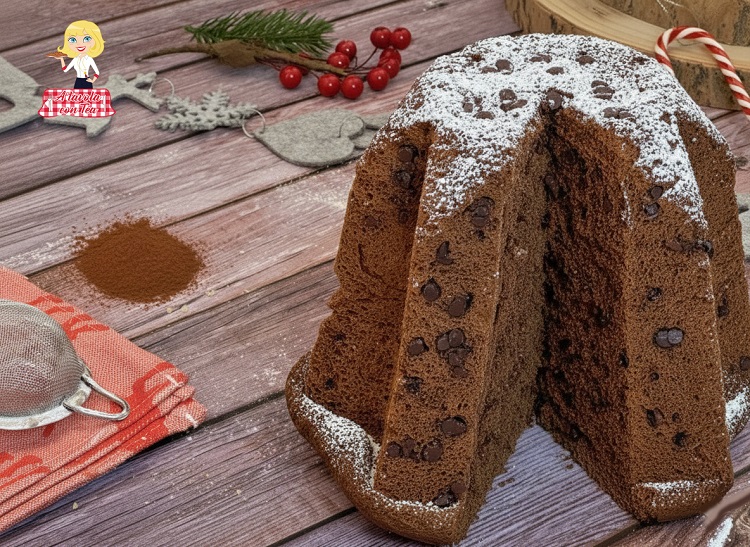
Notes on Ingredients and Substitutions
Manitoba Flour: The use of strong flour is essential for the successful outcome of the Pandoro, which must withstand long rises. Do not replace it with regular all-purpose flour.
Brewer’s Yeast: The amount of yeast is minimal to encourage slow dough maturation, developing a more complex flavor and aroma. You can replace fresh yeast with dry yeast, using 1/3 of the dose, but rising times may vary.
Chocolate Chips: By placing them in the freezer for an hour before adding them, you will prevent them from melting in the dough during processing.
Ingredient Adjustment for 1.65 lb Pandoro Mold
1. Starter Mix (Reduced to 75%) For 1.65 lb Mold
Manitoba Flour 1.5 oz
Sugar ¾ tablespoon
Water 3 tbsp
Fresh brewer’s yeast 6 g
2. First Dough (Reduced to 75%) For 1.65 lb Mold
Manitoba Flour 5 oz
Water 1.5 tbsp
Sugar 3/4 oz
Fresh brewer’s yeast 3 g
Eggs (1 whole + 1 yolk) 60 g (to be weighed!)
Butter (soft) 1.3 oz
3. Second Dough (Reduced to 75%) For 1.65 lb Mold
Manitoba Flour 5 oz
Sugar 2.6 oz
Eggs (2 whole + 1 yolk) 85 g (to be weighed!)
Unsweetened cocoa powder 1 oz
Butter (soft) 3.5 oz
Chocolate chips 1.4 oz
Salt 6 g
4. Aromatic Emulsion (Reduced to 75%) For 1.65 lb Mold
Orange honey 1.5 tablespoons
Vanilla extract ¾ teaspoon
Rum (optional) ¾ teaspoon
⚠️ Critical Note for Precision in case of a 1.65 lb mold with recalculated ingredients
Eggs: For large leavened products, accuracy is everything. I recommend breaking the eggs into a small bowl and weighing them (60 g for the First Dough, 83 g for the Second Dough) to avoid errors due to the different sizes of the eggs.
Procedure and Times: The procedure and rising times (especially the 12 hours in the fridge) remain unchanged. Only the baking time in the oven might be slightly reduced (always check with the toothpick test or with an internal thermometer at 201°F (94°C)).
Storage
The chocolate Pandoro can be stored in a well-sealed food plastic bag, away from heat sources, to maintain its softness for several days. If stored properly, the Pandoro can last up to a week, but it is likely to finish sooner!
Alternatives and Variations
Rum and Raisin Pandoro: Replace the chocolate chips with 100g of rum-soaked raisins.
With citrus zest: Add 1 tablespoon of grated orange and lemon zest to the aromatic emulsion for a more intense aroma.
Usage and Pairings
The chocolate Pandoro is a dessert suitable for various occasions. Besides the classic dusting of powdered sugar, you can serve it with a mascarpone cream, a warm chocolate sauce, or a sweet liqueur. It pairs perfectly with a Passito, a Moscato d’Asti, or a good espresso coffee.
Origins and History
The Pandoro, literally “golden bread”, has its roots in Verona, where it was patented in 1894. Its characteristic eight-pointed star shape and the absence of candied fruit and raisins make it an alternative to panettone. The addition of chocolate is a modern and delicious variant of a timeless classic that has conquered everyone.
Secrets for a Perfect Result
The secret of a great leavened is in the temperature and patience. Ensure the rising environment is warm and sheltered (79-82°F (26-28°C) is ideal). The processing of the dough is crucial: the dough should completely detach from the bowl walls, a sign that it has formed a good structure. The 12-24 hour maturation in the fridge is essential to best develop the aromas and final texture of the dessert.
FAQ (Questions and Answers)
1. Why isn’t my dough rising?
The causes can be different: the ambient temperature is too cold, the yeast is no longer active, or the dough has not been properly corded. Try moving the bowl to a warmer place or check the yeast’s freshness.
2. Can I use regular all-purpose flour?
No, for this recipe, a strong flour like Manitoba is essential. A weak flour would not withstand the long rises needed to obtain a soft and well-structured Pandoro.
3. How do I know when the Pandoro is cooked?
The cooking is perfect when the inside of the Pandoro reaches a temperature of 201°F (94°C). If you don’t have a kitchen thermometer, you can do the toothpick test: insert it all the way, if it comes out clean and dry, the Pandoro is ready.
