
Pomegranate Sorbet: Quick Recipe, Creamy and Naturally Dairy-Free
Who said sorbets are only eaten in summer?
Today we celebrate the Pomegranate, queen of autumn-winter, turning it into an elegant and incredibly fresh dessert.
The pomegranate, they say, brings luck… you never know if it’s true!
Often, the problem with homemade sorbets is the consistency: they tend to crystallize and become too icy and grainy, losing the typical creaminess of artisanal sorbet.
Our recipe solves this problem.
Let me reveal the trade secret for a perfect result: using egg white whipped. The egg white, once incorporated into the syrup, acts as a natural stabilizer and prevents the formation of too large ice crystals.
This gives the sorbet a creaminess that has nothing to envy to that of ice cream, but with the lightness typical of sorbet.
I will guide you step by step, from the preparation of the sugar syrup (the heart of every sorbet!) to the churning moment, which you can easily manage even without an ice cream maker.
This ruby sorbet is the chicest way to end a meal and impress your guests.
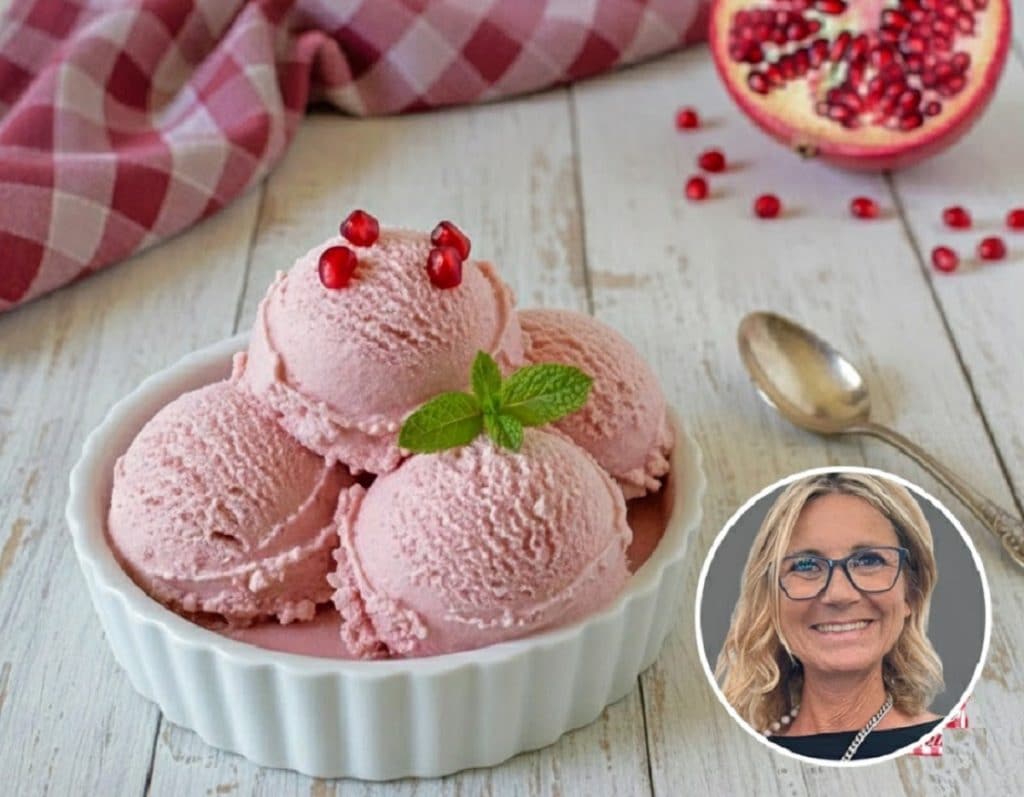
- Difficulty: Easy
- Cost: Economical
- Rest time: 4 Hours
- Preparation time: 15 Minutes
- Cooking time: 5 Minutes
- Portions: 6
- Cuisine: Italian
Ingredients POMEGRANATE SORBET
- 6 pomegranate (To obtain about 280 ml of juice)
- 3/4 cup water (For the sugar syrup)
- 3/4 cup granulated sugar
- 1 egg white (At room temperature)
- A few leaves mint (For garnish)
Tools
- Kitchen scale
- Juicer
- 2 Bowls
- Saucepan
- Electric whisk
- Immersion blender
- Container
- Strainer
Procedure POMEGRANATE SORBET
Gather the water and sugar in a saucepan. Bring to a boil and gently cook for a few minutes, until the sugar is completely dissolved. Turn off the heat and let the syrup cool completely.
Wash the pomegranates well, cut them in half. Squeeze them using a manual juicer or an extractor. Strain the juice to remove any pulp residues. You should get about 280 ml of juice. In a bowl, add the cold sugar syrup to the pomegranate juice. Mix well.
Whip the egg white at room temperature until stiff peaks form. Incorporate the whipped egg white into the liquid (juice and syrup) with slow movements from bottom to top, to avoid deflating it, until you obtain a homogeneous mixture.
Transfer the mixture to a freezer-safe container. Let it firm up in the freezer for about 4 hours.
Churning I: After the first 30-45 minutes, take out the container and vigorously stir with a fork to break the ice crystals. Churning II: Repeat every 30 minutes for the first 2-3 hours.
Alternatively: freeze for 4 hours and, when ready to serve, blend the sorbet with a kitchen mixer for a few seconds to make it creamy instantly.Serve the sorbet in glass cups or flutes. Garnish with a few fresh mint leaves and whole pomegranate seeds.
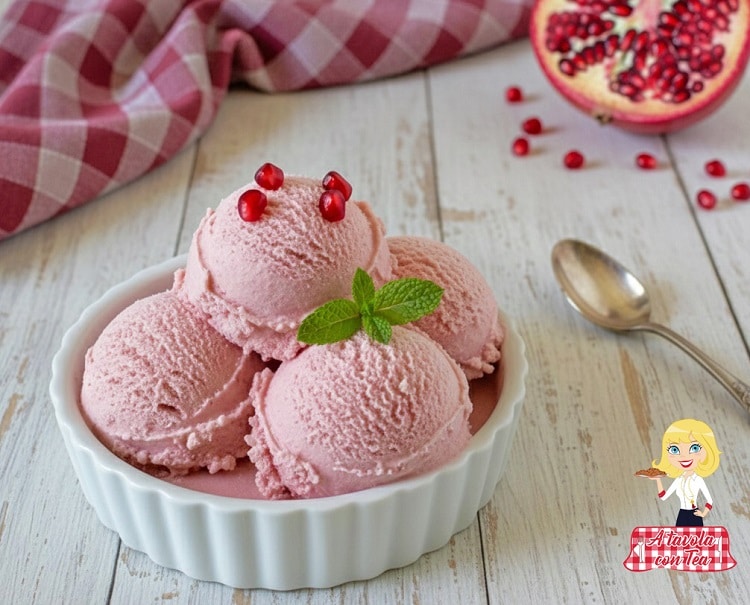
Ingredient Notes and Substitutions
The Pomegranates (Juice Quality): The quantity of pomegranates is indicative, it depends on how juicy they are. The important thing is to get the required 280 ml of juice. If you use ready-made pomegranate juice, make sure it is 100% pure and not sweetened.
The Egg White (Flavor and Texture): The egg white should be at room temperature to whip better. Its function is crucial for creaminess and to prevent the sorbet from becoming a block of ice.
Sugar: You can replace part of the sugar with dextrose (about 30g) or inverted sugar to make the sorbet even more stable and creamy, but granulated sugar is the simplest and most accessible choice.
Storage
The pomegranate sorbet, once ready, can be stored in the freezer in an airtight container for about 2-3 months. To serve it best, take it out of the freezer 10-15 minutes before and, if necessary, blend it quickly to reactivate its creaminess.
Recipe Alternatives and Variants
Pomegranate and Citrus Sorbet: Add 50 ml of orange or tangerine juice to the pomegranate juice. Slightly reduce the amount of water in the syrup (about 30 ml less) to compensate for the excess liquid.
Digestive: Add 30 ml of Vodka or White Grappa to the juice and syrup mixture before freezing. The alcohol will lower the freezing point, making the sorbet softer and easier to churn.
Perfect Uses and Pairings
This sorbet is not just a dessert, it’s a palate cleanser!
End of Meal: It’s ideal for concluding an important menu (like Epiphany Lunch) because it’s fresh and digestive.
Pairing: Serve it as an intermezzo (between the first and second course) or as an accompaniment to dry and not too sweet desserts, such as cat’s tongues or butter cookies.
Origins: Sorbet, Ancient Elixir of Freshness
The ancestor of sorbet (the Arabic sherbet, from sharāb, drink) has ancient origins, dating back to Persian courts. In Europe, its spread is linked to the use of snow and ice to cool drinks and fruit juices, especially in Sicily and Florence, where it was mixed with citrus juices and honey. The addition of egg white is a later evolution, typical of modern pastry, which allowed for stabilizing the mixture, ensuring the creaminess we know today, distancing sorbet from simple “granita.”
The Trick of Quick Churning (Without Ice Cream Maker)
If you don’t have an ice cream maker (and many don’t!), your secret for perfect creaminess is using a kitchen mixer or blender. Freeze the sorbet without worrying too much about initial churning. When you need to serve it, cut the sorbet into cubes, transfer it to the mixer, and blend for 30-45 seconds. You’ll get a soft and creamy texture, just like it came out of the ice cream maker. Serve immediately!
FAQ (Questions and Answers)
1. Can I omit the egg white?
Answer: Technically yes, but I don’t recommend it. Without the egg white, your sorbet will become a granita and won’t have the smooth and fluffy texture typical of sorbet. The egg white is the natural emulsifier that ensures creaminess.
2. Why do I need to let the syrup cool completely?
Answer: If you add the syrup while it’s still warm or tepid to the pomegranate juice, you’ll ruin the fresh flavor of the juice and, more importantly, destabilize the mixture. The syrup must be cold not to negatively affect the crystalline structure during freezing.
3. How do I know if I should use 6 or 7 pomegranates?
Answer: The most precise way is to measure the juice. Squeeze 5-6 pomegranates and then measure: you need to reach 280 ml. If you’re not there, squeeze another one. In general, heavier pomegranates with smooth and shiny skin are the juiciest.
