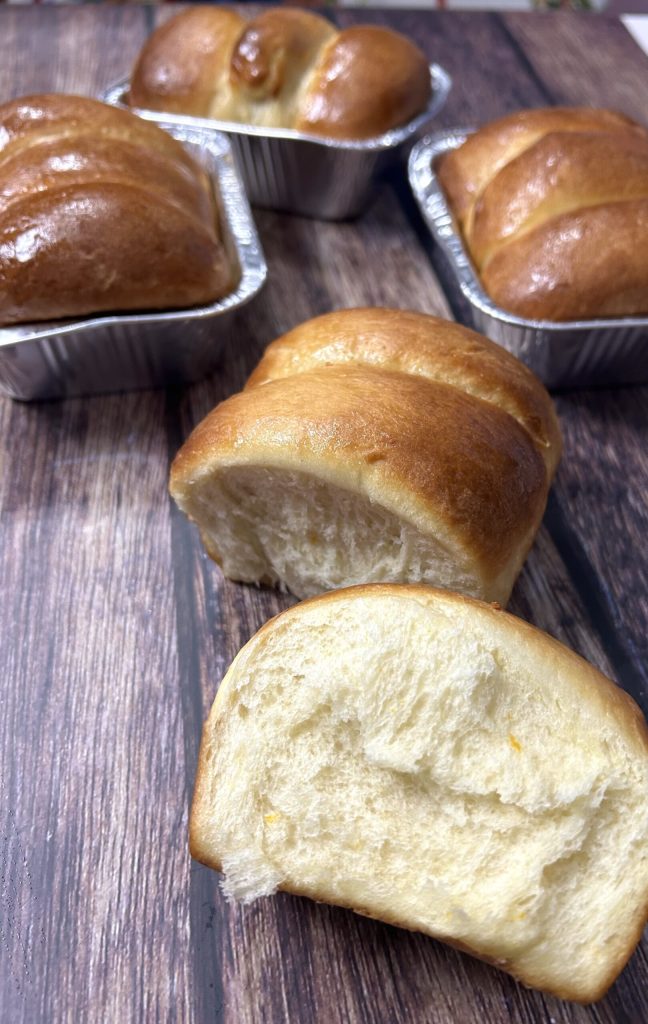
A few weeks ago, while scrolling through Facebook, I came across a video dedicated to the Vendéenne Brioche: a soft and fragrant French brioche that, at first glance, made me want to sink my teeth into it. Since brioche is my favorite breakfast pastry, and this version was made with sourdough starter, I decided to try it right away.
The Vendéenne Brioche originates in the French region of Vendée, where it is traditionally prepared on festive days. Its characteristic is an incredible softness and a rich yet light dough, scented with simple and irresistible aromas.
I prepared it with my sourdough starter, but if you don’t have it, you can easily substitute it with a homemade yeast: mix 10 g of brewer’s yeast with 50 g of water, 100 g of flour, and a pinch of sugar. Once doubled, it will be ready to use instead of the sourdough starter.
Before moving on to the recipe, here are more sweet ideas with sourdough starter
- Difficulty: Easy
- Cost: Very economical
- Rest time: 6 Hours
- Preparation time: 20 Minutes
- Portions: 12
- Cooking methods: Oven, Electric oven
- Cuisine: Italian
- Seasonality: All seasons
Ingredients
- 4 cups all-purpose flour
- 5.3 oz sourdough starter (active)
- 1/2 cup sugar
- 1/2 cup milk (warm)
- 2 eggs
- 1 pinch salt
- orange zest
- 2 tablespoons heavy cream
- 1/3 cup butter (softened)
- vanilla extract
- as needed butter (melted for brushing)
Tools
- 1 Stand Mixer
- 4 Molds
- 1 Bowl
Preparation
The procedure is really simple. Start by putting the dough hook for hard doughs in the stand mixer bowl, along with the flour and the crumbled sourdough starter. Start the mixer and gradually add the other ingredients following the order indicated in the list.
Remember: every time you add an ingredient, the dough should always come back together. To obtain an elastic and well-worked dough, it will take about 15-20 minutes, so don’t rush.
Add the eggs one at a time, waiting each time for the dough to absorb them completely. The softened butter, on the other hand, is added at the end, a piece at a time, letting it be absorbed before adding more.
When the dough becomes smooth, elastic, and well-kneaded, transfer it to the work surface, shape it into a ball, and place it in a bowl to rise.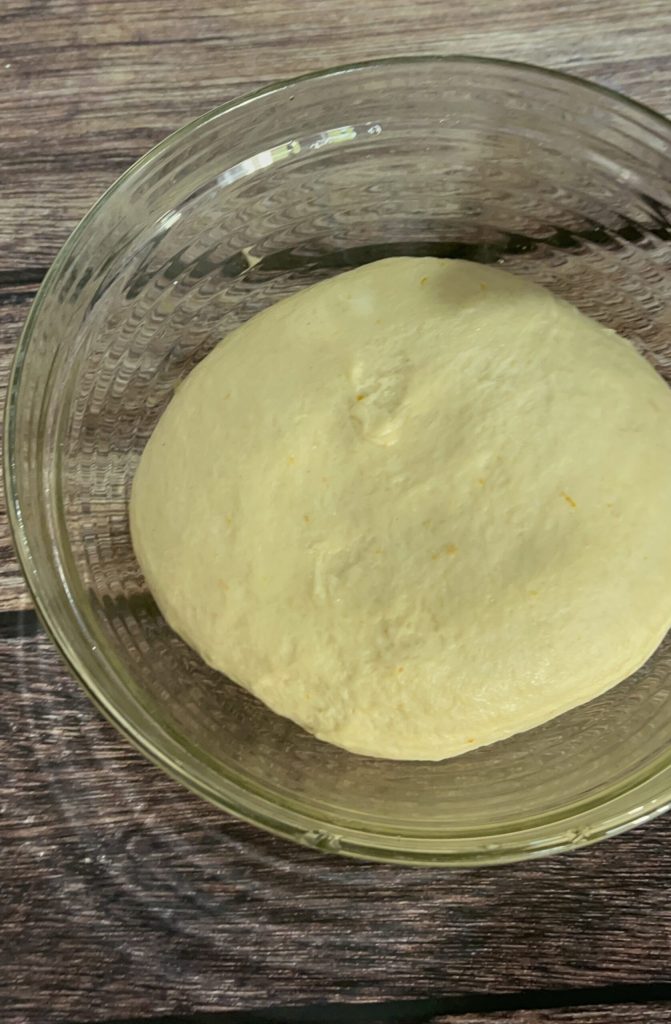
Now put the dough to rise in a warm place, covering it with cling film. I usually put it in the turned-off oven, so it stays protected from drafts and temperature changes.
After about 4 hours, the dough will be more than doubled, soft, and ready to be worked.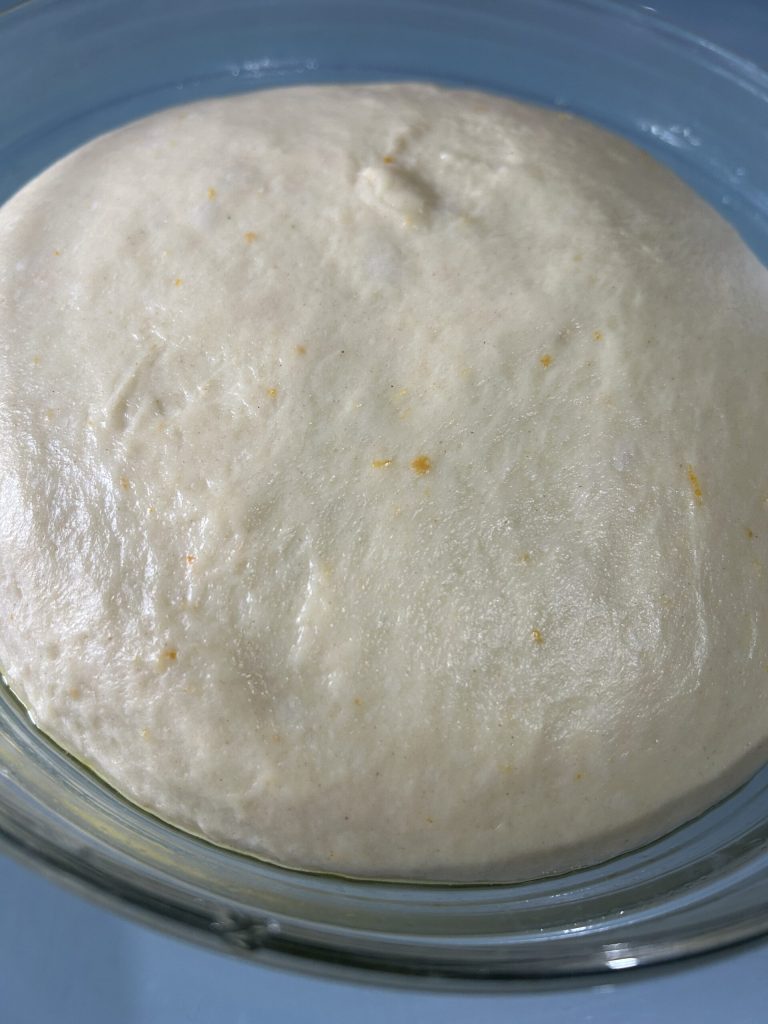
After the first rise, take the dough, transfer it to the work surface, and divide it into 12 pieces. Roll each piece until you get a smooth and tight ball, as shown in the photo. This step is important to obtain soft and regular brioches after baking.
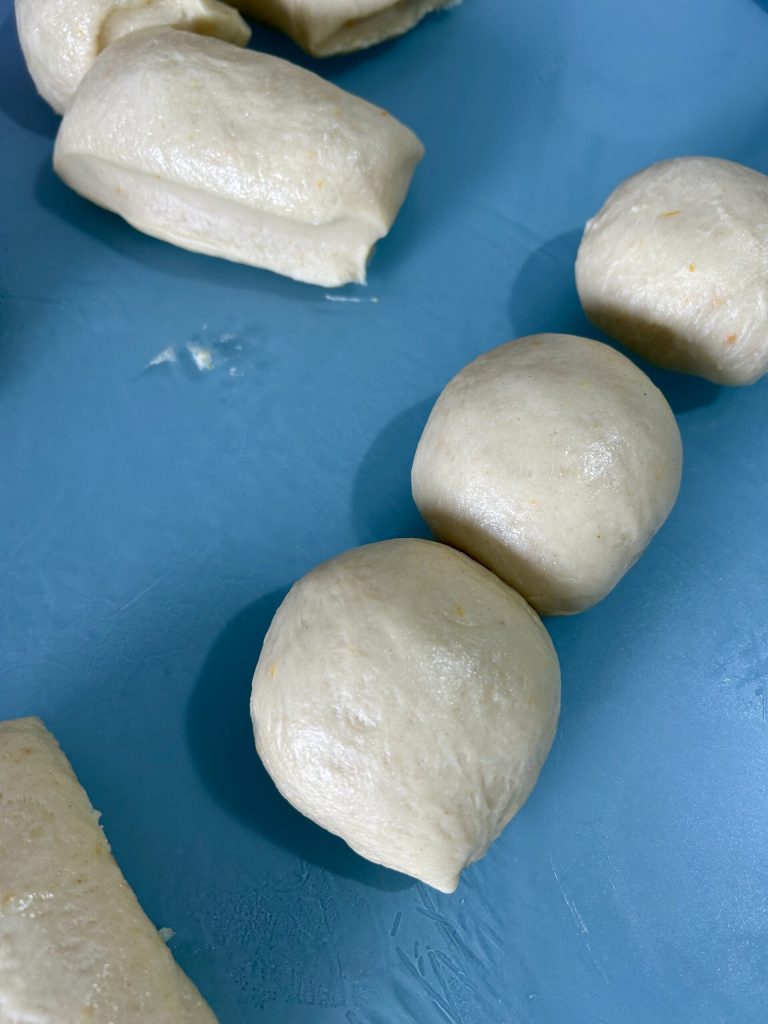
For this brioche, I used two-portion aluminum molds, well buttered. In each mold, place three balls, leaving some space between them: they should not completely fill the mold because they will grow a lot during rising.
Once the balls are in place, cover the molds and let them rise in the turned-off oven. It will take about 2 hours until the dough is more than doubled.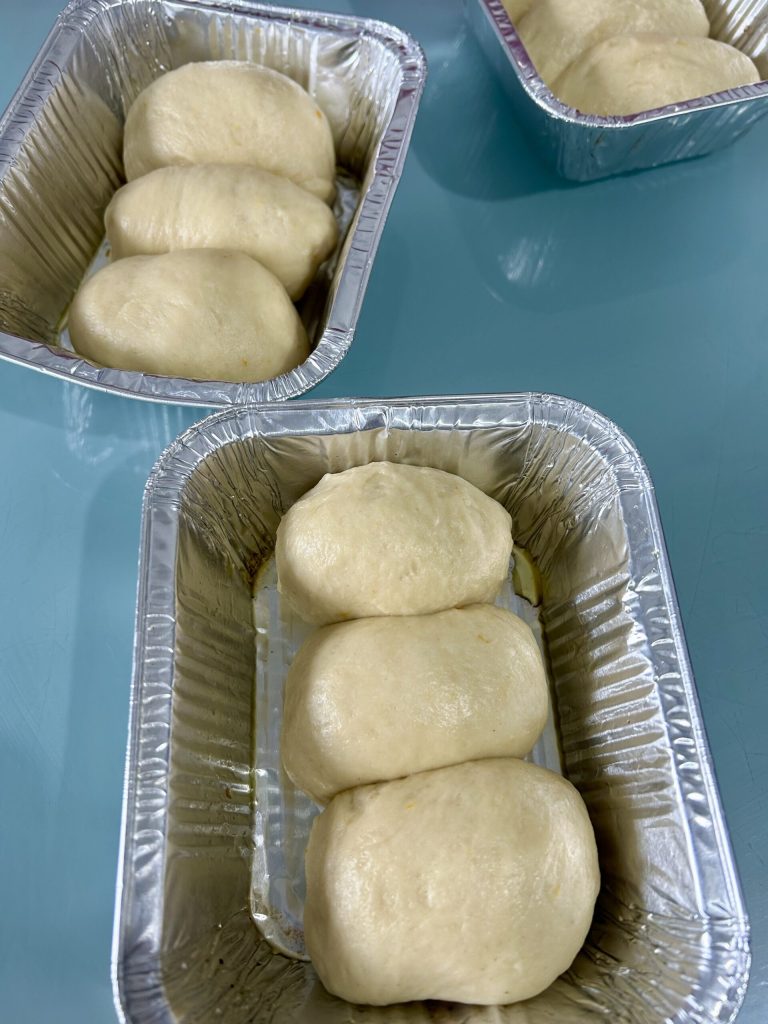
When the brioches are well risen, turn on the oven and preheat it to 350°F. Before baking, brush the surface with some melted butter.
The brioches bake for about 20 minutes, until they become nicely golden on the surface.
Once out of the oven, you can leave them as they are or make them even softer and shinier by brushing them with a light syrup made by heating 4 tablespoons of water with 2 tablespoons of sugar. This finish makes them even softer, moister, and truly irresistible.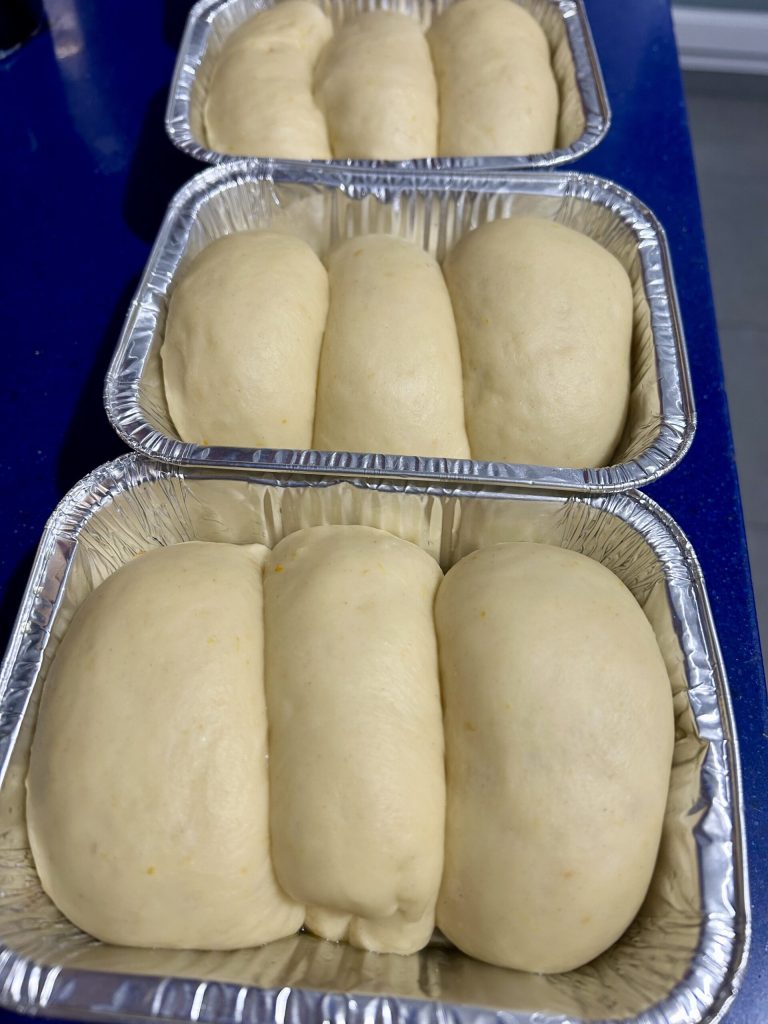
⭐ Final notes and useful tips
Incredible softness: these brioches are super soft when freshly made, perfect to enjoy while still warm.
To be eaten within the day: like all sourdough brioches, they are best if consumed within a few hours of baking. They maintain their softness throughout the day.
How to fill them: if you want to make them even more indulgent, you can slice them and fill them with the cream of your choice: hazelnut spread, custard, milk cream, or jam.
Storage: if there are leftovers, I recommend placing them in a food bag. The next day you can warm them up for a few seconds in the microwave to restore softness.
Final syrup: brushing them with syrup right out of the oven is optional, but it makes them shinier, moister, and irresistible.
If you liked the recipe or if you have any questions, feel free to comment here or on social media Facebook, Pinterest, Instagram and X
FAQ (Questions and Answers)
Can I make the Vendéenne Brioche without sourdough starter?
Yes! If you don’t have sourdough starter, you can make a quick yeast by mixing 10 g of brewer’s yeast, 50 g of water, 100 g of flour, and a pinch of sugar. When it doubles in volume, use it in place of the sourdough starter and the brioche will still be soft and fragrant.
Why didn’t my Vendéenne Brioche turn out soft?
The most common causes are: dough not kneaded enough, rising times too short, or oven too hot. Make sure the dough becomes elastic (it can take 15-20 minutes of mixing) and that it truly doubles in both the first and second rises.