Tonnarelli Cacio e Pepe: the Original Roman Recipe is one of those dishes that demonstrate how extraordinary Italian cuisine can be even with very few ingredients. Yesterday, while preparing it with my cousin, I rediscovered the magic of this specialty from the Roman tradition: simple, quick, but capable of delivering a unique and intense flavor.
Born as a humble shepherd’s dish, cacio e pepe is made with only two ingredients: Pecorino Romano DOP and black pepper. No butter, no cream, no added fats – just technique and quality raw materials. It is a surprisingly light recipe because the seasoning is natural and free of oils or elaborate sauces.
The perfect creaminess is achieved by working the pecorino with a bit of starchy cooking water, which gives it that velvety texture typical of the best Roman restaurants. In a few minutes, we can bring to the table an authentic dish, rich in history and flavor, that always wins everyone over.
Before moving on to the recipe, here are some other ideas for quick and tasty first courses:
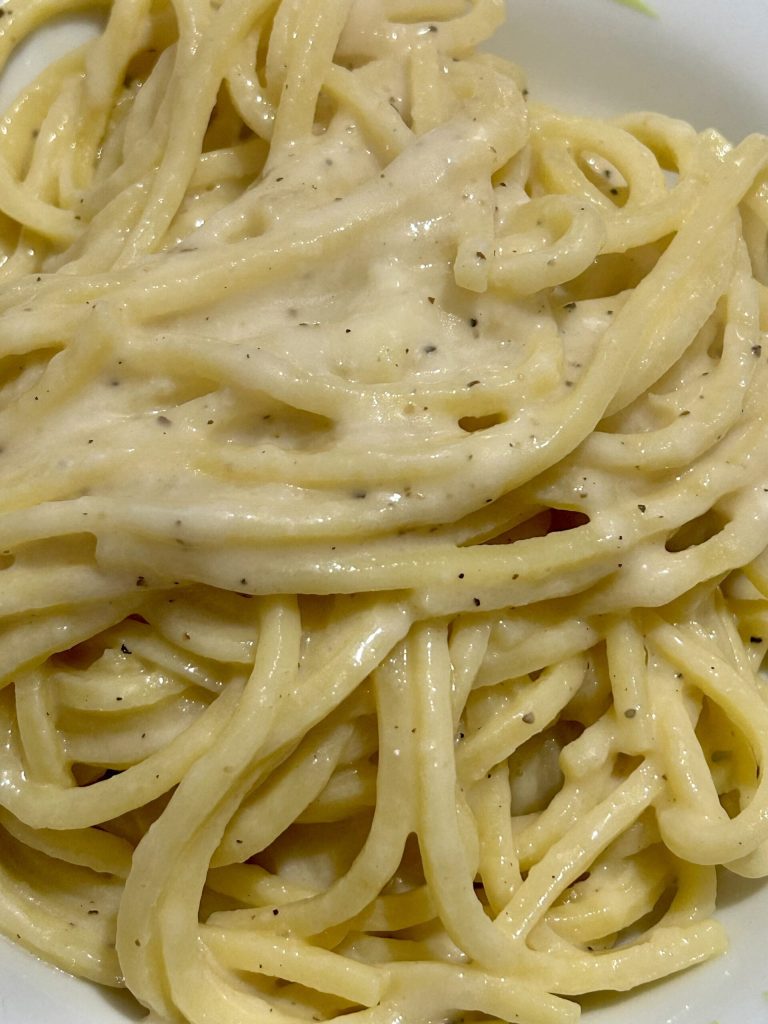
- Difficulty: Very easy
- Cost: Cheap
- Preparation time: 5 Minutes
- Portions: 4
- Cooking methods: Stovetop
- Cuisine: Italian
- Seasonality: All seasons
- Energy 424.18 (Kcal)
- Carbohydrates 31.16 (g) of which sugars 0.56 (g)
- Proteins 20.84 (g)
- Fat 23.44 (g) of which saturated 12.69 (g)of which unsaturated 0.47 (g)
- Fibers 1.99 (g)
- Sodium 4,409.73 (mg)
Indicative values for a portion of 215 g processed in an automated way starting from the nutritional information available on the CREA* and FoodData Central** databases. It is not food and / or nutritional advice.
* CREATES Food and Nutrition Research Center: https://www.crea.gov.it/alimenti-e-nutrizione https://www.alimentinutrizione.it ** U.S. Department of Agriculture, Agricultural Research Service. FoodData Central, 2019. https://fdc.nal.usda.gov
Ingredients
- 14 oz pasta (tonnarelli or spaghetti)
- water (for cooking the pasta)
- coarse salt (for cooking the pasta)
- 10 oz Pecorino Romano (grated)
- black pepper
Tools
- 1 Pot
- 1 Pan
- 1 Ladle
Preparation
First, place a large pot with water and a pinch of coarse salt on the stove. Wait for it to boil: it will be used to cook the tonnarelli.
While the water is heating, heat a non-stick pan and pour in a good amount of ground black pepper. Let it toast for a few seconds until it releases all its aroma.
When it is well toasted, turn off the heat: the pan will remain hot. When the water boils, pour in the tonnarelli and cook them for the time indicated on the package.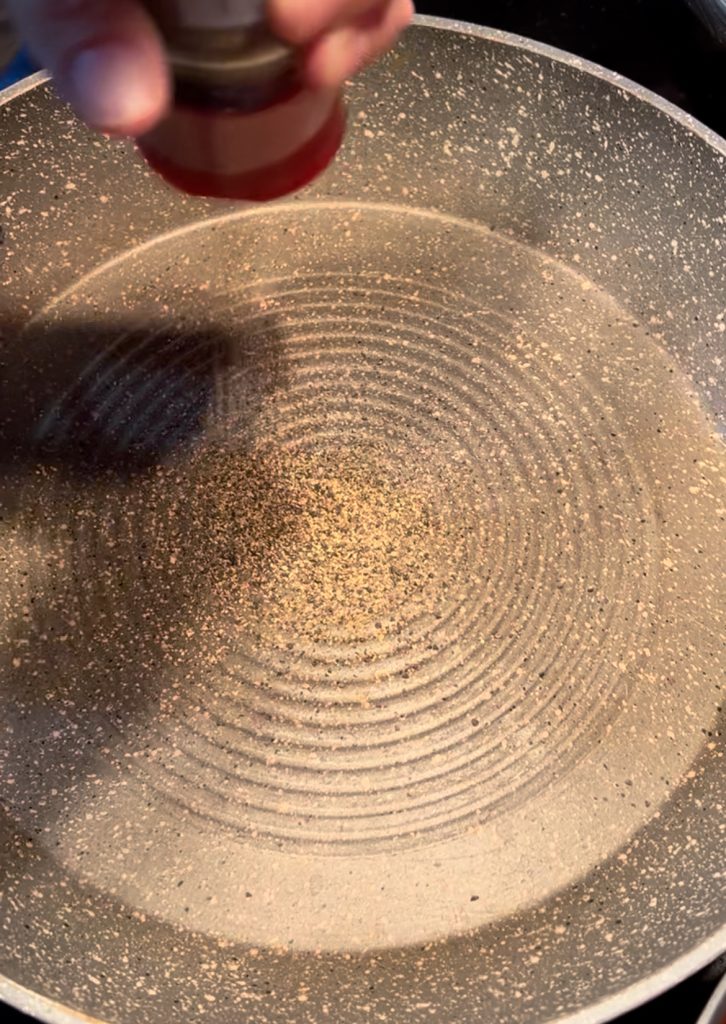
Once cooked, remove the tonnarelli with a slotted spoon (without draining them completely) and place them directly in the pan with the toasted pepper.
Turn the heat back on under the pan and toss the pasta, adding a couple of ladles of cooking water: this will help create the base for the cream. Turn off the heat under the pan.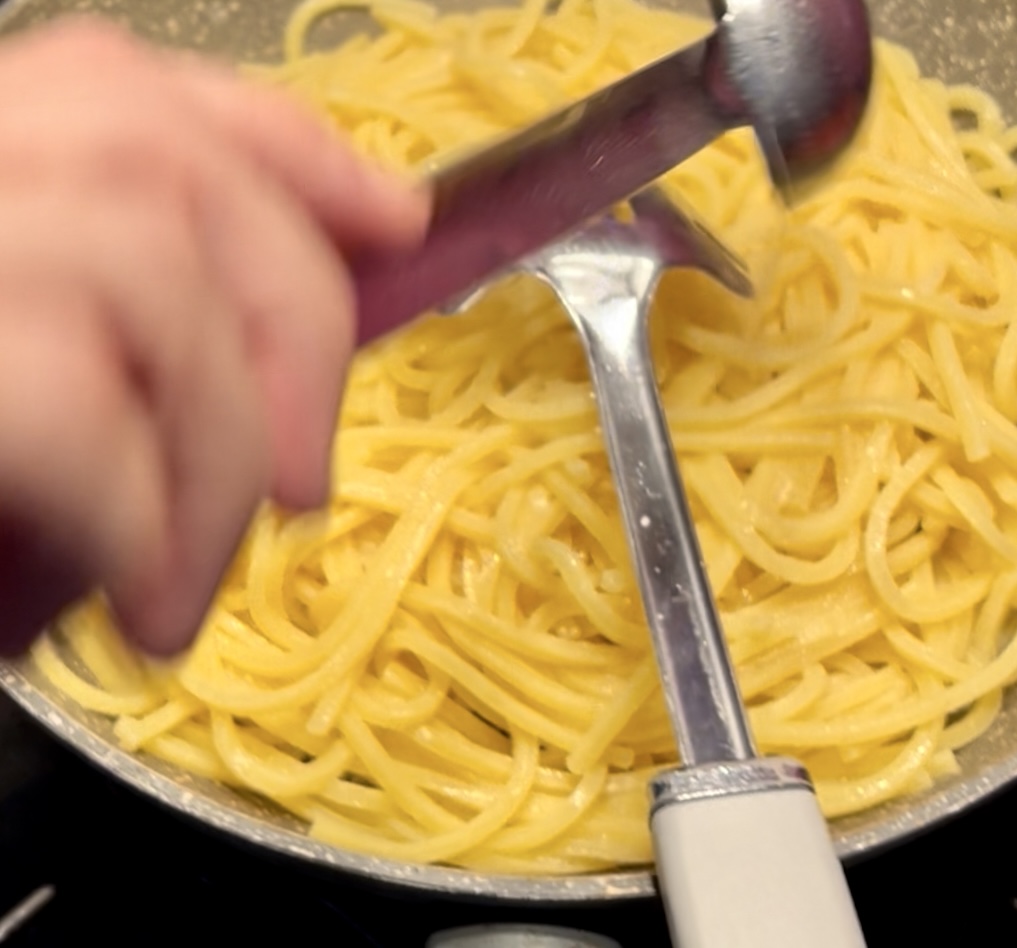
In a bowl, place the grated Pecorino Romano and add a little cooking water at a time, stirring vigorously. Continue until you get a smooth, thick, lump-free cream.
(The secret is to use hot but not boiling water to prevent the cheese from clumping.)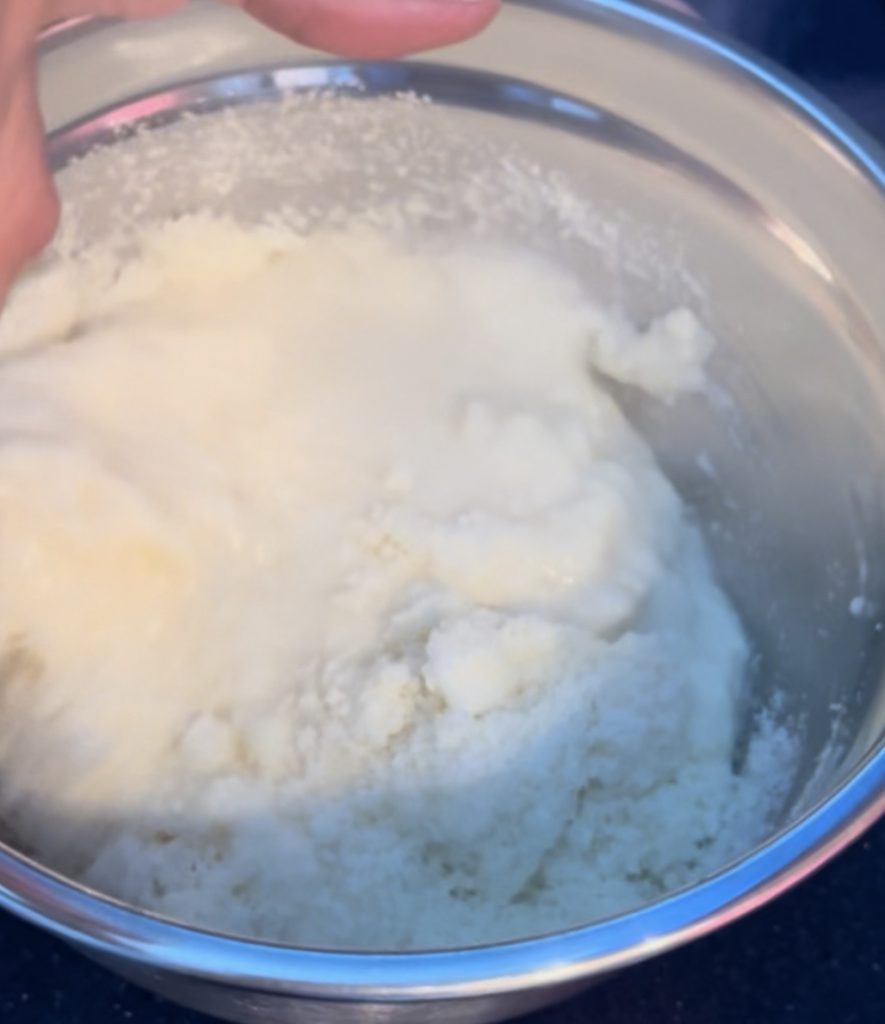
Pour the pecorino cream over the tonnarelli, without turning the heat back on as the pan will still be hot. Mix quickly, blending everything until the sauce becomes shiny and enveloping.
At this point, just plate it immediately, with a final sprinkle of pepper.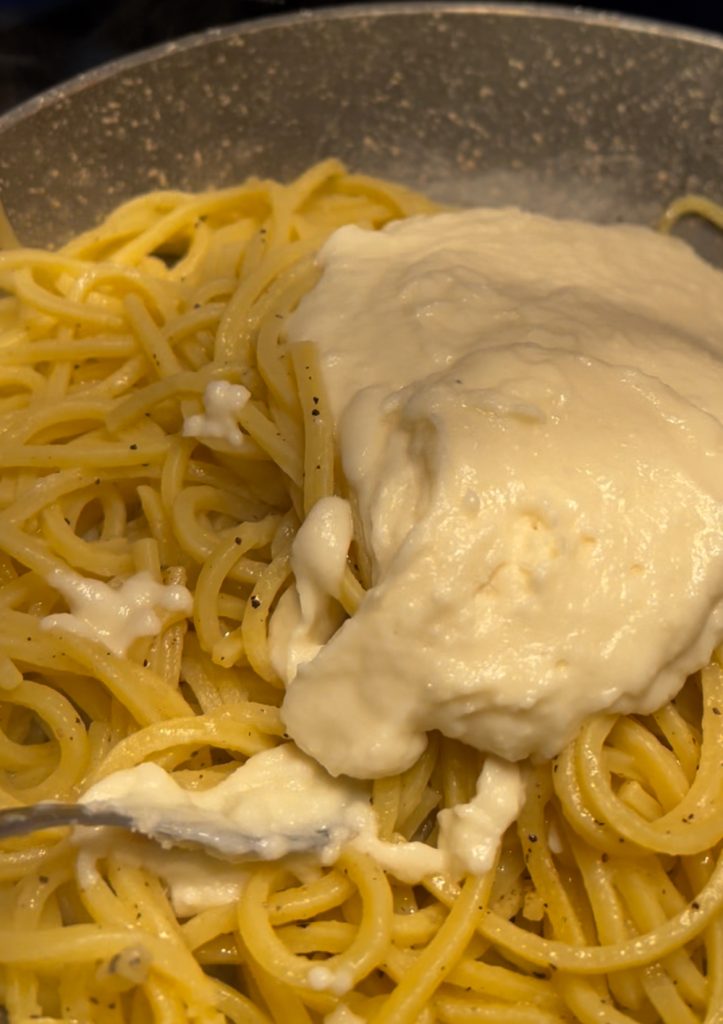
⭐ Final Notes
The secret to a truly creamy Cacio e Pepe lies in the temperature: the pecorino cream should be prepared at the last moment, when the pasta is already cooked, so no thermal shock occurs, which could cause it to curdle. Another crucial step is to toss the tonnarelli with the pepper over high heat, adding a little cooking water to create the base of the sauce. Only after turning off the heat do you incorporate the cream, which, thanks to the pan’s heat, will melt perfectly, enveloping the pasta in a smooth and velvety blend. A simple gesture, but decisive for serving a true Roman Cacio e Pepe.
If you liked the recipe or have questions, feel free to comment here or on social media Facebook, Pinterest, Instagram and X
FAQ (Frequently Asked Questions)
➤ Why does the pecorino cream curdle?
It usually happens due to a temperature shock: the cooking water was too hot or the pan too warm. Always mix the pecorino with hot but not boiling water and add the cream only after turning off the heat.
➤ Should the pasta be completely drained?
No: the tonnarelli should be transferred directly into the pan with the pepper using a slotted spoon. The cooking water helps create the base of the sauce and to blend naturally.