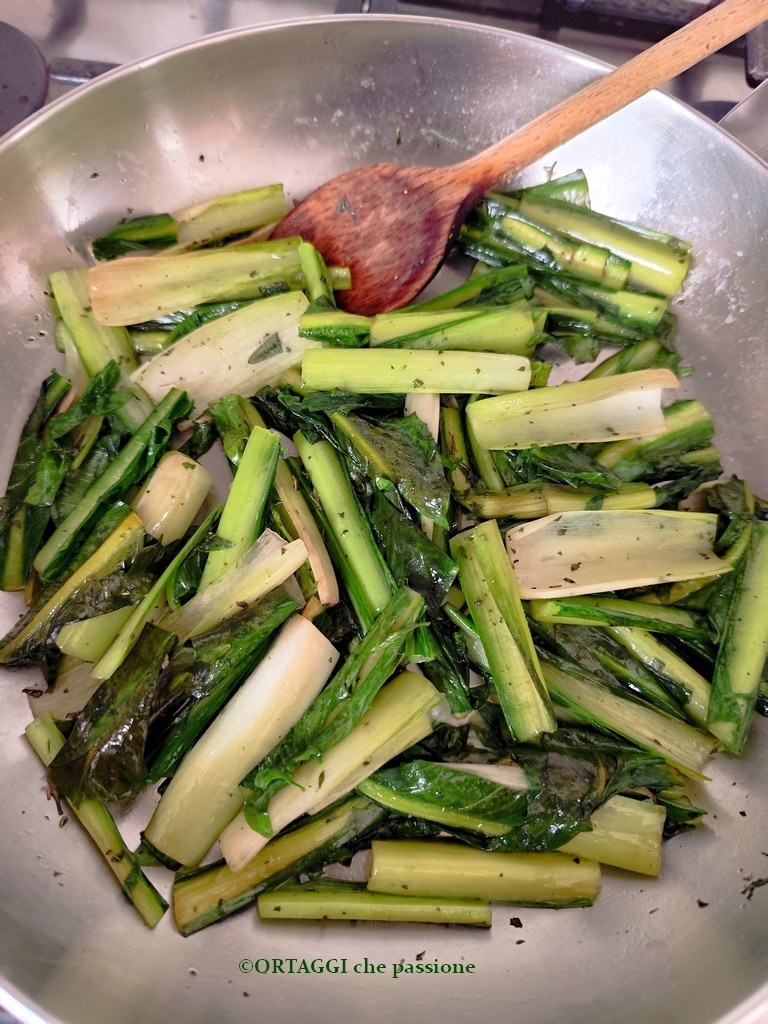
Sautéed chicory without boiling is an easy preparation that retains the intense and slightly bitter flavor of fresh greens. It is a typical traditional dish, especially in the Roman version, where it is flavored with garlic, oil, and for those who love strong flavors, some anchovy fillets. Preparing it like grandma Benedetta does, directly in the pan, allows it to retain many of its natural benefits: chicory is rich in fiber, vitamins, and purifying substances that aid digestion and liver health.
In the pan, it becomes tender but remains consistent, lending itself to many tasty variations. It can be made sweeter by adding sautéed onions or richer by adding diced potatoes. For those who love more comforting flavors, a touch of cheese, like pecorino or parmesan, makes it more delicious.
SEASON of #chicory #catalogna – autumn, winter and spring.
RECIPES with chicory
- Difficulty: Easy
- Cost: Economical
- Preparation time: 10 Minutes
- Portions: 2People
- Cooking methods: Stovetop
- Cuisine: Healthy
- Seasonality: Autumn, Winter, and Spring
- Energy 47.73 (Kcal)
- Carbohydrates 3.70 (g) of which sugars 0.00 (g)
- Proteins 0.83 (g)
- Fat 3.83 (g) of which saturated 0.56 (g)of which unsaturated 0.04 (g)
- Fibers 2.87 (g)
- Sodium 197.64 (mg)
Indicative values for a portion of 100 g processed in an automated way starting from the nutritional information available on the CREA* and FoodData Central** databases. It is not food and / or nutritional advice.
* CREATES Food and Nutrition Research Center: https://www.crea.gov.it/alimenti-e-nutrizione https://www.alimentinutrizione.it ** U.S. Department of Agriculture, Agricultural Research Service. FoodData Central, 2019. https://fdc.nal.usda.gov
Sautéed Chicory
- 1 head chicory (approximately 7 oz)
- 1 tablespoon extra virgin olive oil (or vegetable oil)
- to taste water
- to taste salt (and mixed herbs)
Tools
- Pan stainless steel
Sautéed Chicory
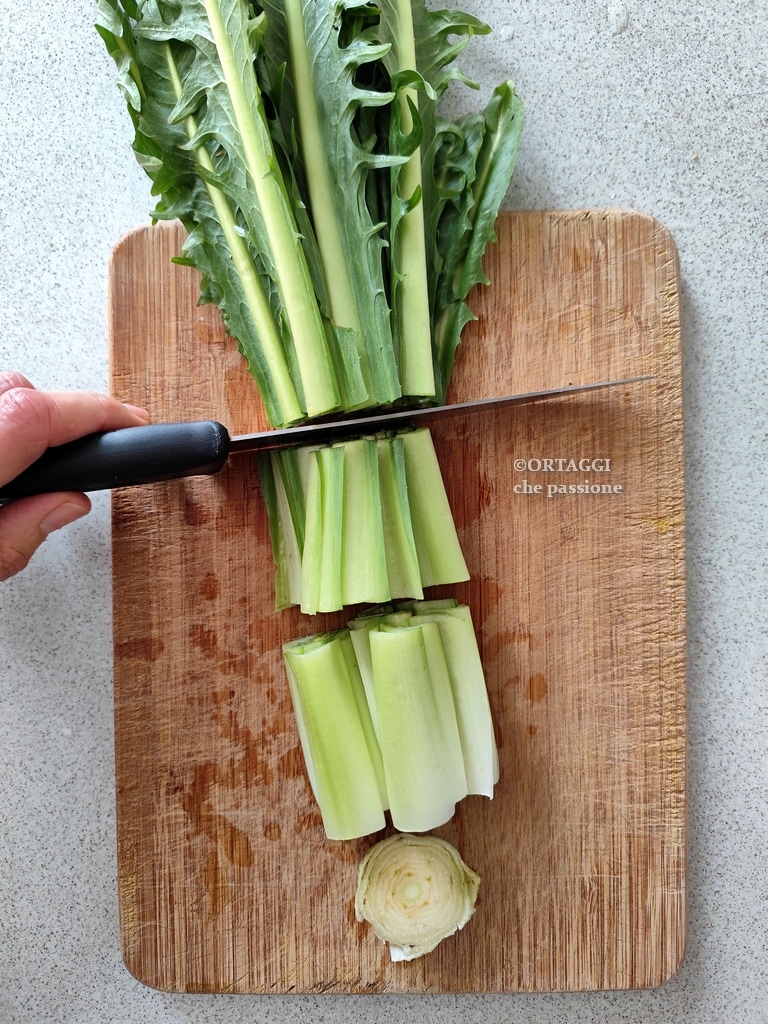
Wash and cut the chicory into regular pieces.
Pour into the pan with a drizzle of oil and a little water, season with salt and spices (or herbs).
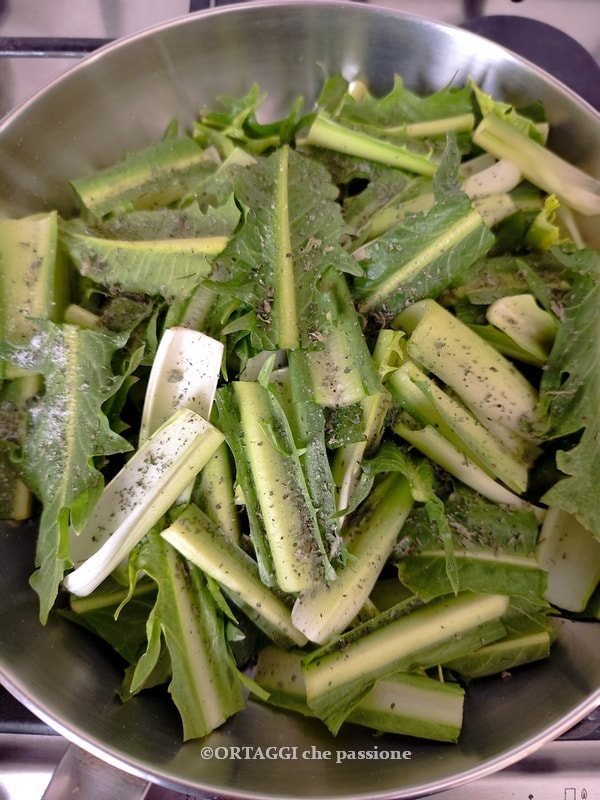
Cook covered and stir as needed. If necessary, add a little water.
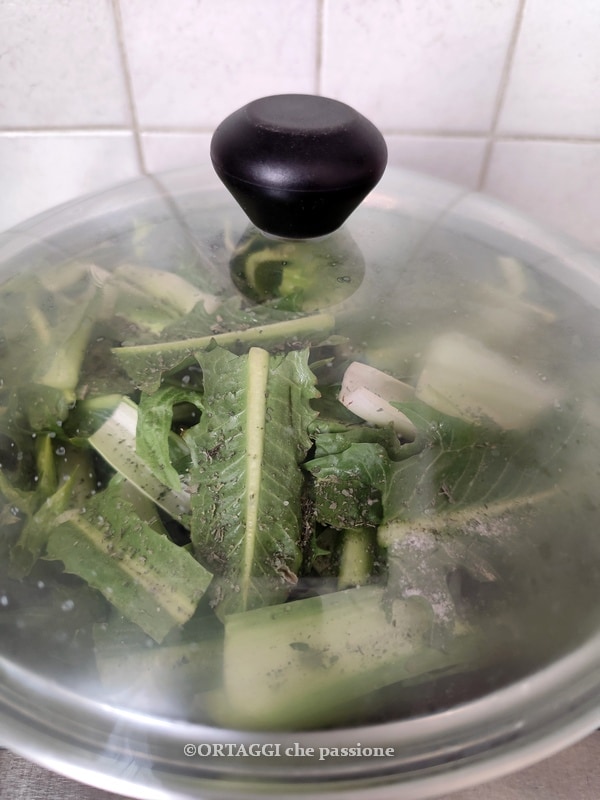
If pre-blanched, 2 or 3 minutes in the pan is enough to flavor it.
If sautéed directly raw, consider at least ten minutes, keeping the heat medium and stirring. If it dries too much, add some water.
It’s a very versatile base. You can add black olives, capers, sun-dried tomatoes, or potato cubes for a richer touch. Or make it a filling for a savory pie or a rustic bruschetta.
STORING sautéed chicory
Let the cooked chicory cool, transfer it to an airtight container, and store it in the refrigerator for 3-4 days. For longer storage, freeze it and keep it for up to 2-3 months. Reheat it in a pan before serving.
A little trick: if the chicory is seasoned with a lot of garlic or chili pepper, it’s best to add those fresh flavors only when reheating it, so it stays more fragrant and tasty even after a few days.
FAQ (Frequently Asked Questions)
What type of chicory is best to use?
Chicory catalogna or wild chicory work well, but also puntarelle if you want a milder taste. All work well in the pan, the important thing is to adjust the cooking times according to the leaf texture.
What does sautéed chicory pair well with?
It’s excellent as a side for legume dishes, potatoes or whole grains, but it also goes perfectly with eggs, tofu, or fresh cheeses. And if you mix it with a bit of pasta and a drizzle of oil, it becomes a simple and healthy main dish.
Can chicory be eaten raw?
It depends on the type. Some varieties, like puntarelle or tender chicory catalogna, can be enjoyed raw, perhaps in a salad with a bit of lemon and oil.
Can I use frozen chicory?
It’s a great alternative when you’re short on time or it’s not in season. You just need to slightly thaw it and then sauté it in the pan as you would with fresh, perhaps adjusting a bit of salt and oil to revive the flavor.
What is the difference between chicory and catalogna?
Chicory is a large family of plants, and catalogna is part of it. The main difference lies in the flavor and shape: catalogna has longer leaves and a slightly less bitter taste, while wild chicory is more intense with a strong taste.