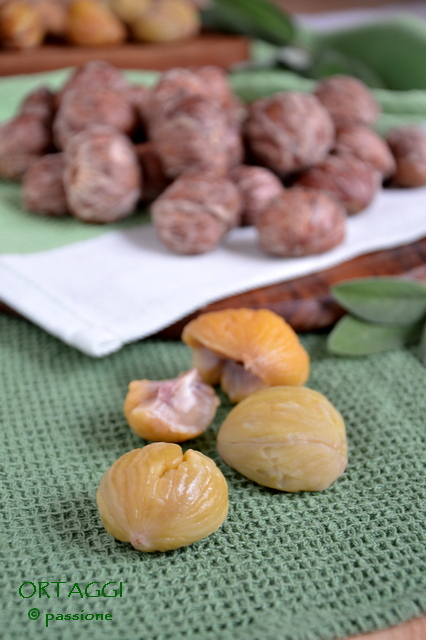
Boiled chestnuts are a great end to a meal or a wholesome snack; soft, flavorful, and substantial, they naturally fill you up. Boiled chestnuts are more digestible than roasted ones, as cooking increases the water content inside them.
The nutritionist Masiero explains the benefits, properties, and contraindications of chestnuts: “The main characteristic is their richness in starch, which makes chestnuts quite caloric (about 7 chestnuts provide 330 kcal). Therefore, they are suitable for athletes and those who need to increase their energy level. It’s better to let them cool before eating, and they are preferable boiled rather than roasted. They also contain a good amount of fiber and protein, useful for celiacs because they do not contain gluten. Their vitamin content is good, such as folic acid, and they provide minerals like potassium, magnesium, calcium, phosphorus, and iron. Not suitable for those with irritable bowel syndrome as their carbohydrates are excellently fermented by microbiota bacteria“.
Discover also the other cooking methods for chestnuts and marrons.
Boiled chestnuts flavored with herbs have a great taste and are creamy. Easy to peel or eat as is with their slightly crunchy skin.
SEASON and period of #chestnuts and #marrons: from September to December.
RECIPES with cooked chestnuts or chestnut flour
- Difficulty: Easy
- Cost: Medium
- Preparation time: 15 Minutes
- Portions: 1.4 oz per person
- Cooking methods: Stove
- Cuisine: Wellness
- Seasonality: Autumn
- Energy 79.05 (Kcal)
- Carbohydrates 17.07 (g) of which sugars 3.40 (g)
- Proteins 1.03 (g)
- Fat 0.72 (g) of which saturated 0.14 (g)of which unsaturated 0.53 (g)
- Fibers 1.70 (g)
- Sodium 160.70 (mg)
Indicative values for a portion of 40 g processed in an automated way starting from the nutritional information available on the CREA* and FoodData Central** databases. It is not food and / or nutritional advice.
* CREATES Food and Nutrition Research Center: https://www.crea.gov.it/alimenti-e-nutrizione https://www.alimentinutrizione.it ** U.S. Department of Agriculture, Agricultural Research Service. FoodData Central, 2019. https://fdc.nal.usda.gov
- 2.2 lbs chestnuts
- 3.17 qt water (or enough to cover them)
- 1 tbsp coarse salt
- 2 leaves bay leaves (prevents bloating and flatulence)
- 3 cloves
- to taste wild fennel
- 1 tsp fennel seeds
- 2 leaves sage
- Half vanilla bean
- 1 cinnamon stick
below calories and nutritional values of the recommended daily dose by nutritionists: 1.4 oz
Tools
- Cutting board
- Knife
- Pan
BOILED CHESTNUTS – allesse
Place one chestnut at a time on a cutting board, remove the outer shell with a sharp knife.
To follow the Neapolitan procedure: you can soak them in cold water overnight.
Gently cook them in boiling salted water. If desired, you can add bay leaves, sage, or fennel seeds (used to limit potential bloating and flatulence) or for a sweeter version: a vanilla bean and/or a cinnamon stick.
Cook for 15 – 20 minutes, or until they are soft but still intact. It’s preferable to leave them slightly al dente so that they can be eaten whole and not mushy. Once cooked, the chestnuts can be eaten as is or the thin skin that surrounds them can be removed.
BALLOTTE – boiled chestnuts with skin
Wash and score the chestnuts. Then place them in a pot with three times the water and a tablespoon of coarse salt, optionally adding: bay leaves, cloves, sage…
Cook for about 40 minutes starting from cold water. Once cooked, drain, peel, and enjoy.
CHESTNUTS cooked in a PRESSURE COOKER
Cover the chestnuts with water, be careful not to exaggerate.
Salt and flavor to taste. Close the pressure cooker tightly. Turn on the heat to medium flame. Then lower the flame to the minimum when the pressure cooker starts to whistle and continue cooking with the following times:
– chestnuts with outer shell and scored 15 minutes
– peeled chestnuts with skin: 5 minutes
What to accompany boiled chestnuts with?
Accompany boiled chestnuts with a good young wine (white or red) and for the little ones with a glass of milk.
How to store boiled chestnuts?
To store boiled chestnuts, it is advisable to cool them completely at room temperature and then store them in the refrigerator in an airtight container for up to 3 days. You can also freeze them for 6-12 months in the freezer, but keep in mind that over time they may lose quality in terms of flavor and texture. Make sure to label the packages with the freezing date to keep track.
To store boiled chestnuts, it is advisable to cool them completely at room temperature and then store them in the refrigerator in an airtight container for up to 3 days. You can also freeze them for 6-12 months in the freezer, but keep in mind that over time they may lose quality in terms of flavor and texture. Make sure to label the packages with the freezing date to keep track.
Curiosities
What is boiled chestnut water used for?
Boiled chestnut water can be used to prepare soups, broths, or sauces to add a rich flavor and a slightly sweet aroma to dishes. It contains starch and substances released during the cooking of chestnuts, which can give a creamier texture and characteristic flavor to cooked dishes.
The cooking water from boiled chestnuts can be used as a conditioner to enhance the color of blonde hair.What are boiled chestnuts called in Italian?
In Italian, boiled chestnuts are commonly called “castagne lessate”, “castagne ballotte” or “allesse“.
What are the health benefits of boiled chestnuts?
Boiled chestnuts are a nutritious food that offers a range of health benefits. They are a significant source of complex carbohydrates, providing energy and balancing blood sugar levels. They are rich in fiber, which contributes to digestive health and the feeling of fullness, in addition to their laxative action.
Naturally gluten-free, they are suitable for people with gluten sensitivity or celiac disease. They also contain unsaturated fats, which can help reduce bad cholesterol in the blood, supporting cardiovascular health.
Finally, many people appreciate their sweet and nutritious flavor, making them a good choice for healthy snacks. However, since chestnuts are caloric, it’s important to consume them in moderation to maintain a balanced caloric intake in the diet.