Neapolitan Scammaro Frittata
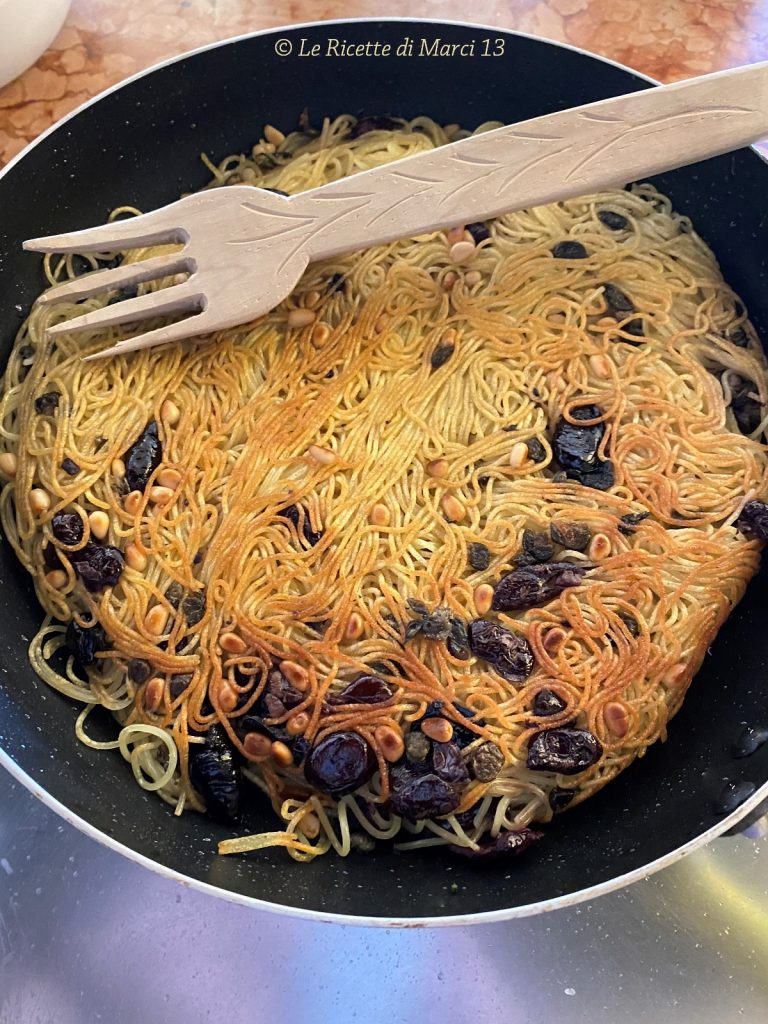
The scammaro frittata is a typical dish of Neapolitan poor cuisine, traditionally consumed during Lent, especially on “lean days“: Good Friday and Holy Saturday.
The “poor” version of the pasta frittata, (“poor” because it is a pasta frittata, without eggs) is so good with its golden crust and the savory mixture of olives and capers, that it’s eaten all year round and is ideal also for outings at Easter Monday or to the beach.
This is a quick and easy recipe, the mixture of olives and capers is prepared while the pasta water is boiling, and then the frittata is made in 10 minutes.
The scammaro frittata is not very aesthetically pleasing because it is without eggs, BUT it is so tasty and appetizing that no one notices, especially because it disappears in a flash!
In my family, the secret to prepare a perfect scammaro frittata, is to use, instead of normal vermicelli or spaghetti, the so-called “fidelini” (very thin spaghetti) to make the frittata well seasoned, not dry, and more compact when sliced.
If you love pasta frittatas, also try my delicious: Summer Spaghetti Sandwich.
If you are looking for recipes for the next Easter or for Easter Monday picnics, I recommend saving my Special from now: “Easter Recipes“.
During Lent, you might also be interested in these other light recipes:
- Light Lent Donuts with Anise, without butter and eggs and no frying.
- Light Oat and Chocolate Cake, without butter, eggs, and lactose
- Light Apple Cake by the Simili Sisters, without oil and butter
- Vegan Chickpea Flour Roll with Tofu and Zucchini Cream. Light Recipe
- Light Tuna Meatloaf, without potatoes. Easy recipe.
- Difficulty: Very easy
- Cost: Very economical
- Preparation time: 10 Minutes
- Portions: 3
- Cooking methods: Stovetop
- Cuisine: Italian Regional
- Region: Campania
- Seasonality: All seasons, Lent
Ingredients for Neapolitan Scammaro Frittata
- 12 oz spaghettini (I use the very thin ones, the 'Fedelini')
- 4.2 oz Gaeta olives
- 1.8 oz capers
- 2 anchovies in oil (optional)
- 1.8 oz pine nuts
- 1 clove garlic
- 1 tbsp raisins (optional)
- 2/3 cup extra virgin olive oil
- 0.7 oz butter (optional)
- to taste parsley
- to taste fine salt
- to taste chili pepper (optional)
Tools
- Bowl
- Wooden fork
- Cutting board with side trays
- Pan Lyonnaise iron
Preparation
Pit the olives and desalt the capers in a cup with water.
Take a small pan and pour the oil, heat it and add the garlic and chili pepper (optional), then let the garlic brown and the pine nuts toast.
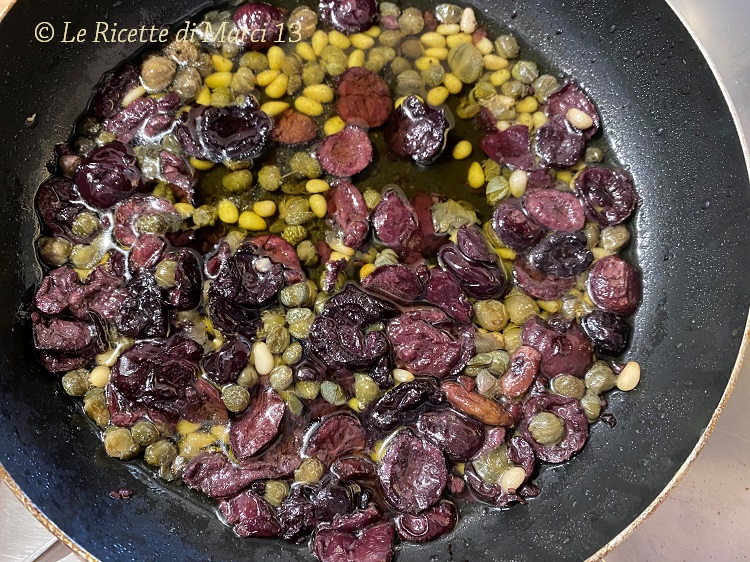
Add to the pine nuts: the olives, raisins (optional), and capers, and let everything flavor for about ten minutes, with the heat off, finally add the anchovies (optional).
Drain the pasta very al dente and season it with the 0.7 oz of butter and parsley, pour it into the pan with the olive and caper mixture, and toss it for a few minutes, then flatten it and cook first on one side and then, when golden, flip it to the other.
Everything must cook for about ten minutes, then place the frittata on a serving plate and serve it warm.
Shopping Tips !!!
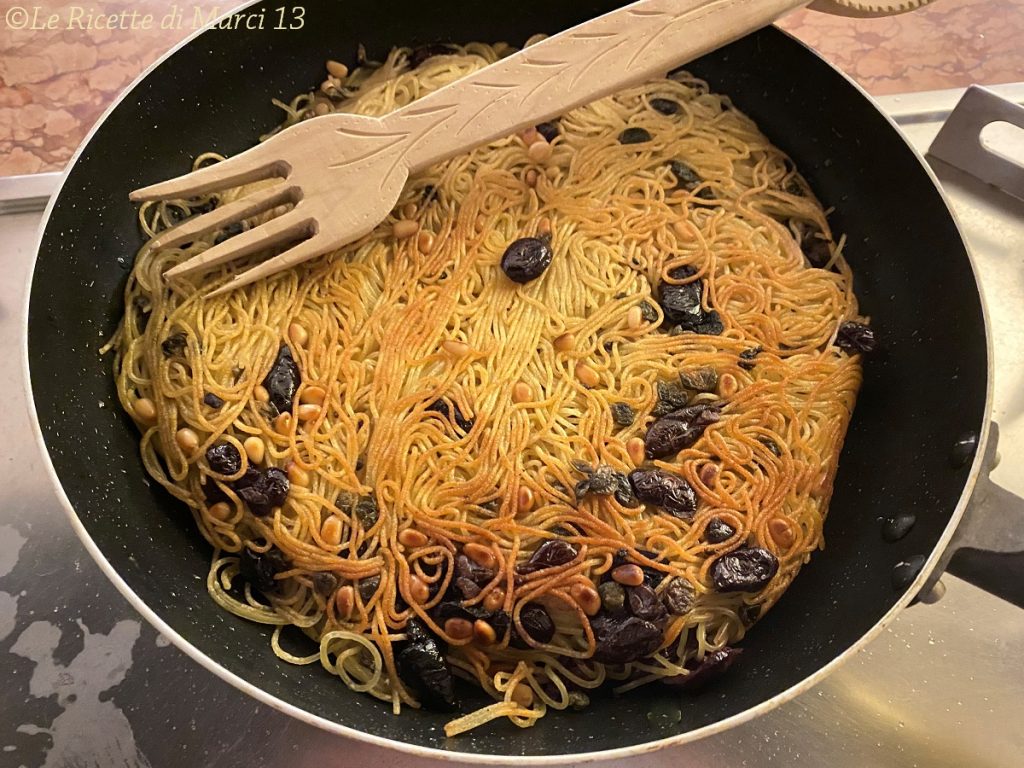
To cook the Neapolitan scammaro frittata, an iron pan is ideal (at a special price on Amazon).
The 99% pure iron of which these pans are made allows reaching high temperatures quickly and maintaining them constant.
Iron is also suitable for cooking on induction plates. Wash it with very hot water (if not boiling) before seasoning it, dry it well in the oven or on the flame, and then proceed with the seasoning: pour a fat (better seed oil) and bring it to the smoke point. The surface of the pan should look nice and black.
I also recommend this handy cutting board with two practical side trays incorporated (one serves for collecting chopped foods, the other for collecting waste scraps).
FAQ (Questions and Answers)
Scammaro Frittata, history and meaning?
The origin of this strange name “scammaro” comes from eating lean during Lent in the forty days preceding Easter, in particular: it had to be done by monks, who lived together, and when one of them, particularly old and weak, couldn’t avoid consuming a little meat, he could do so in his cell, not to generate undue cravings in his companions.
Hence the explanation of the Neapolitan term scammaro: eating in the room, cammerare, implicitly meant “eating animal proteins”; conversely, eating outside the room, scammerare, came by extension to indicate “lean food” allowed during Lent, eventually referring to Lent itself.
Ippolito Cavalcanti, Duke of Buonvicino and descendant of the famous Guido, friend of Dante, in 1837 included this recipe in his book Cucina Teorico Pratica, a veritable encyclopedia of Neapolitan cuisine; evident are the influences of French cuisine, but from the second edition, it is enriched with an appendix entirely dedicated to peasant cuisine and the less affluent classes (source here).