Cheesy Neapolitan pasta and potatoes with provola, original Neapolitan recipe.
The pasta and potatoes is a classic of traditional Neapolitan cuisine, belonging to the ancient popular tradition of recycling (in fact, mixed pasta is used, meaning various pasta shapes left over from the pantry, and parmesan rind is added to use every bit without waste), and more generally, to the Italian peasant culture (“the pasta that smells like earth”).
Neapolitan pasta and potatoes is an ancient, economical, tasty and simple main course, easy to prepare. It can easily serve as a complete meal.
In Naples, pasta and potatoes must be cheesy, creamy and “thick” (literally: “stuck,” dense and dry, meaning NOT brothy or worse, watery) otherwise it is NOT pasta and potatoes! In this recipe, I reveal all the secrets and the step-by-step processes to achieve it and prepare a “perfectly thick pasta and potatoes” like a pro.
If you are looking for super tested recipes (both sweet and savory) that guarantee success and… are flop-proof, click the Special: “My TOP Recipes“.
You might also be interested in:
AUTHENTIC NEAPOLITAN CUISINE
EASY first coursesi
- Creamy Baked Pasta with Pumpkin, Potatoes, and Fontina. Easy and Quick Recipe
- Air Fryer Pumpkin Cubes. Light and Tasty Side Dish, Easy and Quick
- Crispy Air Fryer Chickpeas. Quick and Tantalizing Snack
- Creamy Mezzanelli with Chickpeas and Sausage. Family Neapolitan Recipe.
- Potato Plumcake with Lentils and Provola. Easy Recipe
- Difficulty: Easy
- Cost: Very economical
- Preparation time: 30 Minutes
- Portions: 5-6 servings
- Cooking methods: Stovetop
- Cuisine: Regional Italian
- Region: Campania
- Seasonality: All seasons, Fall, Winter
Ingredients for Neapolitan Pasta and Potatoes
- 1.1 lbs Mixed Pasta (or any short pasta shape, preferably bronze-drawn from Gragnano)
- 6 cups Potatoes ("old", yellow-fleshed and not floury; the weight refers to peeled potatoes)
- 2 Carrots
- 1 stalk Celery
- 1 Onion
- 9 tbsps Extra virgin olive oil (approximately)
- 3.5 oz Pork knuckle (or raw ham or smoked pancetta)
- to taste Pork rind (or lard)
- 1 Garlic
- 4 cups Water (or vegetable broth)
- 7 oz Fresh provola (better if dried for 1 day in the fridge)
- 1 Parmesan cheese rind (or Grana Padano)
- to taste Chili pepper
- to taste Salt
- to taste Pepper
- to taste Grated Parmesan cheese
- to taste Basil
- 3 Cherry tomatoes (or 1 tablespoon of tomato paste, optional)
Tools
- Chopper Braun, 1000W power + accessories
- Terracotta Pot
- Flame Diffuser
- Ladle
Preparation of Neapolitan Pasta and Potatoes
Take a pot (preferably earthenware), pour in the extra-virgin olive oil, and prepare a sauté with finely chopped carrots, celery, and onion. Then add a small-diced raw ham hock (preferably with “pork rind”), and cook everything gently for at least 15 minutes (the onions should become translucent).
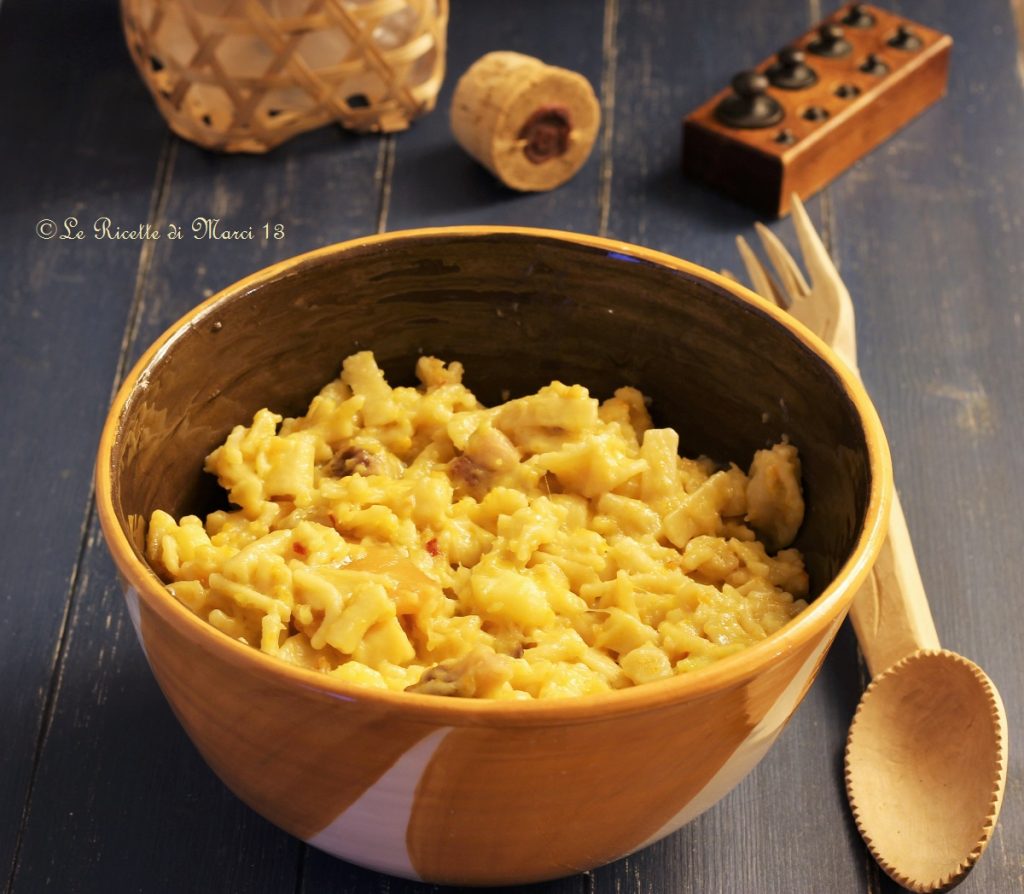
After the indicated time, add the potatoes cut into medium dice (if desired, you can also add cherry tomatoes, but I prefer without), season with salt, pepper, and chili pepper, let them absorb the flavors in the sauté, then add plenty of water (some use vegetable broth) and the parmesan rind cut into pieces (or if you prefer, whole) and cook for about 20 minutes.
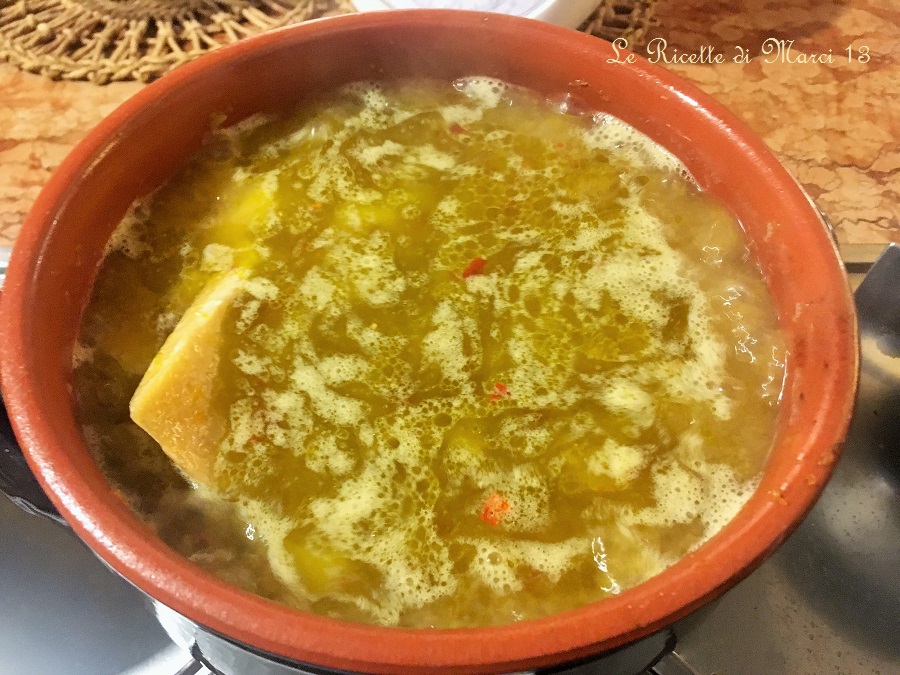
At this point, add the uncooked mixed pasta directly to the potato mixture (1st secret) and cook for about 6 minutes (it should be very al dente) (2nd secret).
If it dries out too much, add boiling water (or vegetable broth) little by little.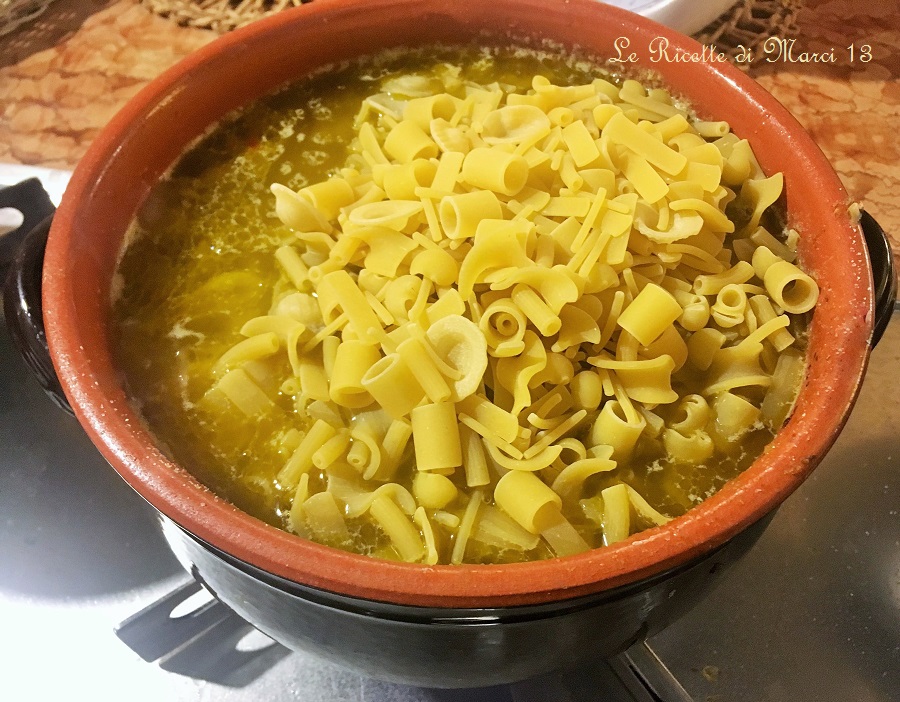
Remove the pot from heat and add the fresh buffalo provola (dried one day in the fridge) cut into pieces and the grated parmesan cheese.
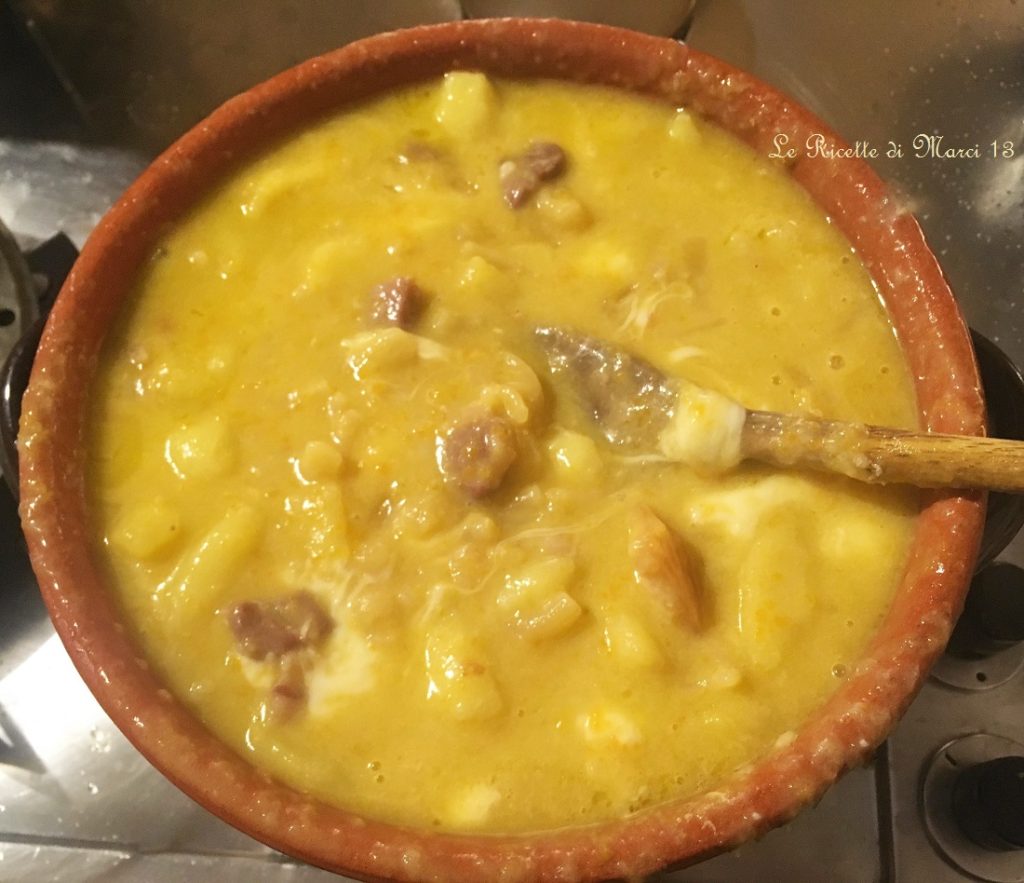
Mix everything well to melt the cheeses, add a little fresh basil, cover the pot with a lid and let it rest for about 5-8 minutes before serving (3rd secret, the most important!).
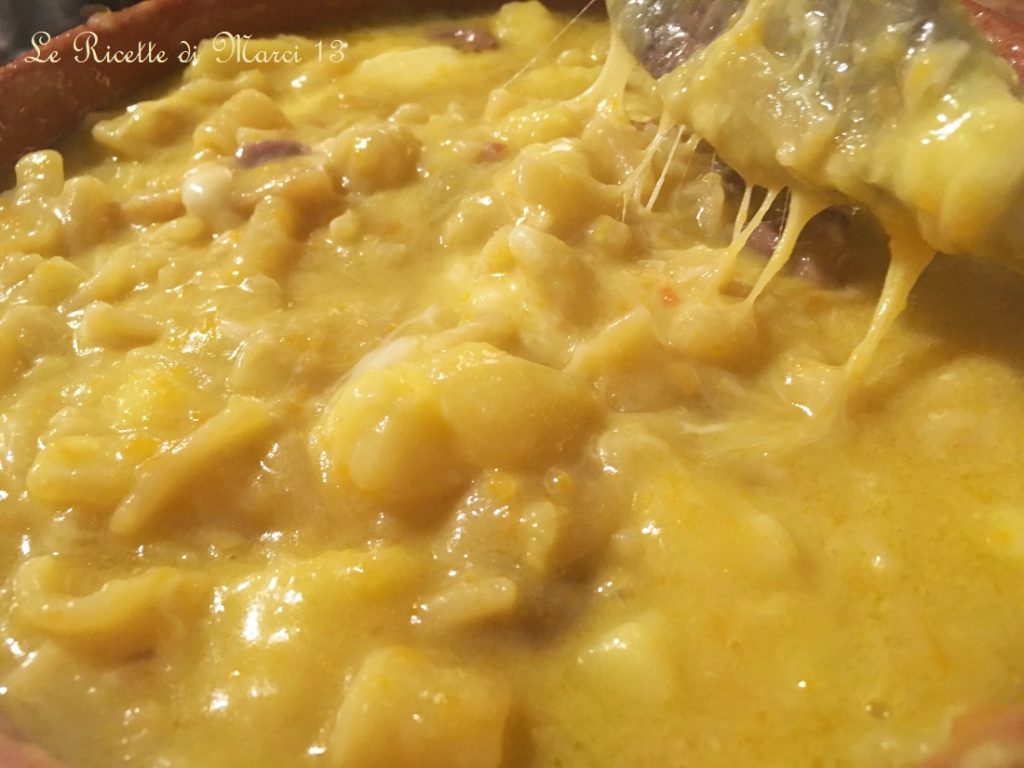
You will see that – due to the steam created inside the pot – the pasta will finish cooking and the cheeses will become beautifully stringy, thus achieving the famous authentic Neapolitan pasta and potatoes: creamy and “perfectly thick” (as shown in the photo above), NOT brothy.
If you love Neapolitan cuisine, I recommend checking out the section that collects all the “AUTHENTIC NEAPOLITAN CUISINE” recipes, published here on my blog!
Notes and Tips
TRICKS and SECRETS IN THE KITCHEN:
5 TIPS FOR MAKING THE PERFECT SAUTÉ.
Are cheese rinds edible? “…the rinds of some famous aged cheeses, like Grana Padano and Parmesan, are not usable directly due to their texture BUT they can be consumed cooked. Just wash them carefully and remove the outer layer with a grater or a knife until the writings disappear, to use the remaining part as a tasty ingredient in soups and stews…” (to learn more, read here).
With the name pork rind or skin, we indicate the hard skin of the pig, which – from north to south of Italy – is used as an ingredient in many famous and tasty traditional dishes. Pork rinds, generally, before being consumed, must be washed, cut into strips, and boiled in water for about an hour (to learn more, read here).
Shopping Tips!!!
To cook pasta and potatoes, I used this excellent earthenware pot crafted in a traditional way, ideal for slow cooking, as it was done in the past. It can be used both on the stovetop, in the traditional oven, and in the microwave. I recommend pairing it with a flame diffuser to avoid thermal shocks and achieve even cooking, preventing food from sticking and eliminating the need for constant stirring.
To chop the sauté, I used the very handy mini chopper accessory included with my Braun MultiQuick 7 Hand Blender, which you can purchase at a special price on Amazon.
Read my review for GialloZafferano on the Hand Blender “Braun MQ9045 MultiQuick 9” .
You can purchase all the items I recommend above on Amazon, at a great price, just click directly on the respective links.
Origins and history of Neapolitan pasta and potatoes
The pasta, potatoes, and provola represents one of the oldest recipes and at the same time most current from the good Neapolitan cuisine.
This dish, like almost all Neapolitan delicacies, comes from simple ideas, then perfected over time. In the 1600s, potatoes were among the easiest and cheapest ingredients to find, and many were eaten in many different ways. Potatoes’ origins are very ancient: they officially entered Italy only in the 16th century, brought along with tomatoes after the discovery of America. It was discovered that the potatoes and tubers imported from the new continent adapted perfectly to the southern climate and began to be cultivated in large quantities. This recipe became widespread among the popular families of Naples.
Pasta and potatoes, with its two carbohydrates combination, was indeed a hearty and energetic dish, perfect for nourishing and satisfying after a day’s work. The first evidence of pasta, potatoes, and provola is found in the book “Cuoco Galante” by Vincenzo Corrado, who in 1773 left us the first recipe for the much-loved dish. From there, this recipe spread throughout Campania, making families fall in love with its goodness.