Bucatini Carbonara, tricks and secrets!
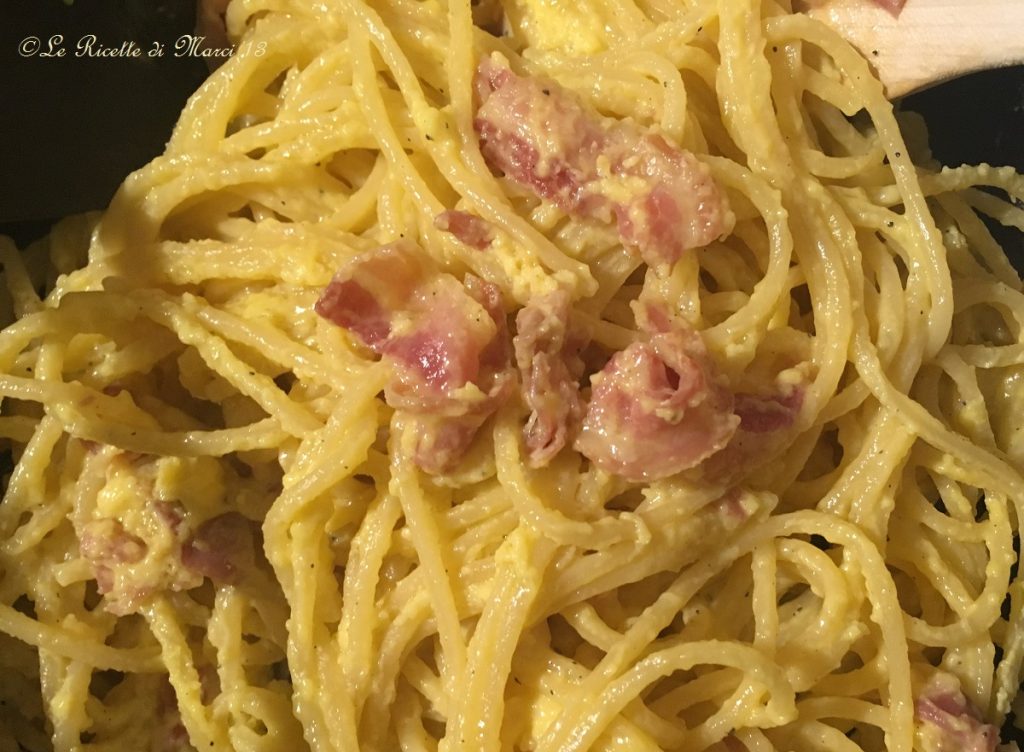
My carbonara is super creamy, try it to believe it!
Carbonara is a delicious and simple dish to prepare, but much debated on its preparation, I’ll tell you right away that:
– The first rule is: one yolk per person plus one whole egg for the pan (which helps better blend the egg mixture with the pasta).
– In the TRUE carbonara, neither pancetta nor cream is used!!
For the purists, I anticipate that the dots you see in the photos are NOT solidified eggs, BUT simply coarsely grated pecorino cheese.
Tricks and secrets for an Authentic Carbonara:
– The guanciale should simmer alone, without other condiments NO oil, No butter;
– DO NOT use pancetta;
– DO NOT use cream;
– PECORINO cheese is necessary (at most you can mix in a little grated parmesan);
– The eggs are added OFF THE HEAT otherwise instead of forming a cream it solidifies with a horrible “omelet effect” (the temperature should NOT exceed 167°F);
– PEPPER should be freshly ground;
– No onion or garlic; no chili pepper.
Follow my advice and you’ll achieve a perfect and creamy carbonara, unmissable !
You might also be interested in
- Bucatini all’Amatriciana original recipe step by step.
- Spaghetti Assassina original recipe easy step by step.
- Creamy Vermicelli with Clams. Foolproof Neapolitan recipe, all tricks and secrets.
- Baked Pumpkin, Potatoes, and Fontina Pasta creamy and melts. Easy and fast recipe.
- Neapolitan Pasta and Potatoes with melted provola. All secrets.
- Difficulty: Very easy
- Cost: Economical
- Preparation time: 10 Minutes
- Portions: 4 people
- Cooking methods: Stovetop
- Cuisine: Italian
- Seasonality: All seasons
Ingredients for Bucatini Carbonara
- 14 oz Bucatini
- 4 Egg yolks
- 1 Egg (whole)
- 9 oz Guanciale
- 7 oz Pecorino Romano (also mixed with grated parmesan)
- to taste Black pepper
- to taste Salt
- 1 tbsp White wine
- 2 tbsp Cooking water (for blending)
Tools for Bucatini Carbonara
- Bowls of various sizes
- Chopping Board with two side trays for waste
- Set of non-stick pans
Preparation of Bucatini Carbonara
Cut the guanciale into strips and place it in a pan over low heat (WITHOUT oil or butter).
And turn on the stove with the pot of water for cooking the pasta.
Deglaze with a tiny bit of white wine and let the guanciale brown (without burning it, it shouldn’t smoke) slowly to release all the fat which will be used to season the pasta.
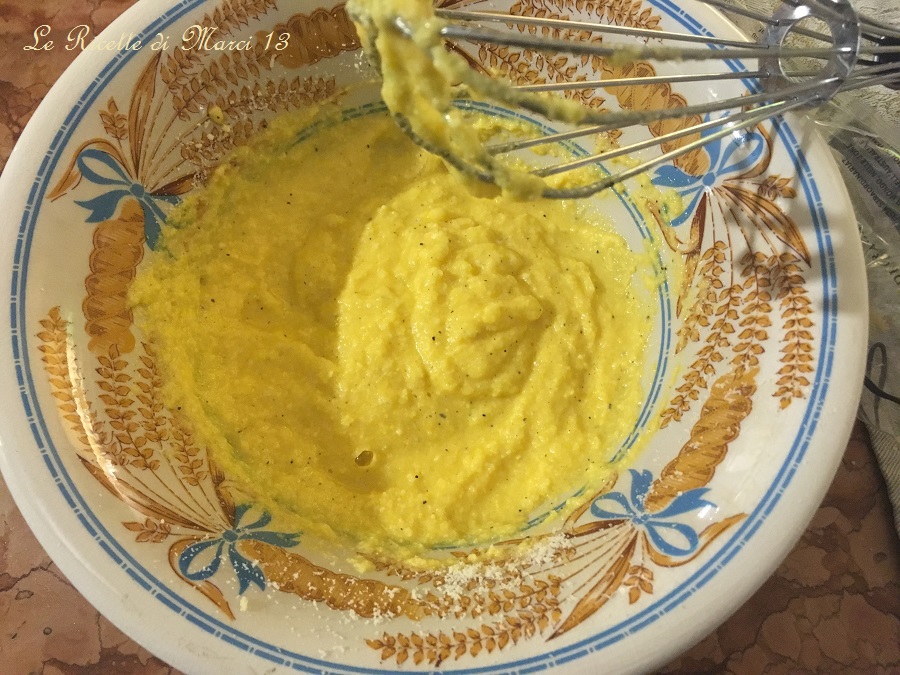
Remove the browned guanciale from the pan.In a container, mix with a hand whisk the 4 yolks and the whole egg, add the cheese, salt, and freshly ground black pepper and mix well.
Throw the bucatini into the salted boiling water and cook them al dente, for about 8 minutes.
Then, once cooked, drain them and save the cooking water.Reheat the pan with the guanciale fat and add the cooked pasta, tossing it in the pan with the guanciale and a ladle of cooking water to release the pasta’s starch which will help make the carbonara creamy.
Finally, OFF THE HEAT pour the hot pasta with the guanciale onto the egg and cheese batter and, with about 2 tbsp of hot cooking water, mix everything well, finally add another sprinkle of pecorino and freshly ground black pepper.
Shopping Tips!!!
To make this recipe, I used one of these beautiful perfectly non-stick pan sets, ideal for blending pasta, they clean in a moment and are also dishwasher safe!
Origins and history of carbonara?
The origins of carbonara are controversial, we read that: “...The impression is that carbonara is one of the cornerstones of Italian cuisine, one of those loved all over the world, imitated, mistaken, discussed.
Yet when Ada Boni made, in 1930, a sort of census of the traditional Roman culinary recipes with the volume Il Talismano della Felicità, there was no trace.
So what is the true origin? If it is true that until the 1930s there is no trace of carbonara’s preparation in Rome, this recipe begins to appear from 1944. Such a coincidence of dates provides a precious clue to understand to whom to attribute the invention of this tasty dish. It is said, in fact, that the Allied soldiers engaged during World War II on the Reinhard line, between Lazio, Molise, and Campania, had the opportunity to taste and become fond of the Abruzzese “Cacio e ova” pasta. It was natural, at least according to what is told between historical reality and legend, to add the guanciale, typical of the area, and eventually the smoked pancetta imported directly from the United States.
These were the flavors that reminded the soldiers of “home” (the combination of the typical American taste of eggs & bacon with pasta topped with cheese), but this did not prevent the Romans, once they discovered the recipe, from adopting carbonara, which has been literally adopted to the point that, today, no one would dare to question its geographical paternity“. (see here).