
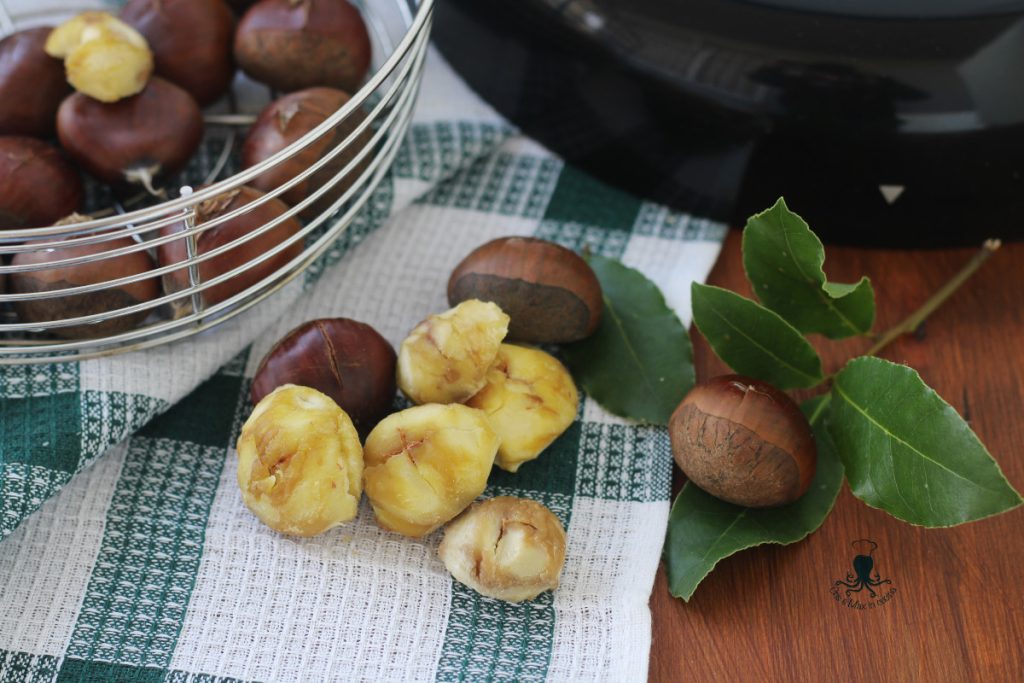
Steamed chestnuts in the multicooker or pressure cooker is a basic, quick, and easy recipe.
Steamed chestnuts are an autumn classic: soft, fragrant, and easy to peel, ideal to enjoy alone or as an ingredient in desserts and rustic dishes.
Traditionally, they were boiled in a pot with water and aromas, but today we can simplify cooking with two quick and effective methods: the multicooker and the classic pressure cooker. Both allow for perfectly cooked chestnuts in less time than boiling, preserving their natural flavor and without the need to supervise them during cooking.
In the multicooker, simply score the chestnuts, place them in the basket with a little water at the bottom, and start the steam program: in a few minutes, they will be ready, soft, and easy to peel. The principle is the same in the pressure cooker: a basket with water at the bottom and about 16-18 minutes of cooking, depending on the size of the chestnuts.
This preparation is perfect for those who love to enjoy them hot and natural, perhaps with a glass of new wine, but also for those who want to use them as a base in the kitchen. Steamed chestnuts can be blended to make creams, added to cake batters, or transformed into delicious treats with chocolate and Nutella.
- Difficulty: Very easy
- Cost: Very cheap
- Preparation time: 5 Minutes
- Portions: 2 people
- Cooking methods: Instant pot, Pressure cooker
- Cuisine: Italian
- Seasonality: Autumn, Winter
Ingredients for Steamed Chestnuts in the Multicooker or Pressure Cooker:
- 10.6 oz chestnuts
- 1.3 cups water
Tools for Steamed Chestnuts in the Multicooker or Pressure Cooker:
- 1 multicooker cecotec
- 1 Steaming basket
Steps for Preparing and Cooking Steamed Chestnuts in the Multicooker or Pressure Cooker:
Wash and dry the chestnuts well, then score the rounded side with a cross cut. You can use a knife or a stainless steel chestnut cutter, this way they won’t burst during cooking.
In the basket of the electric pressure cooker or the classic pressure cooker, put the water and then insert the steam cooking basket, add the chestnuts placed in a single layer.
If you use the steamed chestnuts for savory preparations, you can add 1 level teaspoon of coarse salt and a bay leaf. This way, during the steam cooking, a slight aroma that flavors the flesh is released.
COOKING WITH THE MULTICOOKER:
– Close the lid and the valve
– Set the steam cooking program
– Set the time to 19 minutes
– After the time has passed, let it rest for 5 more minutes with the pot turned off; this way, you will peel them better.
COOKING IN A PRESSURE COOKER:
– Close the pot, and when pressure is reached, cook for 19 minutes, then turn off the gas, let it rest for 5 minutes, release the pressure, and remove the lid.
PEEL the chestnuts immediately while they are still hot; this way, the skin will come off very easily. We left some to cool, and they didn’t peel perfectly!
Cooking times also vary based on size; ours were medium. If they are smaller, count a few minutes less and if larger, add 2/3 more minutes.
If once cooked, they are still not done, just close the lid and bring the pot back to pressure to continue cooking for a few more minutes.
FAQ (Frequently Asked Questions)
Why are chestnuts scored?
To prevent them from bursting during cooking and to make peeling easier.
Can they be cooked without scoring?
Not recommended: they risk opening irregularly or even bursting and blocking the valve.
How to peel them more easily?
It’s better to do it when they’re still warm. Covering them with a cloth for 5 minutes after cooking helps remove the shell and inner skin.
How to store them for a long time?
Besides the fridge (2-3 days), you can freeze them already peeled. You can then defrost and reheat them with steam.
