
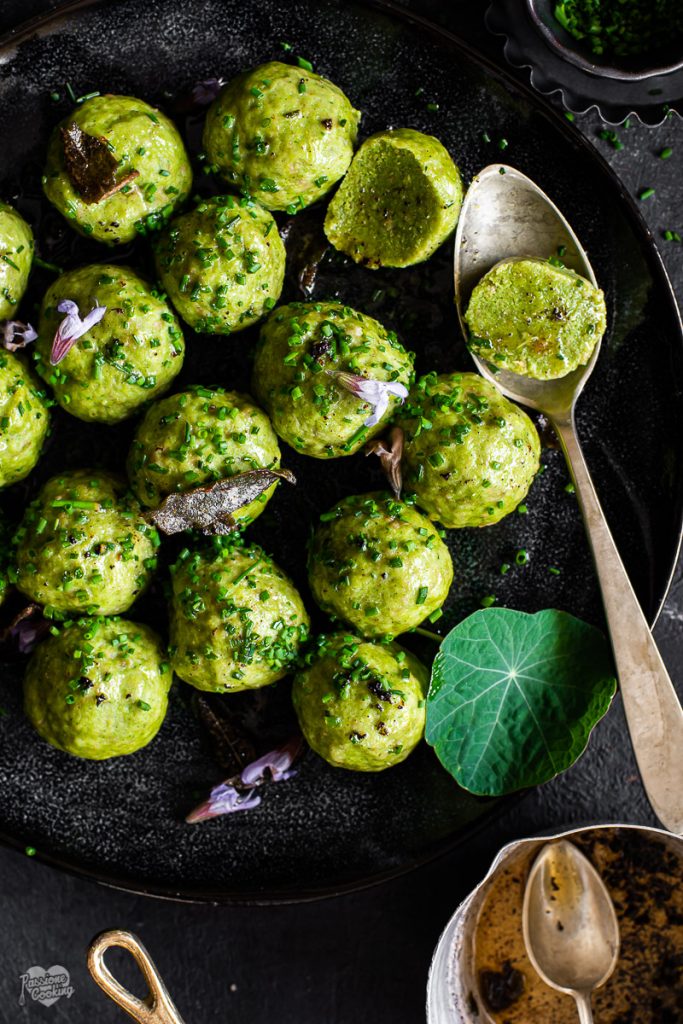
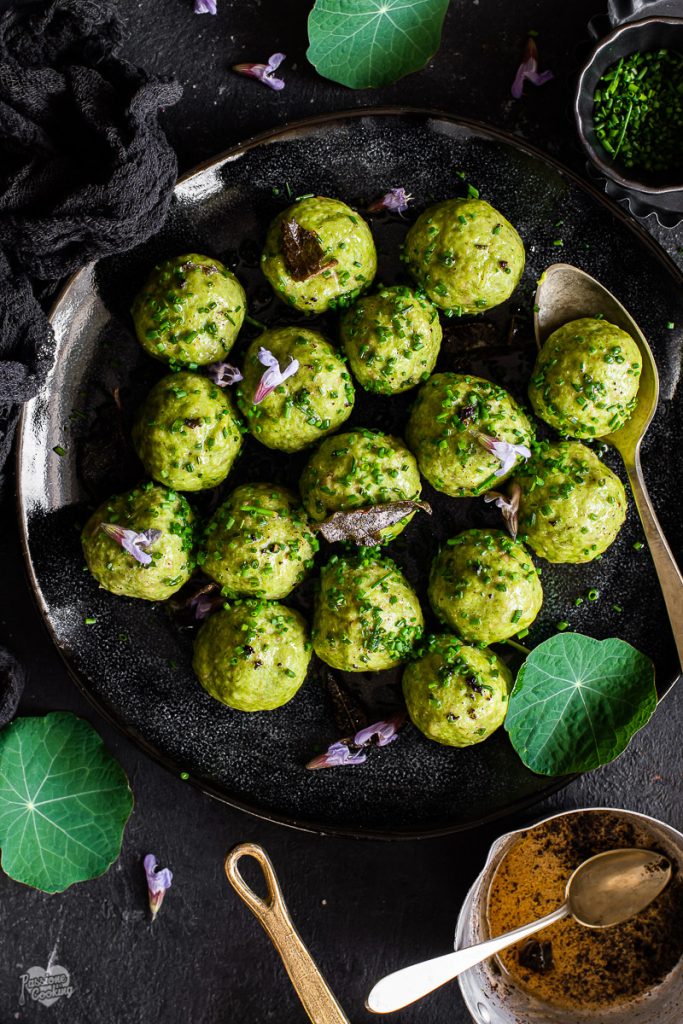
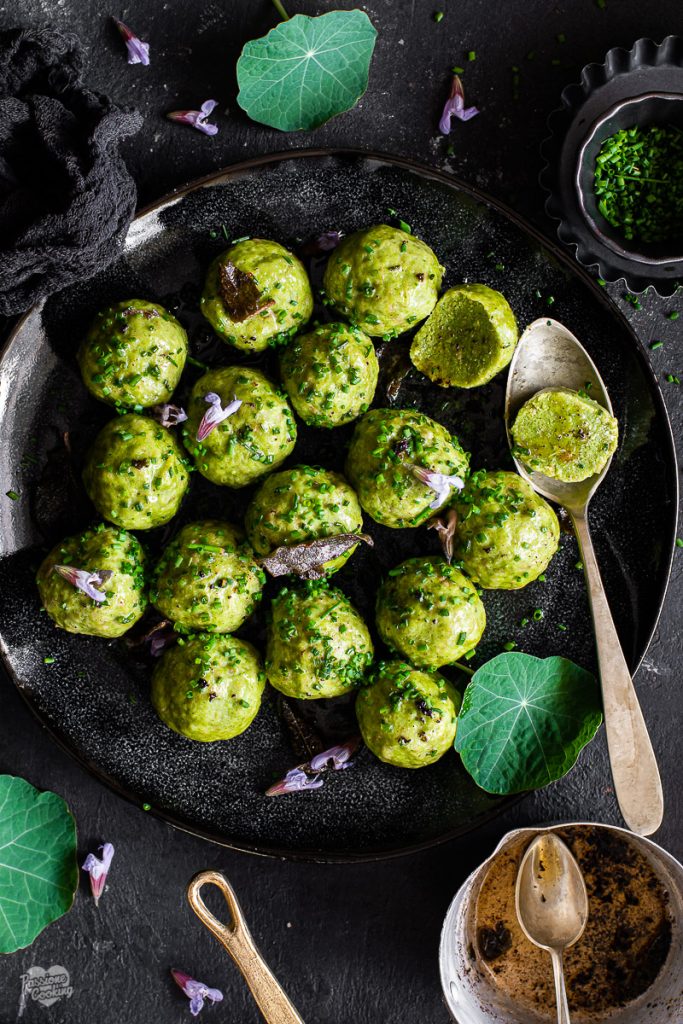
Nasturtium dumplings are soft balls made with stale bread and nasturtium leaves. At first glance, they might look like spinach dumplings due to their color, but the taste distinctly differentiates these two variants. In fact, the slightly pungent taste of nasturtium is very noticeable and the aroma is enhanced by the chives and melted butter used to dress the dumplings.
If you like, you can also dress them with grated Parmesan cheese, or accompany them with a gorgonzola sauce, for which you can find the recipe in the spinach dumplings recipe. Or serve them with a nice peperonata.
Finally, you can easily prepare them in abundance and freeze the dumplings while still raw on a tray, then transfer them to well-sealed food bags once they are frozen. To cook them, simply drop them in boiling water while still frozen and increase the cooking time by a few minutes.
If you like dumplings, also try these recipes of mine:

- Difficulty: Easy
- Rest time: 1 Hour
- Preparation time: 25 Minutes
- Portions: 16 dumplings
- Cooking methods: Stovetop
- Cuisine: Austrian
- Seasonality: Spring, Summer, and Autumn
Ingredients
- 9.5 oz stale bread
- 2.8 oz nasturtium (leaves and 3-4 flowers)
- 1.8 oz onion
- 5 tbsp vegetable oil
- 2/3 cup milk
- 2 eggs
- 1 tsp salt
- 1.8 oz butter
- 10 leaves sage
- 2 tbsp chives
Steps
To prepare the nasturtium dumplings, cut the stale bread into small cubes and place it in a bowl.
Wash the nasturtium leaves and flowers and drain them.
Finely chop the onion and sauté it in the oil for a few minutes.
In a tall-sided container, place the milk along with the eggs, salt, coarsely chopped nasturtium leaves, and nasturtium flowers. Blend with an immersion blender, then add the sautéed onion along with the oil and puree everything with the immersion blender.
Pour the milk, egg, and nasturtium mixture over the stale bread and mix well. Cover with plastic wrap and let it rest at room temperature for about an hour.
After the resting time, bring plenty of water to a boil in a large pot and add salt.
Meanwhile, take the dumpling mixture, and with wet hands, form about 16 dumplings approximately the size of a golf ball. Place the dumplings on a lightly floured cutting board.
Once you have prepared all the dumplings, drop them into the boiling salted water. Cover with a lid and bring the water back to a boil. Once boiling, lower the temperature and let your dumplings simmer for 12-15 minutes until they are softened.
In the meantime, put the butter in a small saucepan along with the previously washed and dried sage leaves and let it melt slowly. The sage leaves should fry in the butter until crispy.
When your dumplings are cooked, remove them from the water with a slotted spoon, let them drain for a moment, and place them on a tray.
Dress the nasturtium dumplings with the chopped chives and the melted sage butter and serve immediately.
Suggestions
You can easily prepare nasturtium dumplings in abundance and freeze them while still raw on a tray, then transfer them to well-sealed food bags once they are frozen. To cook them, simply drop them in boiling water while still frozen and increase the cooking time by a few minutes.
