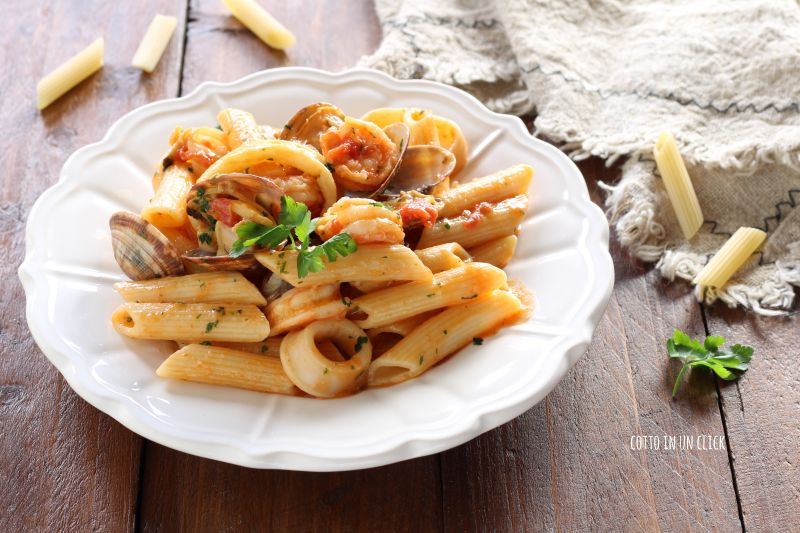
Seafood Pasta, a classic of traditional Italian seafood cuisine, which in most restaurants can never be missing. So why not try making it at home, but in a pressure cooker? A concentrate of Mediterranean aromas in a pasta recipe, perfect even for special occasions.
There are many versions of this recipe, but today I propose mine: with clams, shrimp, and squid rings. Spaghetti is usually used, a type of pasta that is not recommended in the pressure cooker because it is too long. Moreover, the result would be all stuck together and undercooked pasta.
A much faster and more practical version for those who have little time but do not want to give up a unique-tasting seafood first course. And now let’s go to the kitchen together because the pressure cooker seafood pasta will be ready in a click!
If you are interested in other first course recipes with the pressure cooker, also read:
- Difficulty: Very easy
- Cost: Medium
- Preparation time: 25 Minutes
- Portions: 4 People
- Cooking methods: Pressure cooker
- Cuisine: Italian
- Seasonality: All seasons
- Energy 370.60 (Kcal)
- Carbohydrates 26.95 (g) of which sugars 3.83 (g)
- Proteins 34.75 (g)
- Fat 14.31 (g) of which saturated 2.95 (g)of which unsaturated 2.65 (g)
- Fibers 1.89 (g)
- Sodium 1,696.21 (mg)
Indicative values for a portion of 203 g processed in an automated way starting from the nutritional information available on the CREA* and FoodData Central** databases. It is not food and / or nutritional advice.
* CREATES Food and Nutrition Research Center: https://www.crea.gov.it/alimenti-e-nutrizione https://www.alimentinutrizione.it ** U.S. Department of Agriculture, Agricultural Research Service. FoodData Central, 2019. https://fdc.nal.usda.gov
Ingredients
- 8.5 oz pasta
- 1 lb clams
- 9.2 oz shrimp tails
- 12.3 oz squid rings
- 2 cloves garlic
- 1.4 oz extra virgin olive oil
- 6 oz peeled tomatoes
- 1 cup water
- fresh chili pepper (to taste)
- coarse salt (to taste)
- chopped parsley (to taste)
Tools
- Pressure Cooker
- Bowl
- Cutting Board
- Knife
- Strainer
Steps
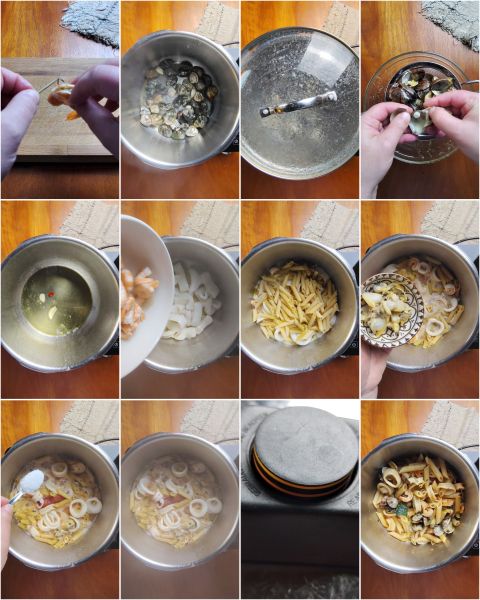
First, take care of cleaning the fish. I bought the squid rings already cleaned and cut into strips. Soak the clams in a bowl of cold water to purge them and rinse them a couple of times. When they have released the sand inside them, drain them and pat them dry with a cloth or paper towel.
Now proceed to clean the shellfish. Cut the back of the shrimp tails and remove the black internal vein. Then remove the shell, rinse them under water, and drain them. Now clean the garlic cloves and sauté one in the open pot with half the oil and some chili pepper. Add the clams and cook over high heat for a few minutes with the normal lid, until they have opened.
Pressure cooking will not be necessary for the clams because they take very few minutes. If you find it appropriate, you can cook them in a separate pan. I preferred to use only one.
When they are completely open, remove them from the pot and transfer them to another bowl and strain their broth with a strainer. Shell some clams and set them aside. In the pot, add the remaining oil, the garlic clove, and some chili pepper and sauté them for a few moments.
Then add the squid rings and shrimp tails and sauté over high heat for a couple of minutes. Then add the peeled tomatoes, pasta, shelled clams with their water, salt, and the water indicated in the ingredients.
The amount of water to use for this pasta is relative, because it depends a lot on how much the clams have released and how much the rest of the fish will release during cooking. Anyway, once the cooking is over, you can dry out the broth over high heat for a few moments. It wasn’t necessary for me, but obviously you’ll have to evaluate based on the final result.
Close the pot and bring it to full power. From the beginning of the whistle, cook for 4 minutes over low heat. If you have my pot, lower the heat as soon as it reaches the first ring indicated on the handle of the lid. Alternatively, cook the pasta on the smallest burner over very low heat. Obviously, cooking times are relative. Pasta in a pressure cooker should cook for half the time listed on the package.
After the cooking time, gradually release the steam and open the pot. Add the clams with shells and chopped parsley. Mix well so that they blend with the pasta. If necessary, reduce the broth over high heat for a few moments.
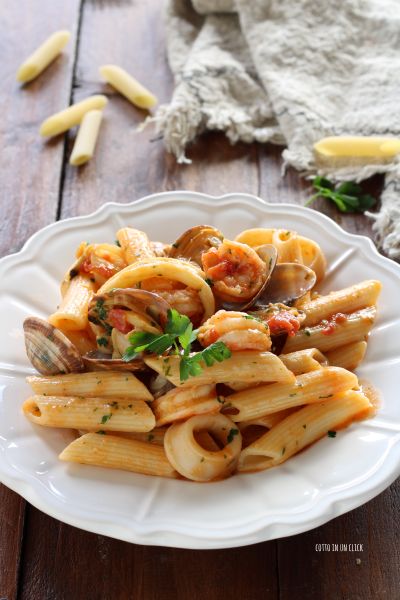
The pressure cooker seafood pasta is ready to be served at the table.
Storage and tips for seafood pasta
Seafood pasta can be stored in the refrigerator for 1 or 2 days in a container with a lid.
This content also contains one or more affiliate links, from which I may earn a small commission at no additional cost to you.
FAQ Questions and Answers for Seafood Pasta
Can mussels be used too?
Yes, of course, you can add mussels as well. After cleaning them, cook them together with the clams and strain the broth that formed after cooking. You will obviously have to reduce a bit the amount of water to add afterward.