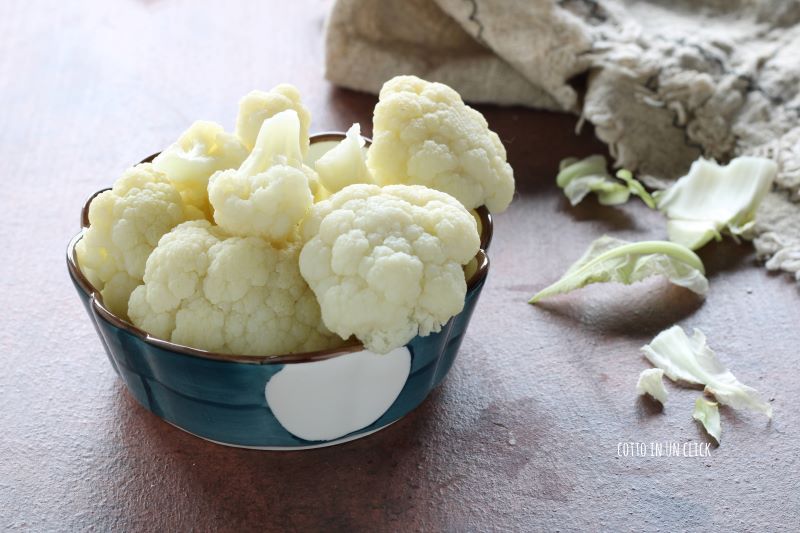
The steamed cauliflower in electric pressure cooker is a healthy and quick cooking method for this type of vegetable, which is often disliked by many, especially because of the smell it releases during cooking. With the instant pot, this does not happen, as this type of pot not only cooks faster but also does not release odors.
I confess that I love cooking with this pressure cooker and I am really trying everything: from first courses to main courses and side dishes. A great alternative to the traditional cooking method, much faster and more practical without altering the nutritional properties of the food.
Cooking cauliflower in the instant pot will allow you to quickly use this vegetable for preparing other recipes, such as cauliflower pesto to spread on croutons or to dress a pasta dish. You can also steam the cauliflower to make patties or fritters. Curious to find out how? Then read the recipe because the steamed cauliflower in electric pressure cooker will be ready in a click!
If you are interested in more cauliflower recipes, also read:
- Difficulty: Very Easy
- Cost: Very Cheap
- Preparation time: 10 Minutes
- Portions: 4 servings
- Cooking methods: Instant pot, Pressure cooker
- Cuisine: Italian
- Seasonality: Autumn, Winter and Spring
- Energy 41.62 (Kcal)
- Carbohydrates 8.27 (g) of which sugars 3.18 (g)
- Proteins 3.20 (g)
- Fat 0.47 (g) of which saturated 0.22 (g)of which unsaturated 0.11 (g)
- Fibers 3.33 (g)
- Sodium 52.44 (mg)
Indicative values for a portion of 147 g processed in an automated way starting from the nutritional information available on the CREA* and FoodData Central** databases. It is not food and / or nutritional advice.
* CREATES Food and Nutrition Research Center: https://www.crea.gov.it/alimenti-e-nutrizione https://www.alimentinutrizione.it ** U.S. Department of Agriculture, Agricultural Research Service. FoodData Central, 2019. https://fdc.nal.usda.gov
Ingredients
- 1 cauliflower
- 1 cup water (at room temperature)
Tools
- Pressure Cooker electric
- Steamer Basket
- Cutting Board
- Knife
Steps
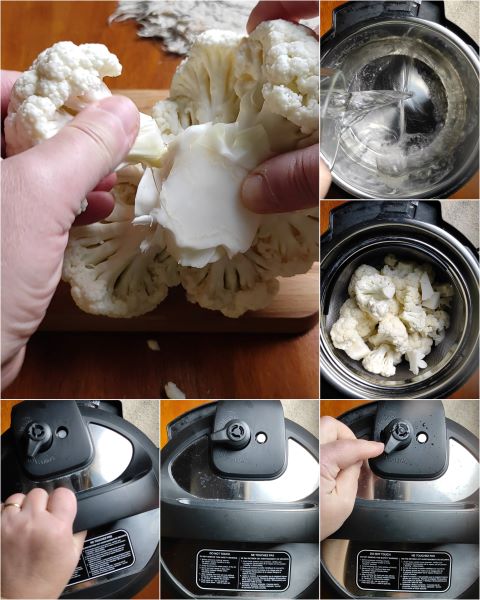
To prepare steamed cauliflower, you can use the instant pot or a traditional pressure cooker. Let’s see how to cook it both ways. First, clean the cauliflower by removing the outer leaves. Then divide it into florets and rinse them under cold water. Transfer the florets into the instant pot basket. Pour the water inside the pot and then add the basket with the vegetables inside.
Close the electric pressure cooker and turn the decompression lever to sealing. Set the cooking to steam and the time to 1 minute (2 minutes for frozen cauliflower florets). After the cooking time, activate the decompression and turn the lever to venting. As soon as the steam has completely escaped, open the pot.
For cooking cauliflower in a traditional pressure cooker, clean the cauliflower as described above. Then pour some water into the pot and place the basket. Add the cauliflower florets and close the pot. Bring it to maximum power and cook for 2 minutes from the start of the whistle. After the cooking time, gradually vent the steam and open the pot.
The steamed cauliflower is ready! Serve it as a light side dish with a bit of oil and salt, or sauté it in a pan with garlic, oil, and chili pepper to dress a pasta dish.
Variations and Tips for Steamed Cauliflower in Electric Pressure Cooker
The steamed cauliflower can be stored in the refrigerator in a container with a lid for one or two days.
FAQ Questions and Answers for Steamed Cauliflower in Electric Pressure Cooker
How can the cauliflower cooking water be used?
You can use it to make soups, broths, and stews.