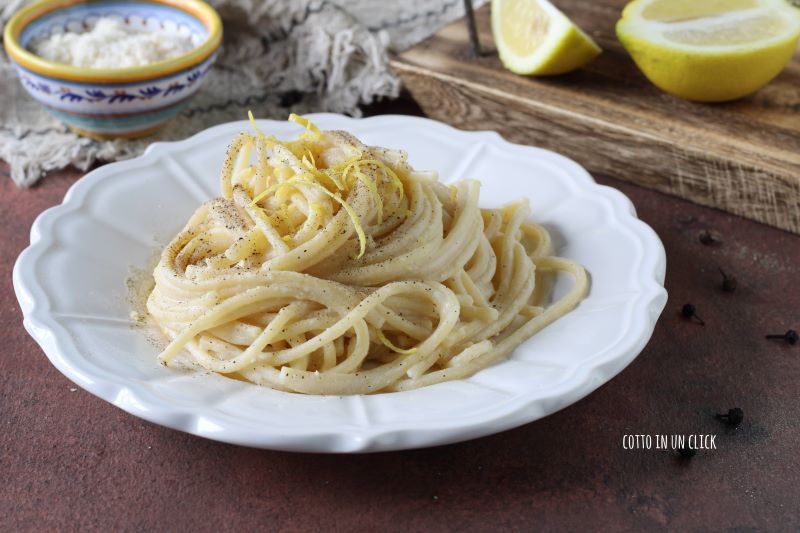
The spaghetti with pecorino, pepper, and lemon are a well-known variation of the classic cacio e pepe, easy and quick to make. A first course of Lazio origin, crafted with simple and readily available ingredients. Several months ago, I prepared spaghetti cacio e pepe with sausage, and they were such a hit that I decided to try this version too. A recipe equally simple to prepare and with a delightful lemon flavor.
The ingredients for this delicious dish, as the title suggests, are pecorino romano and pepper. To these ingredients, I added lemon juice and zest. For this recipe, I recommend using organic and untreated lemons. A first course with minimal seasoning, where the pecorino is slowly melted in the pan with lemon juice. Once the pasta is cooked al dente, it is tossed in this sauce for a creamy and citrusy result.
I love cacio e pepe pasta and even more this version, which is very simple and quick to prepare, even for a last-minute lunch or dinner. Now let’s head to the kitchen together, because the spaghetti with pecorino, pepper, and lemon will be ready in a click!
If you’re interested in other quick first course recipes, check out:
- Difficulty: Very Easy
- Cost: Very Economical
- Preparation time: 15 Minutes
- Portions: 4 people
- Cooking methods: Stovetop
- Cuisine: Italian
- Seasonality: All Seasons
- Energy 188.09 (Kcal)
- Carbohydrates 25.61 (g) of which sugars 1.04 (g)
- Proteins 8.04 (g)
- Fat 5.58 (g) of which saturated 2.83 (g)of which unsaturated 0.38 (g)
- Fibers 2.08 (g)
- Sodium 996.22 (mg)
Indicative values for a portion of 225 g processed in an automated way starting from the nutritional information available on the CREA* and FoodData Central** databases. It is not food and / or nutritional advice.
* CREATES Food and Nutrition Research Center: https://www.crea.gov.it/alimenti-e-nutrizione https://www.alimentinutrizione.it ** U.S. Department of Agriculture, Agricultural Research Service. FoodData Central, 2019. https://fdc.nal.usda.gov
Ingredients
- 11.3 oz spaghetti
- 2.1 oz pecorino romano
- 2 lemons (juice and zest)
- black pepper (to taste)
Tools
- Skillet
- High-sided pot
- Colander
- Citrus Juicer
Steps
First, cook the spaghetti al dente in plenty of salted water. Then, grate the lemon zest and juice them with a citrus juicer. Heat a non-stick skillet and pour in the juice. Add the pecorino, a pinch of pepper, and melt over low heat, stirring.
Then pour in a couple of tablespoons of pasta cooking water and stir again until a thick cream forms. Drain the spaghetti and transfer it to the skillet with the sauce along with half of the previously grated lemon zest. Toss the pasta for a few moments, stirring to combine with the sauce.
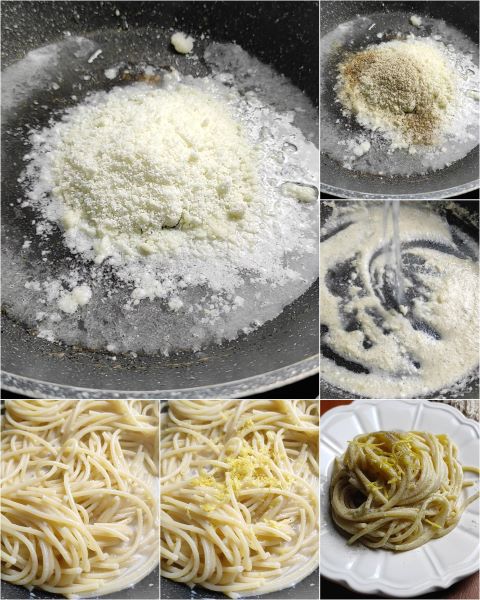
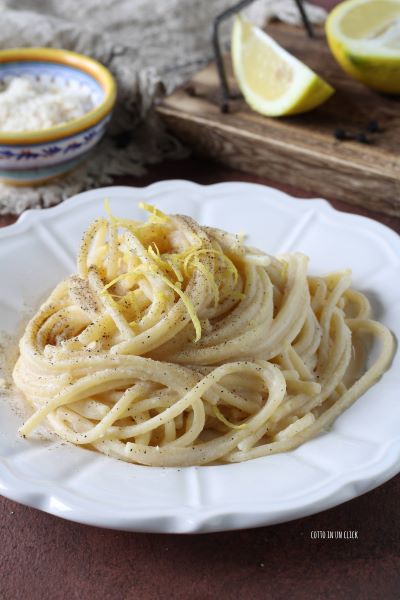
The spaghetti with pecorino, pepper, and lemon is ready! Serve them adding the remaining lemon zest and a sprinkle of pepper.
Variations and Tips for Spaghetti with Pecorino, Pepper, and Lemon
The pasta with pecorino, pepper, and lemon is best served immediately after cooking to retain its creaminess. Alternatively, you can store it in the refrigerator for one or two days and reheat it in a skillet, adding a bit of milk or very hot water.
FAQ Questions and Answers for Spaghetti with Pecorino, Pepper, and Lemon
Why is it called cacio e pepe when pecorino is used?
During transhumance, shepherds carried pieces of pecorino, dried pasta, and some peppercorns in their saddlebags to keep warm.
Why does pecorino form lumps?
Cheeses with a high water content melt better, whereas aged cheeses require high temperatures to break the bonds between proteins. This is why very aged pecorino forms lumps. Simply heating it with a little water will result in a smooth and velvety outcome.
How to reheat cacio e pepe?
Simply reheat it for a few moments in a skillet, adding a bit of milk or water, preferably pasta cooking water.