The knife-cut beef tartare is a typical Italian dish. It is an easy and quick recipe. Below we will learn how to prepare it, which meat to use, and how to season it.
If you like tartares, don’t forget to read the recipe
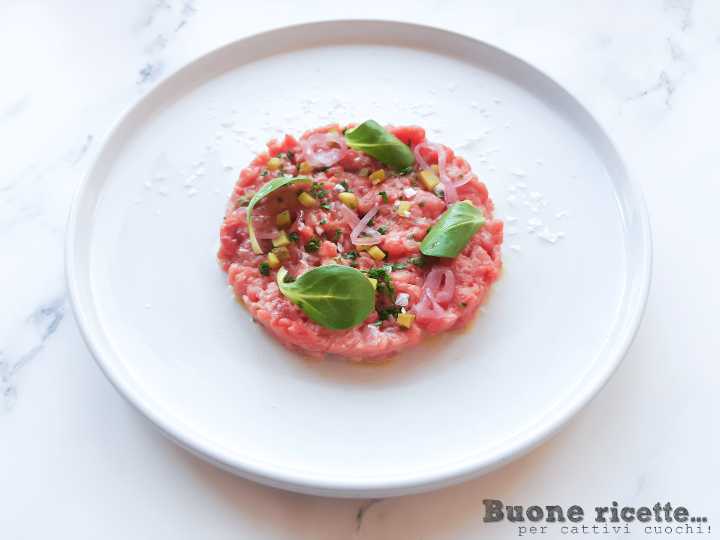
- Difficulty: Very easy
- Cost: Economical
- Rest time: 2 Minutes
- Preparation time: 20 Minutes
- Portions: 2
- Cooking methods: No cooking
- Cuisine: Italian
- Seasonality: All seasons
- Energy 217.65 (Kcal)
- Carbohydrates 6.97 (g) of which sugars 0.48 (g)
- Proteins 28.74 (g)
- Fat 9.13 (g) of which saturated 2.10 (g)of which unsaturated 0.17 (g)
- Fibers 0.61 (g)
- Sodium 1,902.20 (mg)
Indicative values for a portion of 150 g processed in an automated way starting from the nutritional information available on the CREA* and FoodData Central** databases. It is not food and / or nutritional advice.
* CREATES Food and Nutrition Research Center: https://www.crea.gov.it/alimenti-e-nutrizione https://www.alimentinutrizione.it ** U.S. Department of Agriculture, Agricultural Research Service. FoodData Central, 2019. https://fdc.nal.usda.gov
Ingredients for 2 people
- 10 oz beef
- 1 tbsp extra virgin olive oil
- 1 tbsp pickled gherkins (optional)
- 1 tbsp red onions
- 1 tbsp lemon
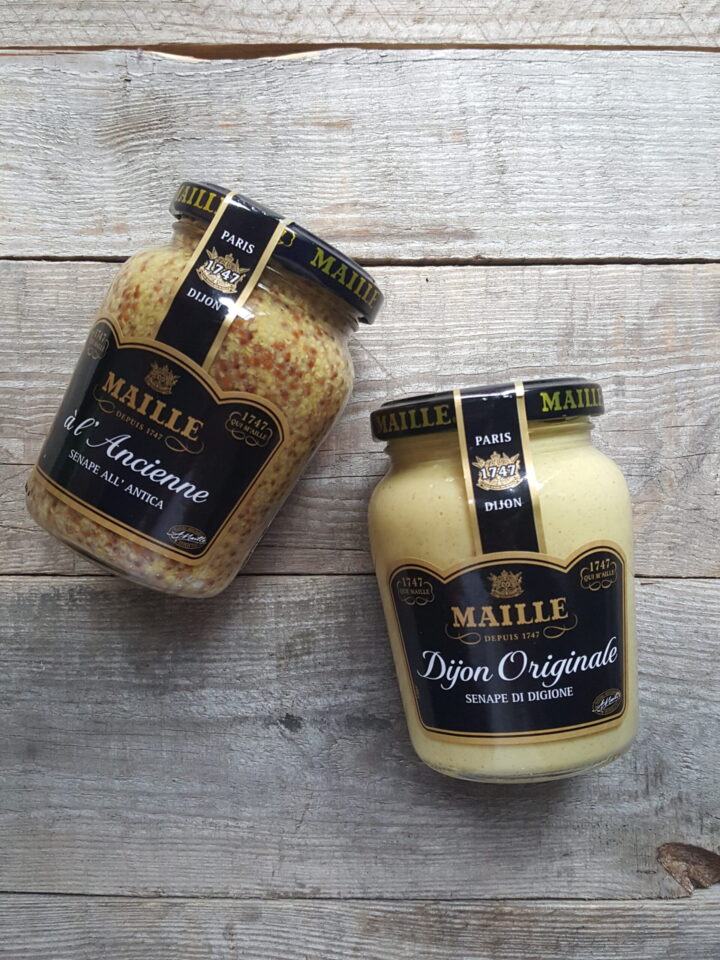
- 1 tbsp mustard (optional)
- 1 tbsp parsley
Tools
- 1 Knife
- 1 Cutting board
- 1 Bowl
- 1 Spoon
Method
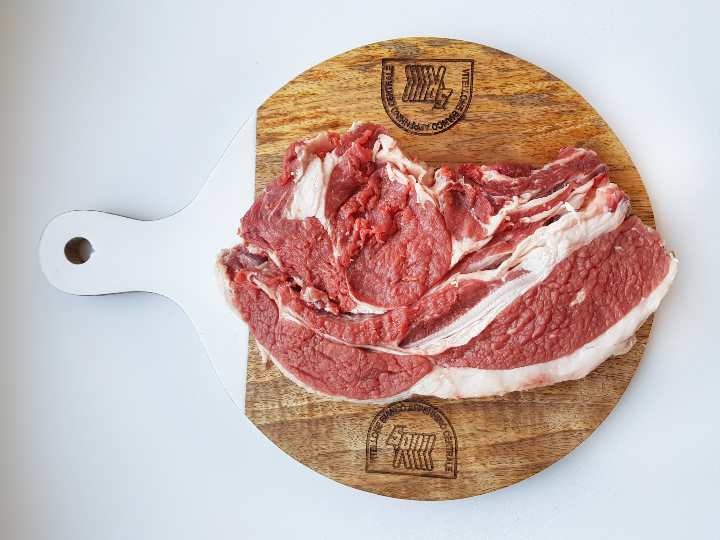
The secret to a good beef tartare is the meat. You don’t need to use premium cuts like tenderloin; you can get a great dish with less premium but flavorful cuts.
For my beef tartare, I use sirloin, chuck, or loin, which are lean and flavorful cuts.
Take the cold meat from the fridge and cut it into cubes. Once you have thin cubes (2-3 mm per side), it’s time to proceed with the knife-cutting.
The main difference between tartare and knife-cut tartare lies in the size of the meat, which in beef tartare is in cubes (more or less large depending on personal taste).
For knife-cut beef tartare, the meat must be chopped with a knife until it becomes extremely fine.
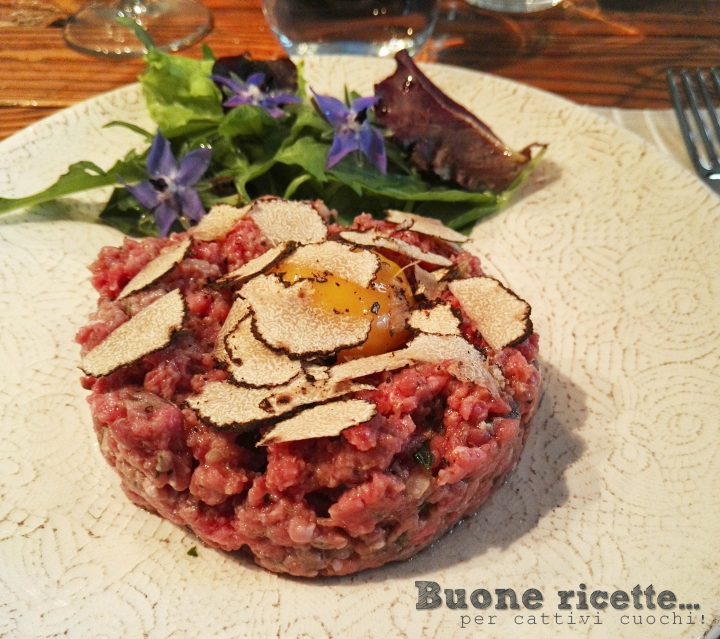
Once the meat is chopped with a knife, it tends to oxidize, which is why it’s important to mix the meat with extra virgin olive oil.
You can season the meat to taste with mustard, lemon, and lemon juice.
If you don’t serve the beef tartare immediately, I recommend adding aggressive ingredients (lemon and mustard) only at the end.
For better preservation, use cling film in contact with the meat.
Serve the beef according to your personal taste by adding pickles or onions before serving. If you like, you can also add a fresh egg yolk.
Your knife-cut beef tartare is ready!
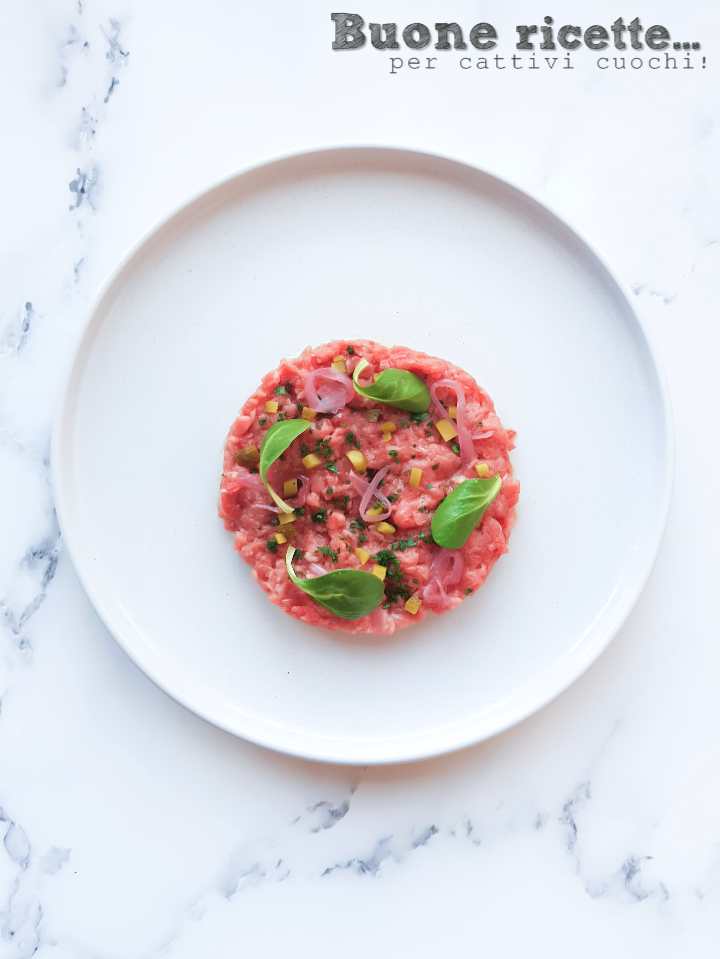
Plating Tips:
The classic presentation is done with a ring mold. You can use a large one for a low presentation or a narrower one to develop the dish in height.
How to Pair Beef Tartare:
I recommend pairing the beef with a full-bodied red wine. My favorites to accompany this recipe are Chianti, Brunello di Montalcino, or Barolo.