Asparagus pesto is one of the best ways to enjoy this vegetable. Thanks to this creamy recipe, you will get a tasty and velvety dish with a bright green color.
If you are looking for other pesto recipes, don’t forget to check out the recipe
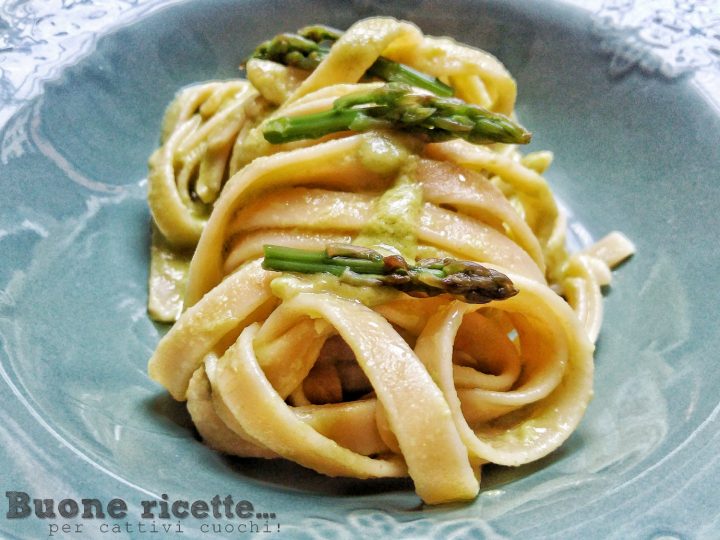
- Difficulty: Easy
- Cost: Very Cheap
- Rest time: 2 Minutes
- Preparation time: 10 Minutes
- Portions: 2
- Cooking methods: Stovetop
- Cuisine: Italian
- Energy 320.15 (Kcal)
- Carbohydrates 27.45 (g) of which sugars 1.86 (g)
- Proteins 11.12 (g)
- Fat 19.28 (g) of which saturated 5.11 (g)of which unsaturated 1.92 (g)
- Fibers 3.02 (g)
- Sodium 664.68 (mg)
Indicative values for a portion of 150 g processed in an automated way starting from the nutritional information available on the CREA* and FoodData Central** databases. It is not food and / or nutritional advice.
* CREATES Food and Nutrition Research Center: https://www.crea.gov.it/alimenti-e-nutrizione https://www.alimentinutrizione.it ** U.S. Department of Agriculture, Agricultural Research Service. FoodData Central, 2019. https://fdc.nal.usda.gov
Ingredients for 2 servings
- 5.6 oz pasta
- 10 asparagus
- 1 tbsp extra virgin olive oil
- 2 tbsps Parmigiano Reggiano PDO
- to taste salt
Tools
- 1 Pot
- 1 Pan
- 1 Colander
- 1 Knife
- 1 Cutting board
- 1 Blender
Procedure
The secret to a bright asparagus pesto lies in cooking the asparagus, which should be cooked for a very short time in the pasta cooking water.
First, take a nice bunch of fresh asparagus, use a peeler to remove the tougher outer part of the stem, and separate the asparagus tips from the stems.
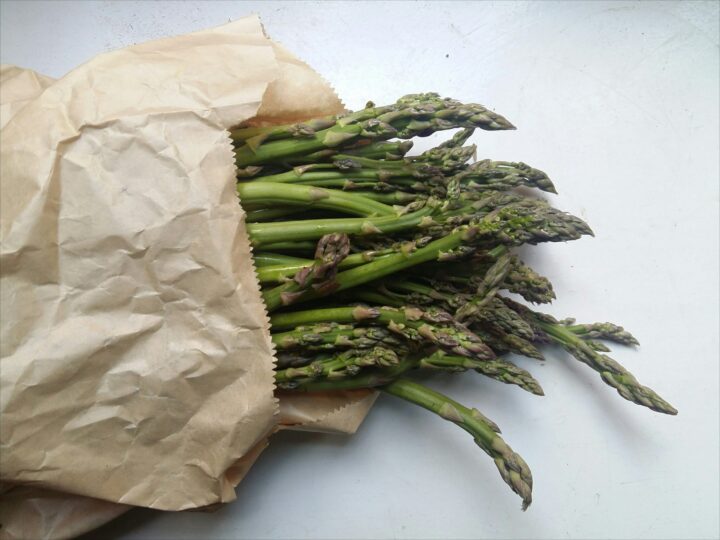
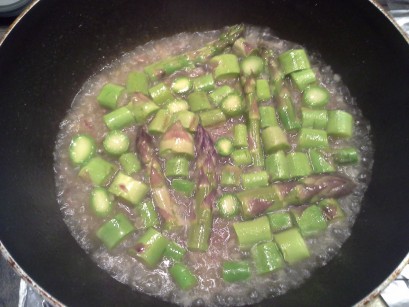
Slice the asparagus stems into rounds, cook the rounds for 4 minutes and the tips for only a couple of minutes, drain and immerse in ice water to stop the cooking and set the color.
Place the asparagus in a food processor, add a tablespoon of pecorino, some extra virgin olive oil, and salt, starting with very little liquid component, add more if necessary.
Once the asparagus pesto is made, taste it and adjust the salt to your personal taste. For a creamy pesto, I recommend using an immersion blender: the result will be more velvety, using a food processor may leave some asparagus fibers.
The only downside of the blender is that it works best with a larger quantity of ingredients… you will end up with more asparagus pesto.
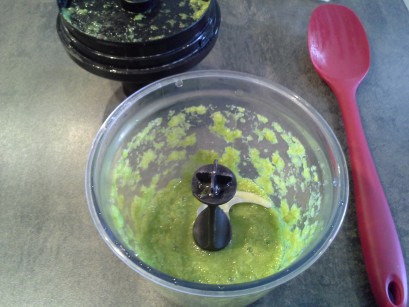
Finally, the pesto is ready, you can use it to prepare a creamy pasta or risotto. If you don’t use the pesto immediately, you can keep it in the fridge with a light layer of oil on top to prevent oxidation and maintain its bright color.
Your asparagus pesto is ready!
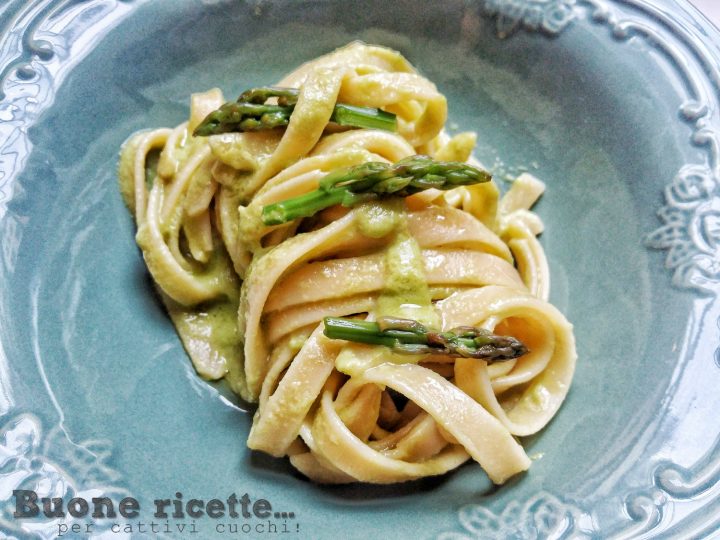
Plating Tips:
Create nests, you can decide whether to arrange them in a dome shape upwards or to lay them gently on the plate, almost creating a cascade of pasta. Complete the dish by decorating with asparagus tips, which will add crunchiness to this recipe
Wine Pairing:
I suggest pairing asparagus pesto with a dry white wine that has a good structure and can balance the flavor of the asparagus. For example, you can serve this dish with a Gavi.