Jewish-style artichokes are a classic of Roman cuisine, a dish I only tasted as an adult, and it was love at first sight. It couldn’t be otherwise since I love both artichokes and fried recipes. Today I’ll explain some tricks to prepare Jewish-style artichokes like a true Roman… because it’s not as simple a recipe as it might seem at first glance.
If you’re interested in other Roman recipes with artichokes, don’t forget to read the recipe
- Difficulty: Very easy
- Cost: Medium
- Rest time: 2 Minutes
- Preparation time: 10 Minutes
- Portions: 2
- Cooking methods: Frying
- Cuisine: Italian
- Seasonality: Fall, Winter, and Spring
- Energy 75.72 (Kcal)
- Carbohydrates 15.89 (g) of which sugars 1.61 (g)
- Proteins 4.94 (g)
- Fat 0.73 (g) of which saturated 0.11 (g)of which unsaturated 0.53 (g)
- Fibers 8.20 (g)
- Sodium 141.12 (mg)
Indicative values for a portion of 150 g processed in an automated way starting from the nutritional information available on the CREA* and FoodData Central** databases. It is not food and / or nutritional advice.
* CREATES Food and Nutrition Research Center: https://www.crea.gov.it/alimenti-e-nutrizione https://www.alimentinutrizione.it ** U.S. Department of Agriculture, Agricultural Research Service. FoodData Central, 2019. https://fdc.nal.usda.gov
Ingredients for 2 people
- 2 mammole artichokes
- 1 lemon
- 2 l water
- 2 l sunflower seed oil
Tools
- 1 Pot (capacity of 3 liters)
- 1 Bowl (capacity of 3 liters)
- 1 Knife (or paring knife)
- 1 Cutting board
Procedure
To make excellent Jewish-style artichokes, you must start with cleaning the artichokes. Follow the instructions found here to have perfectly cleaned artichokes ready to be fried not once, but twice!
In Rome, this operation is called ‘capatura’; I recommend doing it just before frying the artichokes because once cut, they tend to oxidize and spoil quickly if not immersed in water and lemon.
After cleaning the artichokes, take them from the bowl with water and lemon and dry them well. It’s important to dry them well because remaining water can cause splattering and splashing when frying.
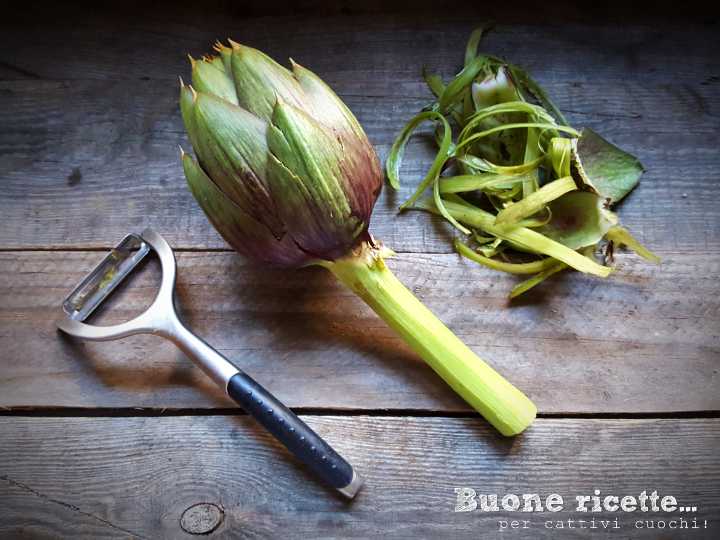
To dry the artichokes well, I suggest tapping them upside down so the water can drain out and the inside is dry.
Don’t use too much force or you risk breaking them; just enough so they open slightly like a daisy.
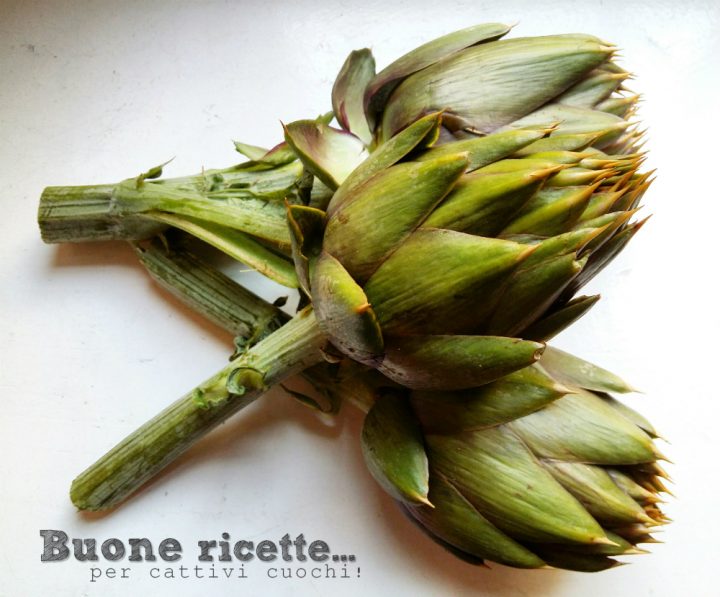
Once dry, it’s time to fry them. Put the oil on the heat and bring it to temperature.
When the oil is hot, immerse the artichoke head down, using a skimmer or kitchen tongs.
It’s important that the artichoke is completely immersed in the oil and fries well both externally and internally.
When the artichoke is well cooked and golden, it’s time to remove it. How can you tell if an artichoke is cooked? Insert a fork at the point where the stem ends and the artichoke begins (the meatiest part); if the fork slides in easily, the artichoke is perfectly cooked.
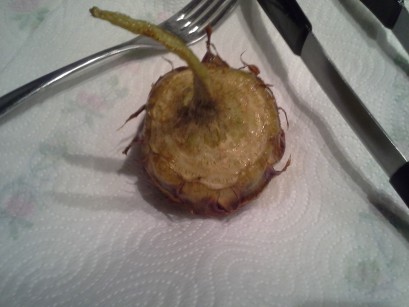
Place the artichoke to drain on a sheet of kitchen paper and let it cool. When you can handle it without burning yourself, start to spread the inner leaves to give it the classic flower shape.
Tip: salt the artichoke and sprinkle a few drops of water (or white wine, depending on taste). This procedure increases the thermal shock during the second cooking and enhances the flavor.
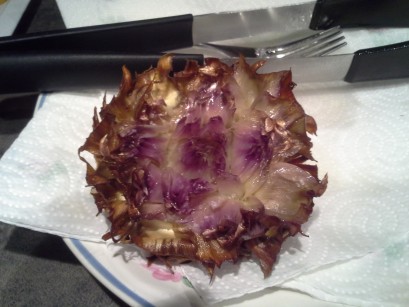
Before frying the artichoke, check that there’s no choke inside. If the artichoke has any, remove it with a paring knife so the heart is tender.
Fry in hot oil for another 3-4 minutes, until you achieve the characteristic crispy leaves open like a flower.
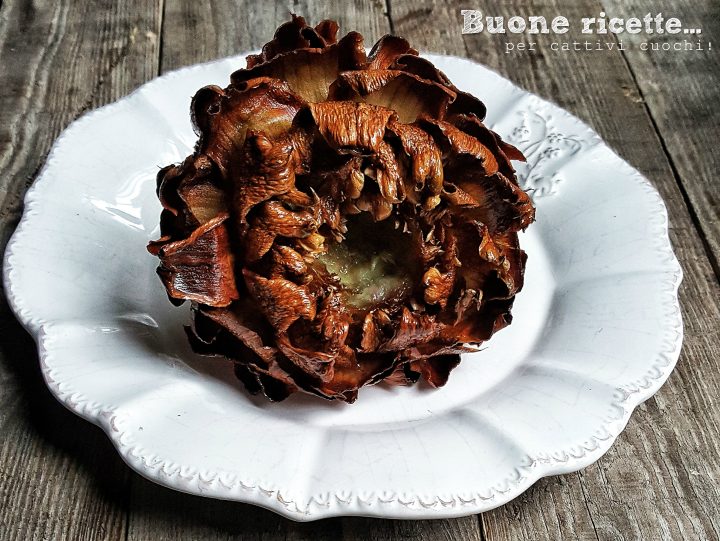
Your Jewish-style artichokes are ready!
Plating Tips:
In Roman taverns, Jewish-style artichokes are served face down, flattened like a flower. You only need a pinch of salt to enjoy this delicious dish.
Wine Pairing with Jewish-Style Artichokes:
To savor your Jewish-style artichokes, I recommend a white wine with character. For example, you can serve with a Lazio Est Est Est or a more intense and bold Fiano di Avellino.