The perfect cooking of the fillet is one of the key steps to prepare the fillet with pink pepper. Here are some practical tips and tricks to get the most out of this recipe. You can use veal, beef, or pork fillet based on your personal taste.
Cooking times change slightly; for pork, we need to have complete cooking (pork is not consumed raw), while for veal and beef, you can also serve the meat rare or medium cooked.
If you like meat main courses, don’t forget to read:
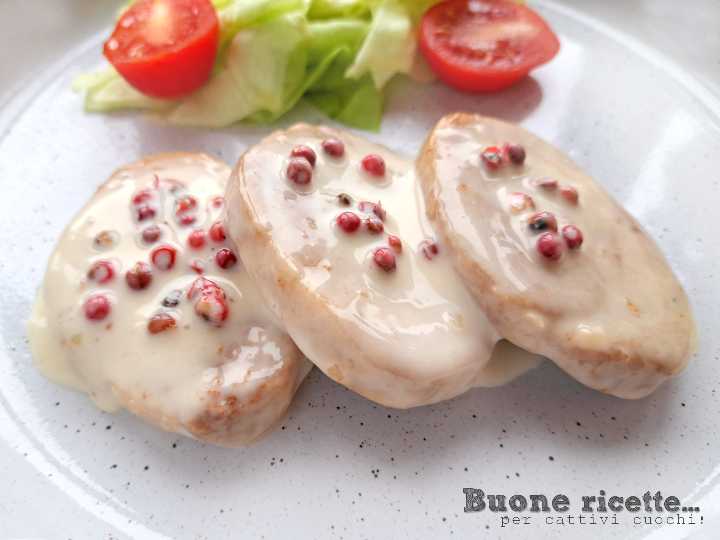
- Difficulty: Easy
- Cost: Very Cheap
- Rest time: 5 Minutes
- Preparation time: 5 Minutes
- Portions: 2
- Cooking methods: Stovetop
- Cuisine: Italian
- Seasonality: All Seasons
- Energy 427.95 (Kcal)
- Carbohydrates 3.60 (g) of which sugars 1.30 (g)
- Proteins 33.09 (g)
- Fat 31.03 (g) of which saturated 4.00 (g)of which unsaturated 3.02 (g)
- Fibers 1.20 (g)
- Sodium 639.87 (mg)
Indicative values for a portion of 150 g processed in an automated way starting from the nutritional information available on the CREA* and FoodData Central** databases. It is not food and / or nutritional advice.
* CREATES Food and Nutrition Research Center: https://www.crea.gov.it/alimenti-e-nutrizione https://www.alimentinutrizione.it ** U.S. Department of Agriculture, Agricultural Research Service. FoodData Central, 2019. https://fdc.nal.usda.gov
Ingredients for 2 people:
- 10.5 oz beef fillets (or pork fillets)
- 1/2 cup fresh liquid cream (or cooking cream)
- 1 tsp pink peppercorns (better natural, but you can also use brined)
- to taste extra virgin olive oil
- to taste salt
Tools
- 1 Pan – 8 inches
- 1 Knife
- 1 Cutting board
Procedure
To achieve the perfect cooking of the fillet, I recommend always starting with meat at room temperature, never cold from the fridge. The times vary depending on the thickness of the meat. For a fillet 1-1.5 inches thick, it takes at least 20-30 minutes.
I therefore recommend starting early and letting the meat rest out of the fridge even 1 hour before cooking.
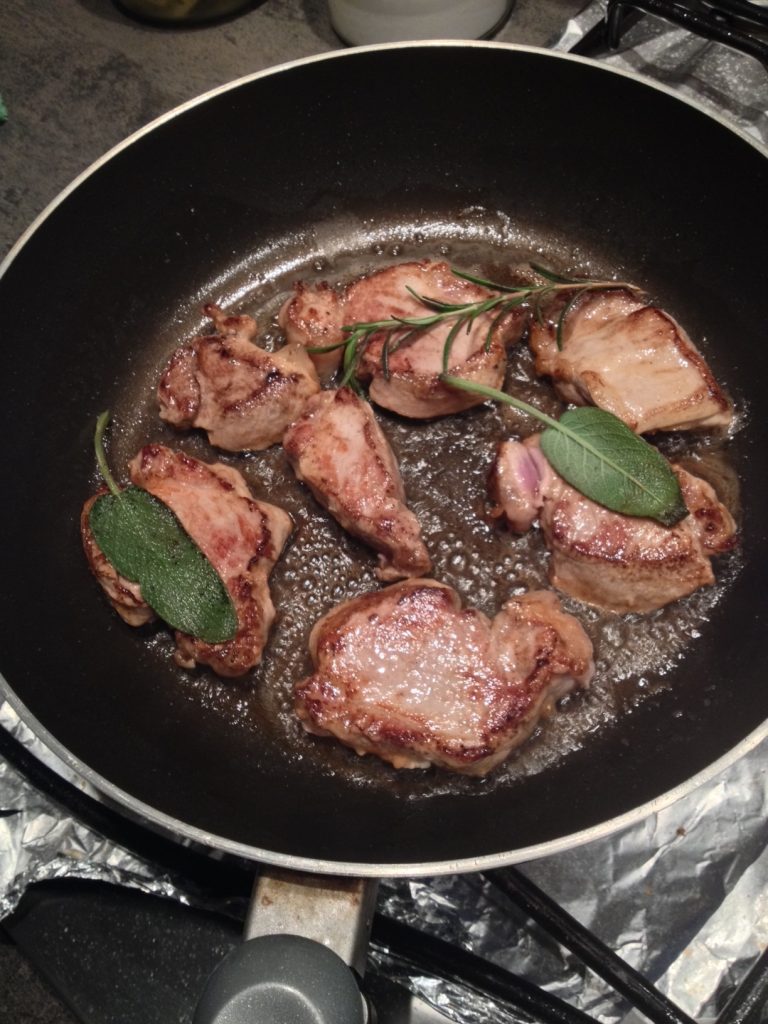
For good meat cooking, seal it on all sides using a very hot pan, technically called the Maillard reaction. The hot pan melts the sugars of the meat, releasing flavor and sealing the meat.
Cooking and times vary depending on the type of fillet used. Veal and beef fillets can be served rare or medium cooked, while pork fillet must be cooked more to avoid issues. The minimum cooking should be slightly pink upwards.

How do you know if the meat is cooked to the desired level? You check the internal temperature with a kitchen thermometer.
For rare cooking (veal or beef), it is recommended between 125-137°F (52-58°C), for medium cooking 140-147°F (60-64°C), and for well-done meat from 149°F (65°C) upwards.
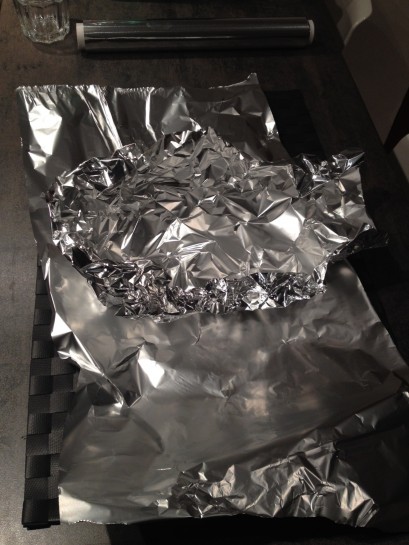
After cooking the meat and wrapping it in foil, the secret to obtaining a flavorful pink pepper sauce is to use the juices released in the foil from the fillet.
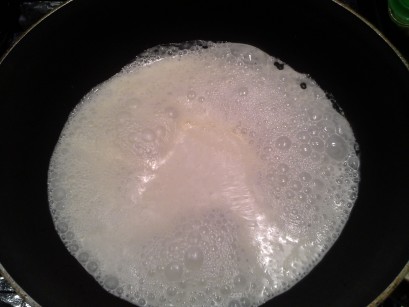
Add the pepper and cream to the juices released in the pan from the beef fillet. Reduce over medium heat until achieving a creamy consistency.
Be careful not to overcook the cream or it will thicken and form sticky lumps. When the sauce is still a bit liquid, insert the fillet so that it blends and absorbs the flavor of the pink pepper sauce.
Now that the dish is ready, all you have to do is serve the hot fillet with a generous amount of sauce to complete it.
Your fillet with pink pepper is ready!
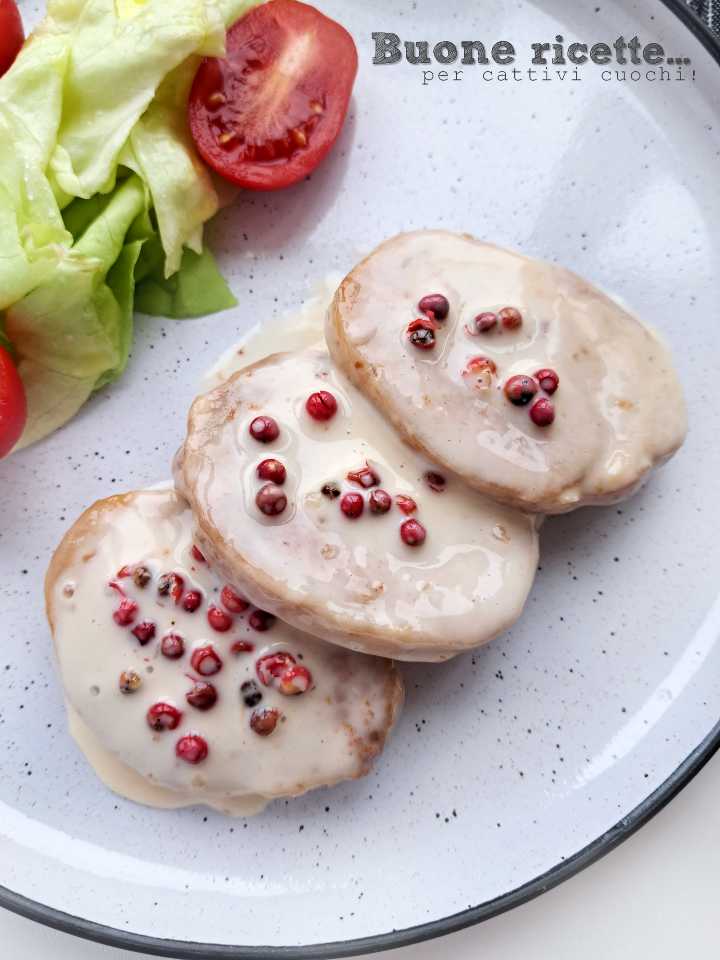
Plating Tips:
The fillet with pink pepper is very scenic and lends itself well to individual presentation on an elegant plate. To best enhance it, place 2 slices of fillet and with the help of a spoon, gently place the sauce over the meat. It should not drown the fillet with pink pepper but embrace it.
Wine pairing for fillet with pink pepper:
I recommend a full-bodied red wine with a dry note capable of balancing the fatty component of the cream, for example, you can serve with a Chianti or a Barolo.