The homemade orecchiette are a dish that requires attention and manual skill. With the advice you’ll find here, you’ll achieve excellent orecchiette.
If you like homemade fresh pasta, don’t forget to read the recipe
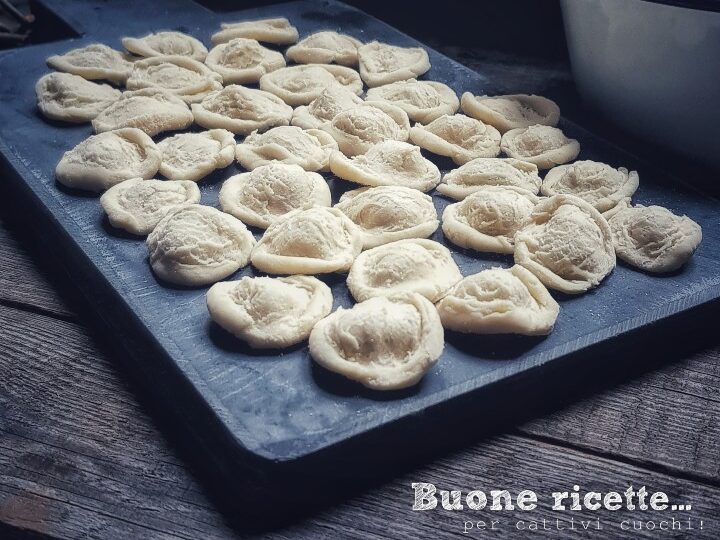
- Difficulty: Very Easy
- Cost: Very Cheap
- Rest time: 1 Hour
- Preparation time: 10 Minutes
- Portions: 2
- Cooking methods: Stovetop
- Cuisine: Italian
- Seasonality: All Seasons
- Energy 339.00 (Kcal)
- Carbohydrates 71.13 (g) of which sugars 0.00 (g)
- Proteins 13.68 (g)
- Fat 2.47 (g) of which saturated 0.45 (g)of which unsaturated 1.32 (g)
- Fibers 0.00 (g)
- Sodium 4.00 (mg)
Indicative values for a portion of 150 g processed in an automated way starting from the nutritional information available on the CREA* and FoodData Central** databases. It is not food and / or nutritional advice.
* CREATES Food and Nutrition Research Center: https://www.crea.gov.it/alimenti-e-nutrizione https://www.alimentinutrizione.it ** U.S. Department of Agriculture, Agricultural Research Service. FoodData Central, 2019. https://fdc.nal.usda.gov
Ingredients for 2 people:
- 1 1/2 cups remilled durum wheat semolina flour (extra for kneading)
- 3/8 cup water
Tools:
- 1 Cutting Board
- 1 Knife
- 1 Bowl
Preparation
Homemade orecchiette are a traditional dish from Apulia, made with a simple mixture of remilled durum wheat semolina and water.
Put the flour in the bowl and half of the water, start mixing the flour gently with your fingertips and add the remaining water, a little at a time until you get a smooth and elastic dough.
If the dough is too soft it will be difficult to roll out, if the dough is too hard it will tend to crumble.
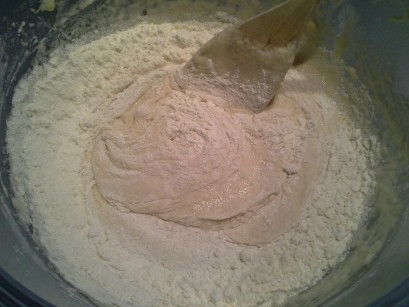
A dry dough is better than one that is too soft, if the dough is hard just moisten your hands with a few drops of water and knead the piece of dough to reach the necessary consistency.
To have excellent orecchiette, the first step is to let the fresh pasta rest in the fridge. After the resting time (at least 30 minutes), start taking small portions of dough and leave the rest of the dough to rest in the refrigerator wrapped in food film.
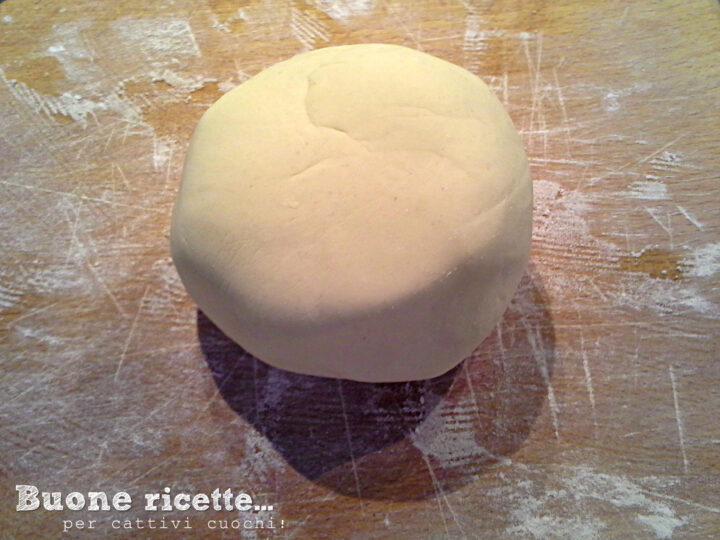
Arrange the fresh pasta to form a round strip approximately 3/4 inch in diameter (same procedure as homemade fresh gnocchi).
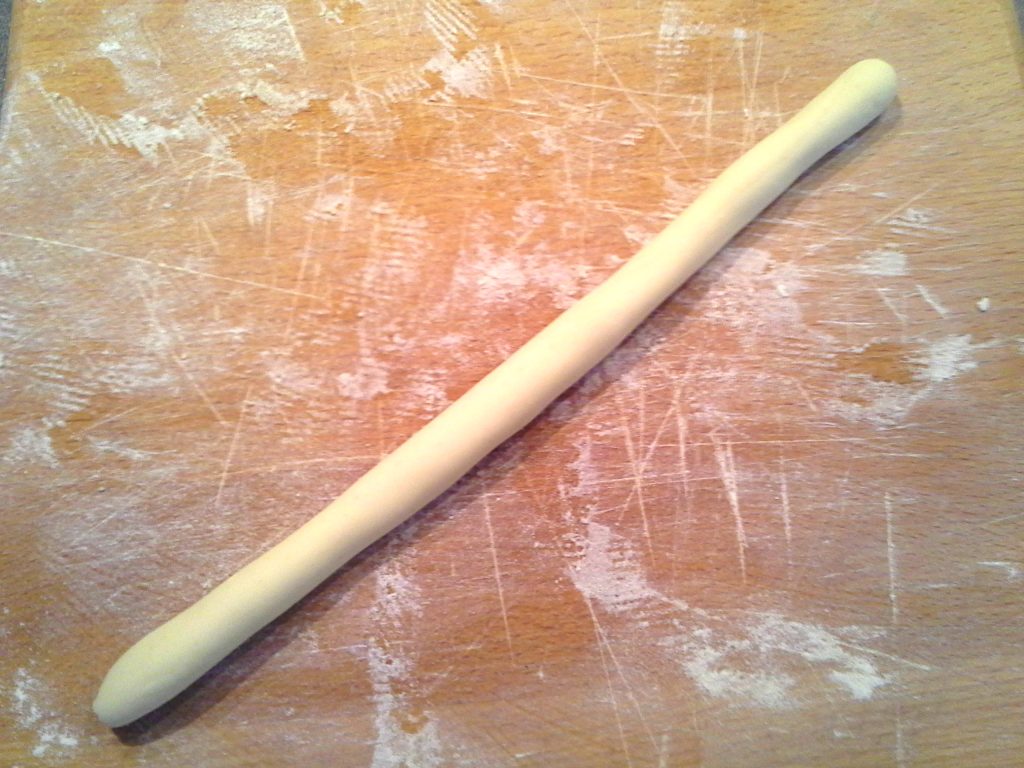
With the help of a round-tipped knife, create 3/8 inch x 3/8 inch squares. After creating them, use the knife tip to slide them on the wooden surface to create the typical orecchietta shape.
To have uniform orecchiette, start from the initial edge and press consistently to stretch the dough. If you start from the center, you will get thick edges and a thinner center.
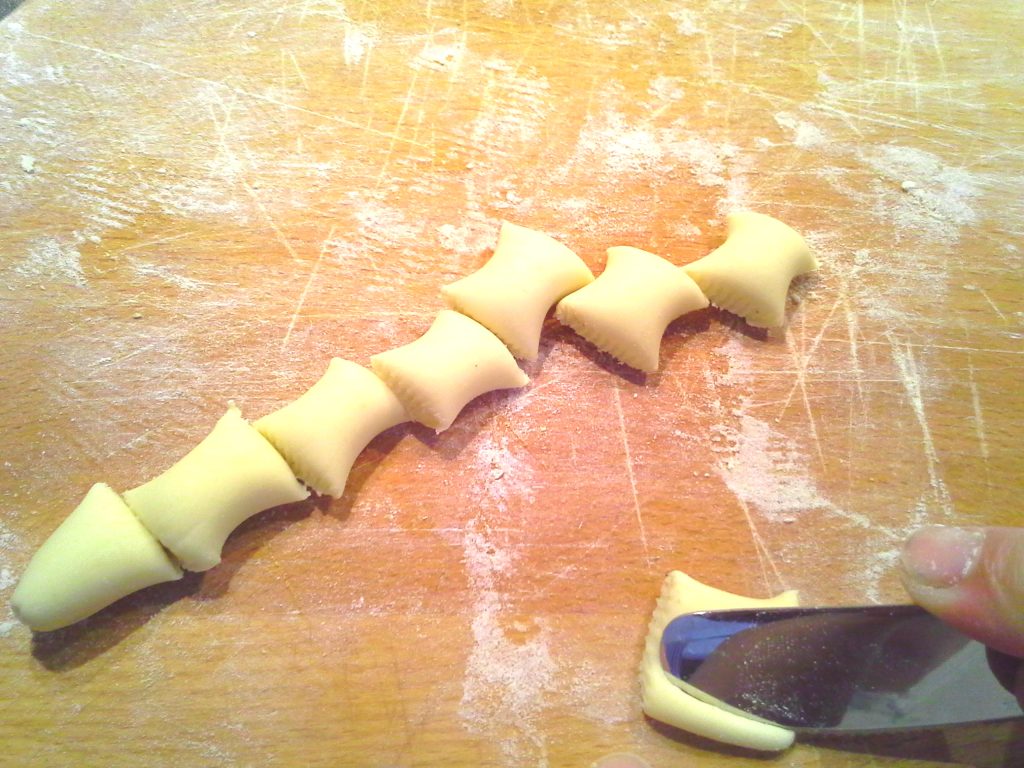
The typical porous shape is obtained by passing the pasta on the wood, while the inner part is the side where you passed the knife.
Repeat the operation and create many cylinders until you have exhausted the fresh pasta.
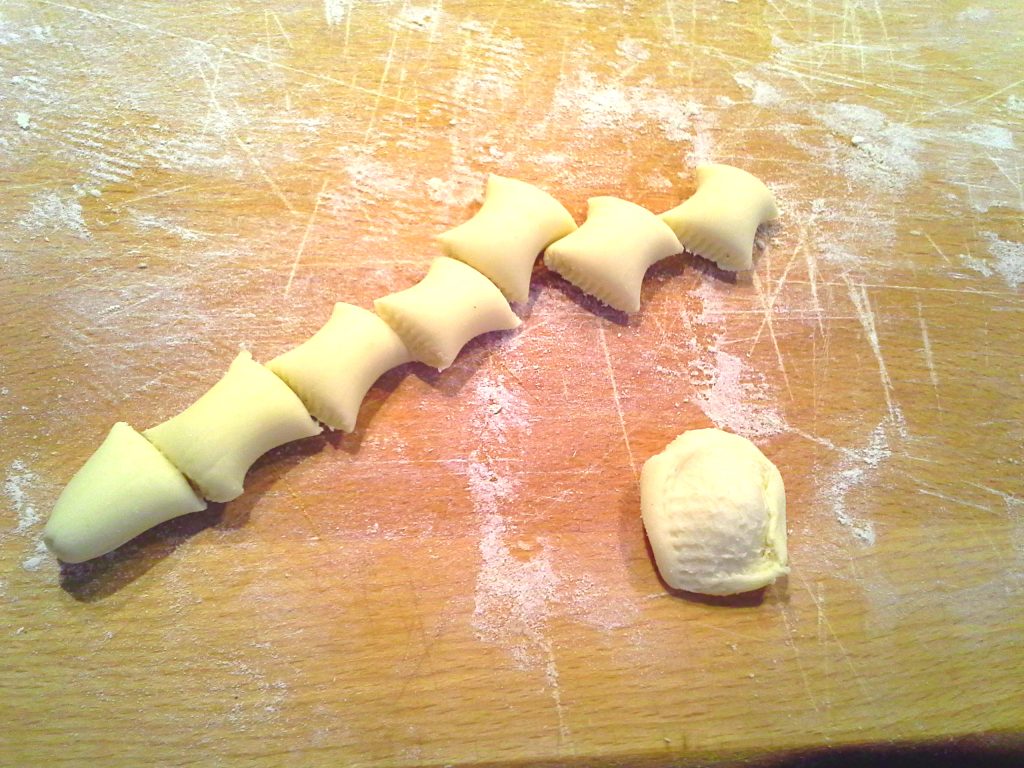
At this point, place the orecchiette on a work surface to dry. Not having eggs among the ingredients, you can also let them dry and harden.
To dry the pasta, a constant and uniform temperature is needed. In winter, for example, when the heating is on, the pasta can be dried and stored a few days before cooking.
Just remember that the more the pasta dries and hardens, the more time it will require in the cooking phase.
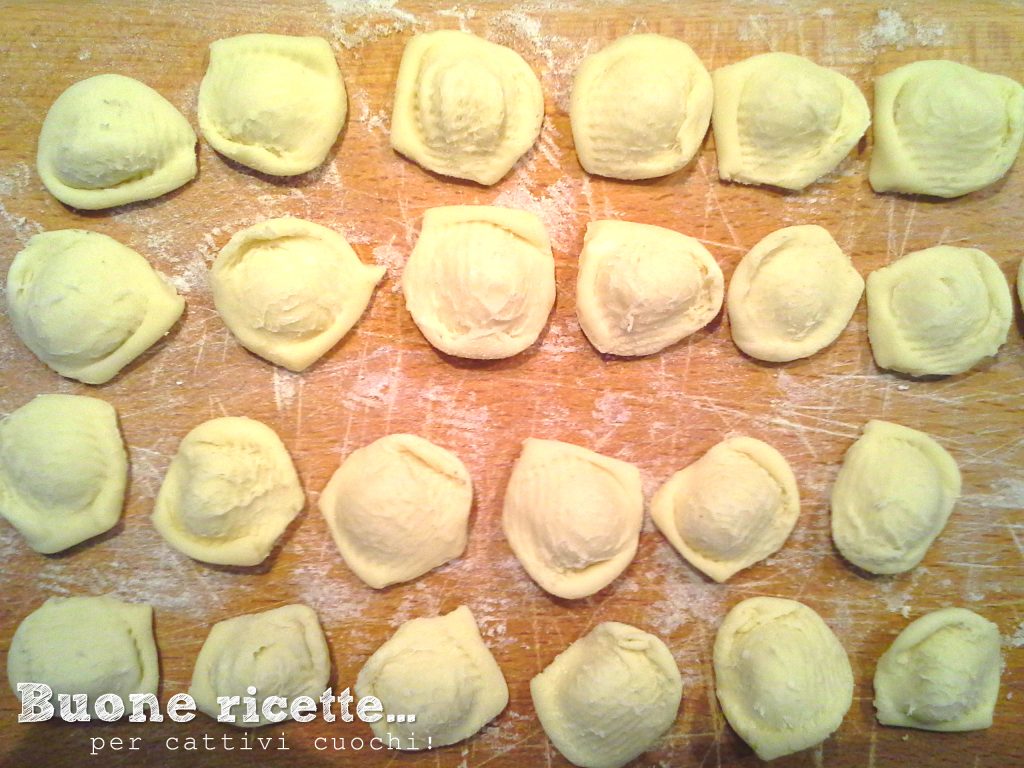
Fresh homemade orecchiette are cooked in plenty of salted water in a few minutes (4-5). If you let them dry and store them, the times increase to 10-15 minutes (depending on the thickness).
Your homemade orecchiette are ready!
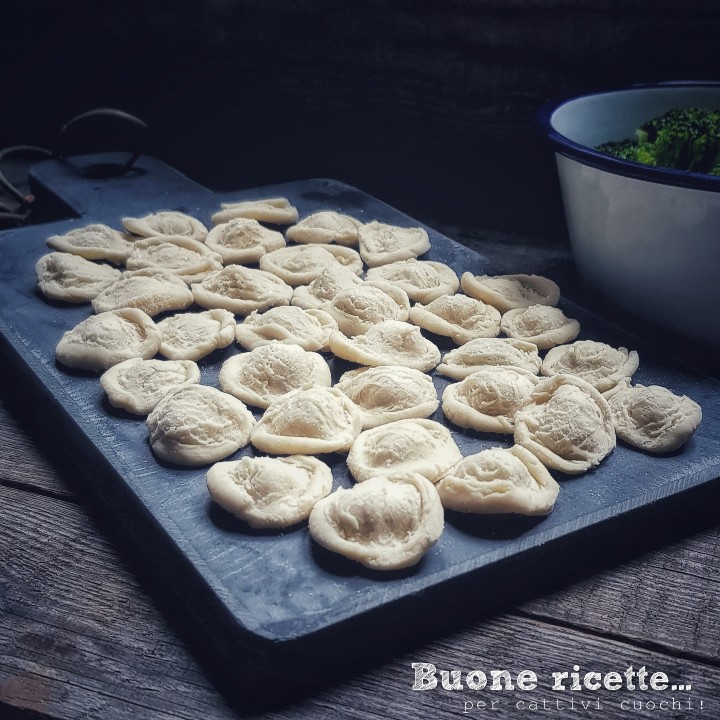
Serving Tips:
Cook the orecchiette in plenty of salted water (the orecchiette have no salt in the dough) and toss them in the pan with the seasoning so that the porous part can absorb it