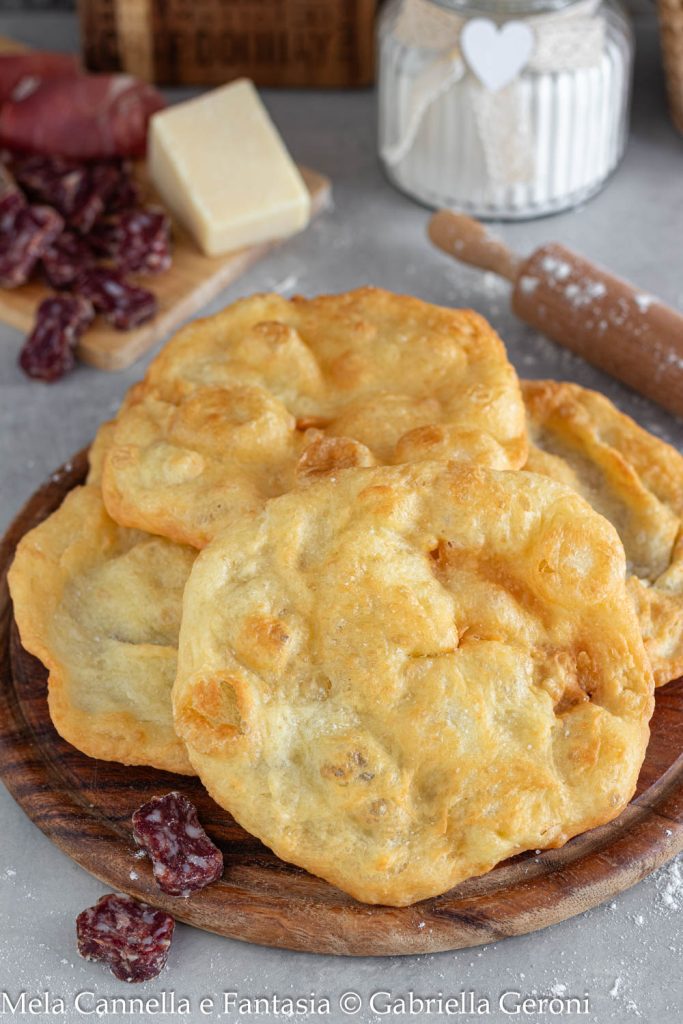
Abruzzo pancakes, also known as Pizzonte or Mazzafam, are balls of leavened dough made with water, flour, milk, oil, yeast, and salt. Once risen, they are stretched by hand and fried in seed oil.
This is an ancient Abruzzo recipe (particularly from the province of Teramo and surrounding areas). They are called “pizzonte”, “pizzonta” or “pizzonde” depending on local dialects. They’re also called Mazzafam because they were used to satisfy hunger with something tasty and nutritious!
The name comes from “greasy pizza”, meaning a greasy ball of dough then fried, traditionally in lard, in pork fat, or in olive oil, today also in seed oil.
When I was young, I often went to Antonella’s house to study or play, and her mother Dora, a dear and generous lady, always welcomed me with a smile and… with these steaming pizzonte, ready for a snack.
The smell coming from her kitchen, I still remember it… rustic, simple, and authentic, like her very soft pancakes! 🥰😍
Like almost all humble recipes of the past, this one arose from a specific need: not to waste anything left over in the kitchen. And that’s exactly how Abruzzo pancakes were born.
When making pizza dough or bread, if there was some extra “mass” (as we call it here in Teramo), it was used to make pizzonta, a genuine fried Abruzzo pizza! Without much fuss, the dough was worked by hand, stretched, and then plunged into boiling oil.
Today, pizzonda is one of the many symbols of Abruzzo, along with bocconotti, uccelletti, caggionetti the Dogge pizza or Easter pizza from Teramo, not to mention the arrosticini! 💖🥰❤️
You’ll find it at Abruzzo festivals and village fairs, served both in savory version, with salt flakes on top, or enriched with cold cuts and cheeses. A perfect street food to enjoy anytime!
But we can also enjoy it in a sweet version, with a nice sprinkle of granulated sugar it becomes a real dessert! Just like the sugar pancakes at the amusement park!
There isn’t a very strict set of rules for the recipe. Each family and region adapts the recipe to their taste, but above all, it is passed down from generation to generation.
For example, there is both the version with only water in the dough and the one that calls for adding milk. Some let them rise for a long time, while others just wait for them to double.
And the one I’m sharing with you today was gifted to me by dear Mrs. Dora ❤️
👉 I recommend reading the article to the end! You’ll find the complete recipe with step-by-step photos 📸 useful tips for perfect frying 🍳 answers to frequently asked questions 💬 how to halve the yeast dose for a longer rise in the fridge and the best tricks to keep them fragrant longer, even in the freezer ❄️
Here is the recipe for Dora’s Abruzzo pancakes ❤️
But first, don’t miss these truly special ancient Abruzzo recipes:
- Difficulty: Easy
- Cost: Economical
- Rest time: 3 Hours
- Preparation time: 25 Minutes
- Portions: 12 pieces
- Cooking methods: Frying
- Cuisine: Italian
- Seasonality: All seasons
Ingredients
- 4 cups all-purpose flour
- 1/2 cup water (at room temperature, neither hot nor cold)
- 7/8 cup milk (if you prefer, you can use water instead of milk, and in total you'll need 1 1/3 cups of water)
- 1/2 cup extra virgin olive oil
- 1 cube fresh brewer's yeast (or 7 grams of dry yeast, NO instant yeast for savory pies)
- 1 teaspoon salt (about 7 grams)
- 1 tablespoon sugar
- seed oil (for frying)
Tools
- Bowl
- Tea towel
- Pan
- Ladle
- Work surface
- Scissors
- Plate
- Paper towel
Steps
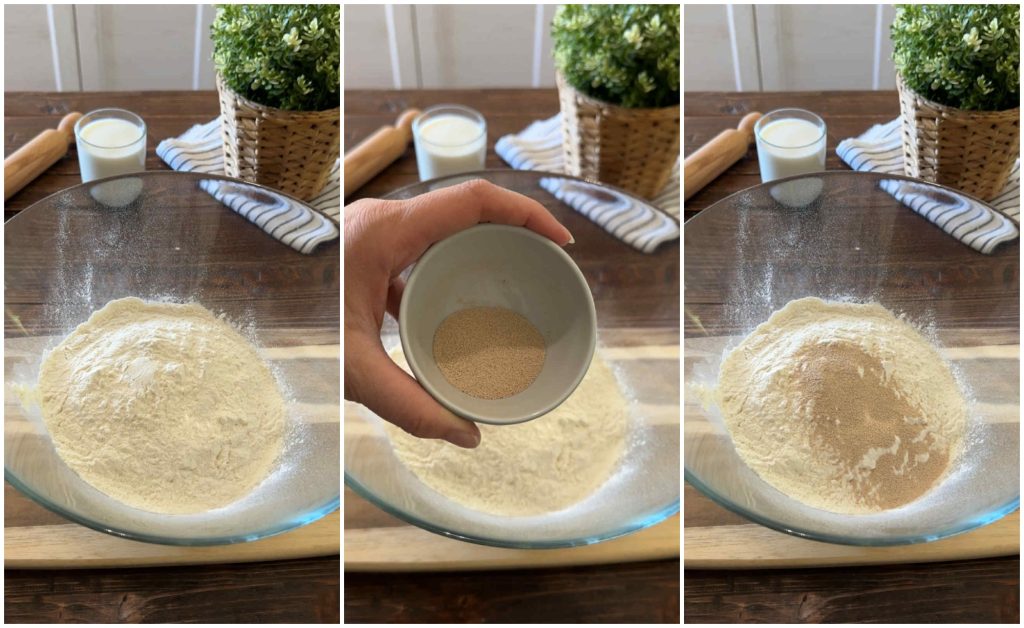
In a large bowl, pour the flour, the dry brewer’s yeast, and the sugar. If you choose to use fresh brewer’s yeast, first you must dissolve it in warm milk.
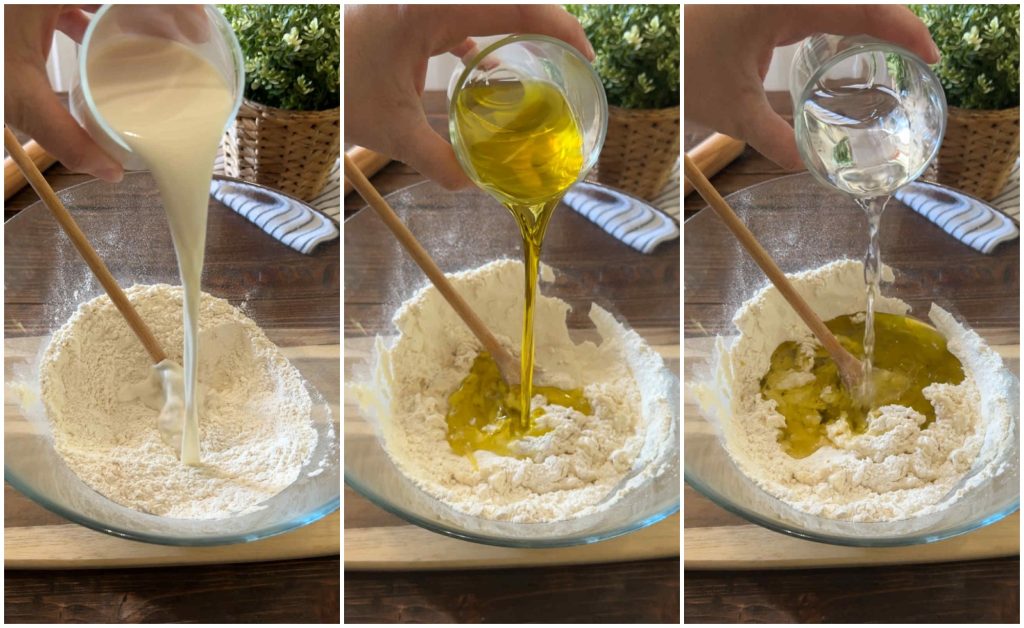
Add to the bowl the milk, the olive oil, and the water (or if you prefer, just water for a total of 1 1/3 cups).
First, mix with a ladle inside the bowl, and when the dry ingredients have absorbed the liquid ones, transfer everything onto the work surface.
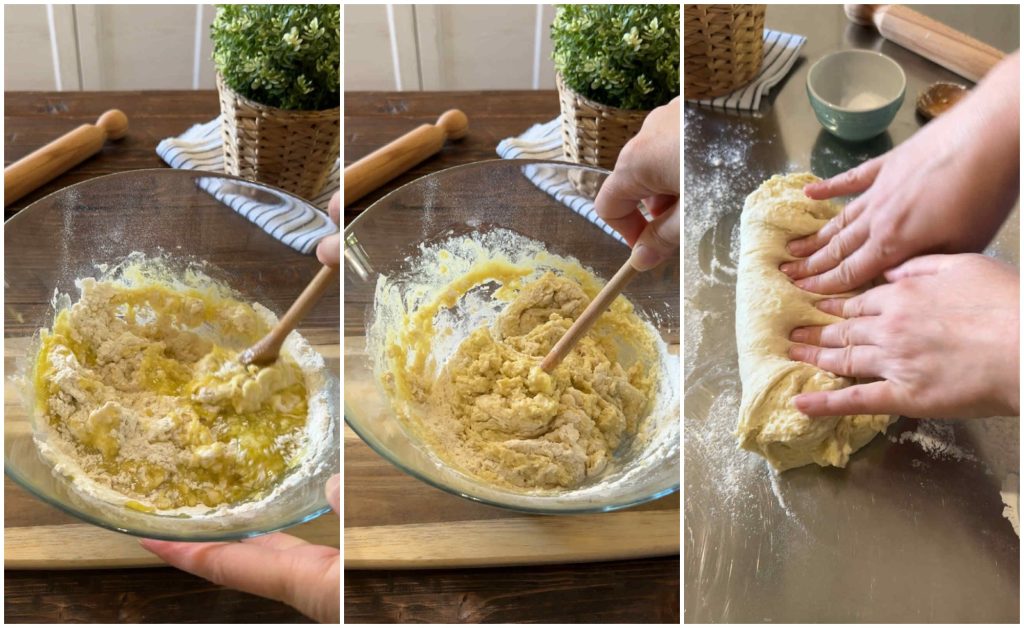
Knead vigorously for a couple of minutes, then spread it out and add only at this point the salt.
Fold the dough over itself and start working it for 5-10 minutes, creating folds to strengthen it.
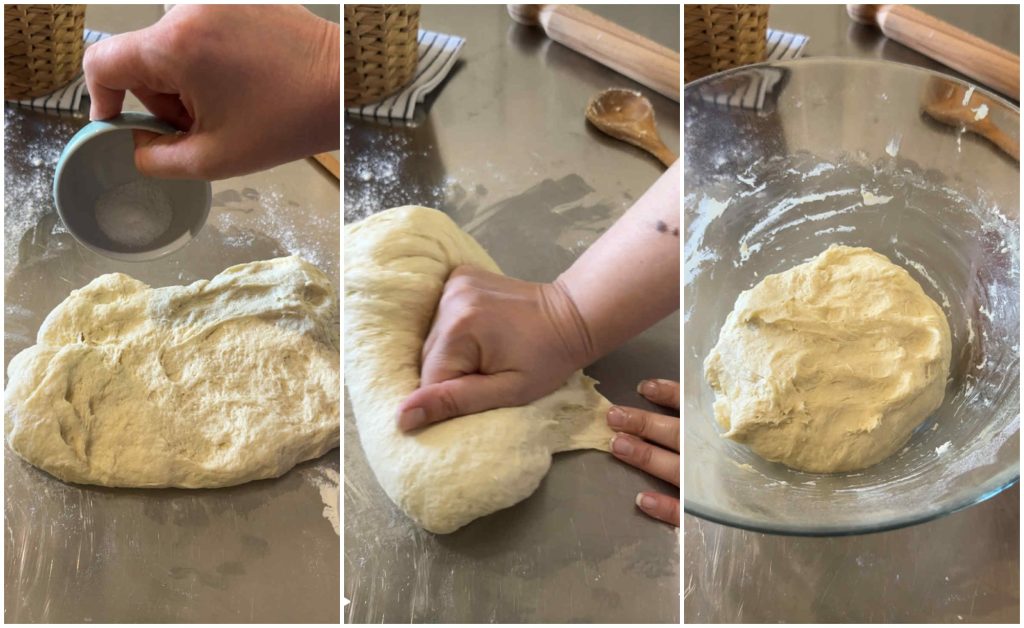
Please, if it seems a bit sticky at first, do not add more flour, it should remain soft and at the end of the process, it will no longer stick to your hands.
Once you have obtained an elastic and soft dough, place it in the bowl, cover with a tea towel or plastic wrap, and let it rise in a warm place for about two hours, until it doubles completely.
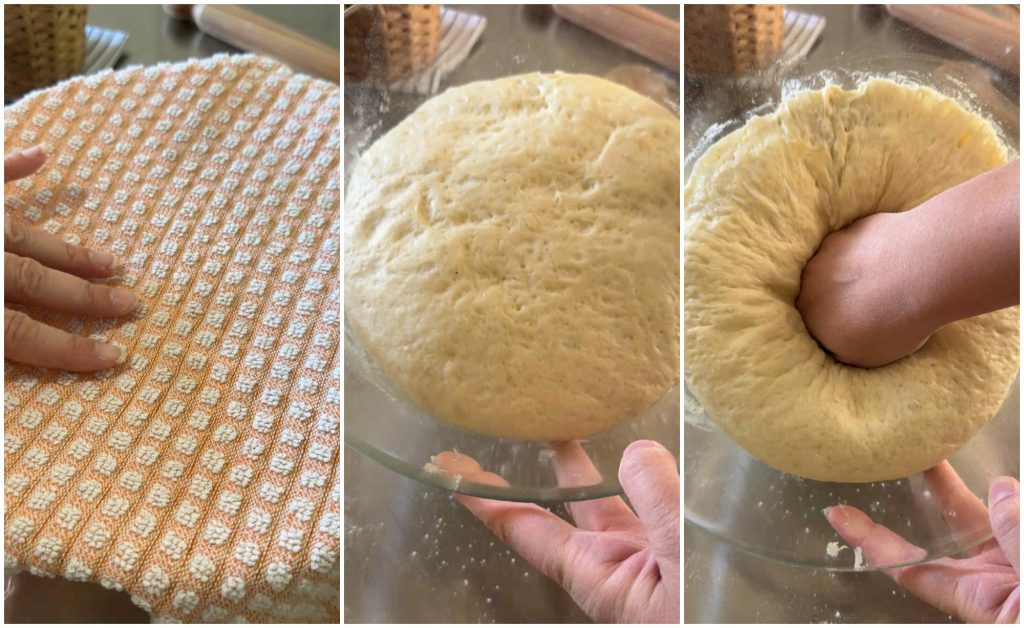
If the room temperature is below 68°F, it might take more than two hours.
After the first rise, take the dough and, on a lightly floured surface (or in the same bowl), form about 12 balls.
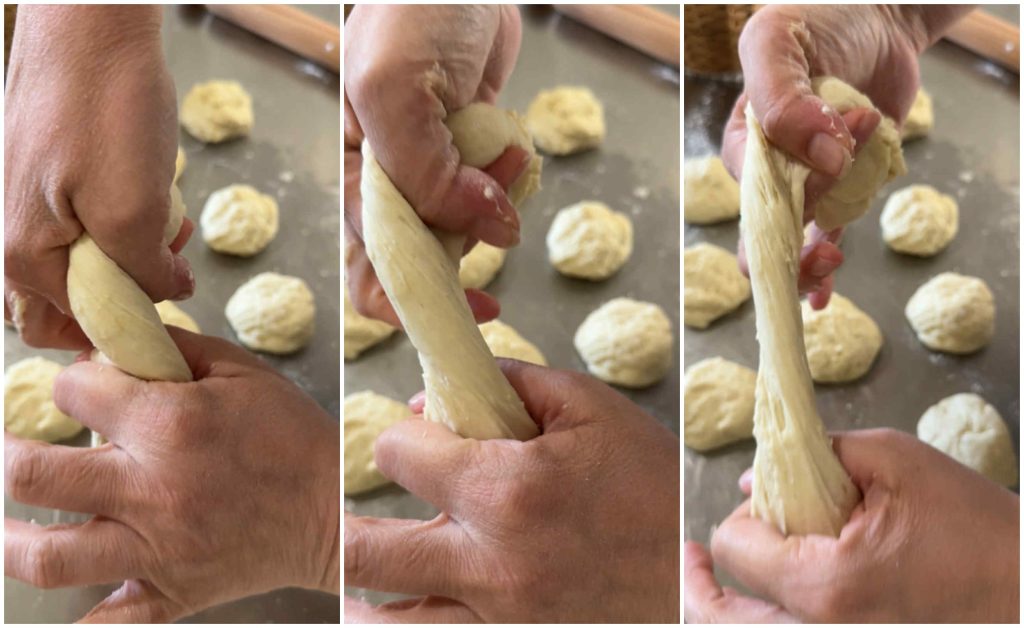
You can choose the size of each ball without any problem. You can make half of them larger and the other half smaller.
To form the balls, lift a piece of dough with your hands and pinch it between your thumb and index finger, “choking it” to detach it, just like when forming mozzarella.
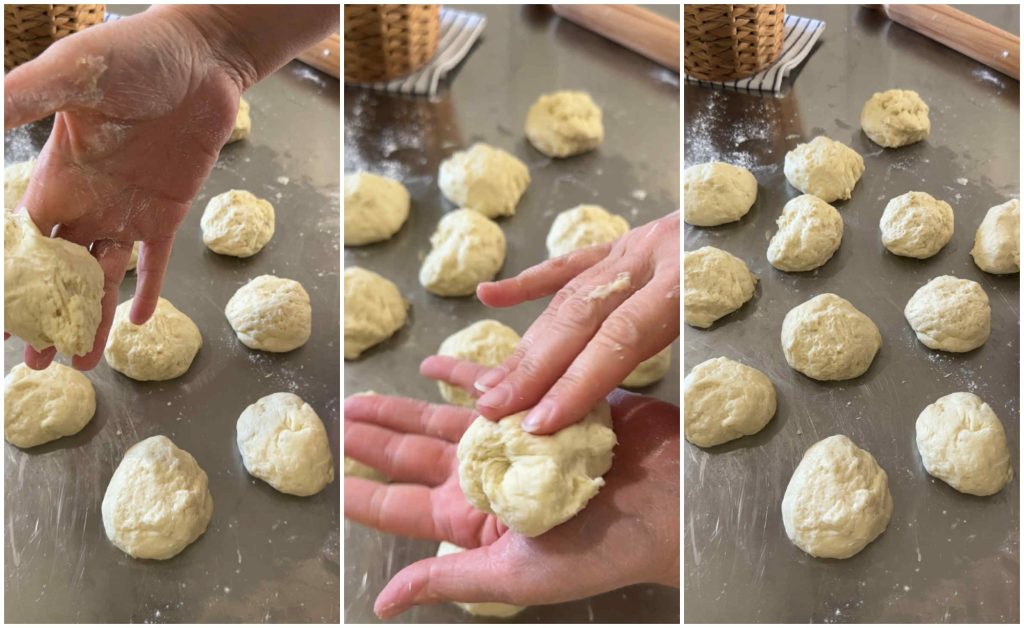
This way, you’ll get similar-sized portions of dough without needing to cut them with a knife.
Cover the balls with a tea towel (or an overturned container) and let them rise again for an hour.
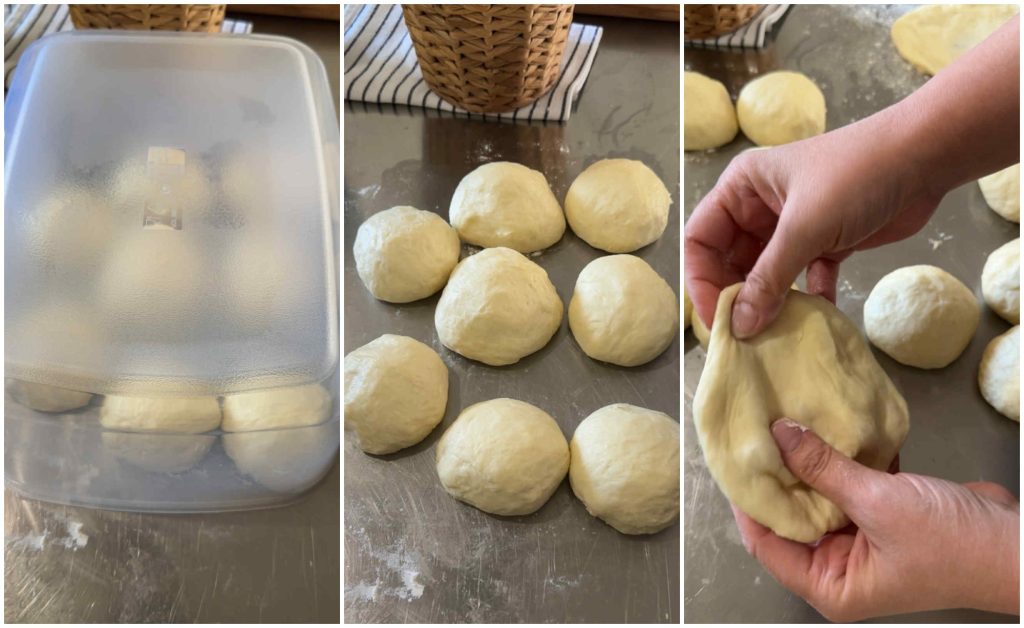
After the second rise, shape the pancakes and start cooking!
Heat plenty of seed oil (peanut or sunflower) in a pan or pot with high edges. Bring the oil to a medium-high temperature (about 340-356°F) for good frying.
Stretch each ball by hand (if you feel more comfortable, you can place the pancake on the work surface and stretch it with your fingers, better to avoid the rolling pin).
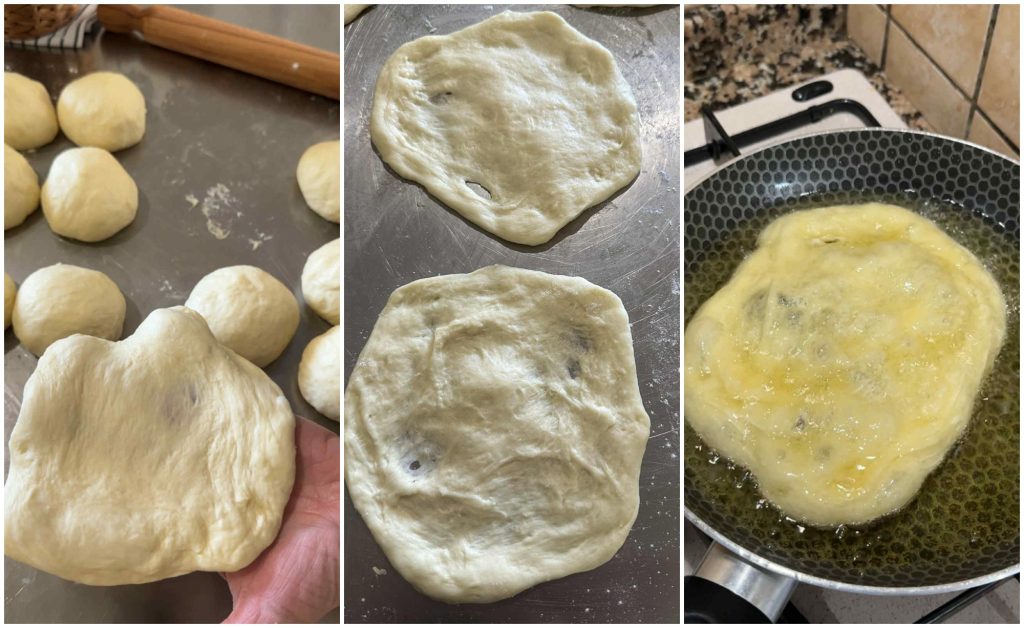
Fry a few pancakes at a time in the hot oil, until golden on both sides (about 3-4 minutes per side, depending on thickness and temperature).
With a pair of scissors, cut the center of each pancake before cooking (or as I do after dipping them in oil, directly in the pan). It’s a little trick from our grandmothers to ensure more uniform cooking.
Please don’t let them burn, they should remain beautifully golden. Drain on a paper towel to remove excess oil. Serve immediately while hot!
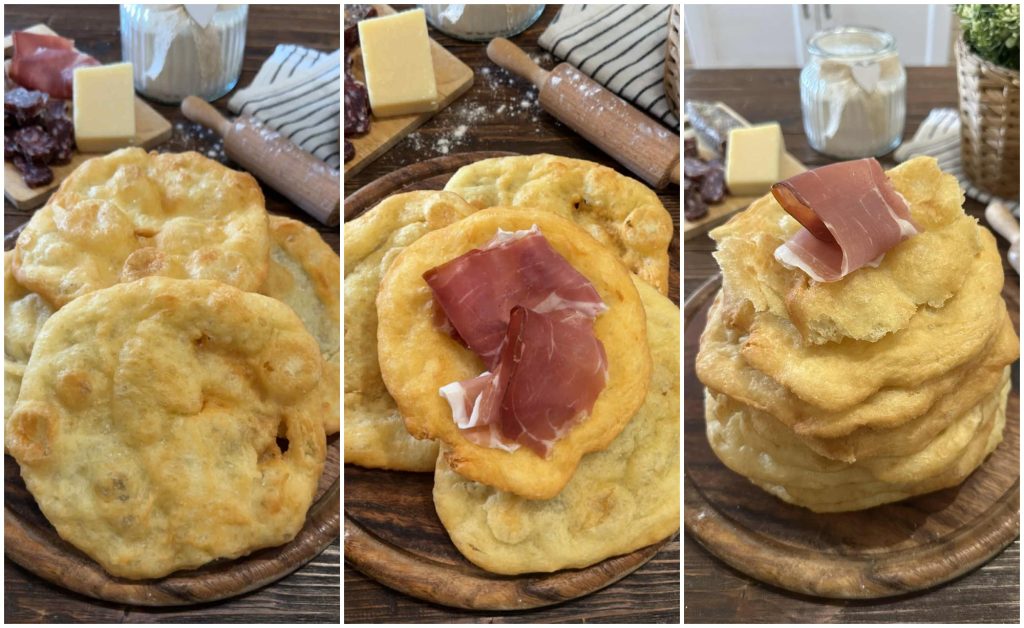
You can lightly salt them for the savory version or sprinkle with sugar for the sweet version. Accompany them with cold cuts, cheeses, or simply enjoy them as is.
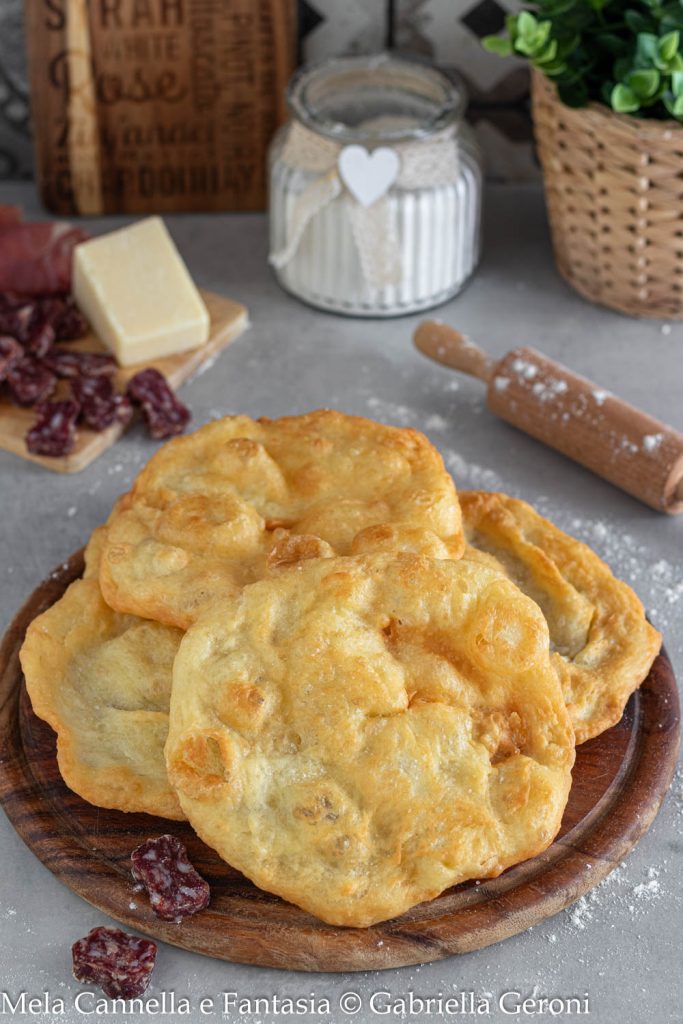
If you try this recipe, let me know in the comments, I’d love to hear how your Abruzzo pancakes turned out 🫓💛
Tell me if you followed the classic recipe or personalized it (maybe with fridge-proofing or a sweet version!).
And if you liked it, follow me on my social channels so you don’t miss the next homemade recipes coming soon 🏡💫Article protected by copyright © – Gabriella Geroni © All Rights Reserved
USEFUL TIPS:
For a softer surface full of bubbles, I recommend not making the pancakes too thin, otherwise, they will lose internal softness and become more crunchy and crumbly. This is not a mistake, it’s just a matter of taste. Choose how you like them best and make them thinner or thicker accordingly.
Once cold, pizzonte tends to lose its characteristic crispiness (like all fried food). If you need to prepare them well in advance of serving, put them in a warm oven for a few minutes (or air fryer in the reheat mode, at about 300°F).
As I always recommend when frying, dip few pieces at a time into the hot oil, this helps to maintain a more consistent temperature and obtain even cooking.
The oil should be very hot before dipping the pancakes, otherwise they will absorb too much oil.
But be careful if it’s too hot, you risk burning them on the outside without cooking them inside.
STORAGE:
Like almost all freshly cooked food, these pancakes should be consumed immediately to appreciate their fragrance and crispness. Especially fried food, once cold, tends to lose consistency, but not all is lost. In this case, we can also reheat them for a few minutes, and they’ll still be delicious!
To enjoy them the next day, follow this tip:
First, let them cool completely, then place them in a paper bag (or food bag if you want them to stay softer).
The next day, you can heat them in a preheated oven at 300-320°F for 5-10 minutes or in an air fryer at about 280°F to bring back the crispiness.
FAQ (Questions and Answers)
Can I use only water and not milk in the dough?
Yes: some traditional versions of pizzonte use only water to make the dough lighter, only milk to make it softer. You choose!
Can I fill or serve them with cheeses/cold cuts?
Yes, absolutely: in the traditional savory version of pizzonte, they are accompanied by local cold cuts and cheeses, especially at Abruzzo festivals.
Is it better to use olive oil or seed oil for frying?
Traditionally, lard or olive oil was used, but they can make the final taste a bit strong. I personally prefer seed oil (e.g., peanut) because it’s more neutral and practical.
If you use olive oil, the flavor will be more intense.Can I use sourdough or natural yeast?
Yes, since it’s a leavened dough. But the recipe we follow here uses fresh or dry brewer’s yeast. If you want to use sourdough, you will need to adjust rising times and amounts.
Should I roll the dough thin or keep it thick?
It depends on the result you want: if you roll it thin, you get a crunchier pancake; if you leave it thicker, you get a softer and “puffy” pizzonta.
Traditionally, they usually have a medium-high thickness because the pancake was meant to “satisfy hunger“! The bigger and thicker they were, the more satisfying!