If you love breakfast cakes, healthy yet delicious, this is the one for you! Today I’m sharing the recipe for my Super Soft Apple Loaf Cake, without butter and milk.
❓👩🍳🥣✅Looking for a baked dessert that is:
1)Soft like a cloud?
2)Light, wholesome, and lactose-free?
3)Easy and quick to prepare, with simple ingredients you already have at home?
4)Ideal for a nutritious breakfast or a tasty snack?
Then you’ve found the perfect recipe! This apple loaf cake without butter and milk is the answer to all your homemade sweet cravings (not too sweet).
A light, healthy, and incredibly soft loaf cake, enriched by the natural sweetness of apples. Get ready to fall in love with its soft texture and enveloping aroma.
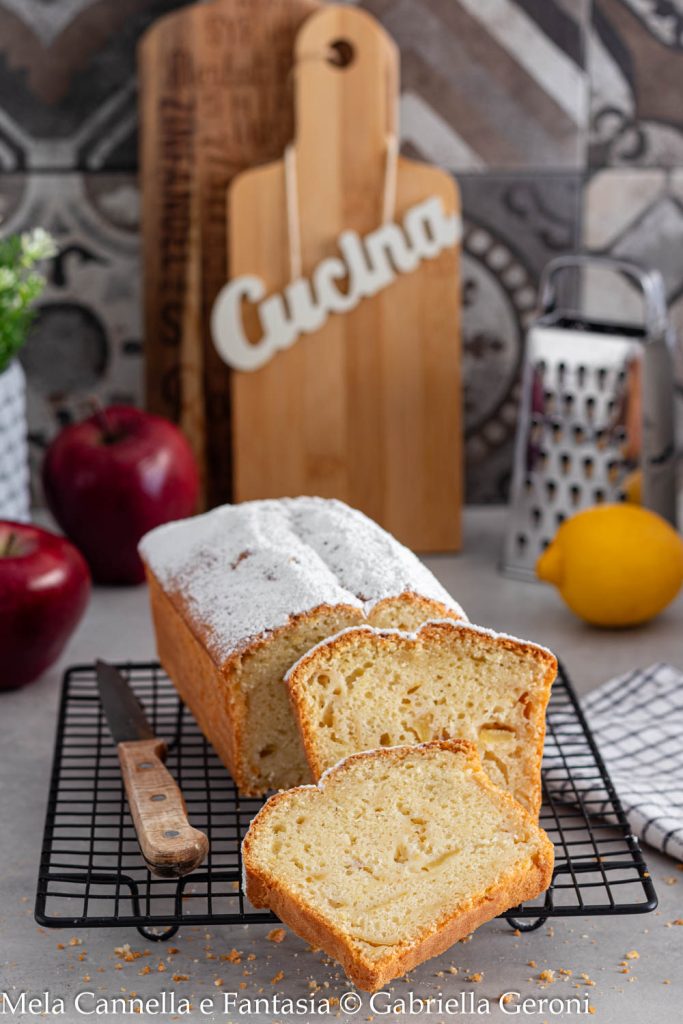
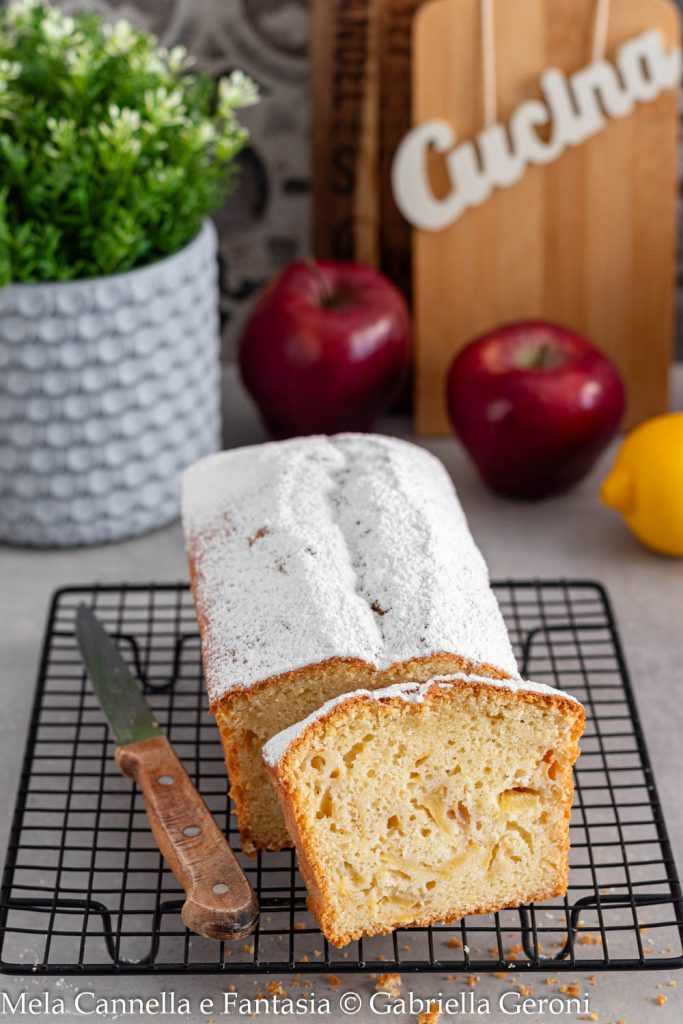
And if you’re thinking “it’ll be just another fruit loaf cake where the fruit sinks“, I tell you absolutely not, the photos speak for themselves!
As you can see, the apples are well-distributed throughout the loaf, and it’s truly a pleasure to enjoy! It stays super soft for days and can even be frozen. Below you’ll find all my tips on how to do it!
This is the quick and easy recipe you were looking for to bring a genuine and delicious dessert to the table, great for breakfast or a snack. Perfect for those who love simple cooking and don’t want to give up taste!
Ready to make it together?! I’ll also reveal a little pastry trick!
But first, here are some more delicious ideas for your homemade breakfast!
- Cost: Medium
- Preparation time: 20 Minutes
- Portions: about 10-12
- Cooking methods: Electric oven
- Cuisine: Italian
- Seasonality: All seasons
Ingredients
- 3 eggs (medium whole)
- 150 g sugar (white or brown)
- 80 g seed oil (better avoid olive oil, below I will explain why)
- 200 g water (or milk or plant-based drink if you prefer)
- lemon zest
- lemon juice (to pour over the apples to prevent them from darkening)
- 320 g flour 00
- 1 sachet baking powder
- 1 apple (weight without peel 200 g)
Tools
- Bowls
- Grater
- Lemon Squeezer
- Loaf Pan
- Sieve
- Spatula
- Parchment Paper
- Hand Mixer
Steps
First, cut the apple into small even chunks. Place it in a bowl and add the juice of half a lemon. Let it rest.
In another bowl, whisk the whole medium eggs with the sugar using an electric mixer.
Whisk the mixture for about 10 minutes until it becomes fluffy, light, and foamy. Grate the lemon zest inside.
Pour the seed oil and whisk for a couple of minutes, and finally, add the water (or if you prefer, milk or plant-based drink, preferably unsweetened).
Incorporate flour and baking powder using a sieve to avoid lumps and blend with the mixer.
Drain the apples well from their maceration juice and add them all into the batter.
Mix with a spatula, then pour the batter into a 25-26-28-30 cm loaf pan, greased and floured or lined with parchment paper.
Level the surface with a spatula and then, with a smooth-bladed knife, cut horizontally across the loaf, sinking the blade.
This is a pastry trick to achieve a perfect crack and allow for even baking. Off to the oven!
Remember, always use a preheated oven, fan mode at 340°F, for about 50 minutes or 355°F static mode for about an hour.
As always, the baking times can vary from oven to oven, so always perform the toothpick test before removing from the oven.
Once your loaf cake is ready, remove it from the oven, let it cool completely, and if you like, decorate it with powdered sugar!
Hope you liked this recipe! Let me know if you try it and visit soon!
Article protected by copyright © – Gabriella Geroni © All Rights Reserved
👩🍳🥣⚠️Baking Tips:
Baking time varies especially based on the pan used. In my case, I chose a 25 cm one, and the baking was longer than when using a 30 cm pan. So remember, consider these variables each time you choose a pan.
👩🍳🥣⚠️General tips for substituting fruit:
Generally, when you want to make a cake with fruit, you can substitute it while maintaining the same proportions indicated in the recipe. This is to avoid unbalancing the cake and not achieving the same result.
Making a cake with fruit might seem easy, but there are some considerations not to overlook, so take notes!
Moisture: Keep in mind that fresh fruit contains between 85% and 95% of water. Some are juicier than others. If you use very juicy fruit, you might need to add a bit more flour or slightly reduce the amount of liquids in the recipe, to maintain the desired consistency. In this case, if the recipe calls for 100 grams of fruit, we can also decide to use a different fruit, but it’s preferable to respect the dose of 100 g indicated to avoid imbalance.
Flavor: For an optimal result, always try to give importance to flavor pairing. For example, cinnamon and nutmeg pair well with apples and pears, while lemon zest or ginger can enhance the flavor of peaches or apricots. Chocolate is a great match with bananas, berries, and cherries.
Cut: It’s preferable to cut the fruit into pieces that are not too large and especially of equal size so you have better distribution throughout the cake.
FAQ (Questions and Answers)
How can I store the Apple Loaf Cake?
✅At room temperature: If consumed within 2-3 days, you can store the loaf cake at room temperature, wrapped in plastic wrap or in an airtight container to keep it soft. If it’s too hot in the house, I recommend putting it in the fridge.
✅In the fridge: For longer storage (up to a week), you can put the loaf cake in the fridge, always well covered to prevent it from drying out or absorbing odors.
✅In the freezer: The apple loaf cake can also be frozen. Let it cool completely, then cut it into slices so you have ready portions and then in a food bag or airtight container. It keeps in the freezer for about 2-3 months.
To thaw, leave it at room temperature for a few hours or in the fridge overnight.I don’t like apples! What other fruit can I use?
Apples are a timeless classic, but there are plenty of other delicious options to enrich your loaf cake. The choice depends heavily on your personal taste and the texture you want to achieve. Here are some of the best alternatives to apples, with some advice:
Pears: Similar to apples in texture, they offer a more delicate and aromatic flavor. You can use them in slices or cubes as you would with apples.
Bananas: They make the loaf cake incredibly soft and moist, adding natural sweetness and an enveloping aroma. You can mash them into a puree to add to the batter or slice them.
Peaches: Especially when diced, they add a juicy touch and a summer flavor to the dessert. Make sure they are not too ripe to avoid releasing too much water.
Apricots: Both fresh diced and canned (well-drained), apricots offer a slightly tart flavor that balances the sweetness of the loaf.
Plums: Both fresh wedges and dried (cut into pieces and perhaps soaked) add a rich flavor and pleasant moisture.
Berries (Blueberries, Raspberries, Blackberries): Perfect for a touch of color and a fresh, slightly tart flavor. They are excellent both fresh and frozen (in this case, add them to the batter still frozen).
Cherries: Pitted and halved, they add a sweet and slightly tart flavor.
Citrus (Oranges, Lemons, Tangerines): You can use the grated zest to flavor the batter (it pairs well with other fruits like blueberries or pears) or even segments (without the white part) but they may release more moisture.
Pineapple: Fresh diced or canned (well-drained and chopped), pineapple adds a tropical flavor. Being particularly acidic, use it sparingly!
Figs: Both fresh diced and dried (cut), they offer an intense sweetness and unique texture.What type of apples is best for a loaf cake?
Apples that hold up well during baking and have a good balance of sweetness and tartness are the best. Great choices are Golden Delicious, Fuji, Gala, Renetta, or Granny Smith (for a more tart touch).
Can I add other ingredients to the batter?
Sure! Chopped nuts or almonds (50 g), raisins (soaked and well-drained, 50 g), chocolate chips (50 g), cinnamon (half a teaspoon), lemon or orange zest, pair perfectly with apples and add an extra touch to your loaf cake.
How do I know if the loaf cake is done?
The most reliable method is the toothpick test. Insert a toothpick in the center of the cake: if it comes out clean, without any wet residue, the loaf cake is ready. Perform the test once the indicated time in the recipe has passed.
My loaf cake sank in the middle, what did I do wrong?
Several causes can lead to this: oven temperature too high, frequent opening of the oven during baking, excessive amount of liquids, or insufficient baking.
How can I make the loaf cake even softer?
Make sure to sift the flour and baking powder to avoid lumps, whip the eggs well with the sugar until you get a foamy mixture and gently incorporate the dry ingredients. Do not overwork the batter once the flour is added.
Why is it better to avoid olive oil for making desserts like this?
Olive oil might not be the ideal choice for all types of desserts, like in this case. First, due to its flavor. High-quality extra virgin olive oil has a strong flavor with a slight hint of bitterness and spiciness. This flavor, although pleasant in savory dishes, might not go well with the sweetness of certain desserts, altering their desired flavor profile. For example, using olive oil for making a sponge cake is absolutely not recommended!
Less refined, lower-quality oils can have a more “greasy” or metallic taste, which would be really unpleasant. If you want to make soft desserts like loaf cakes, muffins, breakfast cakes, ring cakes, surely olive oil is not indicated.
However, it is an excellent choice if you want to make cookies or tart crust as it makes the pastry more rustic and aromatic.Which oil is preferable to use for this loaf cake?
For this type of dessert, the best choice is definitely seed oil for several reasons.
Neutral flavor:
Seed oil, especially sunflower or corn oil, has a much more neutral flavor compared to olive oil. This means it won’t influence the taste of the dessert, allowing other flavors (vanilla, lemon, chocolate, etc.) to shine fully.
Soft consistency:
Cakes remain much softer and moister (even lighter) with seed oil, sometimes even more than butter.
Stability and preservation:
Cakes made with seed oil tend to stay soft longer and thus preserve better.
Which to choose then?
Sunflower: It’s one of the most versatile oils with a more neutral flavor, ideal for most desserts. Better if high oleic for longer baking.
Corn: It has a delicate flavor and is suitable for soft cakes like muffins, cupcakes, and cakes that don’t require high-temperature baking.
Peanut: It has a slight nutty flavor that can be interesting in some desserts (e.g., toppings for ice creams or spreads).
Other oils: You can also use soy or rice oil, always choosing those with a more delicate flavor.
In conclusion, using seed oil in desserts is often preferable for its neutral flavor and its ability to keep desserts soft and moist.Can I bake the loaf cake in an air fryer?
Personally, I haven’t tried, but you can do it, keeping these tips in mind.
Use a lower temperature and longer times. The air fryer tends to cook faster than a traditional oven. Set a lower temperature than you would use in the oven (about 150-160°C) and slightly extend the cooking times. Start checking the cooking after about 30 minutes and continue until it’s done.
To protect the surface of the loaf from direct heat and prevent it from drying out too quickly, you can cover it with a sheet of parchment paper or foil. Additionally, you can add a small container with water to the air fryer’s basket to create a moister environment and prevent dryness.
Make sure there is sufficient space for hot air circulation around the loaf. If your basket is small, it’s better to use the classic oven!Is there a trick to prevent fruit from sinking to the bottom?
It’s a common issue when making cakes with fruit, but fortunately, there are several effective tricks to avoid it.
Flour the fruit: This is perhaps the simplest and most common method. After cutting the fruit into pieces, put it in a bowl with a tablespoon or two of flour. Gently mix to evenly coat the fruit with a light layer of flour. This creates a sort of “barrier” that prevents the fruit from sinking too easily into the batter during baking. In this recipe, I didn’t follow this method, and yet the apples didn’t sink 😉
Add the fruit at the end: Incorporate the fruit only in the final steps, when the batter is almost ready to pour into the pan.
Cut the fruit into equal or similar pieces to help distribute the weight more evenly within the batter.
Don’t overdo the amount of fruit! Too much fruit can weigh down the batter and promote sinking. Follow the amounts indicated in the recipe.