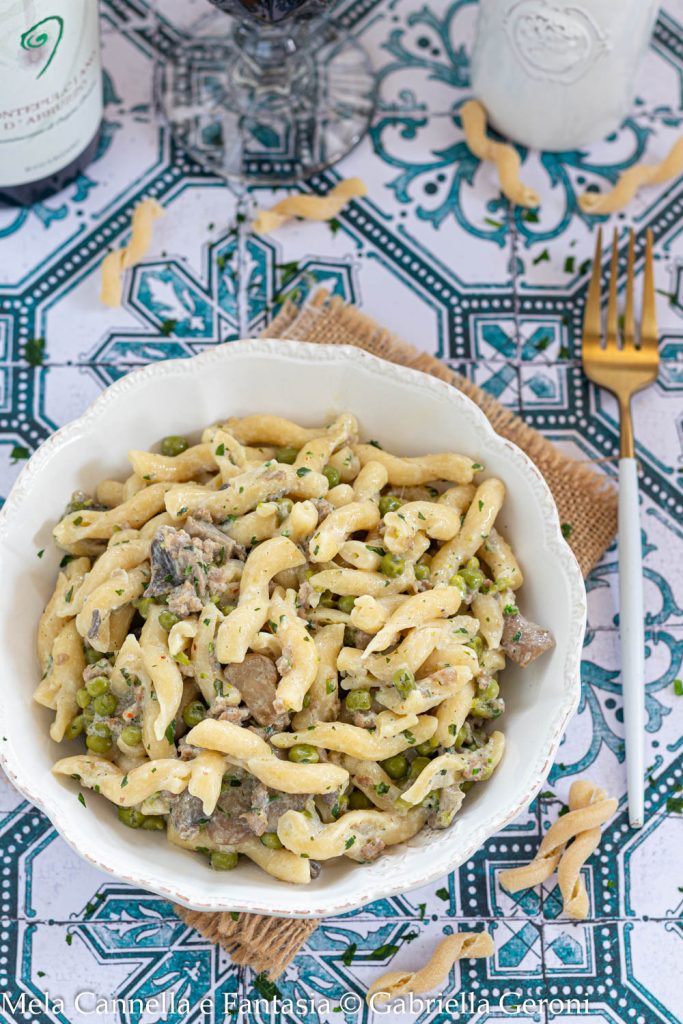
The white boscaiola pasta is an easy and quick recipe, perfect for those always on the go! A creamy first course, very fragrant and so tasty!
The term “boscaiola” indicates a series of different dishes that use a mushroom-based sauce. Whether it’s white, with ragù, or with simple sauce, mushrooms are a must in boscaiola!
It is a widespread and appreciated dish throughout Italy, but it mainly represents the mountain areas and perhaps it’s not by chance that it bears this name.
Boscaiola honors the products of the earth. Mainly porcini mushrooms. Pork meat, in the form of sausage or pancetta. And then peas or cherry tomatoes, the latter especially in the red version.
Besides mushrooms, there are other ingredients added, depending on the areas where this dish is made.
For example, there’s the version with crumbled sausage, or with smoked pancetta or cooked ham. There’s one with added peas or cherry tomatoes or black olives. Finally, there’s the boscaiola with sauce and the one in white, with or without cream.
Surely boscaiola originated in the white version. Then, thanks to the import of tomatoes from the Americas, the sauce version spread, like other typical dishes.
Today I propose my favorite! The white boscaiola, with sausage, mushrooms, peas, and cream!
This first course is really simple and very tasty. With a wrapping, rich, and very fragrant flavor, especially if prepared with fresh porcini (season permitting!).
As for the pasta to use, we can choose the shape we like the most! Short pasta, gnocchi, spaghetti, tortellini, tagliatelle, ravioli, etc.
But now let’s get to it and prepare this delicious white boscaiola dish!
Read to the end, you will find tips on executing this recipe and a small gift for you ❤️
Other delicious recipes I recommend you try!
- Cost: Medium
- Preparation time: 5 Minutes
- Portions: 2 people
- Cooking methods: Boiling, Stove
- Cuisine: Italian
- Seasonality: All seasons
Ingredients
- 7 oz pasta
- 1 sausage (fresh pork)
- 9 oz mushrooms (fresh or frozen, only porcini or mixed or champignon)
- 3.5 oz peas (fresh or frozen)
- to taste chopped parsley
- 2 tablespoons cooking cream (not fresh whipping cream. Lactose-free for those who are intolerant)
- to taste black peppercorns (only if you like)
- Half onion (white, red or golden)
- 1.75 oz white wine (for deglazing)
- 2 tablespoons olive oil
- to taste salt
- 1 oz grated parmesan cheese
Tools
- Frying Pan
- Casserole
- Cutting Board
- Ladle
- Colander
Steps
First, remove the skin from the sausage and crumble it with your hands. Then finely slice the onion.
Fill a pot with water where you will cook the pasta and bring it to a boil.
Take a small pan, and without adding oil, place the sausage inside. Let it brown well, continuing to mash it with a fork.
Alternatively, you can choose to add the sausage to the sauce without browning it first.
Deglaze with a bit of white wine and let it completely evaporate. Continue cooking for a few more minutes, then turn off the burner.
In a larger pan, pour a couple of tablespoons of olive oil and the sliced onion.
On low heat, let it brown, then add the mushrooms, previously cleaned and sliced (I used mixed frozen ones).
The traditional recipe calls for porcini, but when they are not in season, we can also use mixed mushrooms or just champignons.
Cook on high flame until the mushrooms release their vegetative water.
Subsequently, add the frozen peas and sausage. Cover with a lid and let it cook until the peas are tender.
Adjust the salt, add a bit of fresh chopped parsley, and turn off the heat.
In the meantime, drop the pasta into the boiling water. Salt it and cook, draining it al dente into the pot with the sauce.
Add a couple (or more) tablespoons of cooking cream and gently combine.
If necessary, add a little cooking water to achieve the desired creaminess.
A sprinkle of grated parmesan cheese, a pinch of pepper if you like, and the white boscaiola is ready to serve!
I hope you liked this recipe! Let me know in the comments if you try it!
Article protected by copyright © – Gabriella Geroni © All Rights Reserved
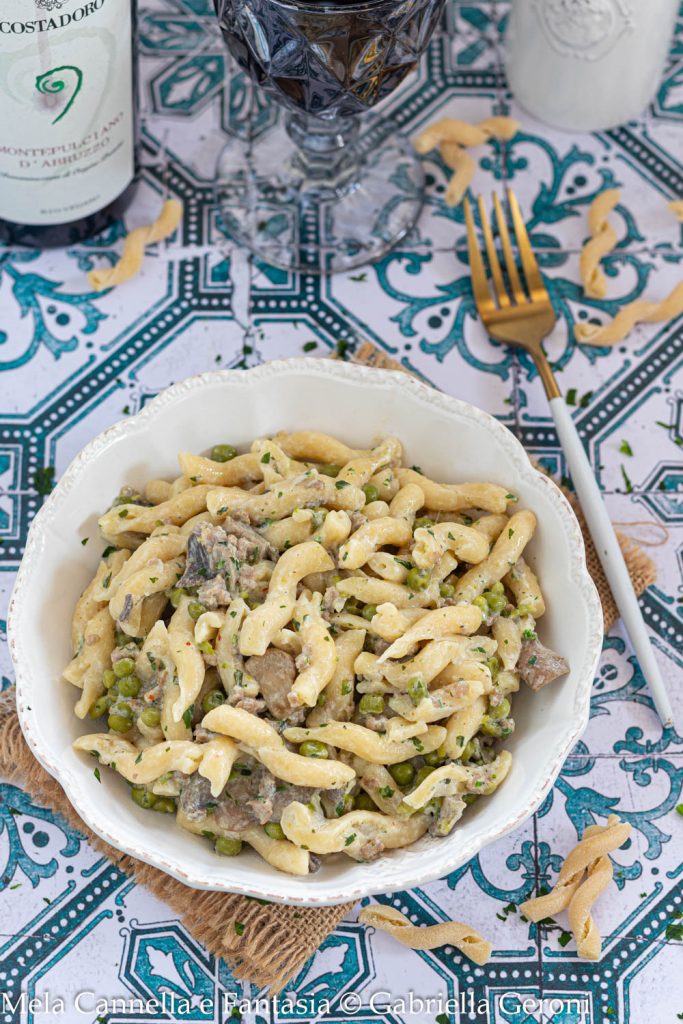
For this recipe, I used the Short Fusilli Al Ferretto from the Pastificio Sorrentino, Pasta di Gragnano IGP (#gifted).
Discover here all the recipes made with their products 🩷
Contains advertising content
FAQ (Questions and Answers)
How can I substitute the cream?
If you prefer, you can prepare the boscaiola without cream. Drain the pasta 5 minutes before it’s fully cooked into the pot. Add a little cooking water and let it cook like a risotto in the pan until it becomes nice and creamy. Continue to add little cooking water and only if necessary, until the pasta is cooked. At that point, add plenty of parmesan and mix off the heat.
Or you can replace the cream with ricotta or spreadable cheese. It will surely be excellent, but in this case, we can no longer call it boscaiola!What can I use instead of sausage?
Boscaiola knows other variants in which, instead of sausage, you can use smoked pancetta or cooked ham. If you prefer, you can use one of these two ingredients. The dose for two people will be 100 grams in both cases.
What type of pasta is preferable to use?
Boscaiola can be prepared using various types of pasta, from short to long. Tagliatelle alla boscaiola, for example, is very popular. Some also prepare it with gnocchi, or with stuffed pasta like tortellini or ravioli. The choice is yours according to your tastes!
What wine can I pair with white boscaiola?
Assuming I’m not a great wine connoisseur, as an Abruzzese, I recommend our Montepulciano d’Abruzzo DOC, a red wine that pairs well with dry first courses or meat-based sauces.