
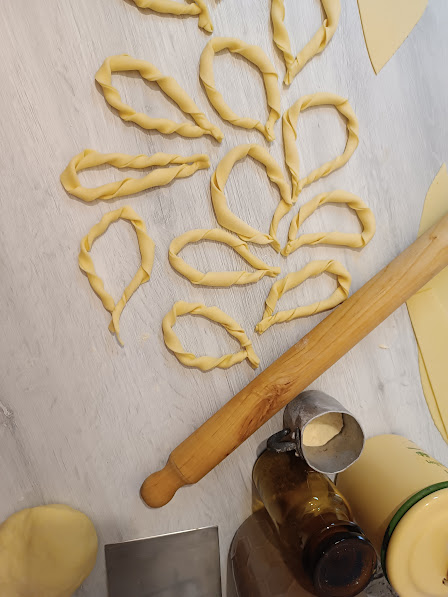
Twisted sagne with shrimp tails and mushrooms.
Twisted sagne is a culinary delicacy from the Salento tradition, a type of fresh pasta that stands out for its unique shape and authentic taste. Typically, these are served with a fresh tomato sauce enriched with salted or fresh ricotta, which deliciously enhances the flavor. However, I want to propose this recipe that deviates from tradition to embrace a combination of sea and land flavors.
The version I recommend for a special occasion includes a refined dressing based on shrimp tails and champignon mushrooms. This choice is not accidental: the sweetness of the shrimp blends perfectly with the earthy taste of the mushrooms, creating a gastronomic contrast of notable refinement. To make this dressing, it is essential to use top-quality ingredients, preferably fresh or of superior quality if opting for preserved products.
The procedure involves starting with cleaning the shrimp, removing the shell and intestines, and then preparing the mushrooms, which must be carefully cleaned and sliced. In a large pan, sauté garlic and extra virgin olive oil, then add the mushrooms. After a few minutes, when the mushrooms have absorbed the flavors and are golden, add the shrimp tails and cook until they turn a delicate pink color. Once the dressing is finished, be sure to adjust the salt and pepper to taste.
For the optimal tasting of this version of twisted sagne, I recommend pairing the dish with a local white wine, possibly a Verdeca or a Minutolo, which, with their freshness and minerality, can splendidly accompany the richness of the shrimp and mushroom dressing. Serve the pasta piping hot, after mixing it with its savory dressing, and complete the dish with a sprinkle of freshly chopped parsley to add a touch of color and freshness.
This dish represents an excellent example of how Salento cuisine can innovate while remaining faithful to its roots, offering intense and authentic flavors. Experimenting in the kitchen with local and seasonal ingredients, combining them creatively, can lead to true gastronomic discoveries, capable of surprising and delighting the most demanding palates.
- Preparation time: 2 Hours
- Portions: 4
- Cooking methods: Stovetop
- Cuisine: Italian
- Seasonality: All seasons
Ingredients
To make semolina pasta you need re-milled durum wheat semolina, water…
- 300 semolina pasta
- 14 oz shrimp tails
- 7 oz champignon mushrooms
- 1 carrot
- 1 garlic (clove)
- 4 tbsps olive oil
- to taste black pepper
- to taste salt
- 1 tbsp chopped parsley
- to taste paprika (Both sweet and spicy, if desired)
Tools
Just a cutting board, a rolling pin, a pot, and a pan…You can find the tools I use by clicking Here
Steps
Preparing fresh pasta is time dedicated to ourselves and our family…If accompanied by good music! Or with the kids for fun and bonding
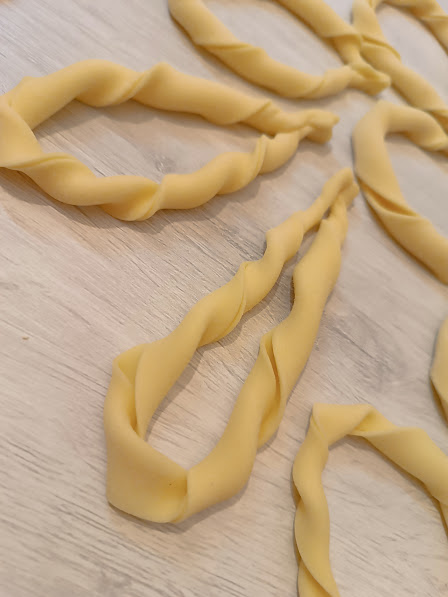
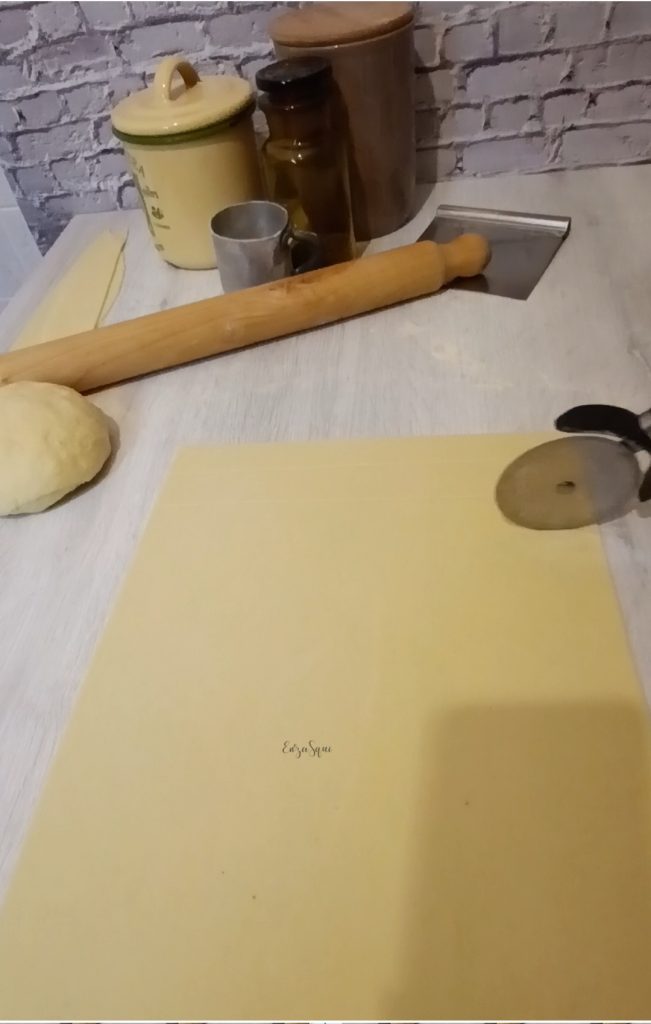
Prepare the semolina pasta following the recommended recipe…After the necessary time, roll it out with the rolling pin until you get a uniform sheet, naturally, this operation can also be done with a pasta machine, which I use when I need to make larger quantities
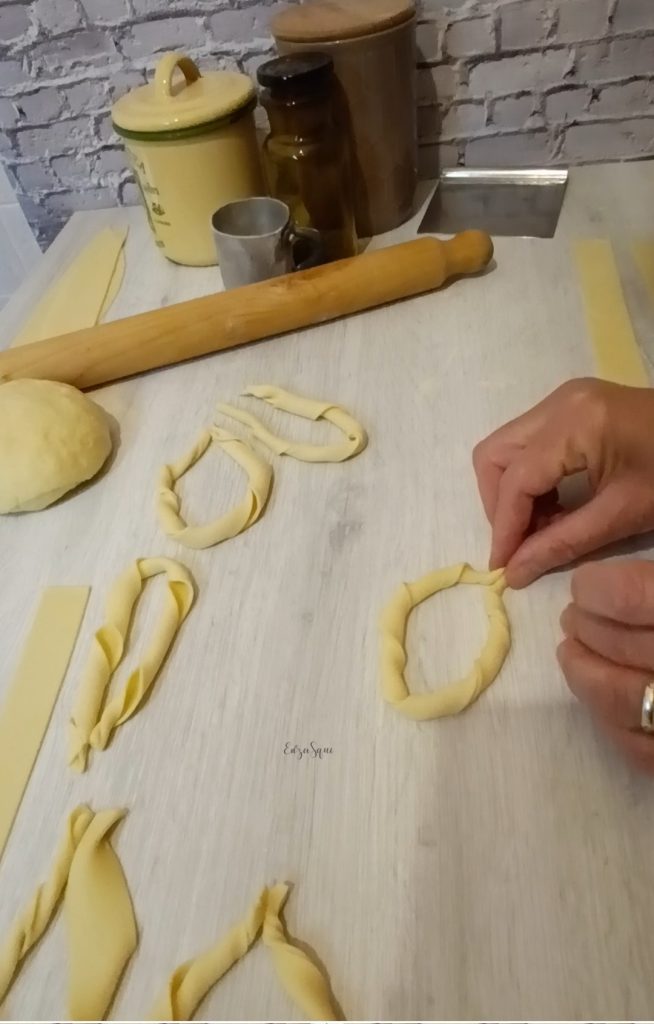
After cutting strips about 0.8 inches wide and 8-10 inches long, pinch the two ends and twist one side clockwise, the opposite side counterclockwise…You can see in the video…
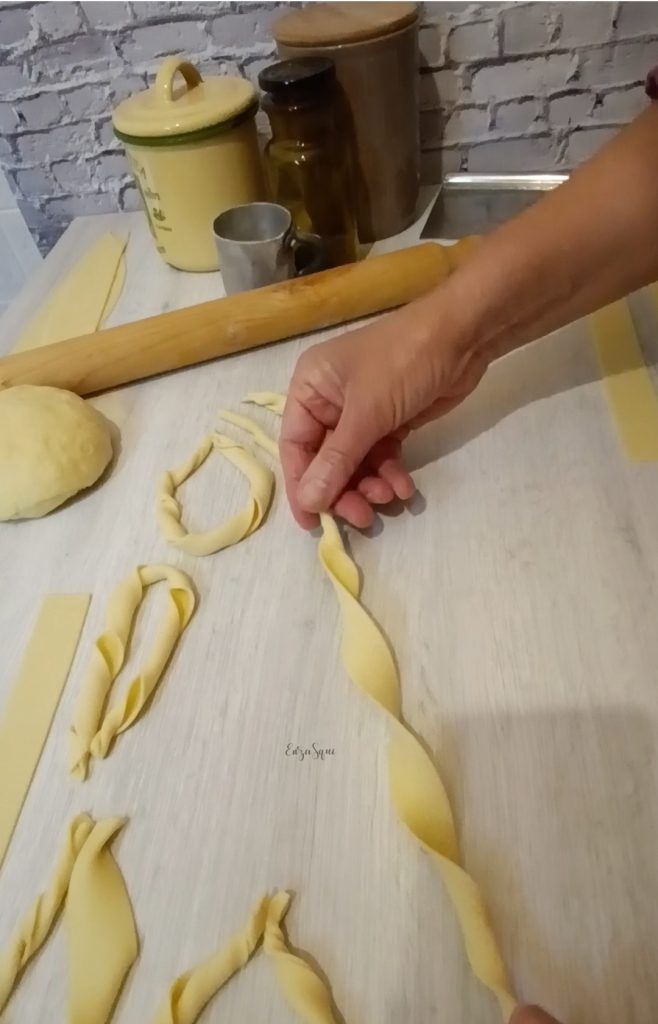
Bend your sagne into a ‘U’ shape and continue until the pasta is used up…
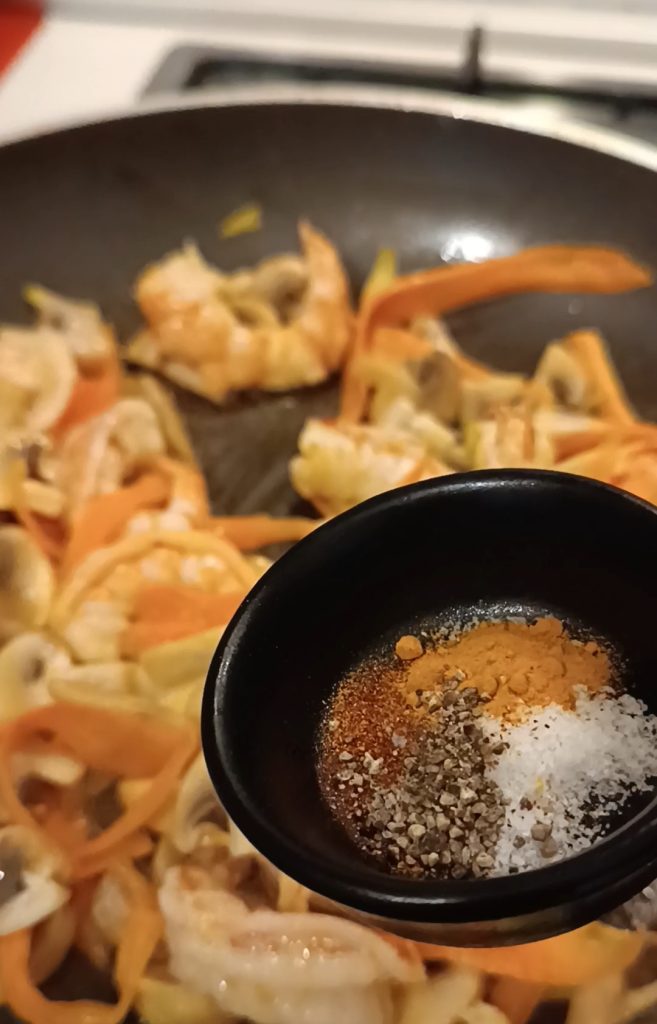
Sauté the garlic clove in olive oil, add the thinly sliced mushrooms, then the carrots; when well sautéed, add the shrimp tails cleaned of the black thread; finally, add salt and spices…
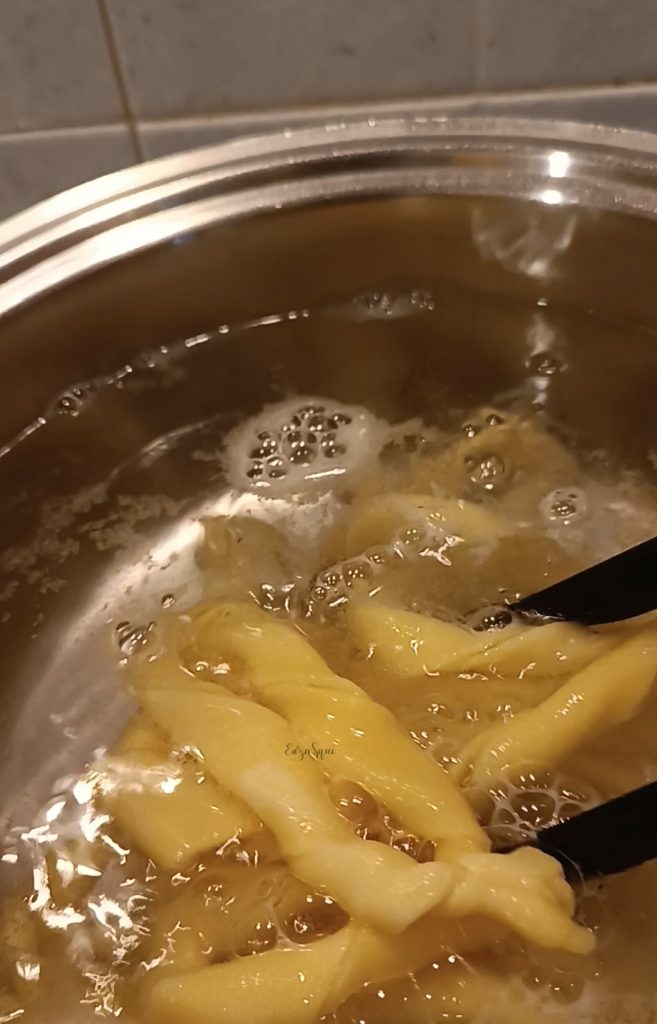
In a pot of salted water, cook the sagne for a few minutes…
And then transfer them into the dressing…further enhance with chopped parsley. Unusual, beautiful, and tasty
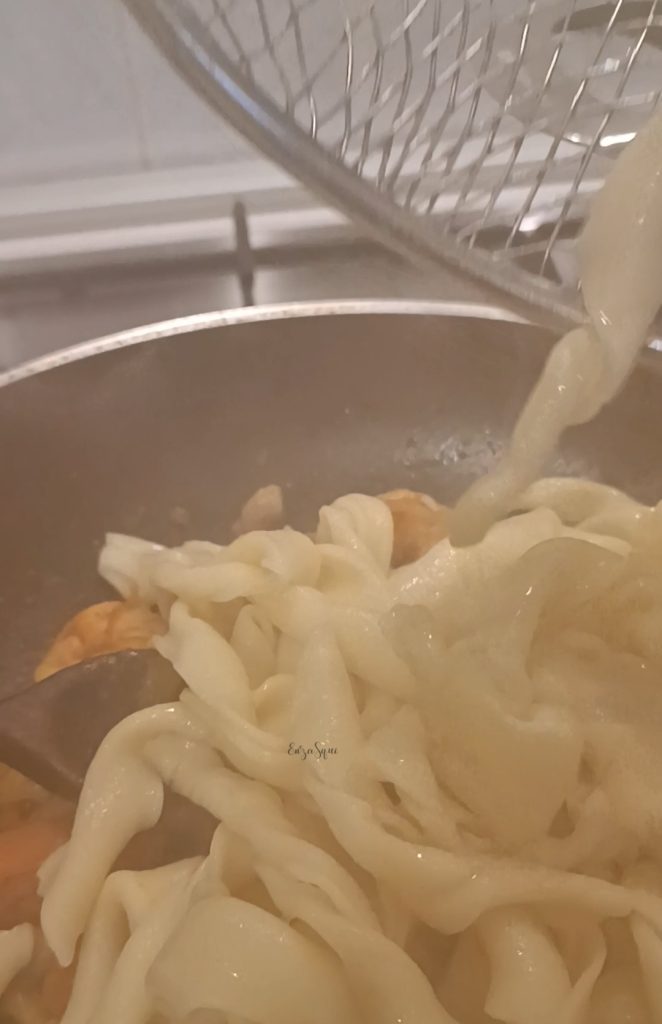
The twisted sagne are ready; all that’s left is to bring them to the table with their breath of novelty and exquisite taste
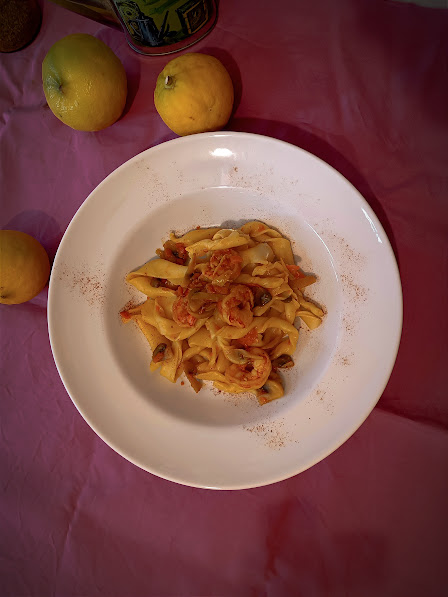
A first course worthy of our Italian regions, of our culture of good food
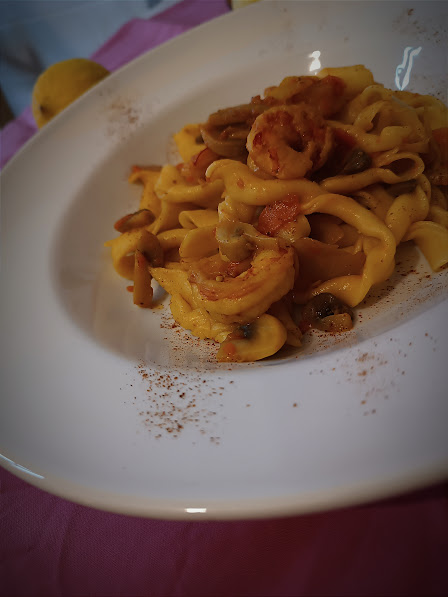
Uncooked sagne can also be frozen; once ready, you can store them in the fridge for one or two days…
