
Stale Bread Dumplings or Cajettes Recipe
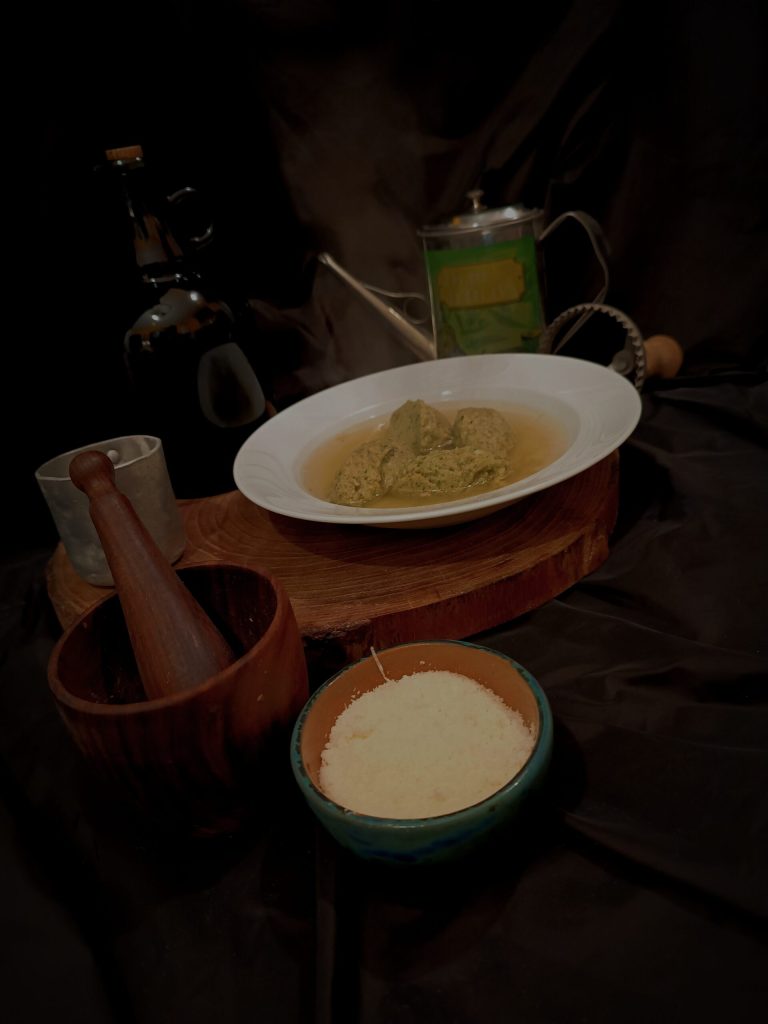
Bread Balls
Once when veal, a prized animal, was not available to everyone, food was created with small tricks
Filomena, a lady I met many years ago, gave me this recipe among many, a poor and tasty recipe; from when everything was preserved to be reused, nothing was wasted, because there wasn’t even the bare minimum; with food, poor dishes were created, with what little could be gathered from the garden and home, and everything was seasoned with gratitude.
Soups were an opportunity to reuse the little dry bread. Bread was not bought in shops but was made every two weeks, often in communal ovens, so the first was fresh and as the days went by, it naturally tended to dry out, so it was used to prepare other dishes mixed with what the countryside provided.
Originally, this first course can be seasoned with crumbled sausage and cooked in a pan along with rosemary and thyme. It will all be added to these dumplings and gratinated in the oven after adding cheese, Piedmont toma or others available; those who didn’t have the final touch ate them in broth.
And so sometimes I prepare the bread dumplings too, flavored with good eggs and fresh vegetables, to then cook them in a good boiling broth and serve them at the table for the pleasure of eating food to be savored slowly
- Difficulty: Easy
- Cost: Cheap
- Rest time: 2 Hours
- Preparation time: 30 Minutes
- Portions: 4
- Cooking methods: Boiling, Stove
- Cuisine: Italian
- Seasonality: All Seasons
Ingredients
Stale bread, eggs, milk and vegetables…
- 7 oz stale bread
- 1 bunch chard (Or wild herbs: dandelion, borage, poppy…)
- 1 cup milk
- 1.75 oz grated Parmesan cheese
- 3 eggs
- 8 cups meat broth (Or vegetable)
- to taste salt
- 2 pinches nutmeg
- 1 pinch black pepper (ground)
Steps
It doesn’t take much time! The first useful task is to soak the bread in the milk already cut into pieces…
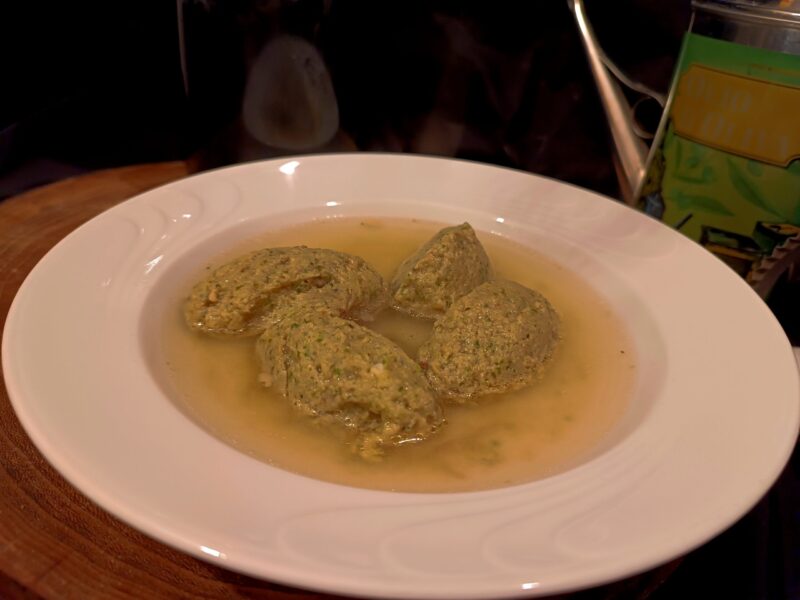
After soaking the stale bread with the milk, chop it finely…

Add the vegetables, boiled and tossed in a pan with a clove of garlic, and salt, blend or chop if you like… Finally, salt, pepper, and nutmeg

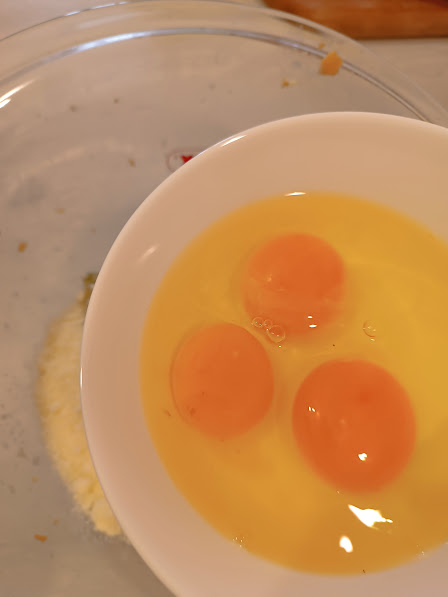
At this point, lastly, add the eggs and mix well, you will obtain a firm dough, if not, add a little breadcrumbs until the right consistency is reached.
Dough ready to cook, it only takes a few minutes, bring the broth to a boil…
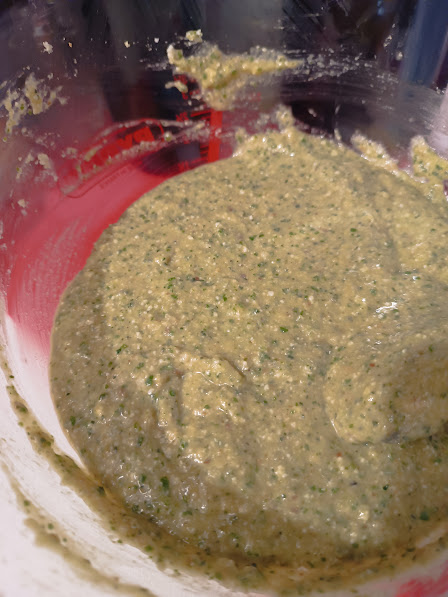
With a spoon, form quenelles and let them slide into the broth to cook…
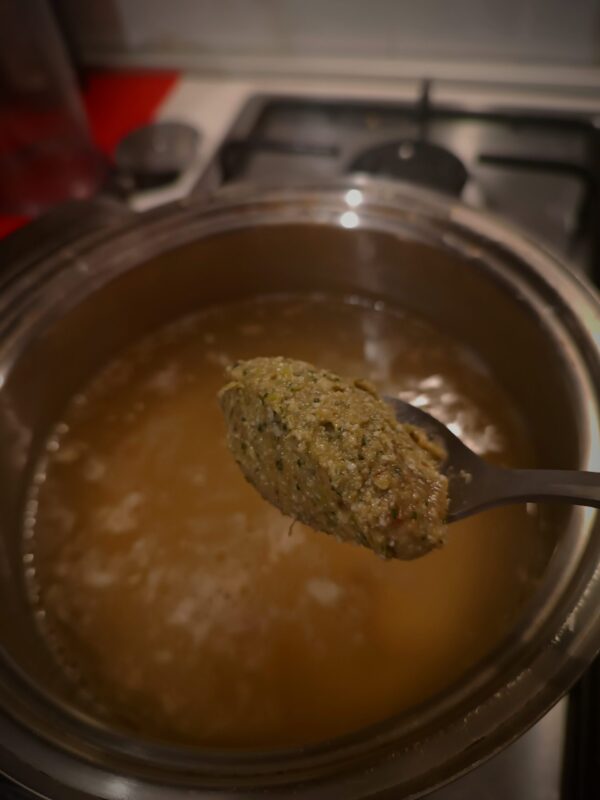
Finally, you can choose whether to serve them just cooked in broth with grated cheese, or gratin them in the oven for a dry and crispy result on the surface; in any case they are delicious, a simple food that you can also freeze to cook as needed. A way to reuse leftover vegetables, stale bread…
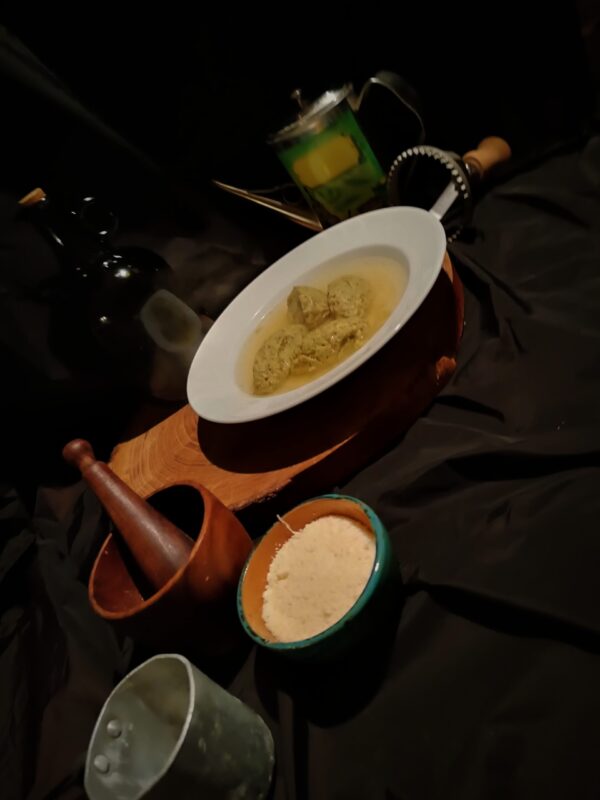
As mentioned above, you can use the vegetables you have at home, stale bread; but breadcrumbs are also fine if you like… You can freeze the formed quenelles to have them ready to cook on other occasions, or fry them and pass them in tomato sauce as vegetarian meatballs.
As mentioned above, you can use the vegetables you have at home, stale bread; but breadcrumbs are also fine if you like… You can freeze the formed quenelles to have them ready to cook on other occasions, or fry them and pass them in tomato sauce as vegetarian meatballs.
As mentioned above, you can use the vegetables you have at home, stale bread; but breadcrumbs are also fine if you like… You can freeze the formed quenelles to have them ready to cook on other occasions, or fry them and pass them in tomato sauce as vegetarian meatballs.
As mentioned above, you can use the vegetables you have at home, stale bread; but breadcrumbs are also fine if you like… You can freeze the formed quenelles to have them ready to cook on other occasions, or fry them and pass them in tomato sauce as vegetarian meatballs.
