
Pumpkin and speck cappellacci recipe with Jerusalem artichoke and sesame chips
Pumpkin time, time to spend a few more hours at home… So you have the opportunity to experiment with new recipes
I gladly eat pumpkin in all its variations; both sweet and savory
The cool weather, the desire to return to the mountains reminds me of the summer just past, with the blueberries picked in the basket; I would have liked to also go for mushrooms and chestnuts, but this year I had to give up…
Different problems prevented me from hiking in my beloved chestnut groves, from being able to savor the mushrooms gathered in the shade of the beeches
Never mind, I’ll make up for it soon, in the meantime, I’ll prepare the pasta for the cappellacci with dried blueberry powder
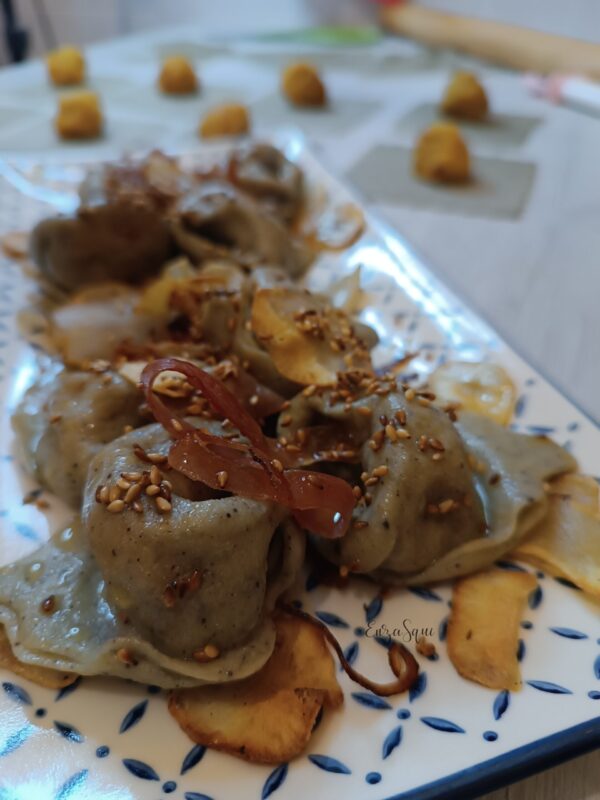
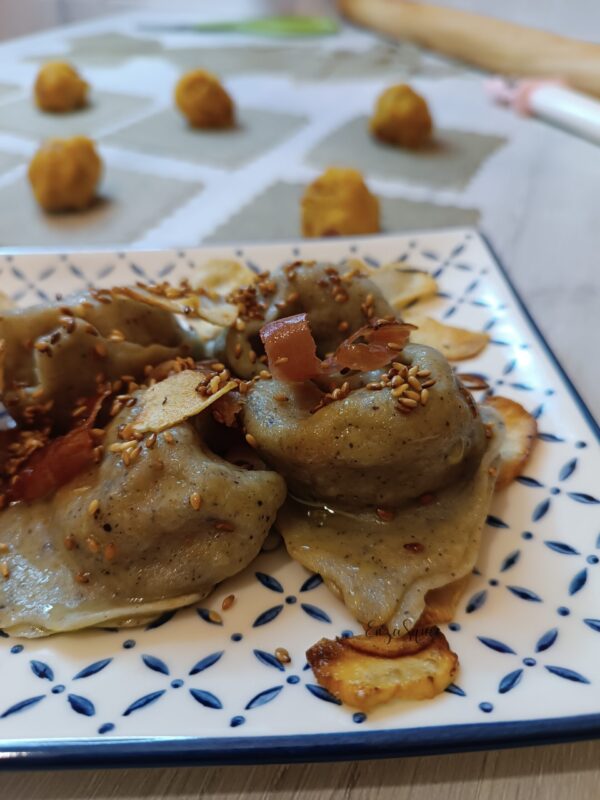
Sure, the bluish tint played a trick on me, the yellowish semolina and the orange eggs from my hens gave a brown hue to the cappellacci dough, but they were beautiful even so, the contrast with the orange pumpkin still yielded results
Homemade pasta, potatoes, and pumpkins from my garden, the speck added its own personal aroma and finally, the toasted sesame to experience different aromas and textures.
- Difficulty: Easy
- Cost: Economical
- Preparation time: 1 Hour
- Portions: 4
- Cooking methods: Boiling, Stovetop
- Cuisine: Italian
- Seasonality: Autumn, Winter
Ingredients
Potatoes, pumpkin, and Jerusalem artichoke chips…
- 8.8 oz re-milled durum wheat semolina
- 2 eggs
- 2 teaspoons blueberries (dehydrated and powdered)
- 1 pumpkin (Small)
- 3 potatoes
- 6 slices speck (not too thin)
- 2 tablespoons sesame
- 3 tablespoons grated Parmesan cheese
- 2 pinches black pepper
- to taste olive oil
- to taste salt
Tools
Wooden pastry board, pan, and pot
Steps
Kneading relaxes me, I find it soothing… Some background music, a glass of dry white wine… The freedom of time to find passion and satisfaction in what we create with our hands
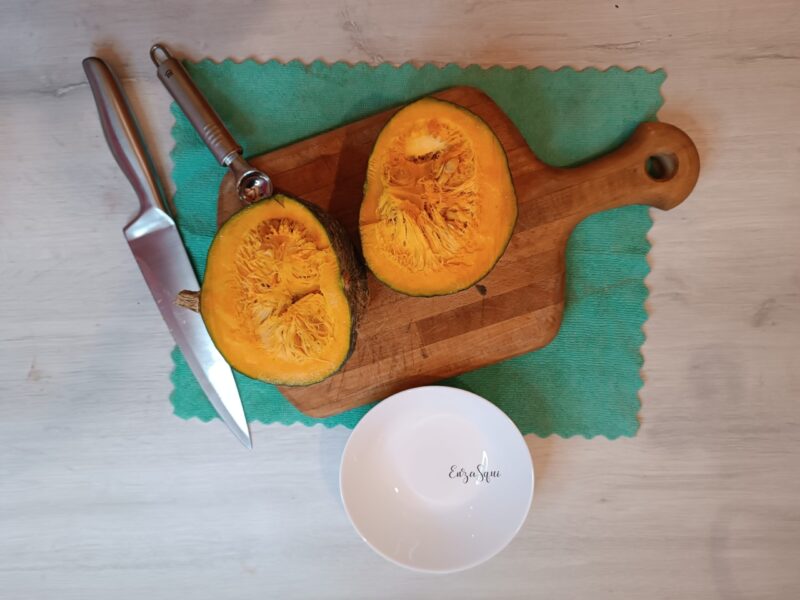
Cut the pumpkin into pieces or scoop out the pulp… I opted for the latter, wanting to use the shell as a container
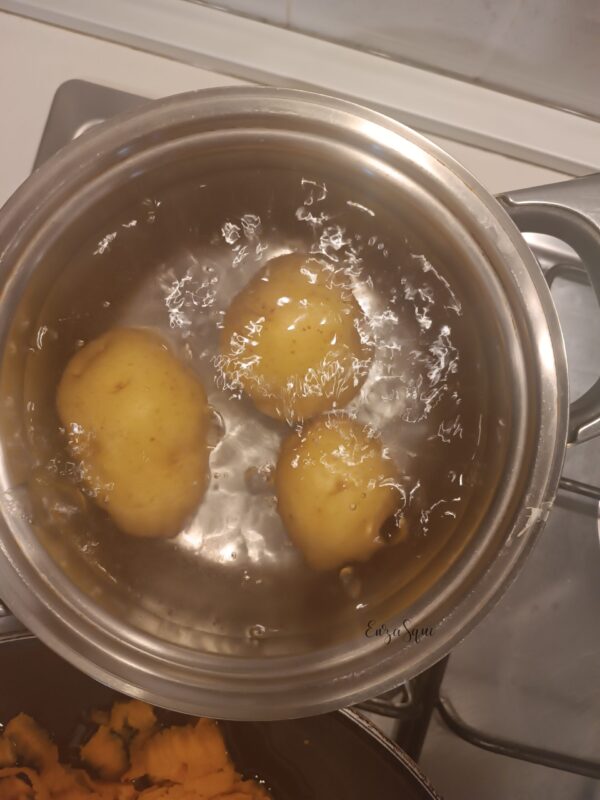
Boil 3 potatoes with the skin on, until cooked
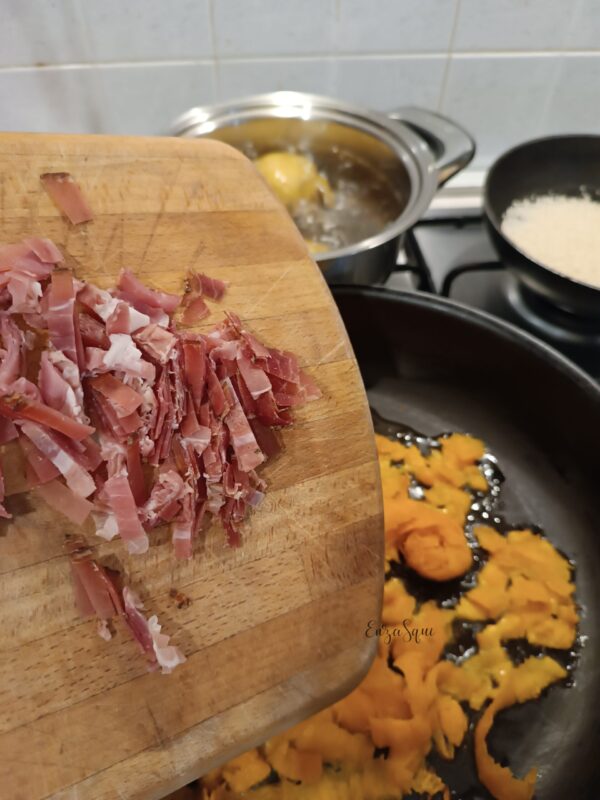
After obtaining the pumpkin pulp, sauté the speck cut into strips, reserve a few for garnishing the dish. Add the pumpkin and cook slightly, season with salt, and keep covered until ready to use
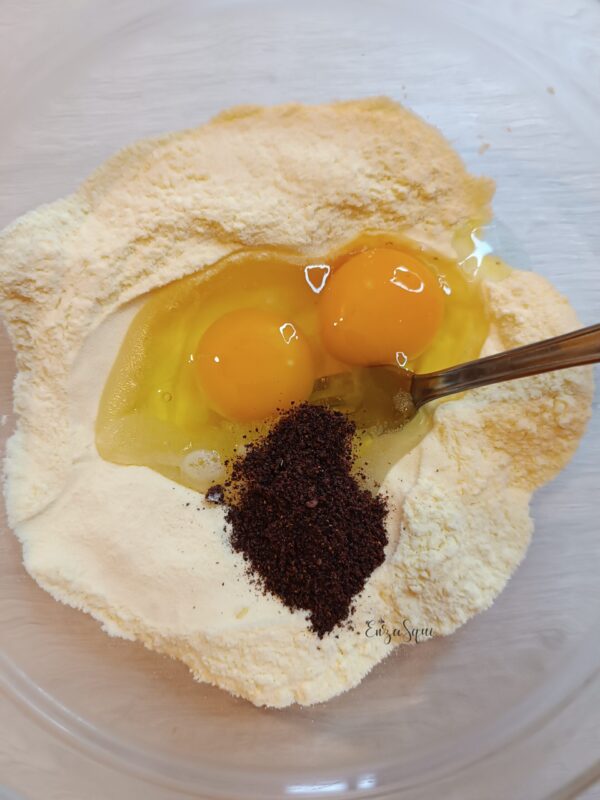
In the meantime, combine the semolina, eggs, and blueberry powder.
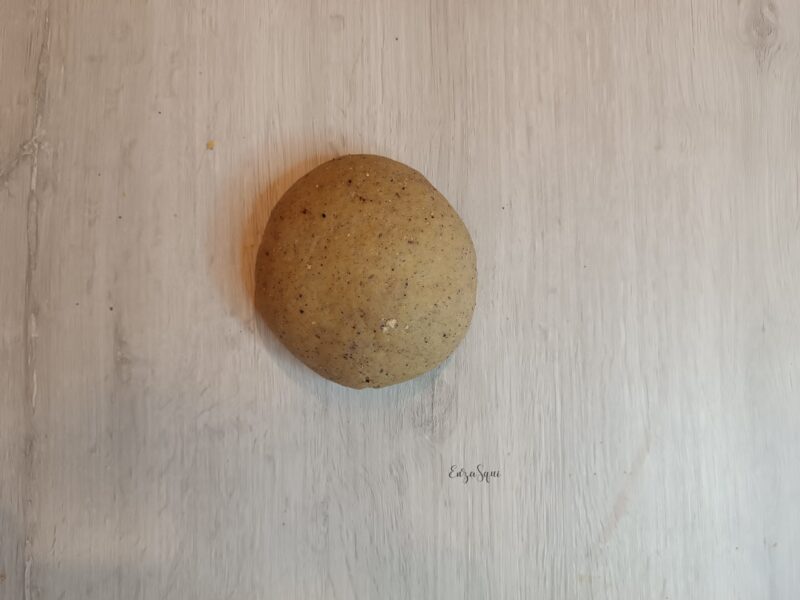
You will obtain a warm brown dough ball. Cover with plastic wrap until ready to use
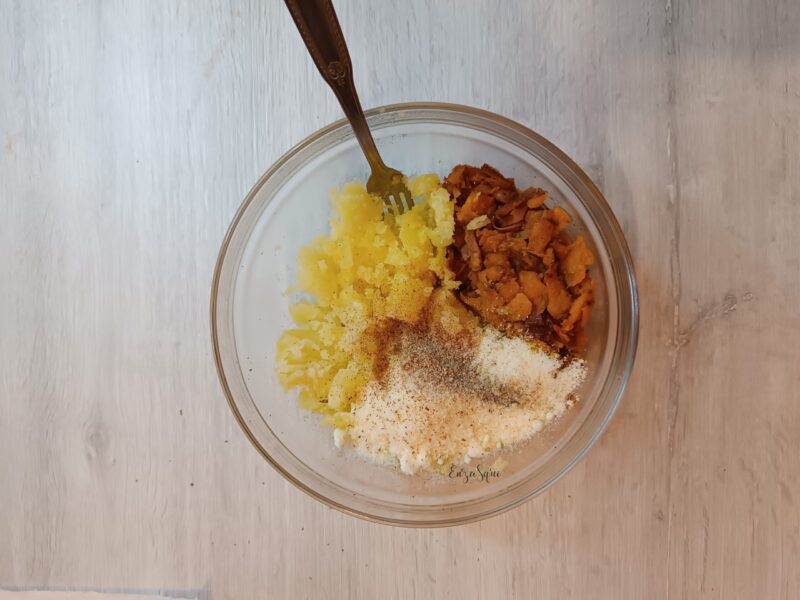
After boiling the potatoes, peel them, and add to the pumpkin and speck in a bowl, add the Parmesan cheese and a sprinkle of black pepper; work to combine everything after mashing the potatoes and pumpkin with a fork. I preferred to leave the filling not too fine to taste the different flavors in the ingredients and not make a homogeneous puree.
Roll out your pasta, cut it into squares about 1.5 – 2 inches per side, place the filling
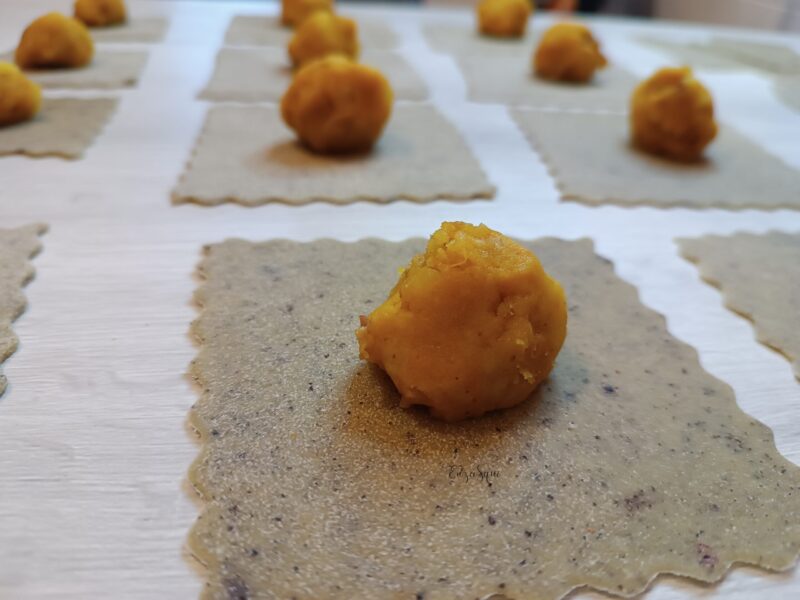
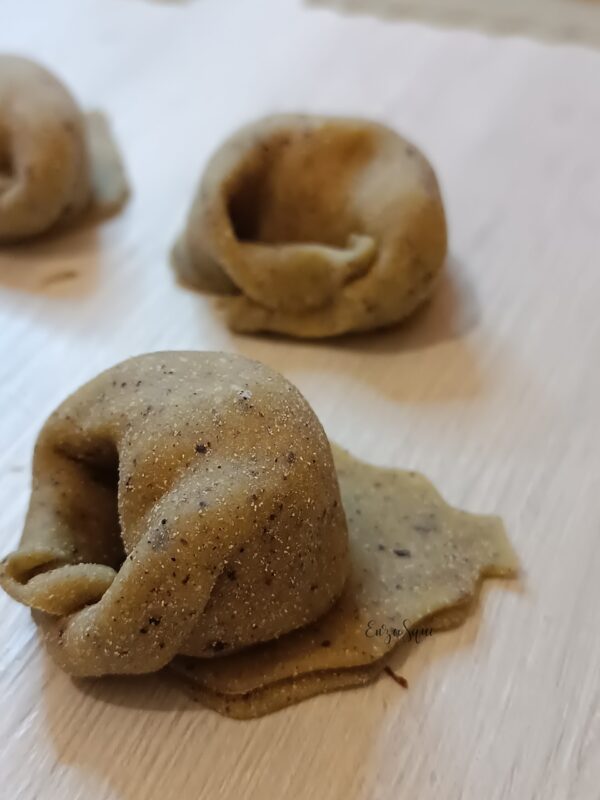
…and shape your cappellacci
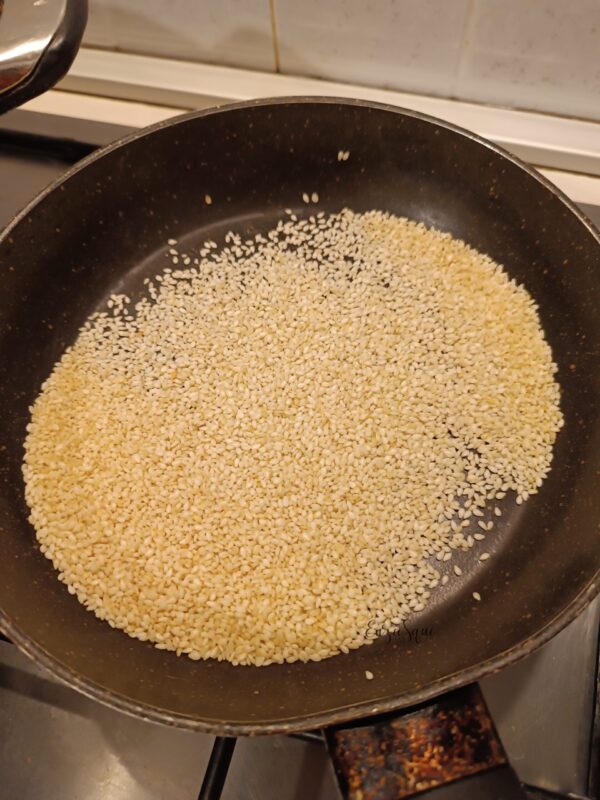
Now you can toast the sesame seeds, which will refine the dish and add a touch of crunch!
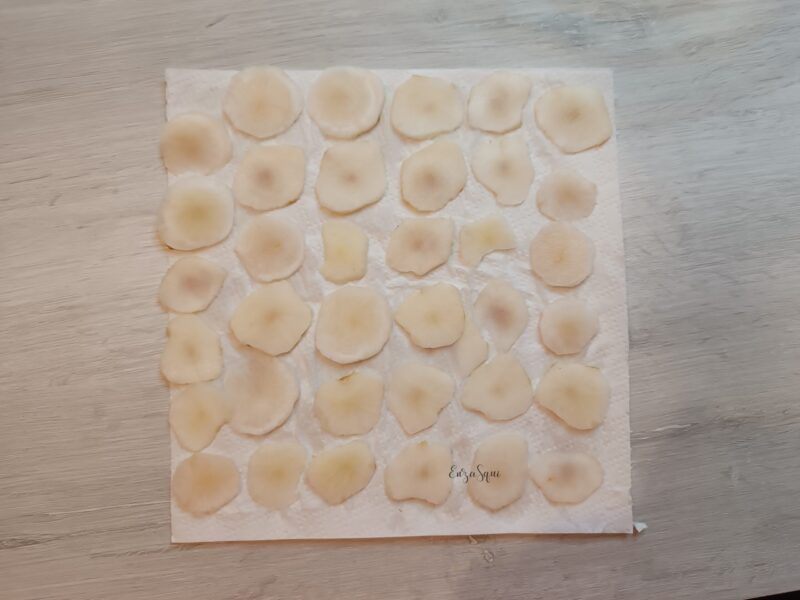
Put the pot with salted water to cook your cappellacci, and meanwhile, slice some Jerusalem artichoke thinly, which you will then fry to make chips to serve with the cappellacci
Cook the pasta, and dress it with a little sautéed speck in olive oil, accompanied by Jerusalem artichoke chips and toasted sesame seeds
I haven’t added cheese on top, but feel free if you wish!
Like many stuffed pastas, it can be frozen, even just for a day, to maintain the shape; you can prepare them in advance this way. If you don’t want to freeze and need to prepare them the day before, place them on parchment paper with a little rice flour, as the moisture from the filling could cause the pasta to break.
