
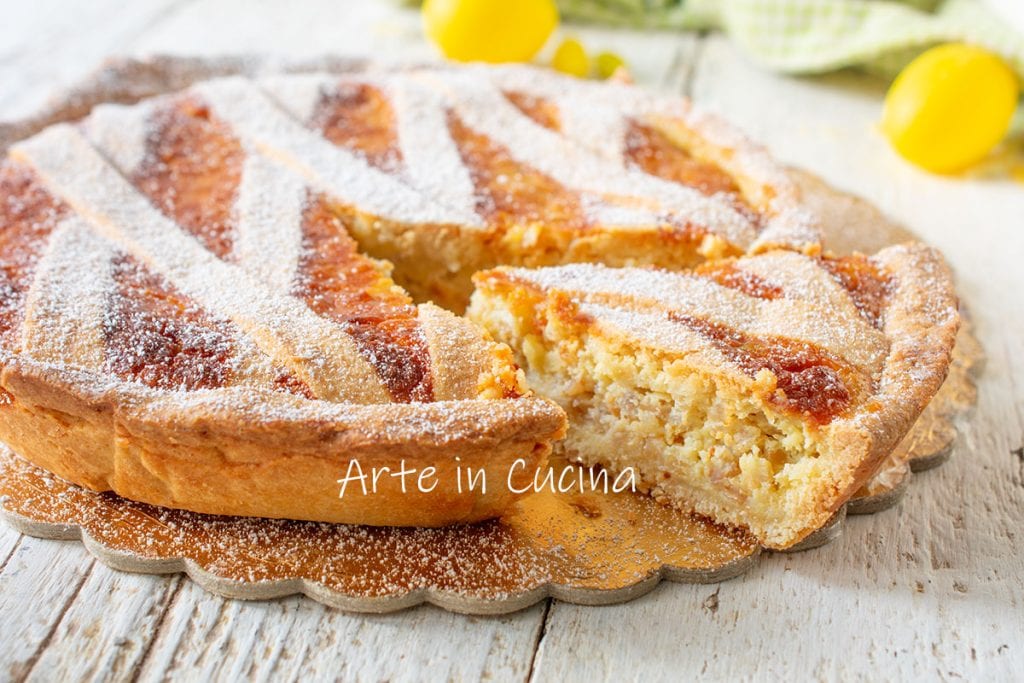
Original NEAPOLITAN PASTIERA traditional recipe from grandma, a typical Easter dessert with shortcrust pastry, filled with wheat and candied fruits.
The Neapolitan Pastiera is a classic dessert of Neapolitan tradition, a culinary symbol of Easter that enchants with its authentic flavors and ancient history. Among the many versions, the one from the famous Scaturchio pastry shop stands out for its original recipe, which gives an irresistible touch to this Easter delight.
The Scaturchio pastry shop, renowned for its Neapolitan delicacies, has made the already delicious Neapolitan Pastiera even more special. Their original recipe, passed down through generations, is enriched with the intense fragrant notes of Neroli drops and traditional candied fruits.
Although the Neapolitan Pastiera is traditionally linked to Easter celebrations, it can be enjoyed all year round, and sometimes it is prepared even at Christmas or during Ferragosto.
Preparing the Scaturchio Neapolitan Pastiera is an experience that brings you closer to Neapolitan roots and culture. With authentic ingredients and the original recipe, you can delight family and friends with a dessert that embodies all the warmth and love of Neapolitan tradition.
Join me in the kitchen today, there’s the original Neapolitan pastiera traditional recipe.
Published on August 2, 2012, 10:33
- Difficulty: Very easy
- Cost: Very economical
- Rest time: 30 Minutes
- Preparation time: 30 Minutes
- Cooking time: 1 Hour 30 Minutes
- Portions: 12
- Cuisine: Italian
- Seasonality: Easter
Ingredients
- 1 lb 2 oz g sheep ricotta (Roman or Sardinian)
- 2 1/2 cups g sugar
- 1 lb 2 oz g wheat
- 1 tbsp g butter
- 4 eggs
- 3 1/2 oz g candied fruit
- vanilla
- to taste orange aroma (orange blossom or Neroli drops)
- 4 cups g all-purpose flour
- 1 cup g sugar
- 2 eggs
- 7 oz g lard (or butter)
- 1/2 tsp g baking ammonia
- 1 lemon zest
Steps
The recipe is for two medium-sized pastiera or one large for a pan about 12 inches.
Place the shortcrust pastry ingredients in the mixer bowl, work the ingredients well then form a ball, wrap it in cling film, and let it rest in the fridge for at least half an hour.
Cook the wheat for about 10 minutes in water with butter or lard then drain and set aside.
Mix the ricotta with sugar, eggs, candied fruit, a vial of vanilla, and orange blossom.
Work the ingredients well until you get a smooth mixture.
Divide the pastry into two parts, one smaller for the strips on top, then roll out the pastry on a floured surface and place it in a 12-inch pie dish or divide it into two pans.
Fill the base with the filling, then roll out the pastry and cut the strips, place them on the filling.
Bake at 356°F for about 1 hour and 10 minutes for the large pan, 45 minutes for the small one.
Remove from the oven and let it cool completely before cutting.
With the BIMBY: Prepare the shortcrust pastry by putting flour, butter (or lard), eggs, vanilla sugar, and a pinch of salt in the bowl: 40 sec. speed 6
Remove the dough from the bowl and wrap it in cling film, place it in the fridge for 30 minutes.
Pour the wheat and butter into the bowl: 10 min. 212°F Anticlockwise speed 1.
Set aside and let it cool.
Insert sugar and eggs into the bowl: 2 min. 98°F speed 4.
Pour half of the mixture into a bowl.
In the bowl add ricotta, the set-aside wheat, and orange blossom water: 20 sec. Anticlockwise speed 4
Pour the rest of the mixture into the bowl and mix well 20 sec. Anticlockwise speed 4
Bon appétit
If you like the recipe click the stars at the bottom of the article. THANK YOU!
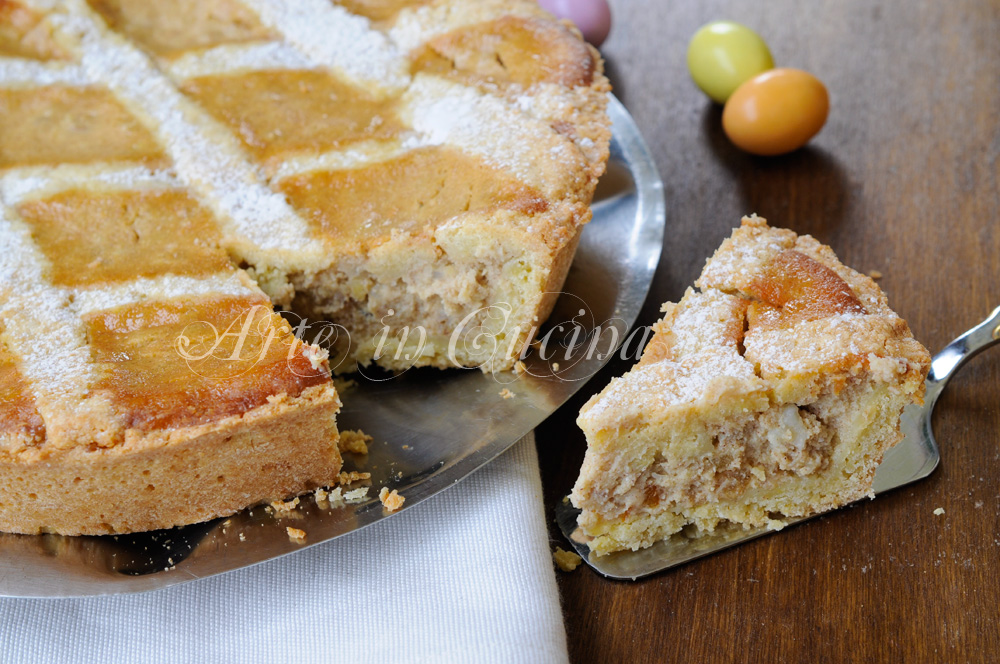
I made a mini version of the Neapolitan Pastiera, it is perfect to delight both adults and children on any occasion. Easy to prepare and irresistible to the palate, this version was literally devoured by the little one at home, confirming its success even among the youngest.
The pastiera was born around 1600, the legend says that the siren Partenope entertained the Neapolitans with her songs and in return, she received gifts: ricotta, symbol of abundance, flour wealth, eggs fertility, wheat in milk symbolizing the union of the animal kingdom with the plant one, sugar indicated the sweetness of the siren’s song, orange blossom the scents of the Neapolitan land, spices, a tribute from all people.
It symbolizes various cultural and religious elements:
The Resurrection of Christ: The Neapolitan Pastiera is traditionally associated with the celebration of Easter, the Christian festival that commemorates the resurrection of Jesus Christ. Its round and golden shape evokes the symbol of the sun, which represents rebirth and new life.
The Abundance of Spring: The pastiera is prepared with typical spring ingredients, such as wheat cooked in milk, fresh ricotta, candied fruits, and orange blossom. These ingredients symbolize the abundance of the spring season and the rebirth of nature after the harsh winter.
The Community and Sharing: The preparation of the pastiera is an opportunity to bring family and friends together, sharing culinary traditions and celebrating the Easter holidays together. The gesture of offering and sharing the pastiera with others symbolizes the importance of community and generosity.
The Cultural Roots: The pastiera is deeply rooted in Neapolitan culture and traditions. Its recipe passed down from generation to generation represents the connection to the historical and cultural roots of the city of Naples and the surrounding region.
Original NEAPOLITAN PASTIERA traditional recipe
New: subscribe to my WhatsApp channel
FOLLOW ME ON TELEGRAM ENABLE NOTIFICATIONS
FOLLOW ME ON TIKTOK
FOLLOW ARTE IN CUCINA ON INSTAGRAM
FAQ (Questions and Answers) Original NEAPOLITAN PASTIERA traditional recipe
What does the pastiera symbolize?
The Neapolitan Pastiera symbolizes rebirth, abundance, community, and cultural roots, making it not just a delicious Easter cake but also an important element of Southern Italy’s culture and traditions.
Why is the pastiera not put in the fridge?
Because the filling dries out too much and its flavor changes significantly.
How long does the Neapolitan pastiera last?
It can be stored for 1 week or about 10 days.
Why is the pastiera made at Christmas?
It is a kind of good omen or for superstition in case it could not be “seen” or “eaten” at Easter.
Static or fan oven for the pastiera?
Both cooking methods are fine, perfect for a fan oven.
