
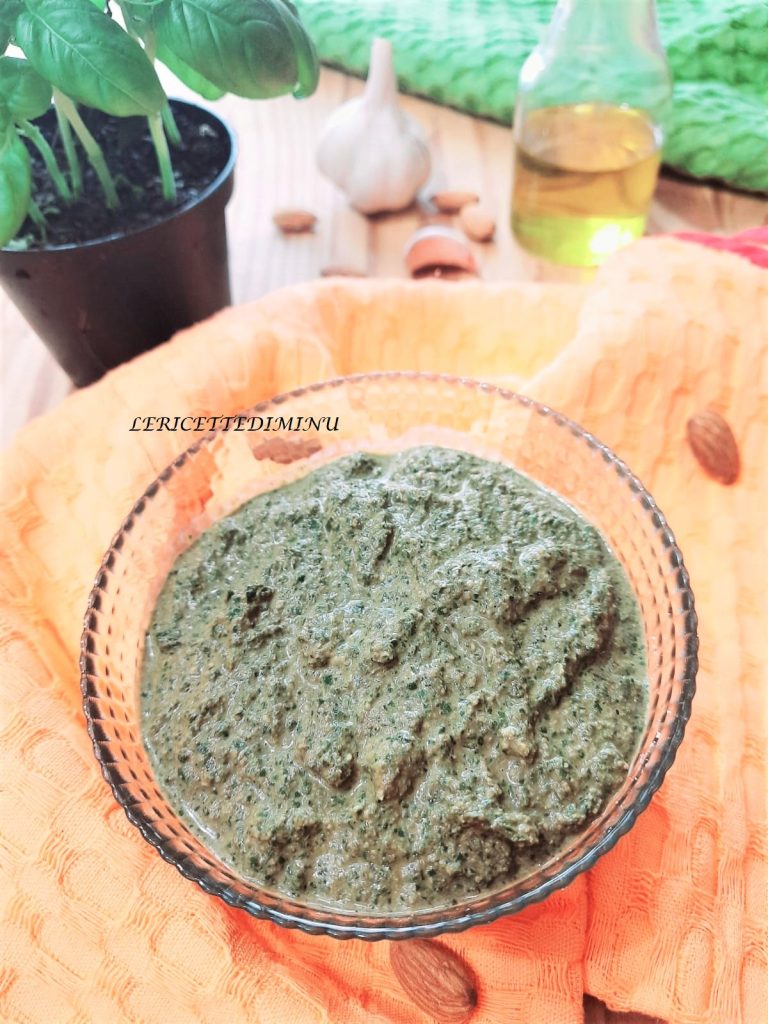
The basil and almond pesto recipe and preservation is a simple and economical way to make and keep pesto at home for a while.
Using fresh and fragrant basil and employing almonds instead of pine nuts, my version of Genoese pesto turns out to be delicious and also cheaper than the original version that includes the more expensive pine nuts.
It is quick to make and rich in minerals such as iron, potassium, zinc, etc., naturally present in basil, and all the other vitamins and proteins contained in the other ingredients, such as vitamin D from almonds and calcium from cheese.
The presence of garlic, with its well-known antiseptic properties, is indeed a real added value not only in terms of taste.
Preserving it is not a demanding operation at all, and it will allow us to enjoy it with a taste almost identical to when we just made it, for several months.
A quick and healthy way to dress a last-minute pasta, as by following my tips, you will have it ready to use even in the time it takes to cook the pasta.
Try it, and you will have a new lunch or dinner-saving resource for a period of the year that extends far beyond the summer.
If you like my recipes, you can follow me on my FACEBOOK page and on INSTAGRAM
Thank you ❤😘❤
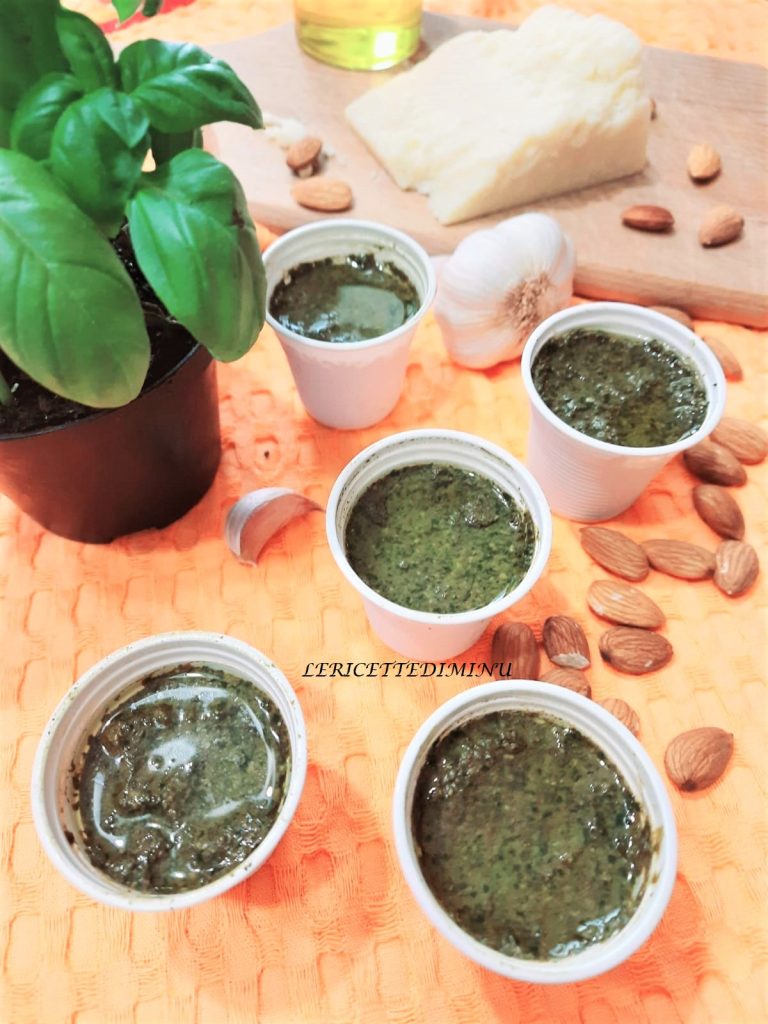
- Difficulty: Very Easy
- Cost: Very Inexpensive
- Preparation time: 15 Minutes
- Portions: 10
- Cooking methods: No Cooking
- Cuisine: Italian
- Seasonality: Spring, Summer
Ingredients
- 4.2 oz basil (fresh and already cleaned)
- 1.4 oz almonds (without skin or pine nuts)
- 1/4 cup extra virgin olive oil
- 1 clove garlic (large or 2 small)
- to taste coarse salt
- 1.4 oz Parmesan cheese (grated)
Tools
- Blender
- 5 Small glass
- 5 Lids to close the glasses
Steps
For making basil and almond pesto with preservation, start by rinsing the basil several times under running water, then leave it to soak in a bowl full of clean water for about ten minutes.
Detach the most beautiful and intact leaves from the stems and weigh the amount of basil thus obtained.
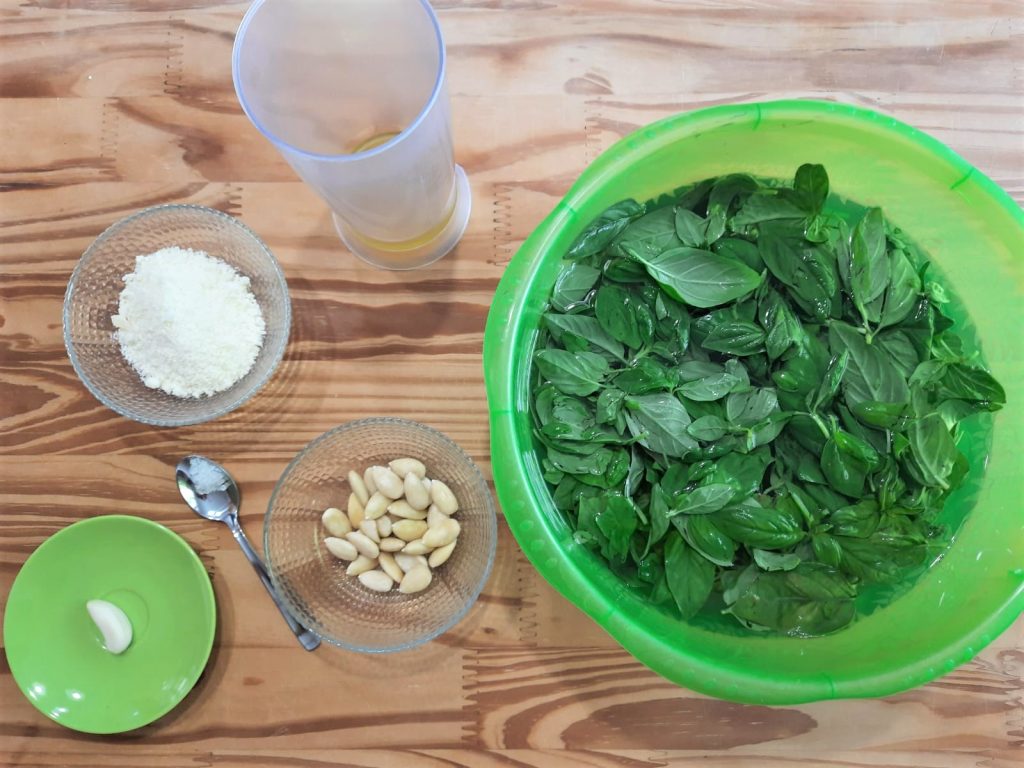
Put the leaves in the blender jar along with the coarse salt, garlic, almonds (or pine nuts), grated Parmesan cheese, or in small pieces, and extra virgin olive oil.
If you intend to preserve it, many prefer to add the cheese only at the time of serving, in which case it will suffice to omit its addition at this stage.
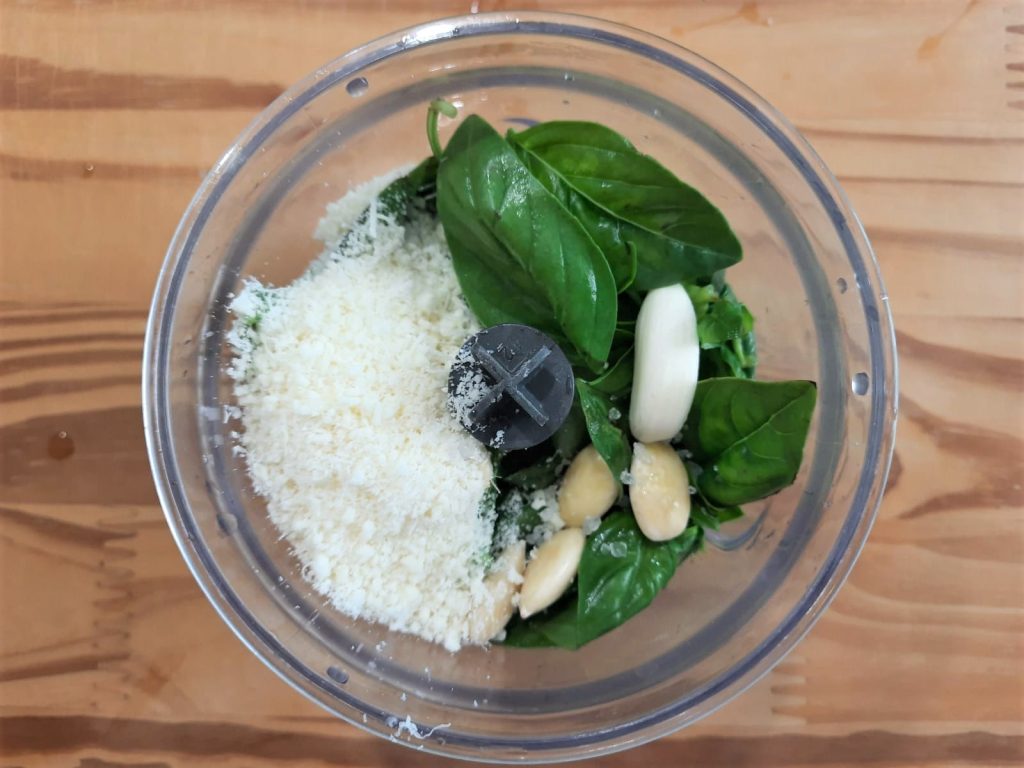
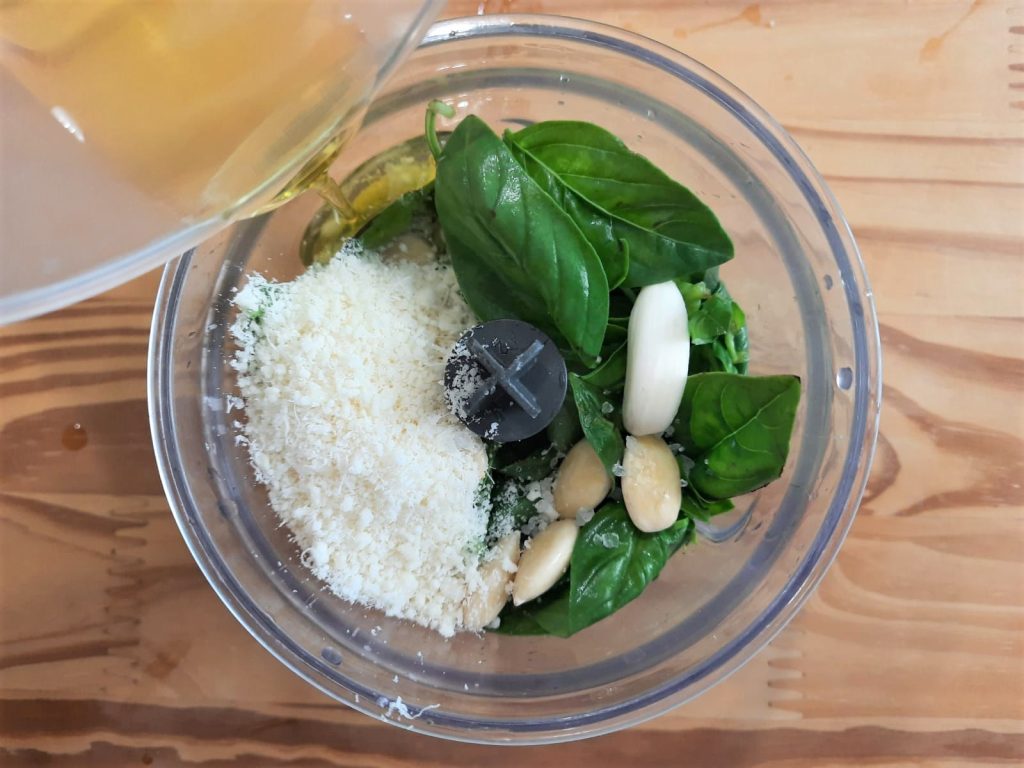
Blend making short pauses between blender starts until you get a fine and homogeneous mixture, set aside what you plan to consume immediately and put the rest in plastic coffee cups for preservation.
Fill them leaving a margin to insert the lid without any spillage.
As an alternative to plastic cups, you can use glass jars or aluminum trays with a lid.
The advantage of using plastic coffee cups is that it will be very easy to remove the pesto even if still frozen, while using glass jars you will have to wait until it is almost completely softened before you can take it out.
Gently tap the bottom of the filled cups against the palm of your hand to release any air bubbles.
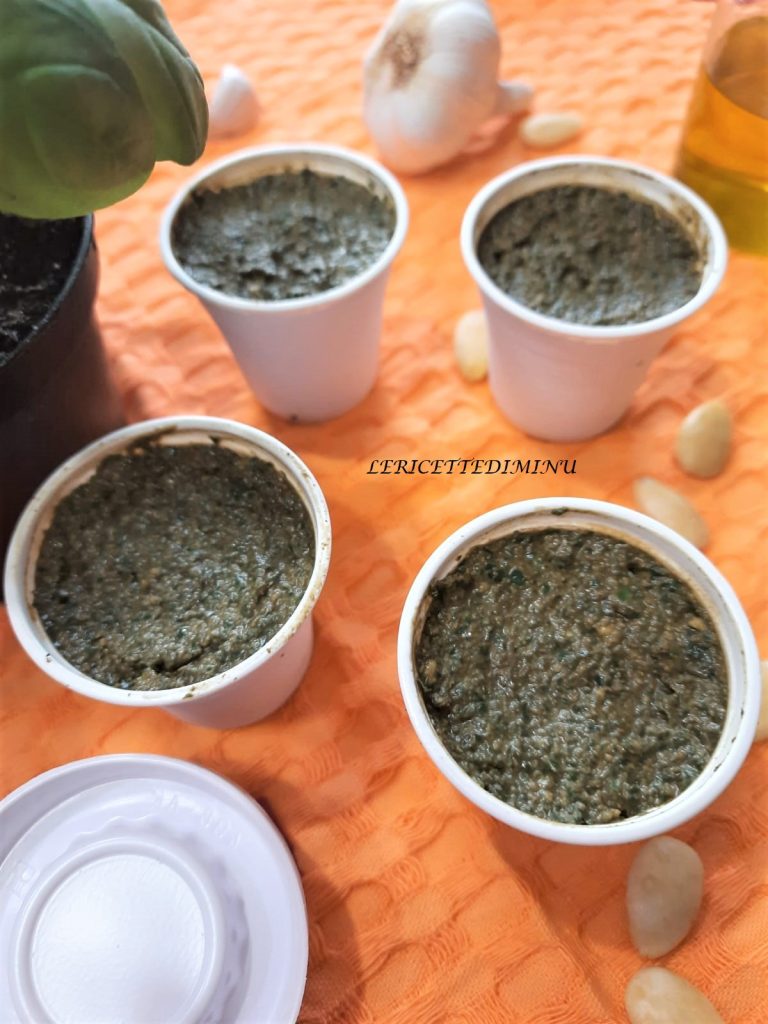
Cover the pesto surface with a thin but uniform layer of oil to better isolate the pesto.
Close with the lid and freeze after indicating the start date of freezing on each cup.
The content of each cup will be more than enough to dress 2 or 3 plates of pasta.
When using it, if you are short on time, just slide the still-frozen pesto from the cup, remove the surface oil with a knife, and place the pesto on a saucer while bringing the water to a boil and cooking the pasta, it will be soft by the end.
Leave the pasta very al dente and save a few tablespoons of cooking water.
Cut the pesto into pieces directly on the drained pasta with a knife, add the reserved water and another drizzle of oil. Also, if it was not added before, it’s time to add abundant grated Parmesan cheese, stir.
Wait a few minutes, stir again, and serve.
If instead, you planned for pesto as a pasta dressing for the day, take it out of the freezer a few hours in advance and thaw it in the fridge.
The basil and almond pesto recipe with preservation is thus completed.
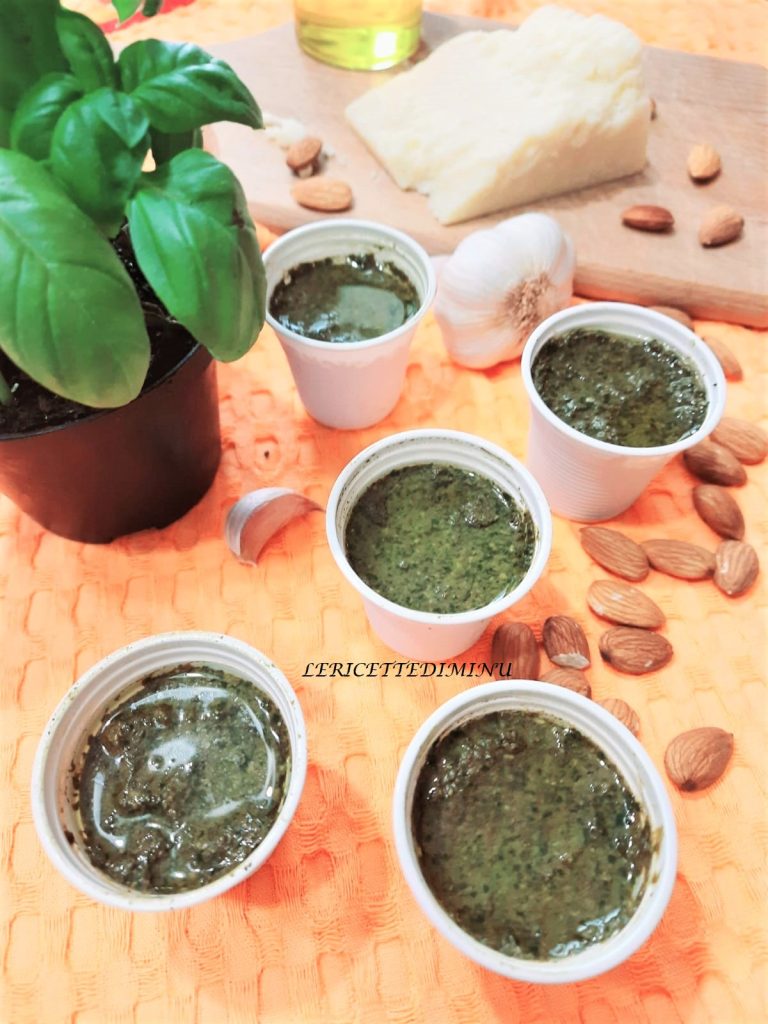
Store in the freezer for no more than three months. Once thawed, keep in the fridge for a maximum of one day and well closed.
Fresh, it can be stored closed in an airtight container in the fridge for about 2 days.
Fresh, it can be stored closed in an airtight container in the fridge for about 2 days.
Fresh, it can be stored closed in an airtight container in the fridge for about 2 days.
Sponsored links on the page
Sponsored links on the page
For free, you can subscribe to my new YOUTUBE channel by clicking here. You will receive a notification every time I publish new video recipes.
