How to Cook Salt-Crusted Fish
Discover how to cook a perfect and flavorful salt-crusted fish: a perfect guide with all the tricks to get the crust and cooking times right.
“Elegant fish dinner with very few ingredients?
Here’s how.” Salt-crusted fish: the only trick you need to know to keep it from drying out.”
This recipe celebrates the meeting of tradition and technique: the fish is wrapped in a scenic salt crust that acts as a natural oven, sealing in moisture and aromas. Breaking the crunchy shell at the table, you’ll discover incredibly tender and juicy flesh, capable of releasing all the essence of the sea in a dish as elegant as it is simple to prepare.
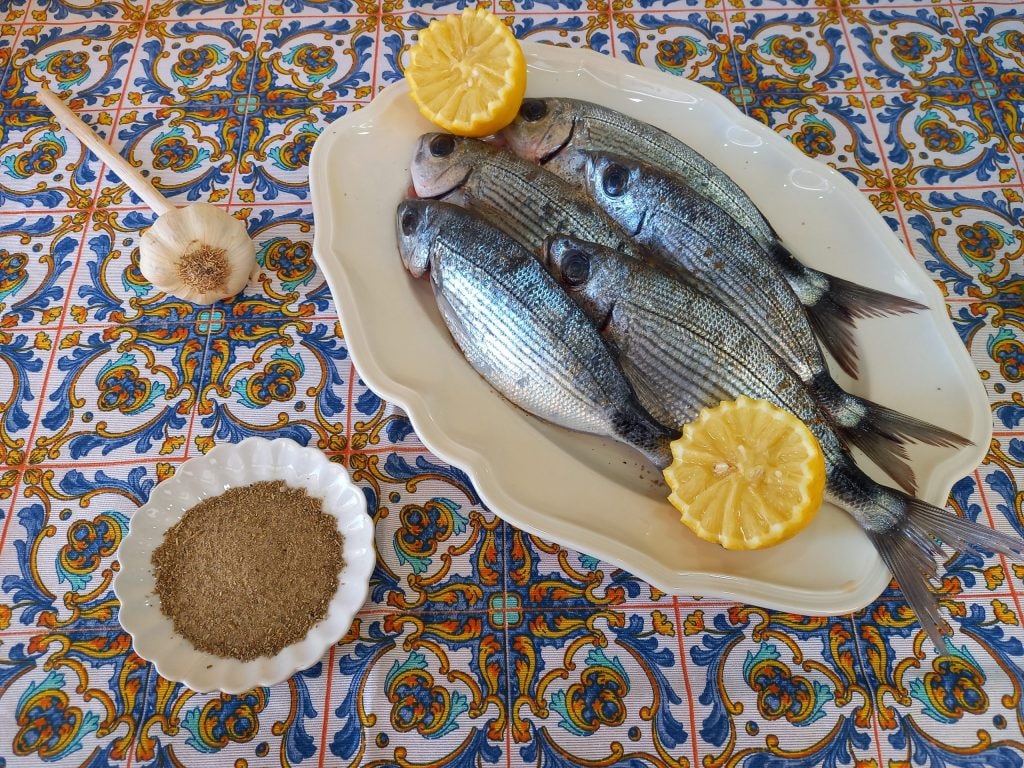
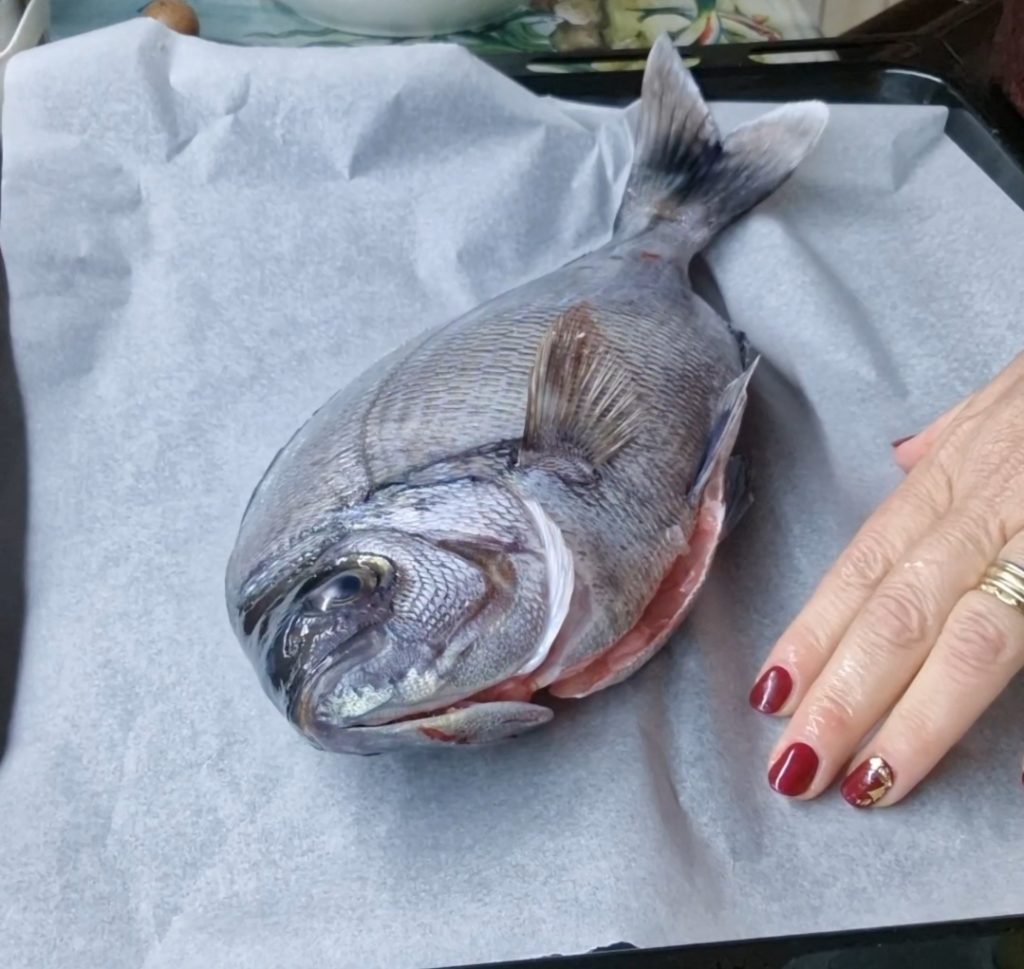
For this recipe, I had a beautiful fish called tanuta. It’s a close cousin of the gilt-head bream. Its meat is very exquisite and succulent.
With this recipe, you can use any type of fish weighing at least half a kilogram; typically, a regular household oven can fit a fish weighing about 5.5 lbs (2.5 kg), at most placed diagonally on a baking sheet.
If your fish is larger and you still want to cook it in the home oven, you can remove the head and fill that part with parchment paper to prevent salt from entering the fish.
In any case, whether with the head or without, the fish should never be scaled because the scales will come off when you remove the salt crust.
Thought for you:
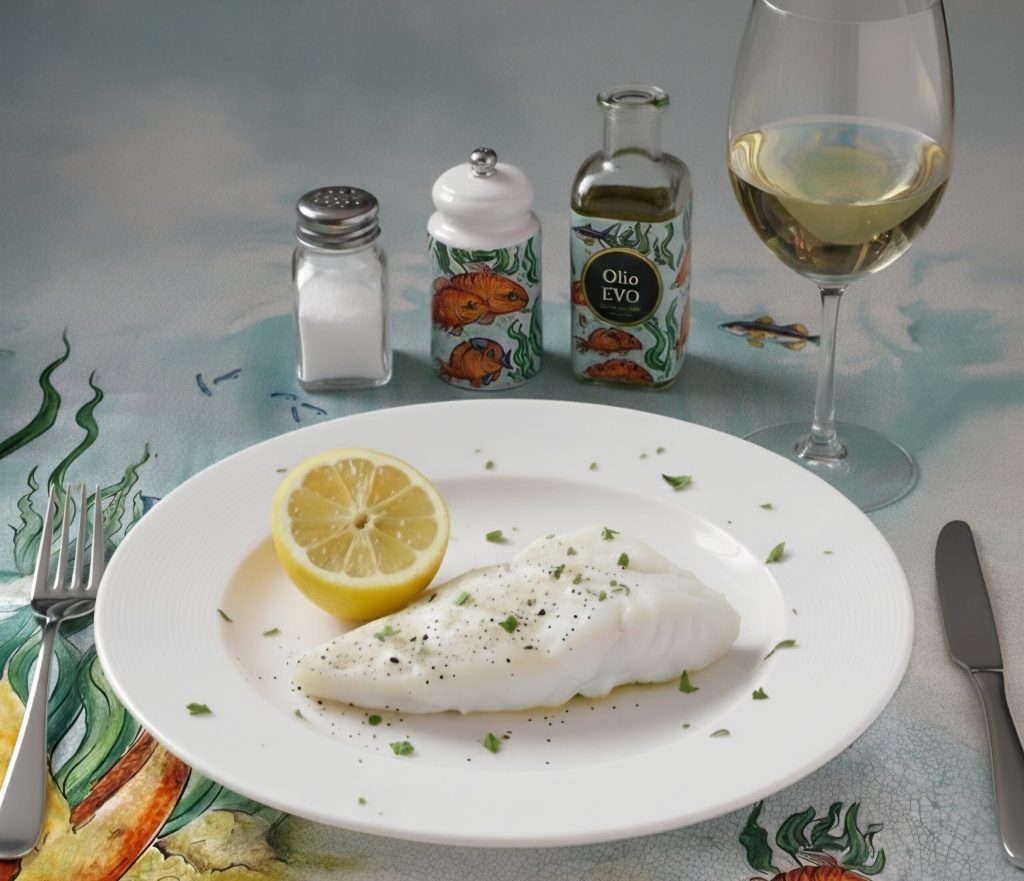
- Difficulty: Easy
- Cost: Medium
- Rest time: 5 Minutes
- Preparation time: 15 Minutes
- Portions: 3
- Cooking methods: Electric oven, Oven
- Cuisine: Italian
- Seasonality: All seasons
- Energy 270.75 (Kcal)
- Carbohydrates 2.11 (g) of which sugars 0.06 (g)
- Proteins 34.62 (g)
- Fat 14.49 (g) of which saturated 2.48 (g)of which unsaturated 1.30 (g)
- Fibers 0.08 (g)
- Sodium 131.22 (mg)
Indicative values for a portion of 200 g processed in an automated way starting from the nutritional information available on the CREA* and FoodData Central** databases. It is not food and / or nutritional advice.
* CREATES Food and Nutrition Research Center: https://www.crea.gov.it/alimenti-e-nutrizione https://www.alimentinutrizione.it ** U.S. Department of Agriculture, Agricultural Research Service. FoodData Central, 2019. https://fdc.nal.usda.gov
Ingredients
Let’s go shopping
- 1.76 lbs gilt-head bream (or another whole fish)
- 2 egg whites
- 1.32 lbs fine salt
- to taste roast seasonings
- to taste extra virgin olive oil
- to taste pepper
How to Cook Salt-Crusted Fish
Tools
We’ll need:
- 1 Knife
- 1 Cutting board
- 1 Baking tray
- 1 Parchment paper
- 1 Electric whisk bosch
Steps
How to Cook Salt-Crusted Fish
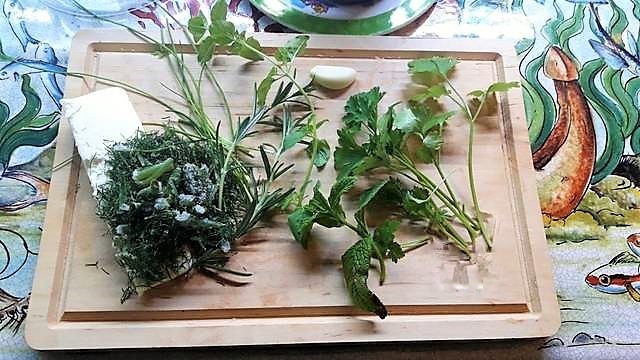
In my recipe, I add some homemade seasonings, click here to find out how I make them.
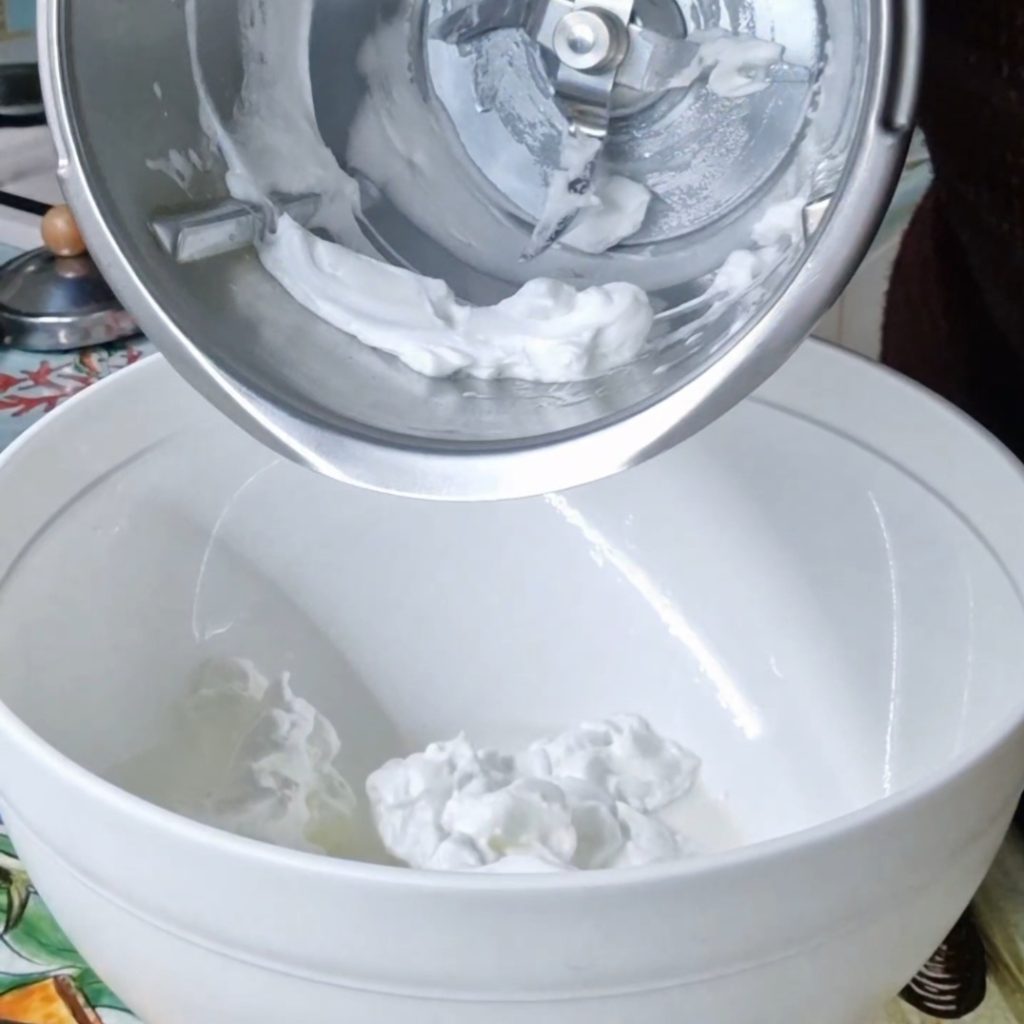
Once the egg whites are whipped,
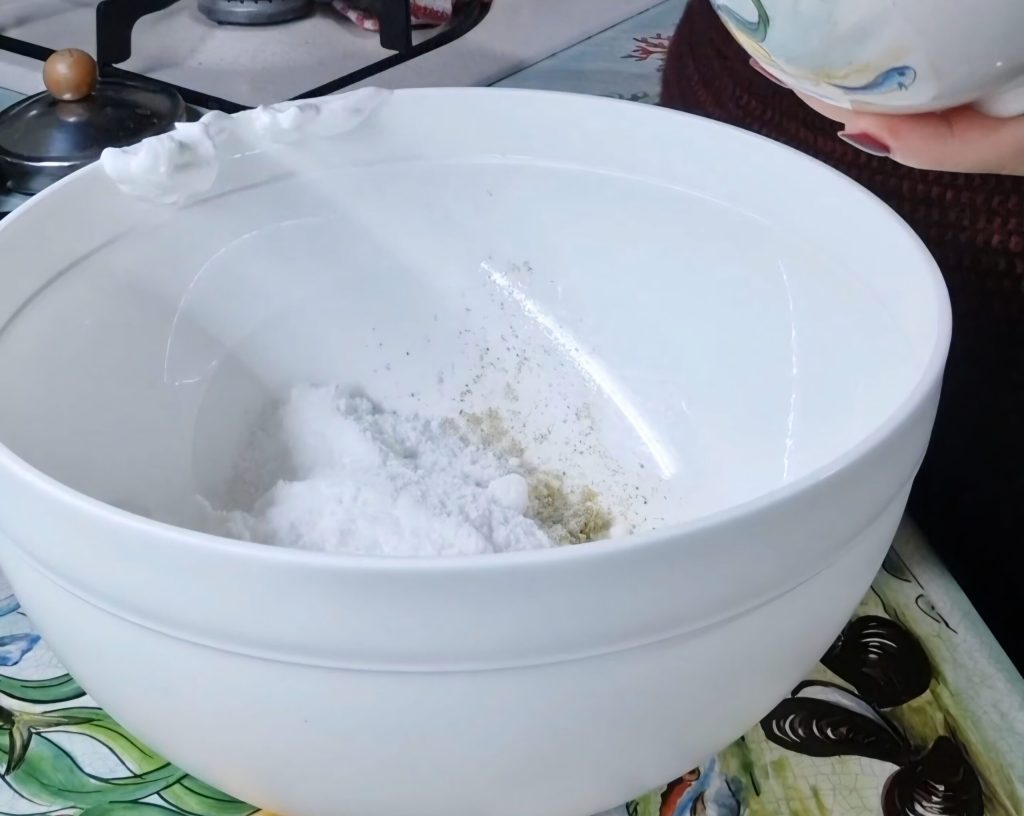
gradually add the salt, mixing. We need to create a sort of pasty mixture.
At this point, take the fish and place it in a baking tray with parchment paper underneath.
In the belly of the fish, we put only homemade seasonings. I avoid adding other herbs as I have the possibility because these seasonings are easy to make.
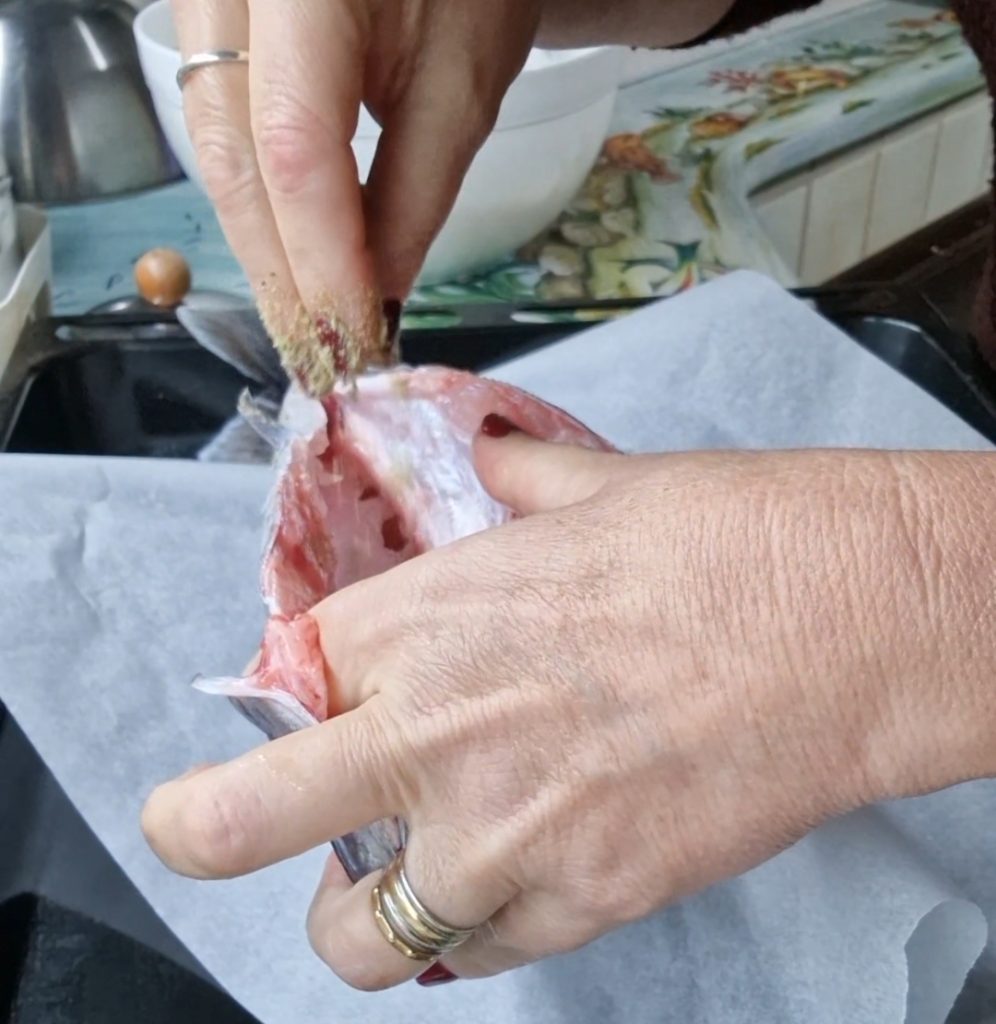
But if you don’t have the fish seasonings, you can put bay leaves, some lemon slices, and other herbs in the belly.
To complete, we’ll roll some parchment paper inside the belly, ensuring the fish doesn’t absorb too much salt inside.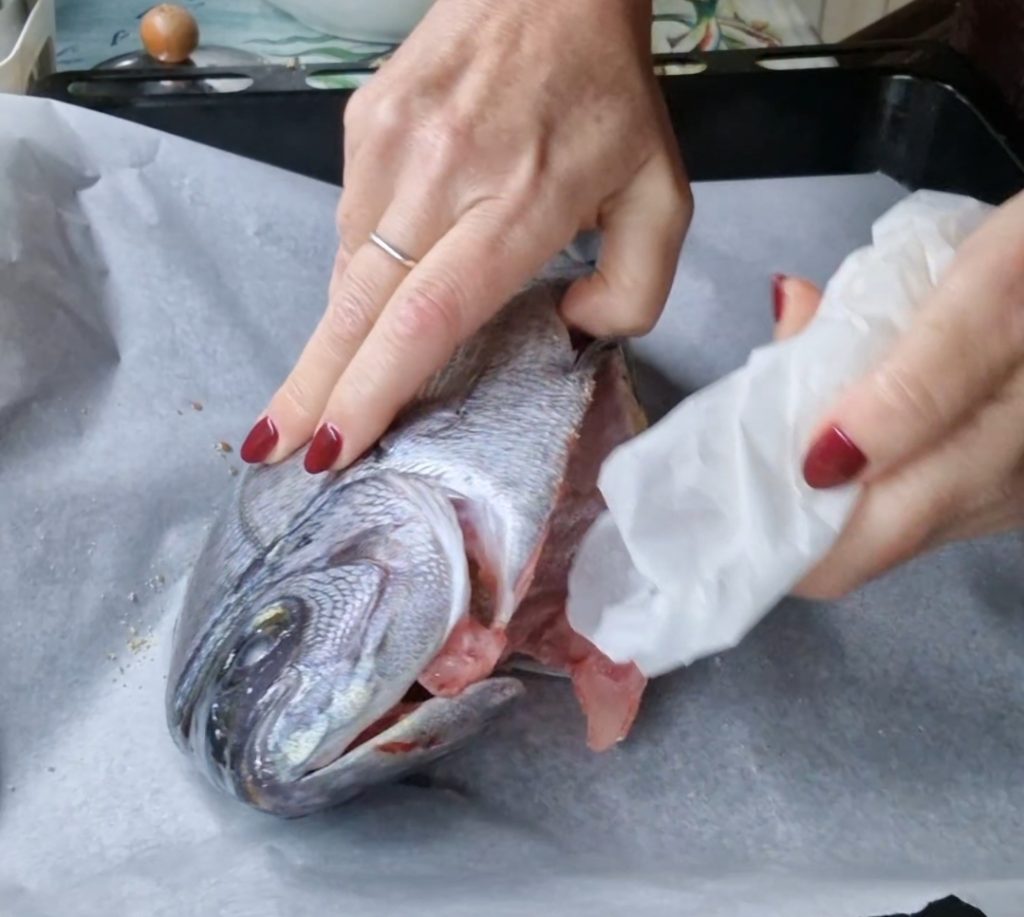
With the help of a spatula or your hands, take the pasty mixture of salt and egg whites and cover the entire fish, which must remain completely sealed, like inside a sarcophagus. To complete, sprinkle the surface of the sarcophagus with more fine salt.
If the tail is too large and should remain outside the tray, wrap it first in parchment paper. However, this will only happen with large fish.
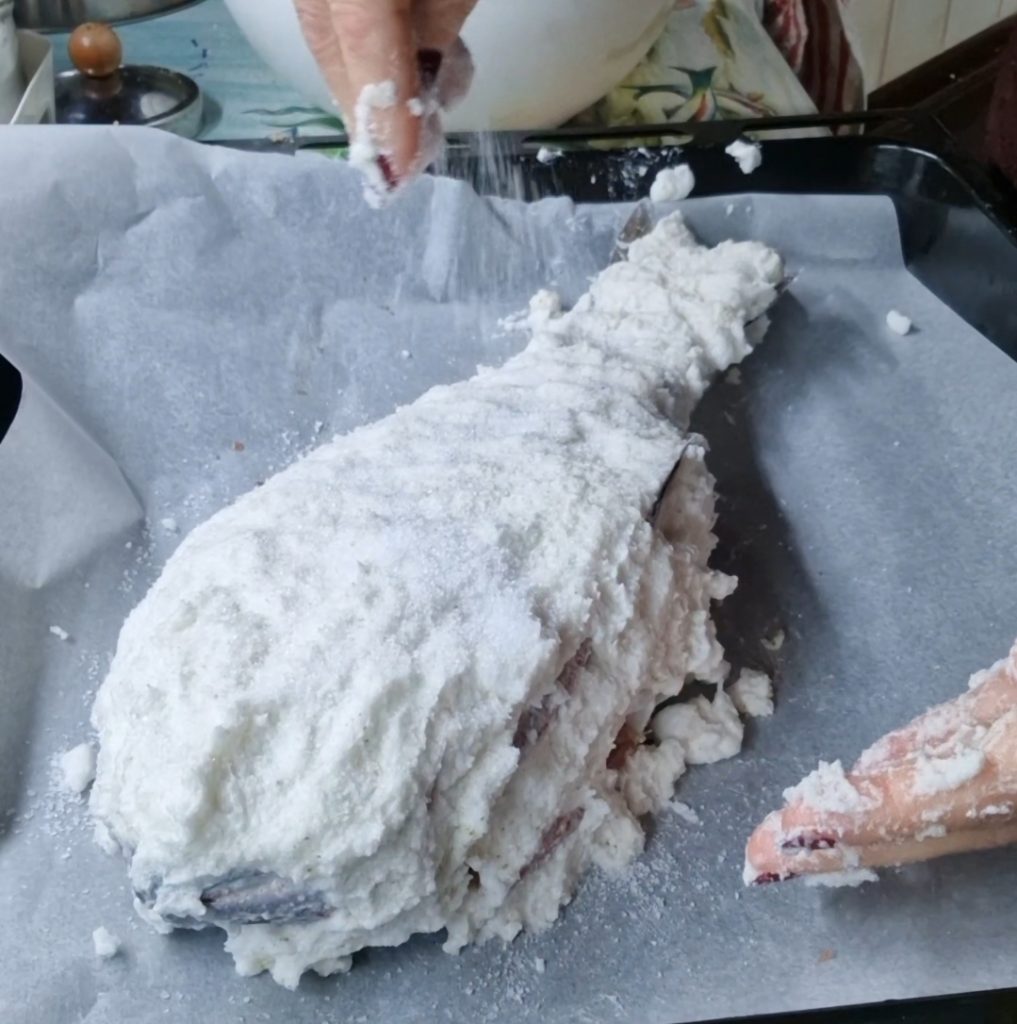
Place the fish with its salt covering inside a preheated oven at 392°F (200°C) in static mode, and cook it according to the times indicated based on the weight.
Cooking times with a preheated oven:
Half a kilogram (1.1 lbs) of fish cooks in fifteen to twenty minutes.
One kilogram (2.2 lbs) in twenty-five to thirty minutes,
one and a half kilograms (3.3 lbs) in thirty-five to forty minutes, and so on.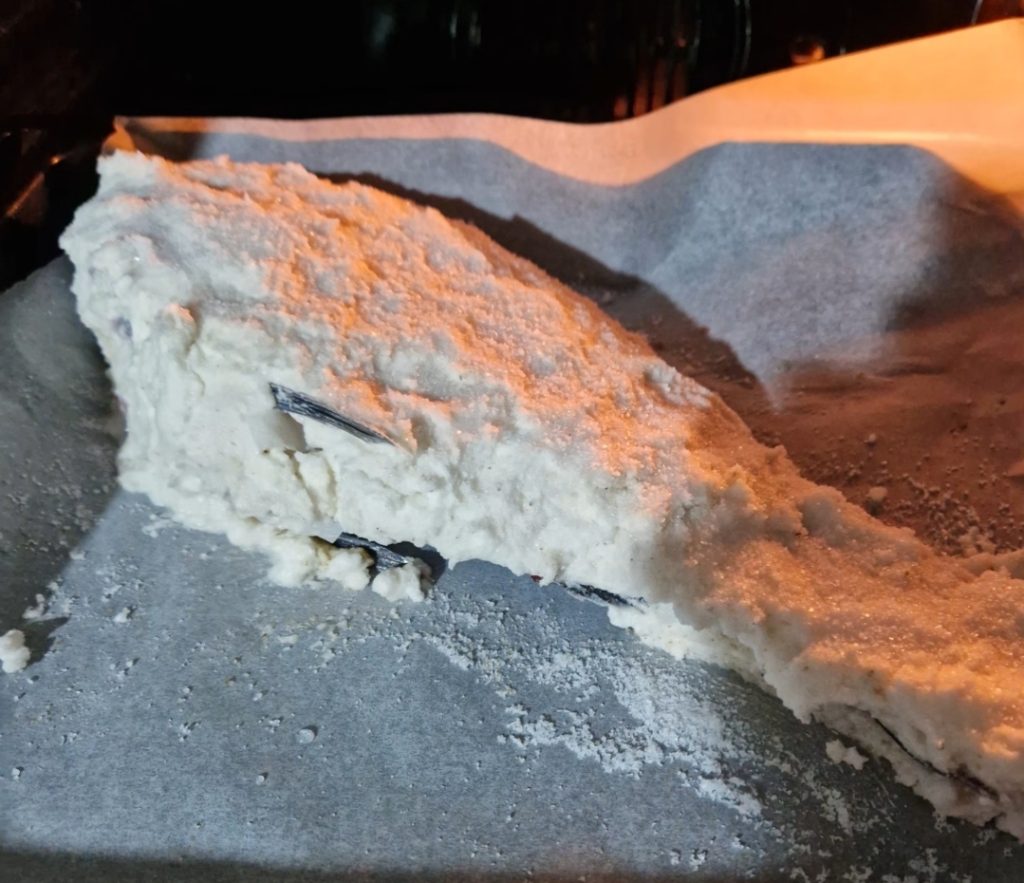
So adjust accordingly based on the size of the fish.
Usually, a traditional-sized home oven can fit a fish up to 5.5 lbs (2.5 kg), placed obliquely in the tray.
After the time has passed, take the fish out of the oven, and let it rest for 5 minutes in the tray with all its salt crust, then after those last 5 minutes, you can open the sarcophagus starting by making incisions at the fins along the back and under the belly.
Following this line with the tip of a knife and slightly lifting the crust which will come off in pieces or whole.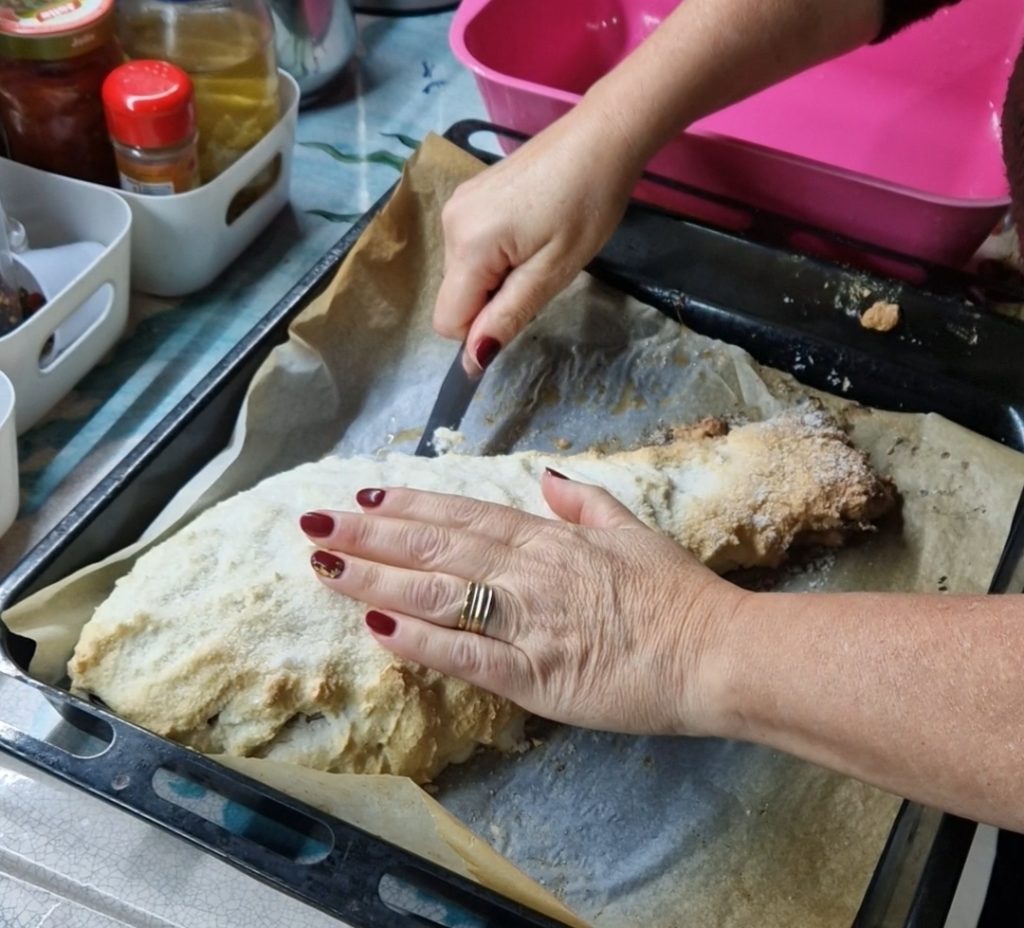
Finally, remove the parchment paper from the belly,
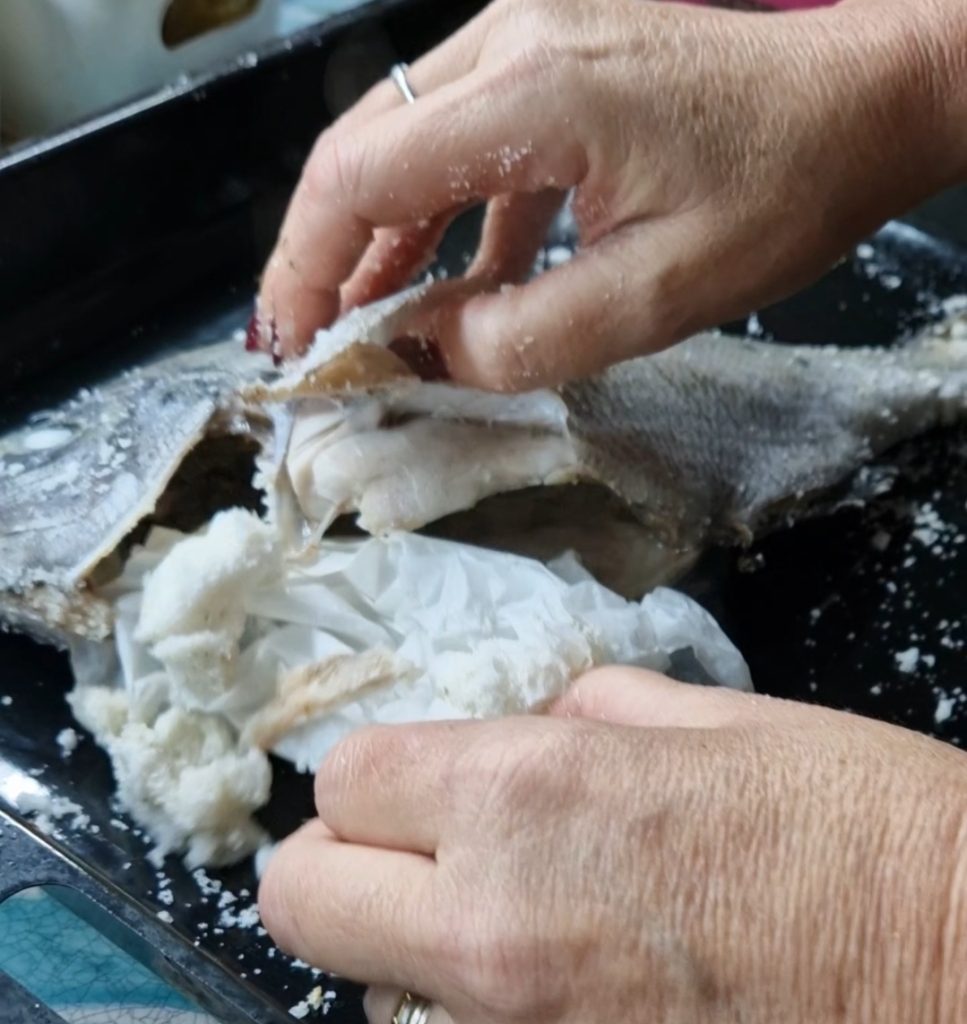
Now you can completely debone the fish and serve it in portions or whole on a serving platter.
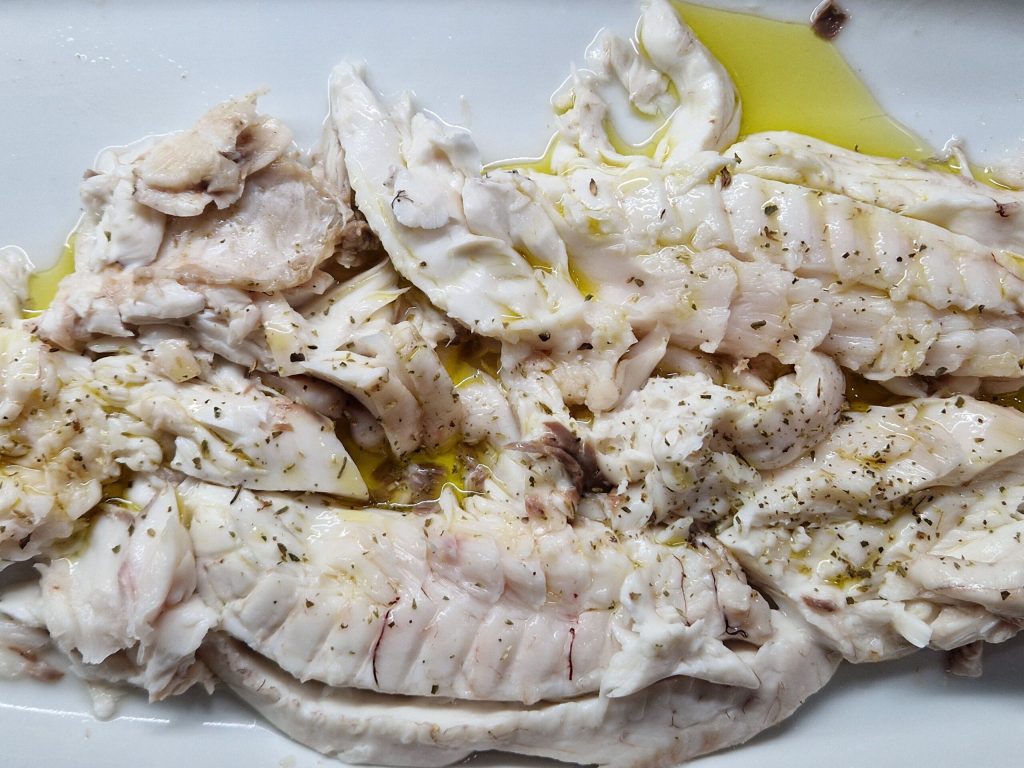
Simply season with oil and pepper. If you like, you can also add chopped parsley or the typical salmoriglio sauce, which is a sauce made with oil, lemon, garlic, chopped and oregano, salt, and pepper, lightly emulsified to create a cream.
Here’s how to cook salt-crusted fish.
Storage and Tips
Once cooked, salt-crusted fish can be stored in the refrigerator for up to 2 days.
I recommend following these steps to best preserve it:
Remove the crust: Extract the fish from the salt immediately after cooking, otherwise, it will continue to absorb flavor, becoming too salty.
Clean the fillets: Remove the skin and bones before storing.
Airtight container: Seal the fillets in a glass container to prevent them from absorbing odors or drying out.
When consuming, briefly steam it or enjoy it at room temperature with a drizzle of oil.
FAQ
How to Cook Salt-Crusted Fish
Can I not use ready-made seasonings?
Yes, you can replace them with herbs of your choice.
How to Cook Salt-Crusted Fish