
The oat milk I used to buy from the supermarket for my breakfasts is now just a faint memory! Making it at home has its advantages, and I would say they are already clear for everyone to see! Firstly, as extensively explained in the recipe for homemade oat milk, from an economic standpoint, and then also in terms of health benefits, and not least, environmental impact! Furthermore, from the waste of this homemade production, which I assure you, you can achieve in just three steps, we obtain a nutrient-rich ingredient really useful for many other recipes! For example, today I tried making my oat okara cookies again, they’re too good, believe me! They’re perfect both as a snack and as a dessert to pair with some liqueur or digestif! Last time I suggested them with almonds, but this pistachio version is absolutely no less! The basic ingredients are always the same: flour, this time type 1, oil, honey, chocolate chips, and naturally the oat okara. In this case, I just replaced the almond flour with pistachio flour and the orange honey with pistachio honey, but you can use whatever you have in your pantry! Instead of cinnamon, I added vanilla extract, and to give a crunchy touch, I added some pistachio granules. In short, it’s a delight bomb to try for a snack or breakfast!
If like me, you’re interested in making the most of the okara from your homemade plant-based milk, try these other recipes below:
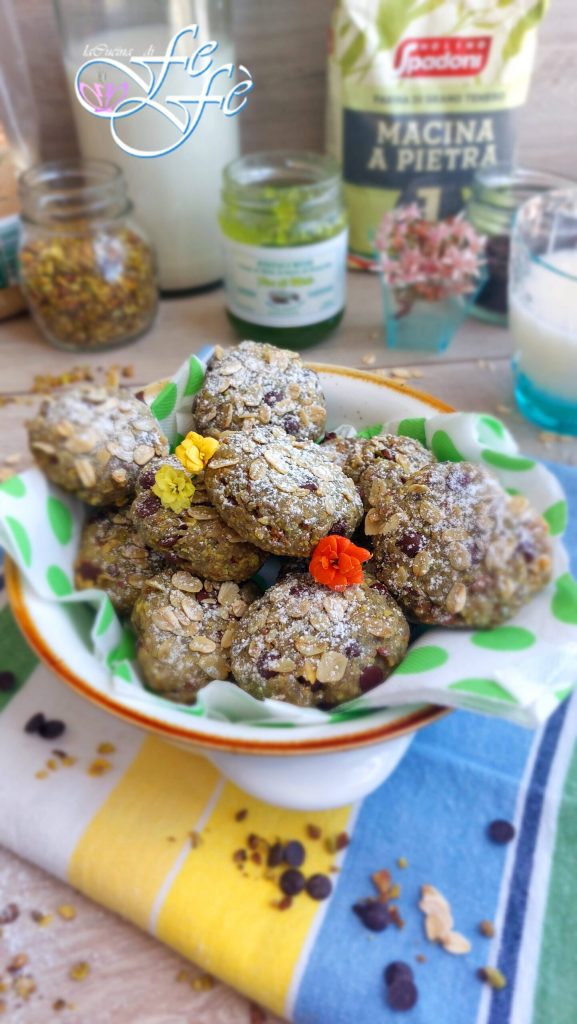
- Difficulty: Very Easy
- Cost: Very Cheap
- Preparation time: 10 Minutes
- Portions: 15 cookies
- Cooking methods: Oven
- Cuisine: Italian
- Seasonality: All Seasons
Ingredients
⚠ THIS RECIPE CONTAINS ONE OR MORE AFFILIATE LINKS. The products I recommend are the same ones I use in my recipes; purchasing them through my blog helps support me and my work, while it won’t cost you any more!
- 1 cup cup type 1 flour
- 1/2 cup cup pistachio flour
- 2 3/4 oz oz okara (leftover from homemade oat milk production)
- 3 1/2 tbsps tbsp peanut oil
- 3 1/2 tbsps tbsp honey (I used pistachio honey)
- 1 oz oz dark chocolate chips
- 1 oz oz pistachio granules
- 1 tsp vanilla extract
- as needed oat flakes
- as needed powdered sugar
Tools
- 1 Large Bowl
- 1 Wooden Spoon
- 1 Teaspoon
- 1 Sieve
- 1 Baking Tray
- 1 Silicone Mat
Steps
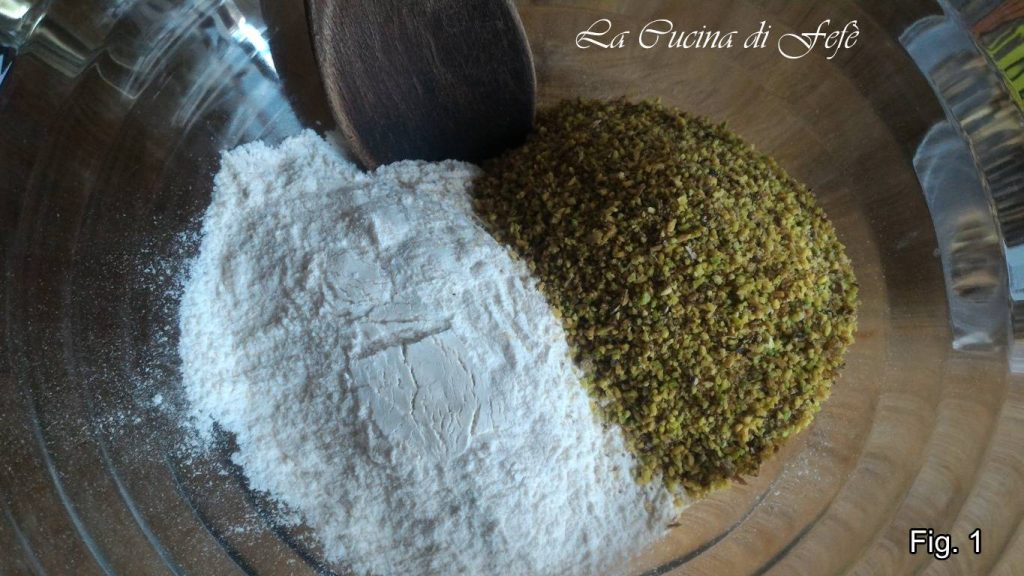
In a large bowl, sift the two types of flour (fig. 1).
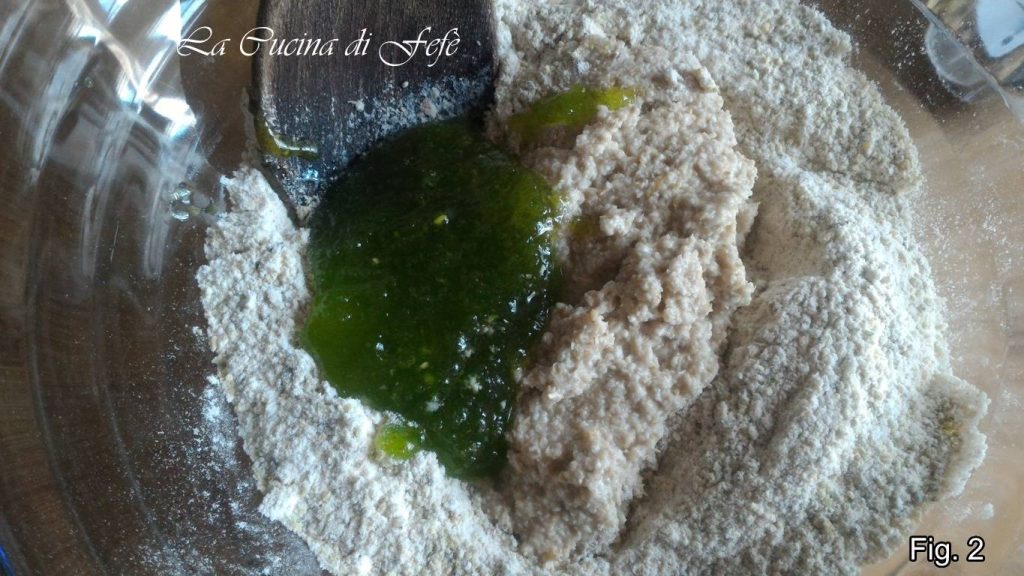
Mix them with a wooden spoon, then make a well in the center and add the oat okara and honey, in my case pistachio (fig. 2). Continue mixing and add the vanilla extract (fig. 3).
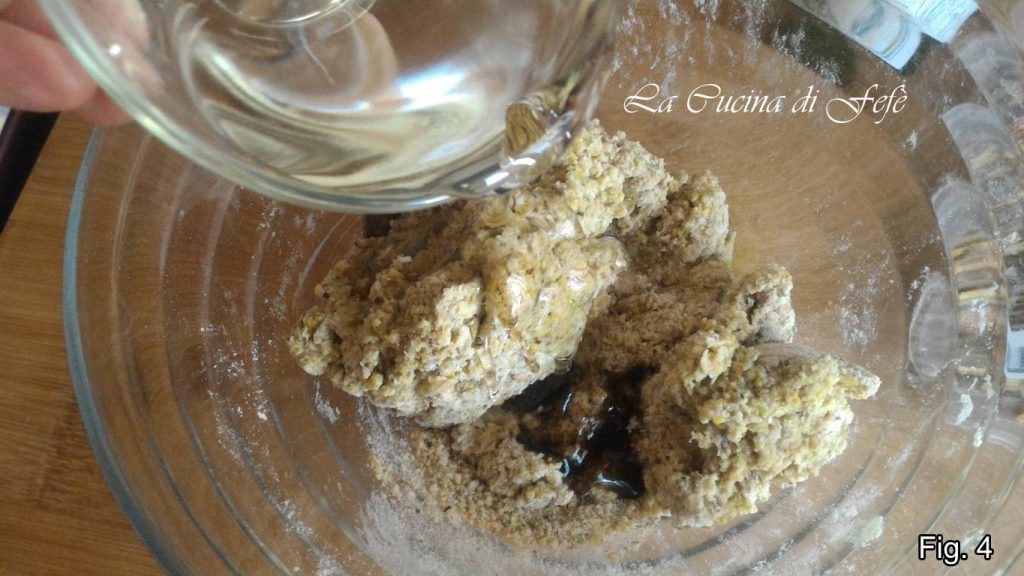
Also, add the oil gradually (fig. 4). Continue working until you obtain a soft but workable dough. Finish by adding the pistachio granules and chocolate chips last (fig. 5).
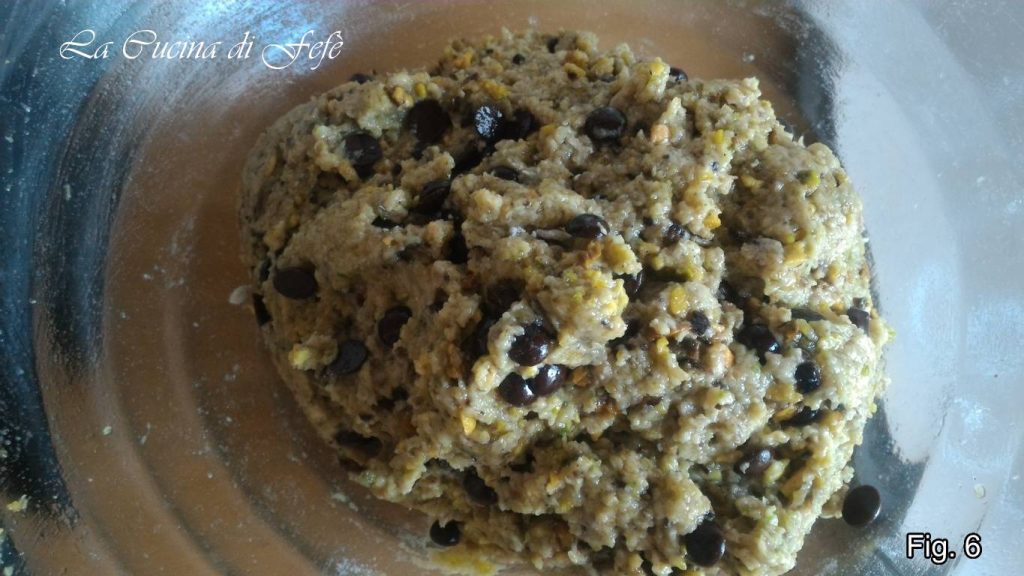
Knead with your hands until you get a coarse but homogeneous dough (fig. 6). With slightly oiled hands, take small portions and form balls slightly larger than a walnut, flattening them. Place them on a baking tray lined with parchment paper and garnish the surface with a handful of oat flakes, pressing lightly to adhere (fig. 7).
Bake in a preheated oven at 356°F for about 12′-14′. Remove from the oven and let your cookies cool on a rack. Once cooled, dust with powdered sugar to taste.
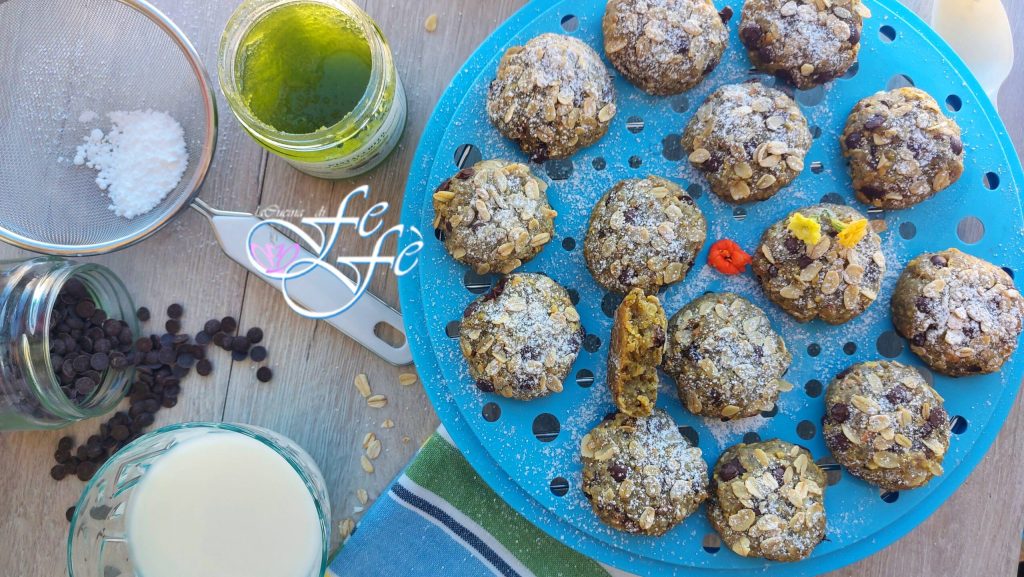
And voilà… the oat okara, honey, and almond cookies are ready to be enjoyed!
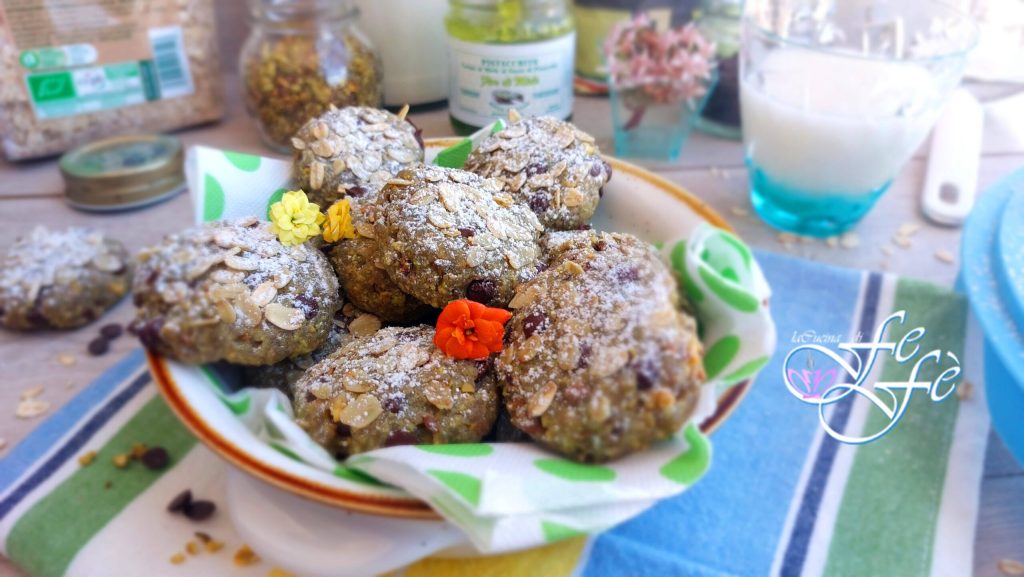
Enjoy from La Cucina di FeFè!
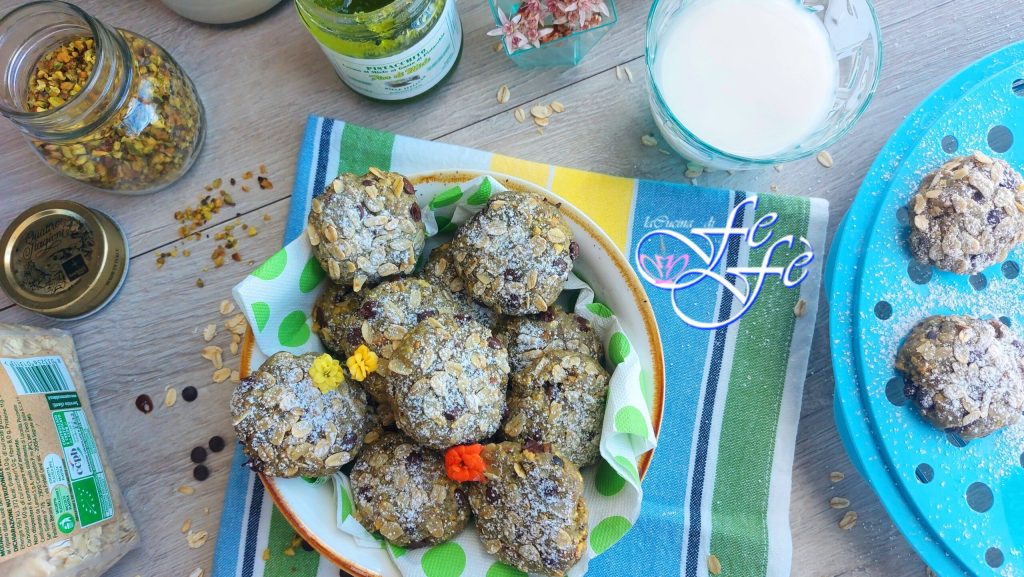
Storage
👉 Once cooled, you can store the oat okara and pistachio cookies at room temperature in an airtight container for several days.
Tips, notes, variations, and suggestions
🟣 Since okara is the pulp left after pressing plant-based milk, and since there are different types of plant-based drinks, it is evident that various types of okara can be produced (based on soy milk, rice milk, almond milk, hazelnut milk, etc.). So, based on your preparation, you can make these cookies by substituting oat okara with another type of leftover of your liking.
🟣 Since okara is the pulp left after pressing plant-based milk, and since there are different types of plant-based drinks, it is evident that various types of okara can be produced (based on soy milk, rice milk, almond milk, hazelnut milk, etc.). So, based on your preparation, you can make these cookies by substituting oat okara with another type of leftover of your liking.
