
In recent years, I have noticed, while shopping, how much easier and more convenient it is to buy a plant-based drink alternative to milk. The types available on the market have literally multiplied! Initially, there was only rice milk, which I never really liked much! Now, you can choose from soy milk to spelt milk, and even kamut or oat milk, which were once hard to find! They are undoubtedly valid alternatives to cow’s milk, even from a nutritional point of view, but on the other hand, we cannot ignore some important aspects. The first concerns the economic impact in terms of daily consumption. Does their purchase affect our budget? Certainly, the price for each carton is around €3.50, and in a large family, its duration covers just a couple of days. Therefore, by doing some calculations, in a month, we can see how these drinks can easily lighten our wallets. Moreover, even choosing among the best brands, which of course will also cost more, we won’t have the guarantee that there are no hydrogenated oils, added sugars, salt, and even preservatives among the ingredients. So why not produce these drinks at home? Besides, it’s really simple and the saving is considerable! Not to mention that it will contribute to a reduced environmental impact compared to recycling. I, for personal choice, have invested in oats, a cereal with a pleasant taste and excellent health properties. Preparing this plant-based milk requires only two fundamental ingredients, water and oat flakes, and two optional ingredients, to sweeten and add flavor without excesses. The final result will be truly extraordinary! Besides the obvious saving on expenses, you will be the one deciding what to add and in what proportions! And with the waste from this simple process, namely okara, you can make many other recipes. In short, by preparing oat milk at home, you can enjoy a much healthier, more genuine, and economical breakfast. And if you decide to leave it neutral, without sweetening it, you can also use it for many savory recipes!
CURIOSITY: Did you know that oats in particular are rich in fibers and naturally gluten-free? Therefore, they can also be consumed by celiacs, although it is still a good habit to check the package for the words “gluten-free” to be sure there are no traces of other cereals containing gluten. Moreover, oats are a cereal capable of reducing bad cholesterol levels and preventing insulin spikes, making them suitable for diabetics as well.
Source: https://www.viversano.net/alimentazione/mangiare-sano/avena-proprieta-controindicazioni/.
If you’re interested in experimenting with other plant-based drinks, also try:
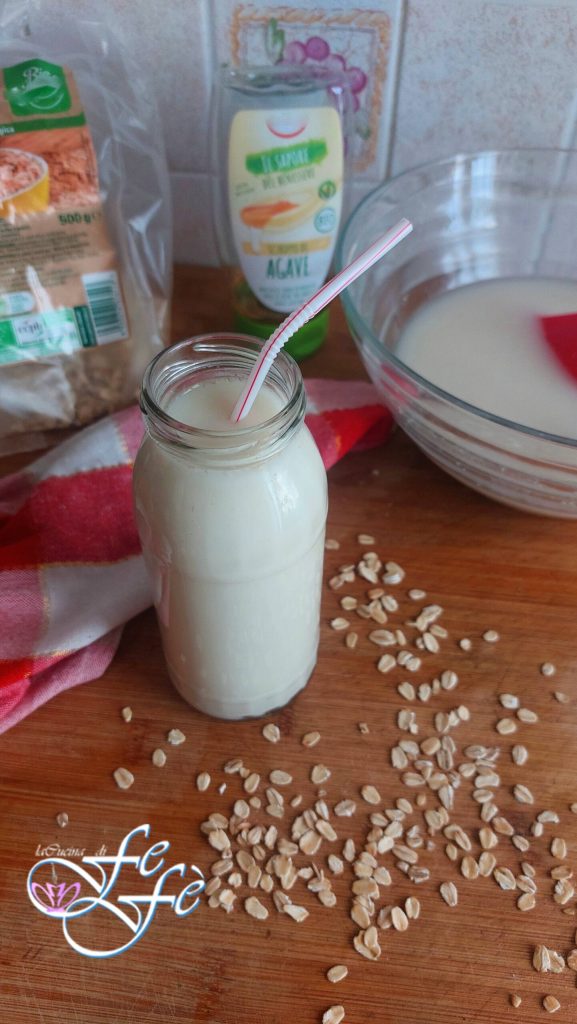
- Difficulty: Easy
- Cost: Very cheap
- Rest time: 1 Day
- Preparation time: 15 Minutes
- Portions: 4 people
- Cuisine: Italian
- Seasonality: All seasons
Ingredients
⚠ THIS RECIPE CONTAINS ONE OR MORE AFFILIATE LINKS. The products I recommend are the same ones I use in my recipes; buying them through my blog helps support me and my work, and it won’t cost you anything extra!
- 3 1/2 oz oat flakes
- 4 cups cups water
- 6 1/3 oz oat flakes
- 4 cups cups water
- to taste agave syrup (or other of your choice)
- 1 pinch salt
Tools
⚠ THIS RECIPE CONTAINS ONE OR MORE AFFILIATE LINKS. The products I recommend are the same ones I use in my recipes; buying them through my blog helps support me and my work, and it won’t cost you anything extra!
- 2 Bowls
- 1 Sieve
- 1 Hand blender
- 1 Aluminum bottle
Steps
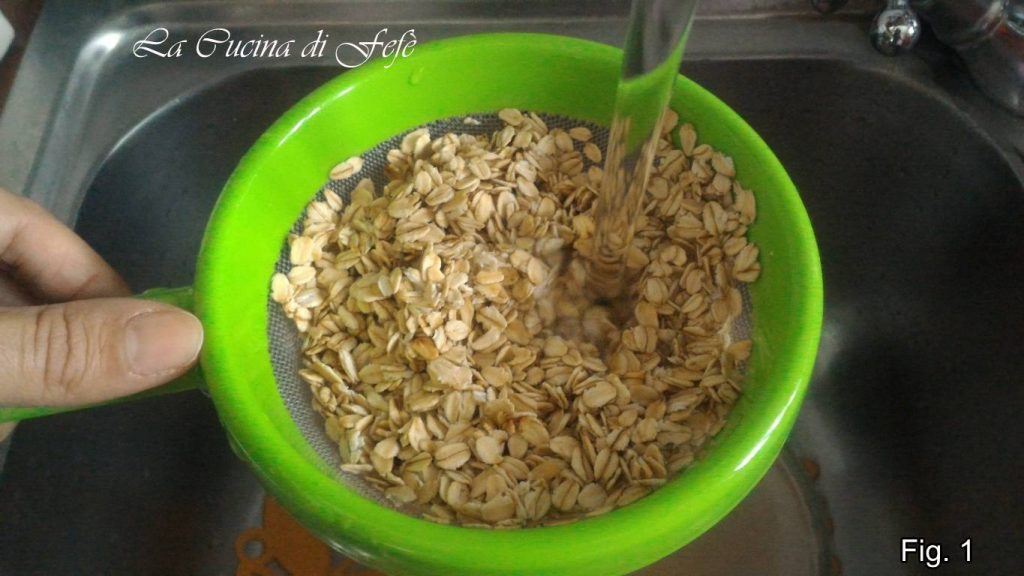
Making homemade oat milk is really easy and requires just a few steps. First, rinse the oat flakes thoroughly under running water to remove impurities, until the water is no longer cloudy.
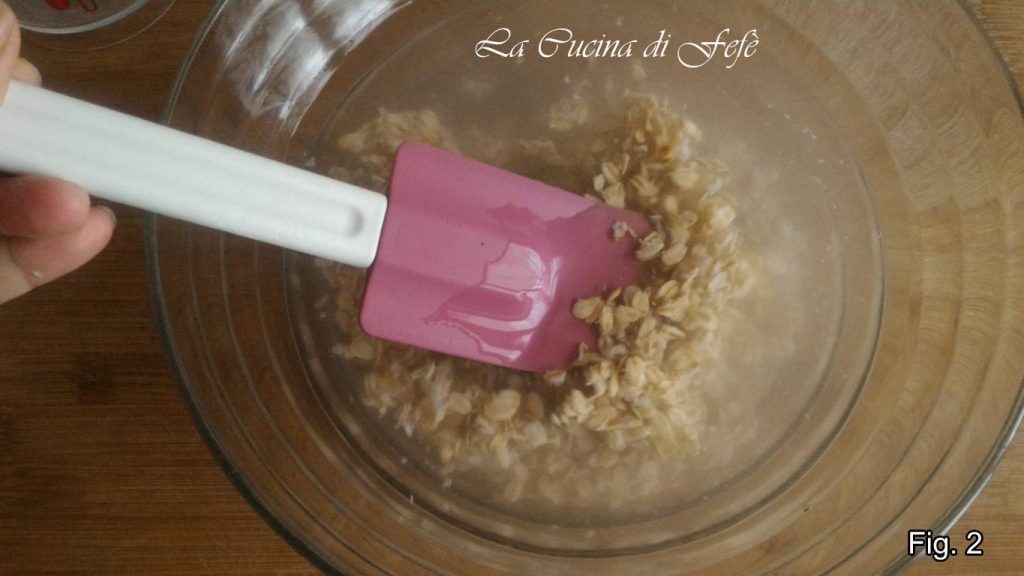
Then transfer the oat flakes to a glass bowl and pour water over them. Cover with a cloth and let them soak for at least 12 hours and up to a maximum of 24 hours at room temperature.
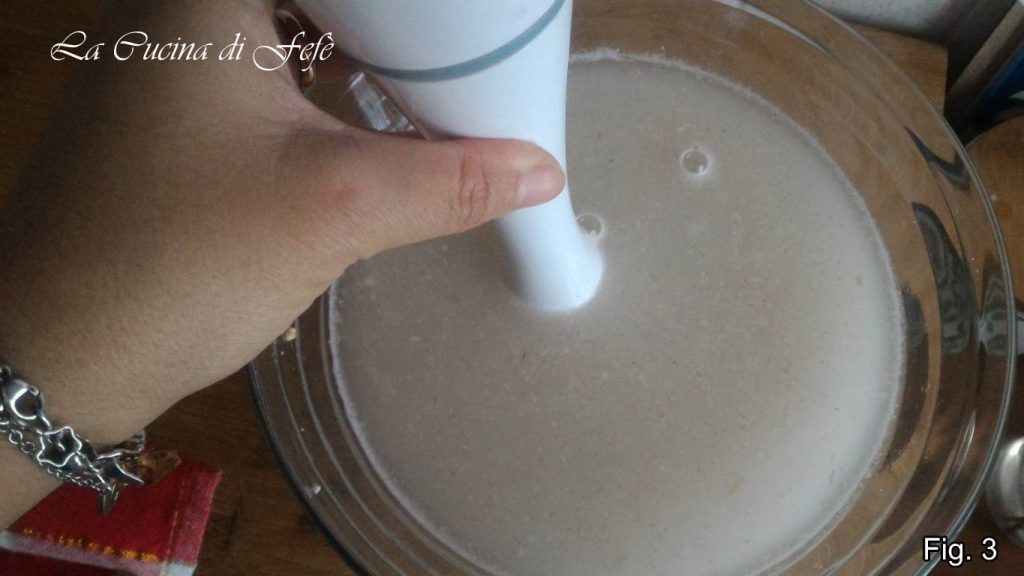
The following day, blend them gradually with a hand blender at low speed to prevent all the water from splashing out.
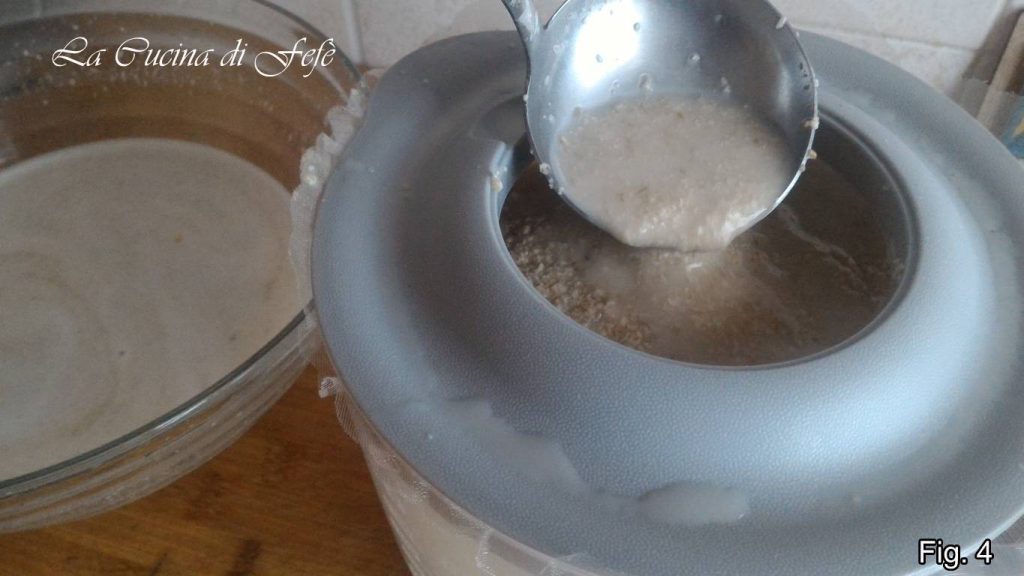
At this point, transfer the obtained milk to another bowl, filtering it through a fine sieve. Do not discard the residue, as you can use it for other recipes.
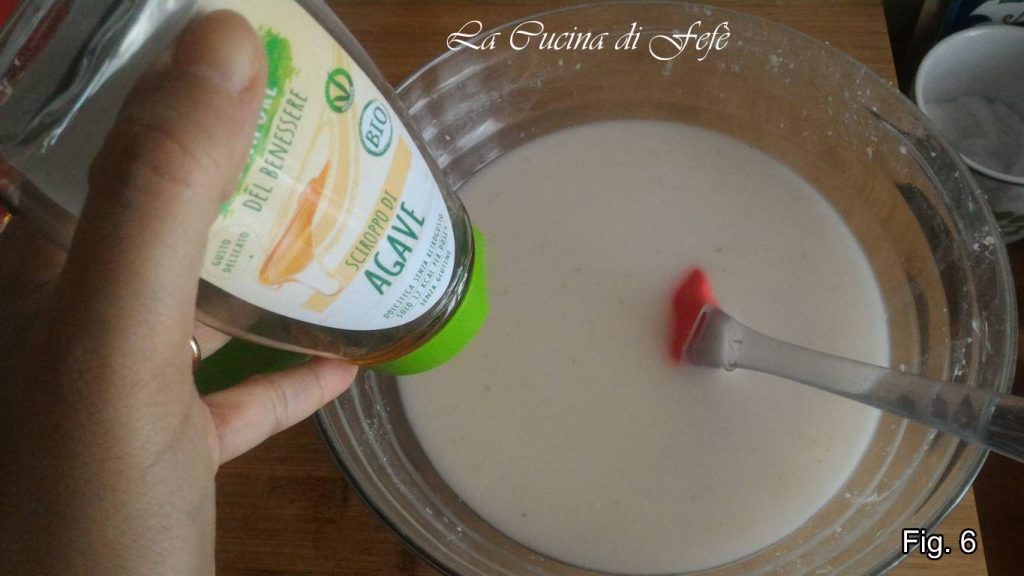
Once filtered, add a pinch of salt and sweeten with agave syrup* to taste, mixing well, but these are absolutely optional steps.
Transfer the oat milk into a glass bottle to keep in the fridge or an aluminum bottle, once the beverage has cooled, to carry with you in your bag until consumption.
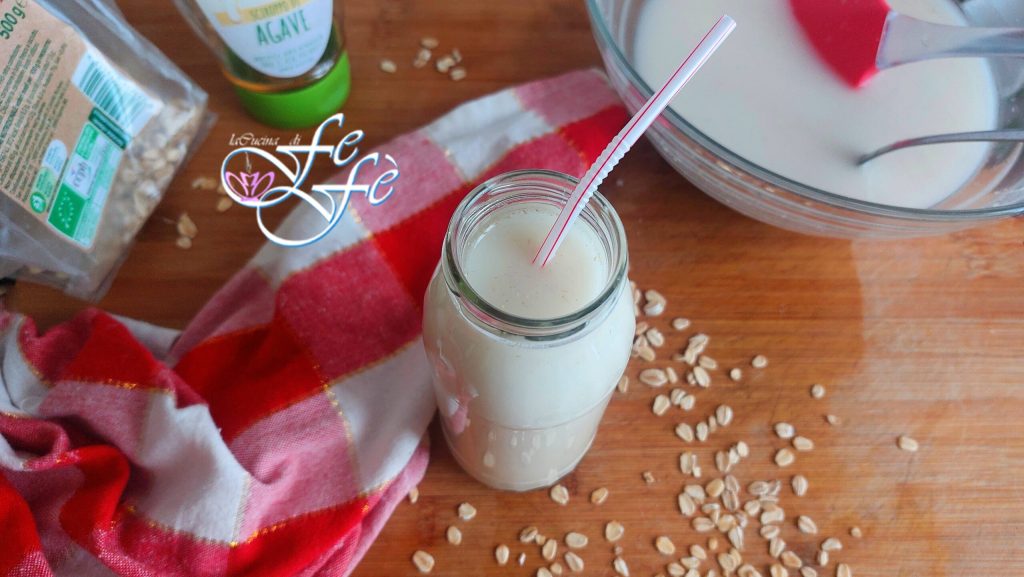
And voilà…your homemade oat milk is ready to be enjoyed!
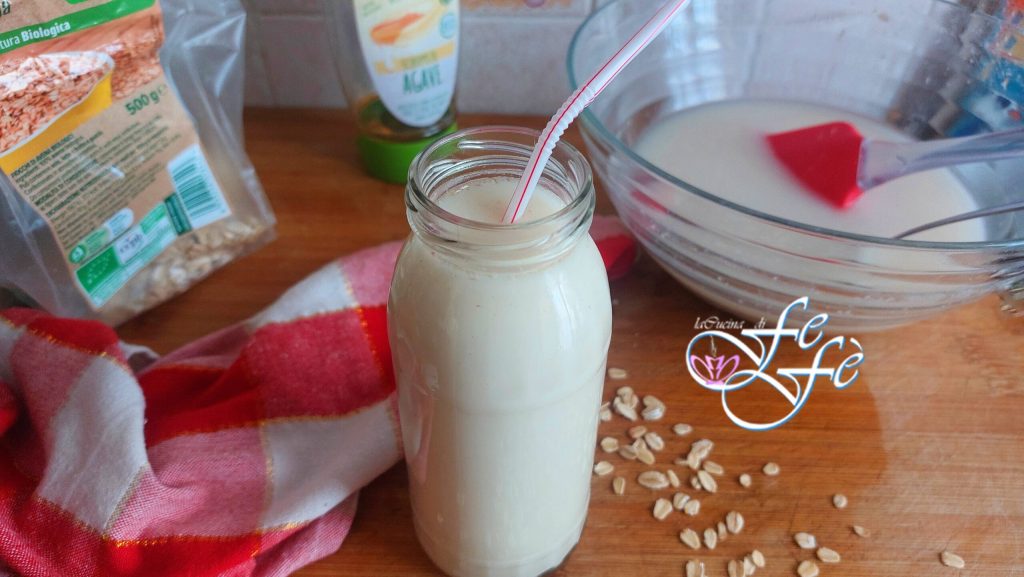
Bon Appetit from La Cucina di FeFè!
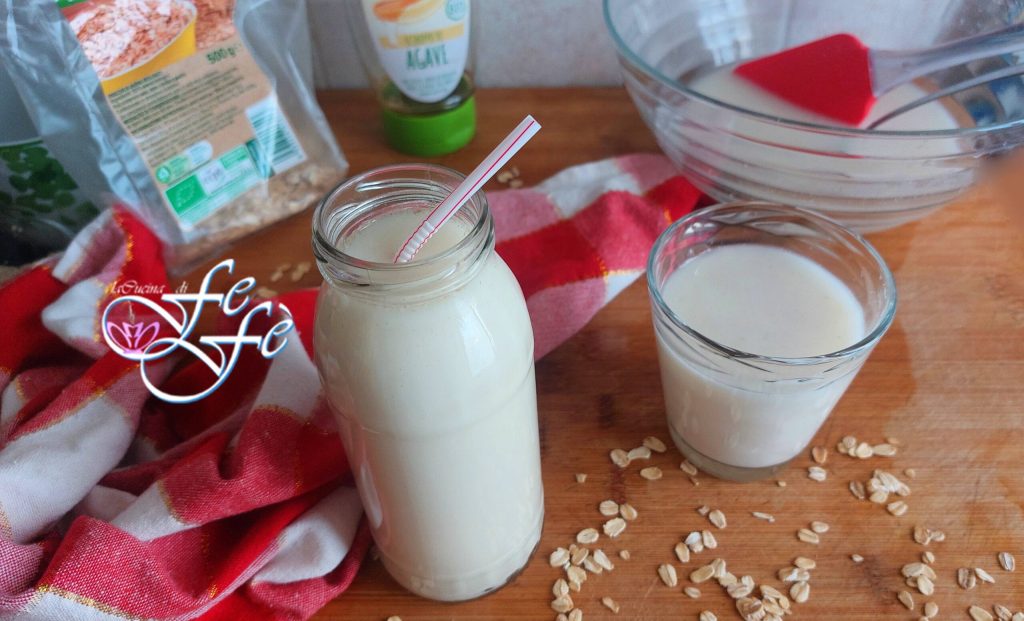
Enjoy it with some cookies for breakfast or a handful of cereals.
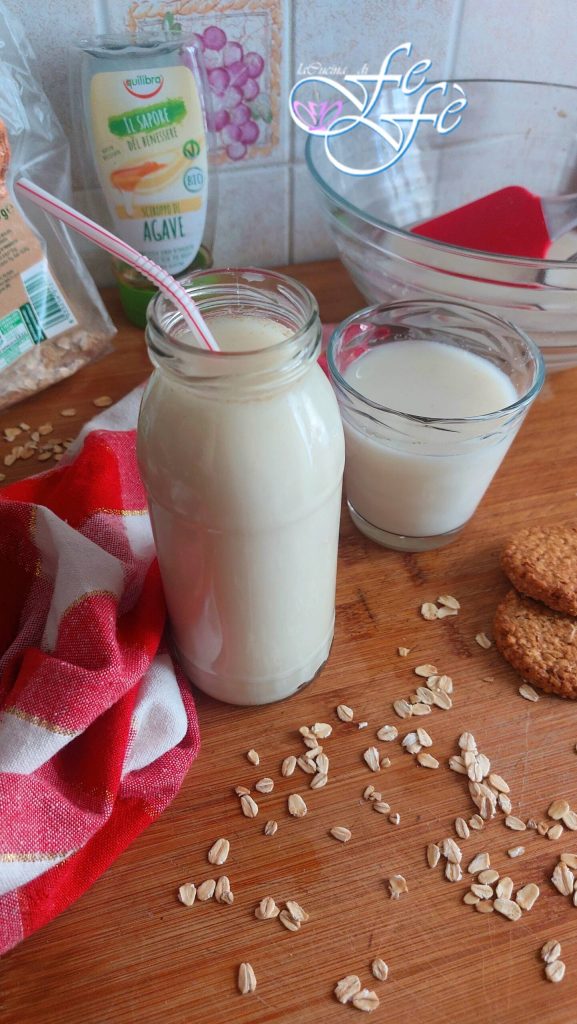
Storage
👉 Store the oat milk in the fridge for 2-3 days. Shake it before use as it tends to separate.
Tips, notes, variations and suggestions
🟣 * If you don’t have agave syrup at home, you can sweeten oat milk according to your taste with malt, honey, rice syrup, and flavor it with vanilla, cocoa, matcha tea, cinnamon, etc. Personally, we almost no longer sweeten it, as my husband loves having breakfast by adding half a cup of homemade oat milk with about 100 ml of 100% apple juice or almond milk (also homemade) and the result is really excellent!
🟣** Okara, which is the white and floury pulp remaining from the preparation of any plant-based milk, be it soy, almond, rice, oat, or spelt, is a nutrient-rich resource typical of Chinese, Japanese, and Korean culinary traditions since the 1600s. Nowadays, it is increasingly popular in vegan diets in many Western countries, and can be used as a base for preparing both sweet and savory recipes (raw recipes, energy bars, muesli, creams, and cookies like almond and honey ones or pistachio cookies). If dried, it can be used instead of parmesan on pasta or risotto, or on desserts as a topping instead of hazelnut crumbs. Thanks to its consistency, it can make soups creamier, add softness to doughs, and function as a binder, which is why it can be used in desserts instead of eggs. To regulate, consider that 60 grams of okara equals 1 egg.
🟣*** As often read in specialized magazines and online, the oat/gluten issue has been long debated. Until recently, it was not present on the celiac’s table because it was thought that, although it contained a low percentage of glutamine and proline, it could still be harmful to their body. However, the AIC, Italian Celiac Association, one of the most accredited sites on the subject, reiterates instead that “most celiacs can include oats in their diet without negative health effects.
🟣**** In the recipe, you will find two types of dosages, the original ones, although usually, the water quantity would be 1 liter on 100 grams of oat flakes, and my stronger version, with a full 20% of oat flakes on the total. Personally, I much prefer the latter version, experimented in recent weeks, by adding more oat flakes compared to the water percentage. However, based on your taste, I recommend trying both and choosing which one you prefer. In fact, I then invite you to let me know!
