
Well, yes, this year I was tempted to prepare themed cookies for the most commercial holiday there is! I’m not fond of Valentine’s Day gadgets, nor all those mushy phrases said on this occasion, but if I have to take something positive from this holiday, it’s the broader meaning of the word Love! And then this holiday for me means love towards a parent, a child, a partner, a sister, a friend, towards others! This is my Valentine’s Day, and with this spirit, I also prepared many really special cookie hearts, red like the beetroot flour used for their preparation, and sweet like almond flour. A perfect embrace of unimaginable flavors and aromas! And the best part is they’re also gluten-free. Unfortunately, beetroot flour is not an ingredient you can find on the market; I bought it online, but it’s really worth it because the fragrance it releases is something absolutely unique! Moreover, having it in your pantry, you can use it for many of my other recipes. Write me what you think. And happy love to everyone!!!
Other recipes to take advantage of all the benefits of beetroot flour:
- Difficulty: Easy
- Cost: Medium
- Rest time: 1 Hour
- Preparation time: 15 Minutes
- Portions: About 25
- Cooking methods: Oven
- Cuisine: Italian
- Seasonality: All seasons, Valentine's Day
Ingredients
⚠ THIS RECIPE CONTAINS ONE OR MORE AFFILIATE LINKS. The products I recommend are the same ones I use in my recipes; buying them through my blog helps support me and my work, and it won’t cost you anything extra!
- 6.35 oz beetroot flour
- 3.5 oz almond flour
- 2.82 oz brown sugar
- 3.5 oz butter (cold, diced)
- 1 egg (at room temperature)
- 1 tbsp milk (only if needed)
- as needed almond spread
Tools
- 1 Large bowl
- 2 Gloves
- 1 Rolling pin
- 1 Plastic wrap
- 1 Dough scraper
- 2 Cookie cutters
- 1 Baking sheet
- 1 Baking mat
- 1 Cooling rack
- 1 Teaspoon
Steps
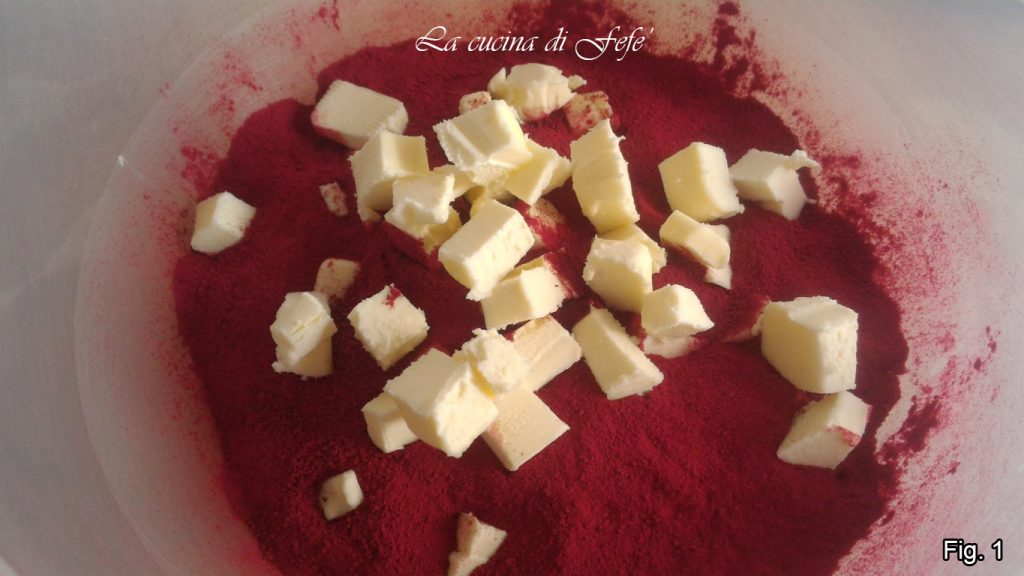
Place the previously sifted beetroot flour in a large bowl along with the cold butter cut into cubes.
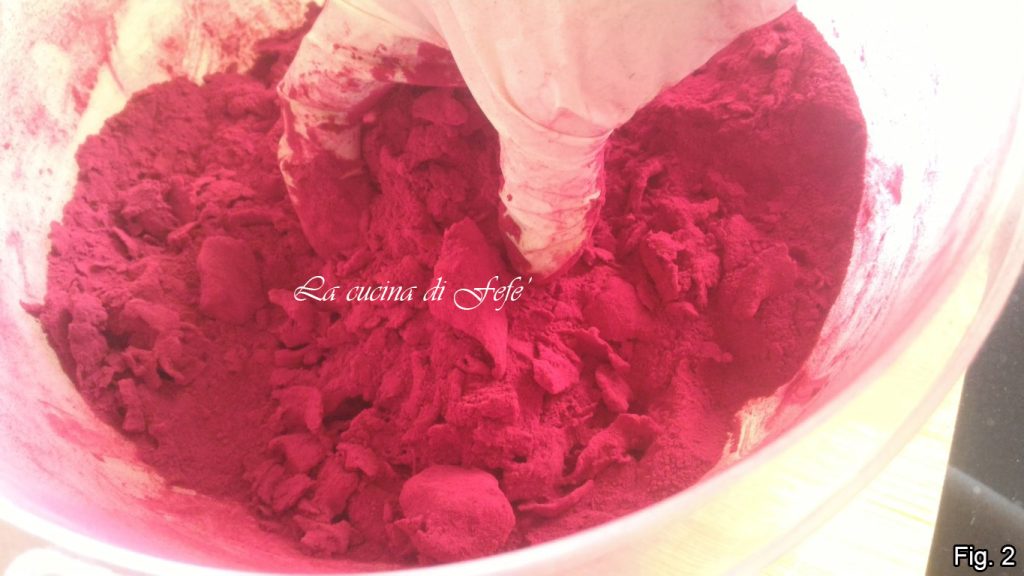
Work them together until you get a sandy mixture.
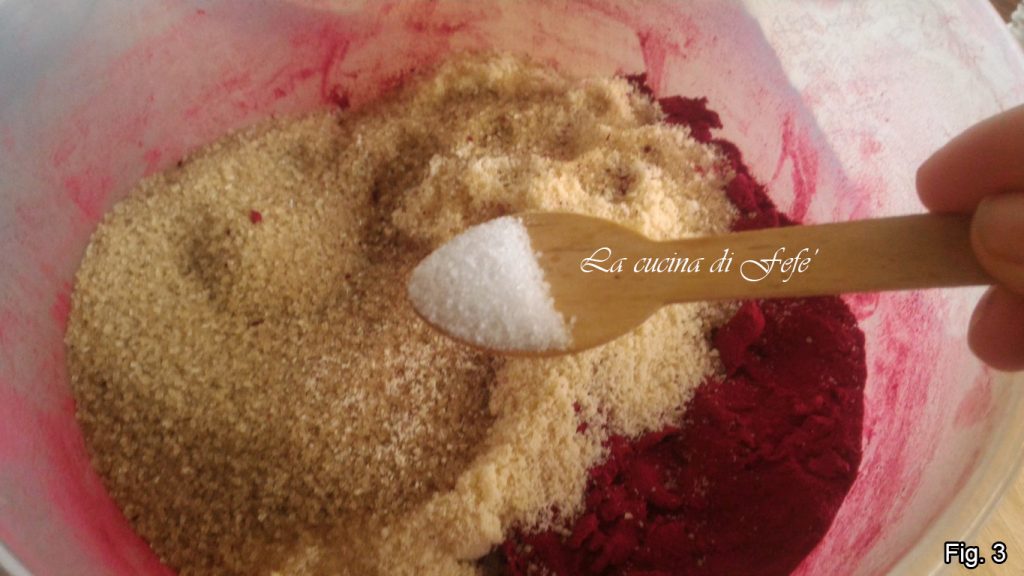
Then add the almond flour, brown sugar and a pinch of salt.
Finally, add the egg and mix with a wooden spoon.
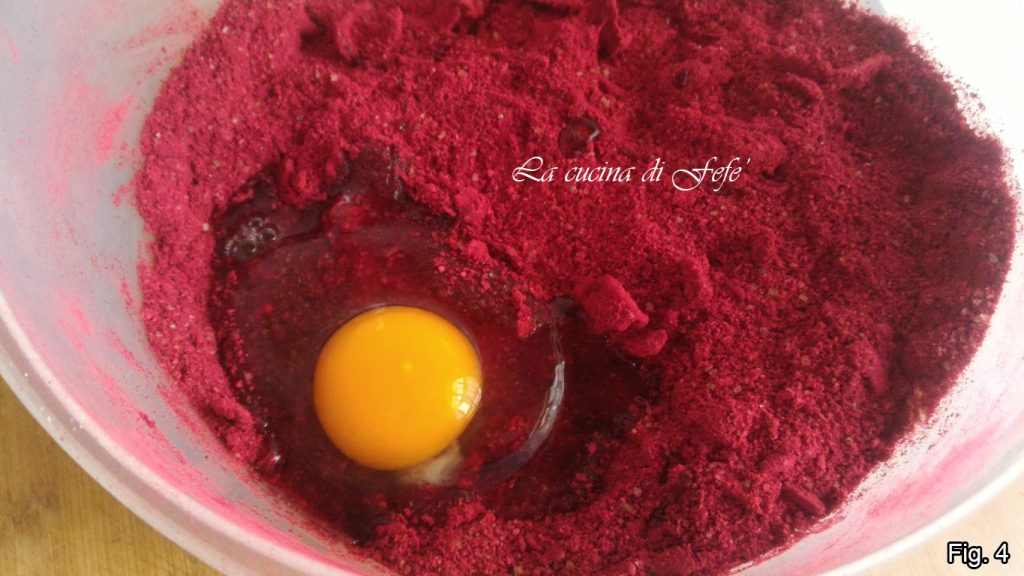
As soon as the dough becomes more consistent, quickly knead it by hand (to avoid warming the butter).
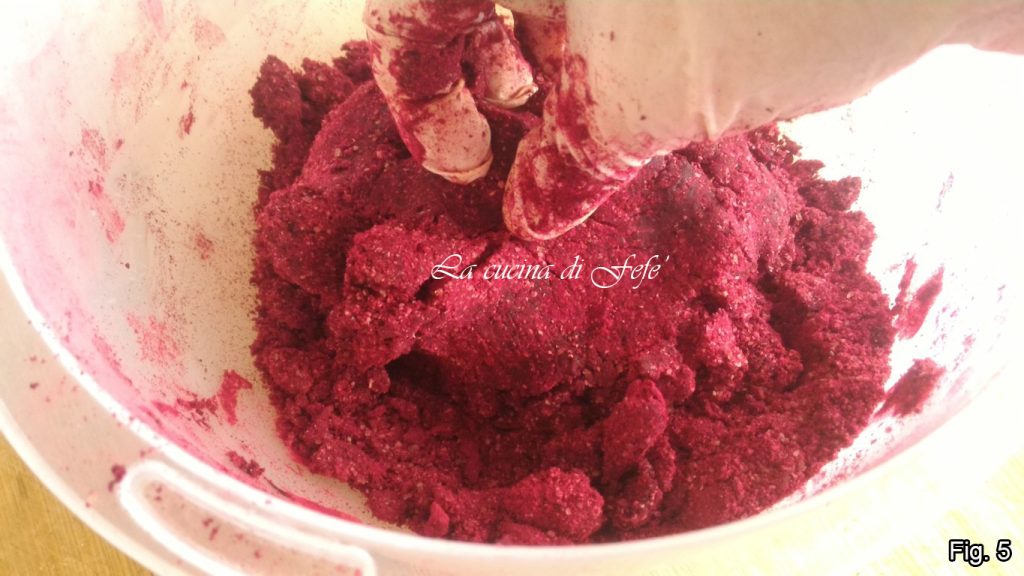
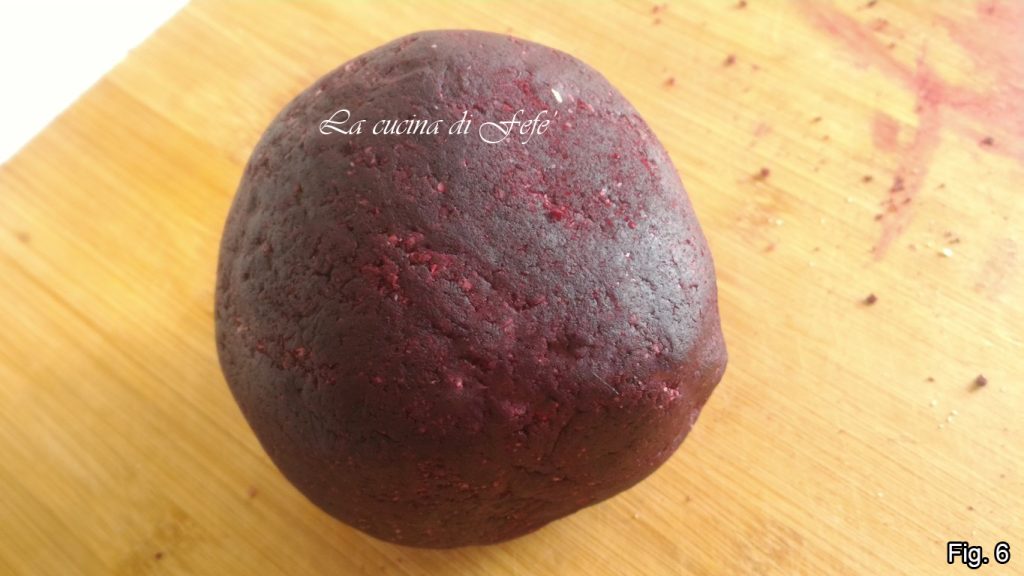
Then transfer it to a work surface until you obtain a smooth and homogeneous dough that you will let rest for at least 1 hour in the fridge covered with plastic wrap. This will allow the beetroot flour to hydrate and the almond flour to stabilize.
After resting time, divide the dough into two parts, placing the first half back in the fridge until ready to roll out.
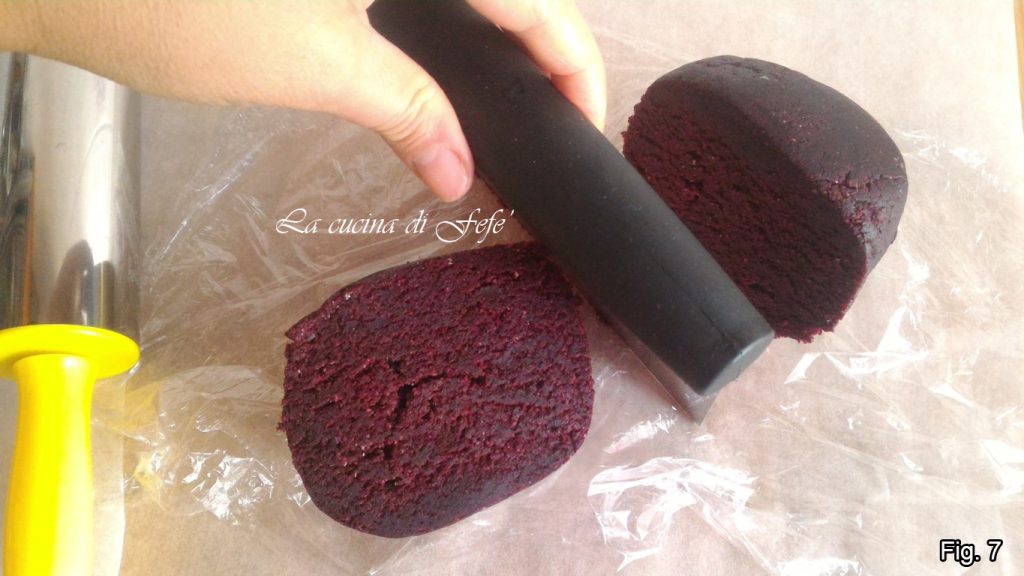
Roll out the first half between two sheets of parchment paper with a standard rolling pin. This prevents adding extra flour (which would make the cookies hard). I then dusted with beetroot flour and rolled the surface with a decorative rolling pin, an optional step. Then cut the cookies with a heart-shaped cutter.
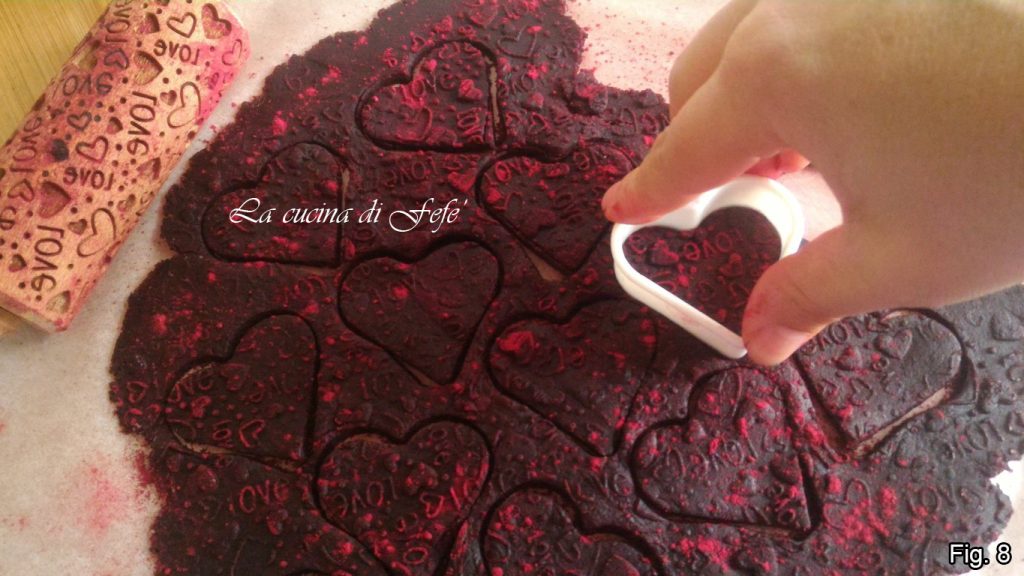
Roll the dough to a thickness of 5 mm.
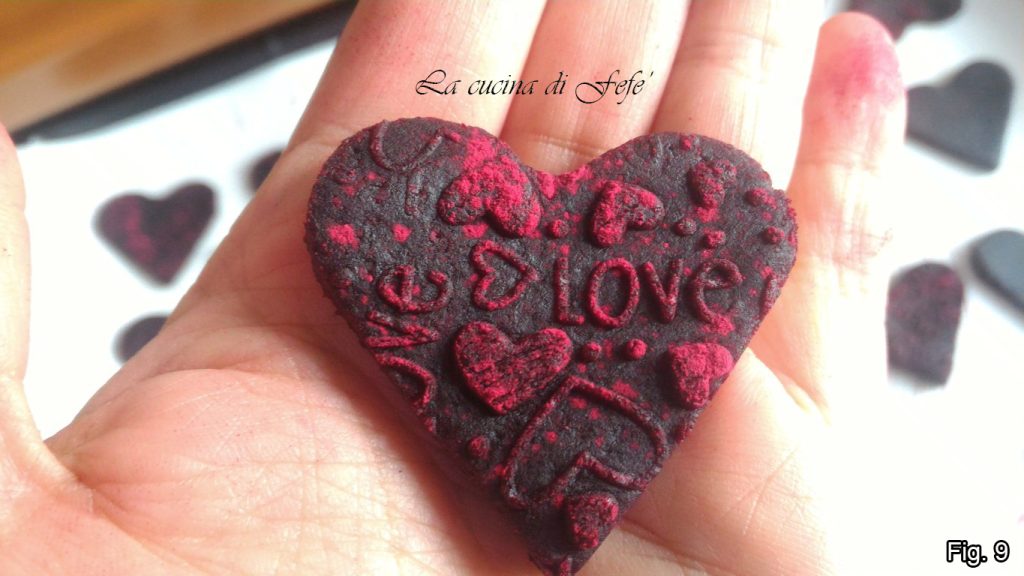
If you wish to create a filled version, you will need to roll them to a thickness of 3 mm and make a heart-shaped hole in the center of half the prepared shapes using a smaller cutter, then arrange the cookies on a baking sheet lined with parchment paper.
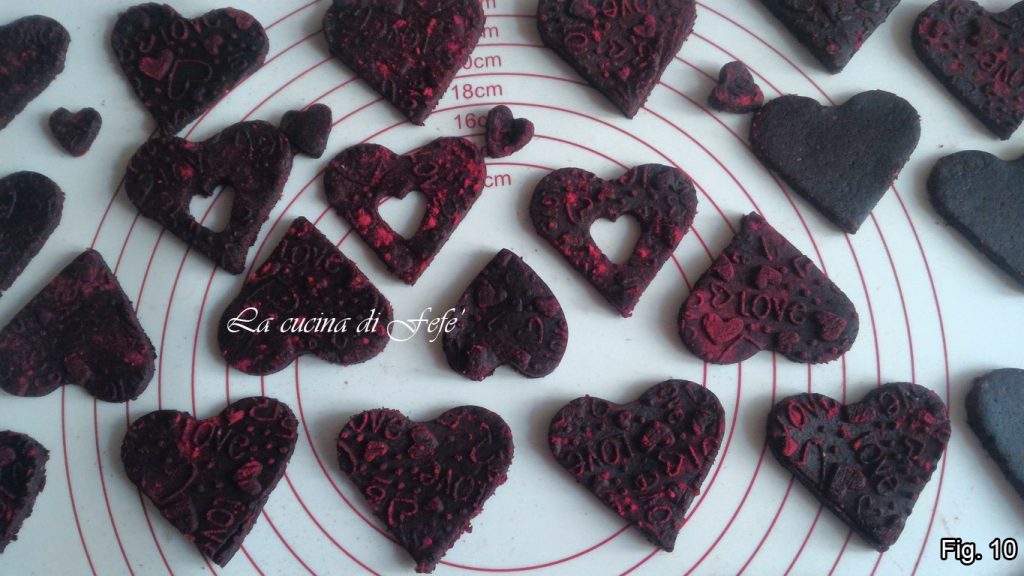
Bake in a preheated oven in static mode at 340°F for 11-12’*. The cookies will still feel slightly soft to the touch, but they will harden as they cool on the rack. Continue until all ingredients are used. Remove from oven and cool on a rack.
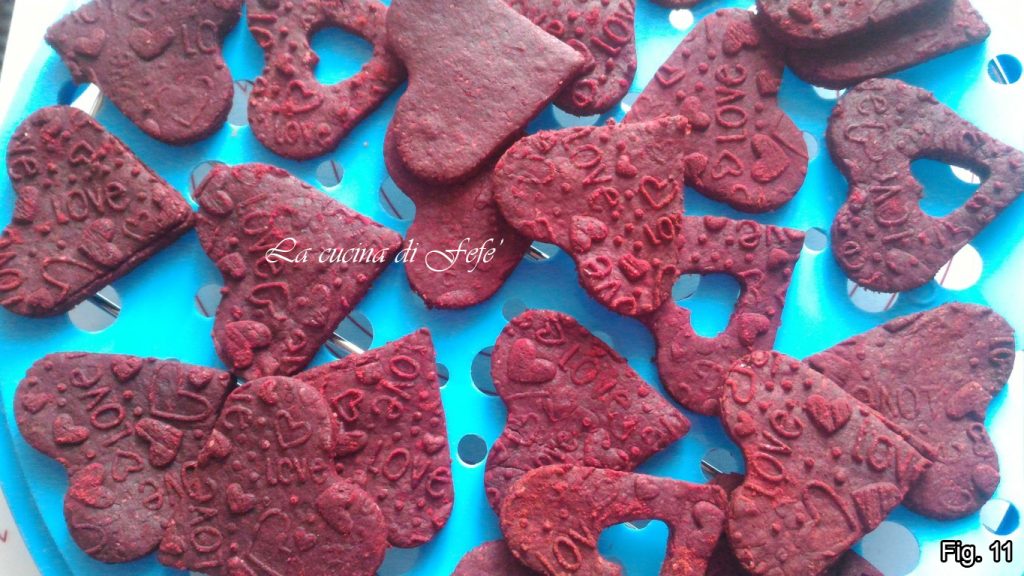
Spread half a teaspoon of spread on the base and pair your cookies.
And there you have it…the Valentine’s hearts with beetroot and almond flour are ready to be enjoyed.
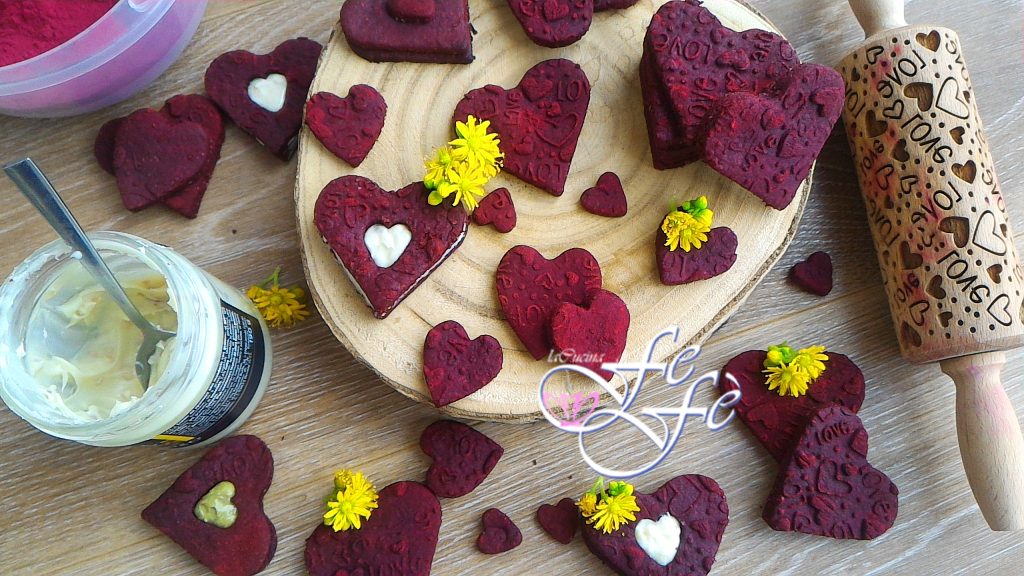
Enjoy from La Cucina di FeFè!
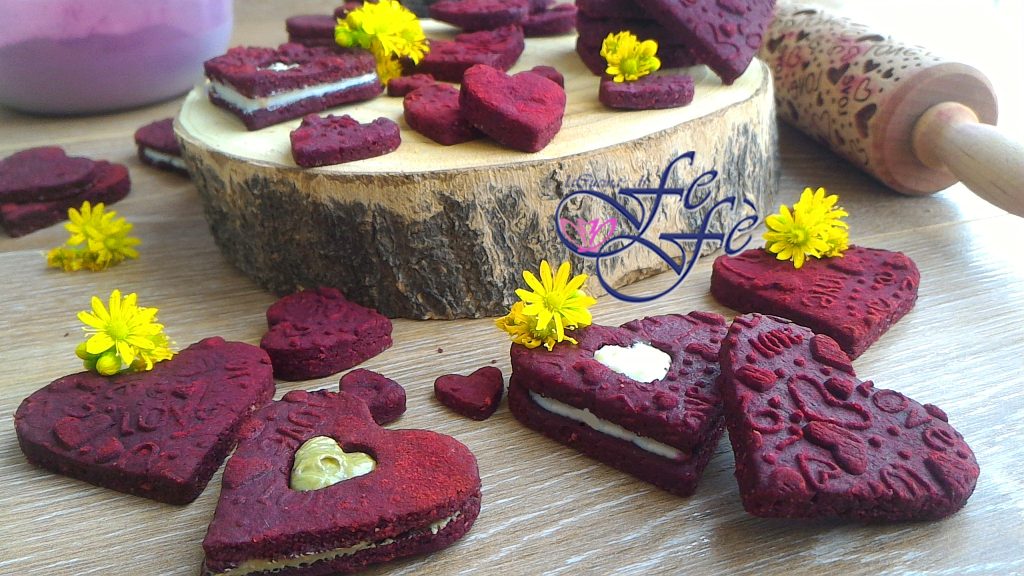
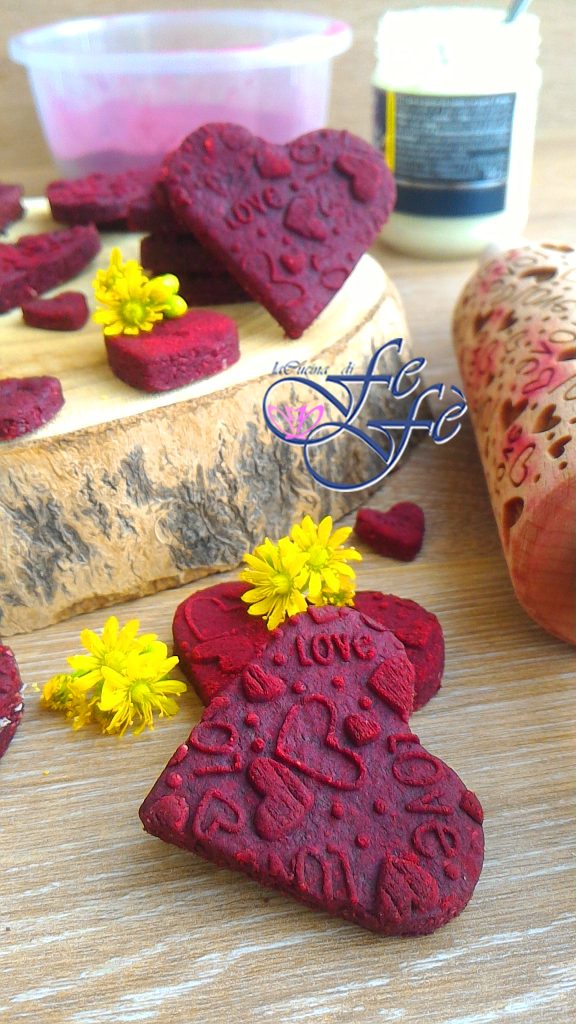
Detailed view of cookie without filling.
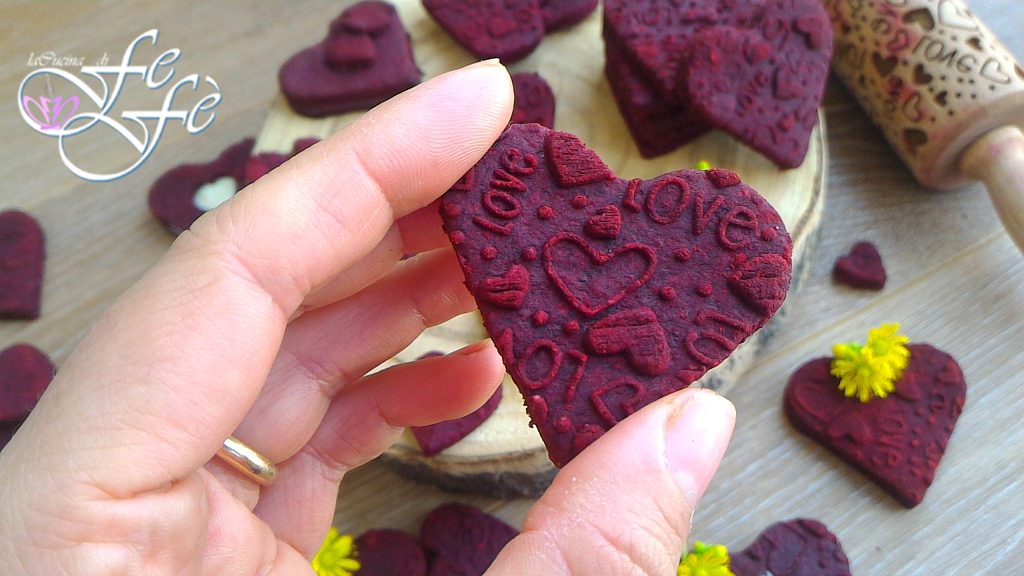
Storage
👉 You can store the cookies at room temperature in an airtight container for up to 7 days. The almond flour will keep the heart of the cookie slightly more moist compared to a common shortbread.
Advice, notes, variations, and suggestions
🟣 The consistency of the dough: almond flour, being gluten-free and rich in fats, tends to make the dough very crumbly, while beetroot flour is very fibrous and absorbs a lot of moisture. Result: You will get a rather delicate shortcrust. Compared to a traditional shortcrust, this one tends to break more easily if rolled too thin. I recommend keeping a thickness of at least 5 mm for unfilled cookies and no less than 3 mm for filled ones. Baking times for both will naturally differ. If you make them thinner to fill, the baking will be 10′ compared to the 11′-12′ for thicker ones. Always check.
🟣The filling: almond spread can be replaced with Nutella, pistachio cream, or strawberry jam.
FAQ (Frequently Asked Questions)
1. Are the cookies too dry?
If the dough is still “crumbly” after adding the egg, add 1-2 tablespoons of milk. Beetroot flour can vary greatly in absorption depending on the brand.
2. Can I replace beetroot flour?
Absolutely yes! If you don’t have beetroot flour on hand or want to change the biscuit’s profile while maintaining the structure for rolling, all-purpose flour (Type 1 or 2) will be the main classic choice. Compared to beetroot (which is gluten-free), these flours create a gluten network that makes the dough much more elastic and easy to roll thinly. Beetroot flour has both a structural and esthetic function. If you replace it with neutral flours and want to maintain a vibrant color without using artificial dyes, you can add to the dough 2 tablespoons of Unsweetened Cocoa, for chocolate cookies.
or 1 teaspoon of Raspberry Powder: for a natural pink.
