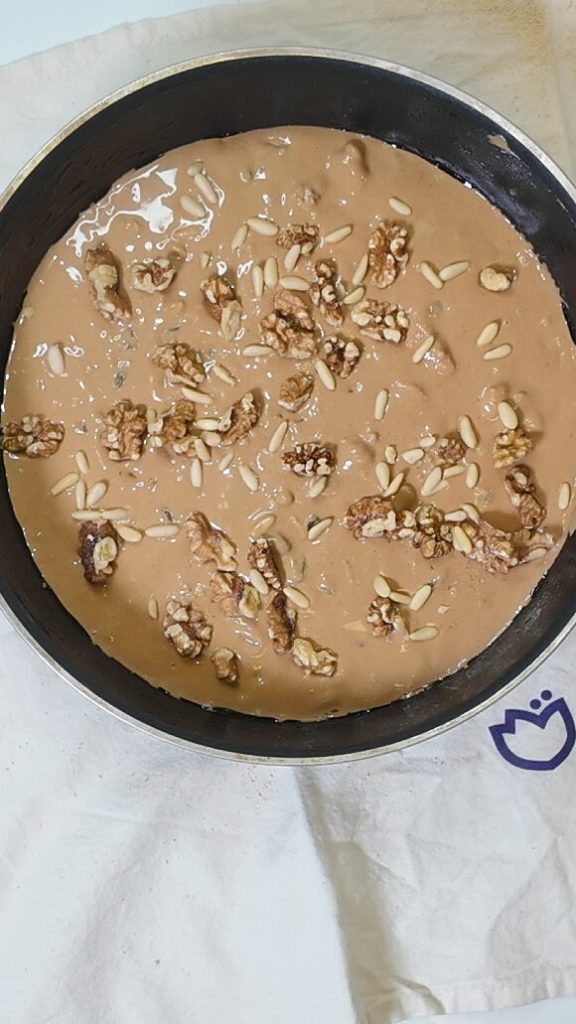
Fall hasn’t truly begun until the warm, rustic aroma of Chestnut Cake fills your home.
This traditional Italian dessert, made with chestnut flour, water, and little else, is true comfort food, a naturally gluten-free and vegan classic reminiscent of mountains and authenticity.
But let’s be honest: making Chestnut Cake perfectly can be tricky.
How many times have you baked it only for it to turn out dry, crumbly, or too thin?
After years of trials and adjustments, I’ve found the perfect recipe for Lombardian Patùna that definitively solves the dryness issue!
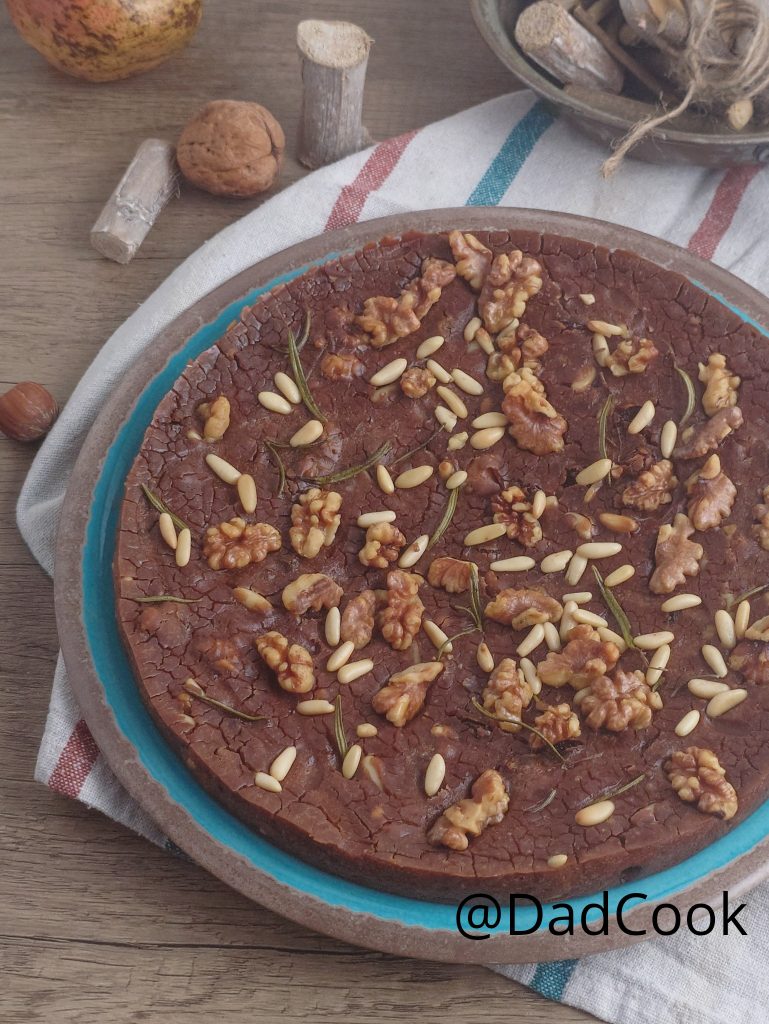
In this guide, you’ll not only find the precise measurements (for 500g of flour!) for an exceptionally soft and moist result, but I’ll also reveal my three secret tricks for a smooth batter (goodbye lumps!) and a final Chestnut Cake rich with walnuts and pine nuts, with that magical touch of rosemary that makes it unforgettable.
Are you ready to make the best Chestnut Cake of your life?
Let’s start right away!
- Quick Patùna Recipe: Simple Cremonese Chestnut Cake with Milk (Popular Version)
- Apple and Cinnamon Muffins without Flour (Low Carb Recipe in Air Fryer)
- Baked Pasta with Tuna, Melting Mozzarella, Olives and Capers
- Crispy Baked Celeriac | The Easy Recipe (like Roasted Potatoes)
- BAKED TURBOT WITH POTATOES: The Classic and Perfect Recipe for a Tasty and Easy Fish Main Course
- Difficulty: Very Easy
- Cost: Cheap
- Rest time: 2 Hours
- Preparation time: 15 Minutes
- Portions: 10 People
- Cooking methods: Oven
- Cuisine: Italian
- Seasonality: Fall, Winter, Fall
- Energy 304.18 (Kcal)
- Carbohydrates 35.89 (g) of which sugars 11.44 (g)
- Proteins 4.90 (g)
- Fat 15.61 (g) of which saturated 0.91 (g)of which unsaturated 2.63 (g)
- Fibers 7.56 (g)
- Sodium 84.20 (mg)
Indicative values for a portion of 130 g processed in an automated way starting from the nutritional information available on the CREA* and FoodData Central** databases. It is not food and / or nutritional advice.
* CREATES Food and Nutrition Research Center: https://www.crea.gov.it/alimenti-e-nutrizione https://www.alimentinutrizione.it ** U.S. Department of Agriculture, Agricultural Research Service. FoodData Central, 2019. https://fdc.nal.usda.gov
Ingredients
- 500 g chestnut flour
- 750 ml water
- 1 tablespoon salt
- 50 ml extra virgin olive oil
- 100 g walnuts (Shelled)
- 50 g pine nuts
- 50 g raisins
- 1 sprig rosemary
Tools
- 1 Bowl Pyrex
- 1 Wooden Spoon Fjnatinh
- 1 Electric Whisk Bosch
- 2 Nonstick Pans Graziano
Steps
Follow these simple steps to achieve a soft, never dry, and perfectly baked Chestnut Cake in every pan.
Batter Preparation
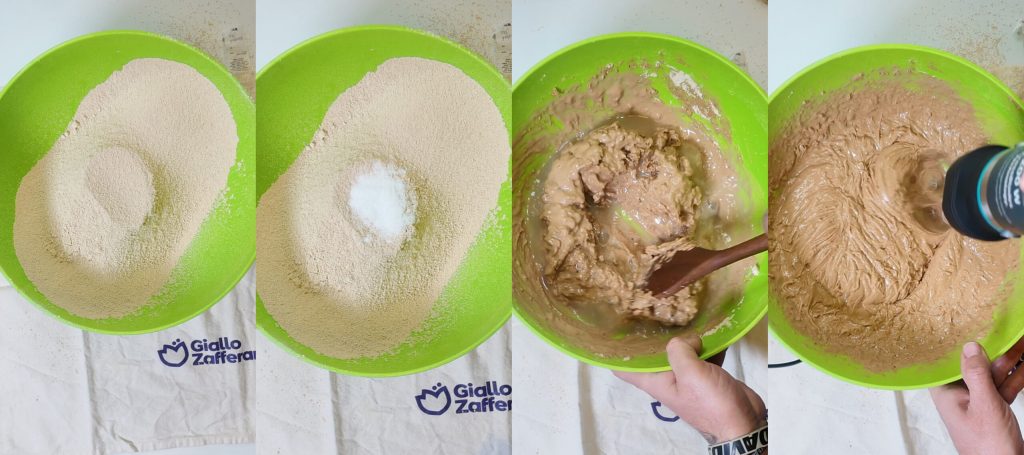
Sift and Mix:
In the bowl, sift the 500 g of chestnut flour.
Add the pinch of salt.
Begin pouring cold water gradually, mixing well with a wooden spoon, until the dough becomes a homogeneous mass.
Perfect Consistency:
To eliminate any lumps and make the dough perfectly smooth and fluid, use the immersion blender (or an electric whisk) for about 30 seconds.
Add more water, if necessary, until reaching the consistency of a thick batter.
Adding Ingredients and Dividing into Pans
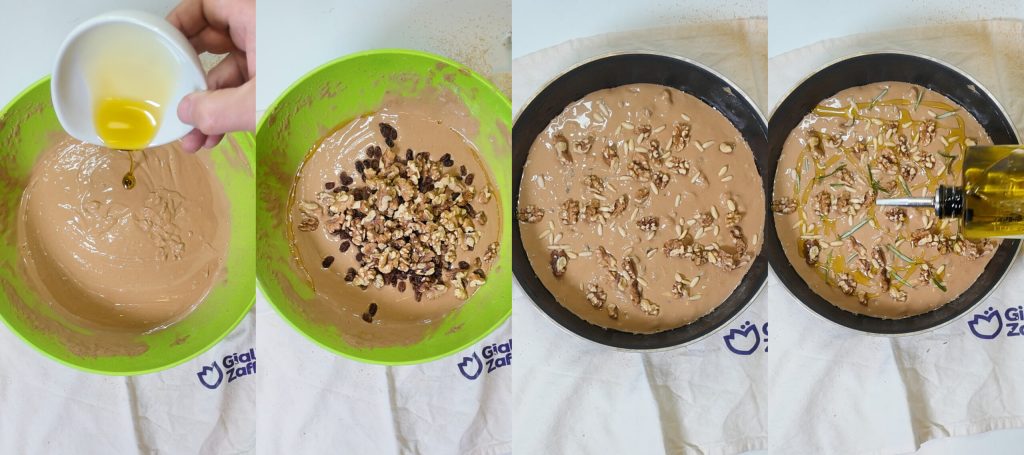
Enrich the Dough:
Add a tablespoon of EVO oil to the dough and mix.
Add the squeezed raisins, half of the chopped walnuts, and half of the pine nuts.
Mix well to incorporate the dried fruits.
Divide in Two:
Grease both pans very well that you will use.
Divide the batter into two different pans (make sure the layer does not exceed 0.8 inches in height, it should remain thin).
Finishing:
On the surface of the two cakes, add the remaining walnuts and pine nuts.
Evenly distribute the rosemary needles and finish with a generous drizzle of extra virgin olive oil.
Sequential Baking and Resting
Preheat the Oven:Preheat the static oven to 375°F.
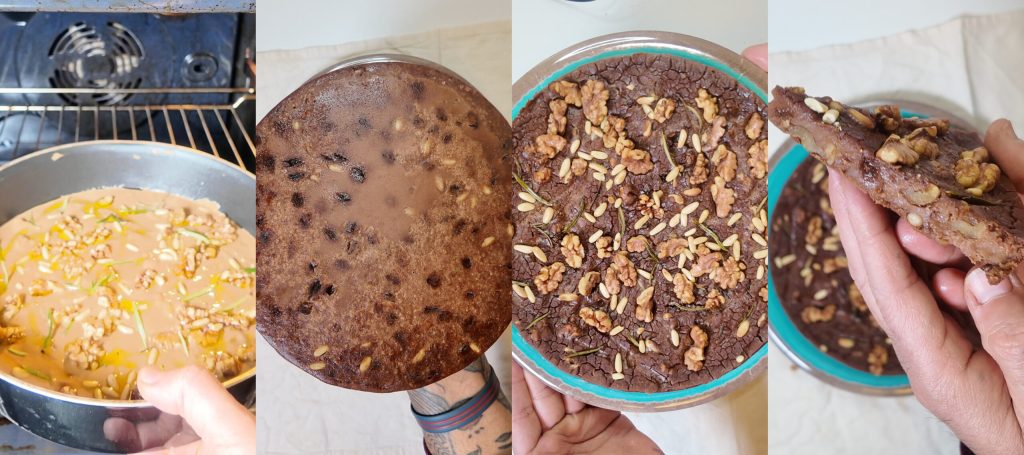
Bake One at a Time: Bake one pan at a time. Insert the first and let it bake for 35-45 minutes.
Point of Baking:
The Chestnut Cake is baked when the surface is dry, slightly cracked, and the walnuts/pine nuts are toasted.
Let Cool:
Remove the Chestnut Cake from the oven and let it completely cool at room temperature for at least an hour before attempting to cut and serve it.
Serving and Tasting
Unmold with Care:
Once chilled, unmold the Chestnut Cake (if necessary, assist with a thin spatula).
Serving:
Slice the dessert.
Tasting:Enjoy your Patùna, perhaps accompanied by fresh ricotta or a glass of sweet wine.
🍽️ Storage, Tips, and Variations
How to Store Soft Chestnut Cake
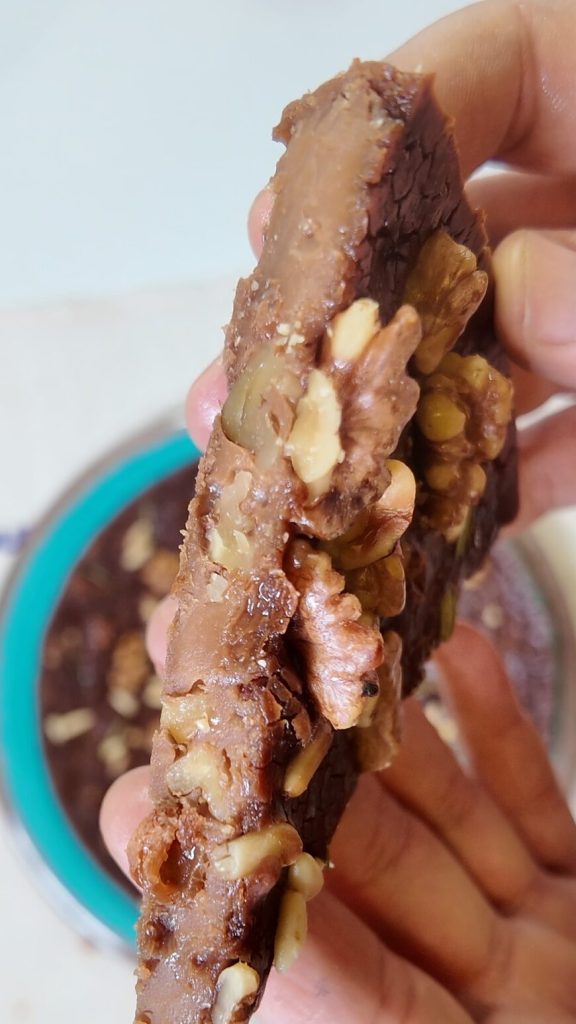
Chestnut Cake is a dessert that stores well thanks to its base with few perishable ingredients (no eggs or milk).
Room Temperature:
Store the Chestnut Cake under a glass dome or well-wrapped in plastic wrap for 2-3 days away from humidity.
In the Refrigerator:
If you prefer, you can store it in the refrigerator in an airtight container for up to 4-5 days.
Remove it from the fridge at least half an hour before serving to enjoy it best.
Freezing:
You can freeze Chestnut Cake in slices.
Wrap each slice well in plastic wrap and then in aluminum; it lasts up to 3 months.
Thaw at room temperature.
Tips for a Perfect Result
Fresh Flour:
The quality of chestnut flour is crucial.
If it’s bitter, the dessert will be bitter.
Buy it from a trusted store.
Don’t Overdo the Thickness:
Remember that Patùna should be thin (maximum 0.8 inches).
If it’s too high, it will take too long to cook in the center and become too dry.
No Rush:
Patience is essential.
Chestnut Cake is cut and tasted only when it is completely cold and compacted.
Variations on the Theme (and Pairings)
Regional Variations:
Instead of walnuts and pine nuts, you can use almonds or hazelnuts.
In some regions, orange peel or wild fennel is also added (especially in Liguria).
Rosemary or Sage:
The use of rosemary is a classic, but you can also try sage, which adds a different and interesting aroma.
Pairing:
Traditionally enjoyed with Novello red wine or a Passito, but it is also excellent with a sprinkle of powdered sugar or a spoonful of fresh ricotta.
❓ Frequently Asked Questions (FAQ) about Chestnut Cake
Why is my Chestnut Cake dry or crumbly?
Chestnut Cake becomes dry or crumbly for three main reasons:
Too Much Flour:
The proportion between flour and water is wrong.
Ensure to use about 700-750 ml of water for 500 g of chestnut flour.
Overcooking:
If the cake cooks too long, the water completely evaporates.
Check the baking point (cracked surface) after 35 minutes.
Lumpy Batter:
Lumps prevent proper hydration of the flour.
Using an immersion blender, as shown in my procedure, guarantees a smooth and soft batter.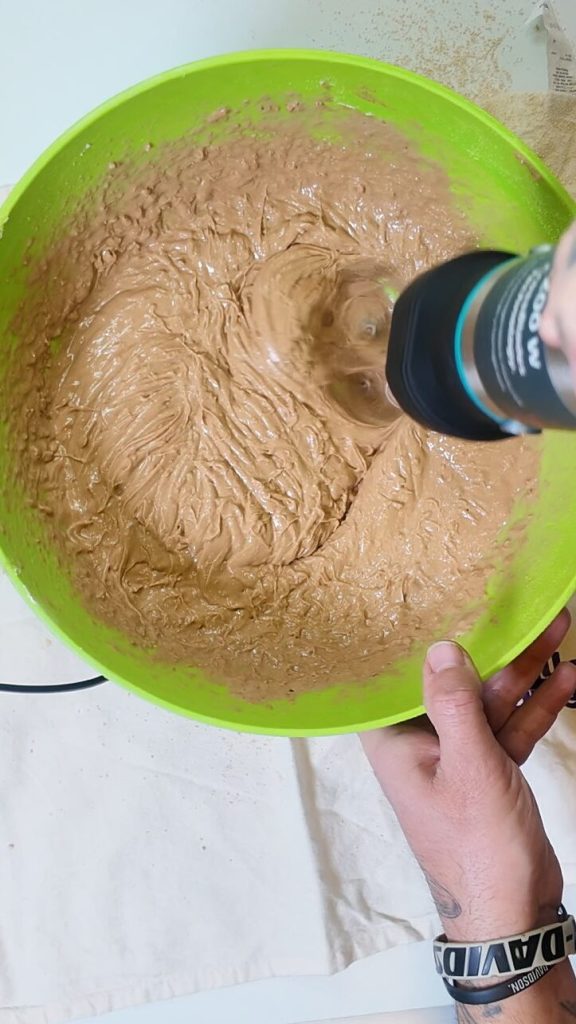
Can I use other types of dried fruits?
Yes, absolutely!
In our recipe, we chose walnuts and pine nuts because they pair wonderfully with rosemary, as in the Lombard tradition of Patùna.
You can replace them entirely or partially with peeled almonds, chopped hazelnuts, or walnut halves.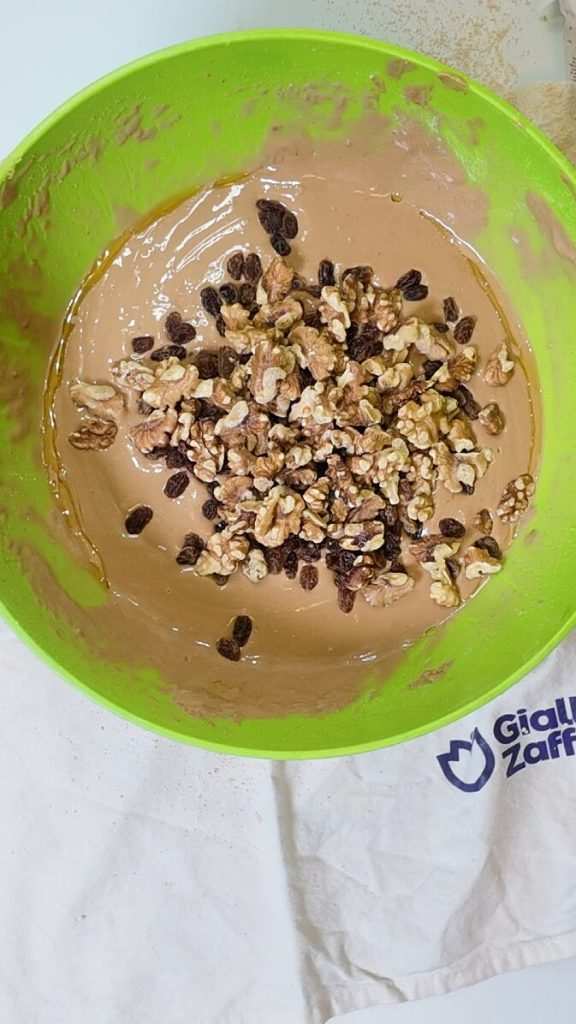
Do I have to use rosemary?
No, it’s not mandatory, but it is highly recommended.
Rosemary gives a salty and balsamic aromatic contrast that enhances the rustic sweetness of chestnut flour.
If you don’t like rosemary, you can try a pinch of wild fennel (as used in Liguria) or orange zest.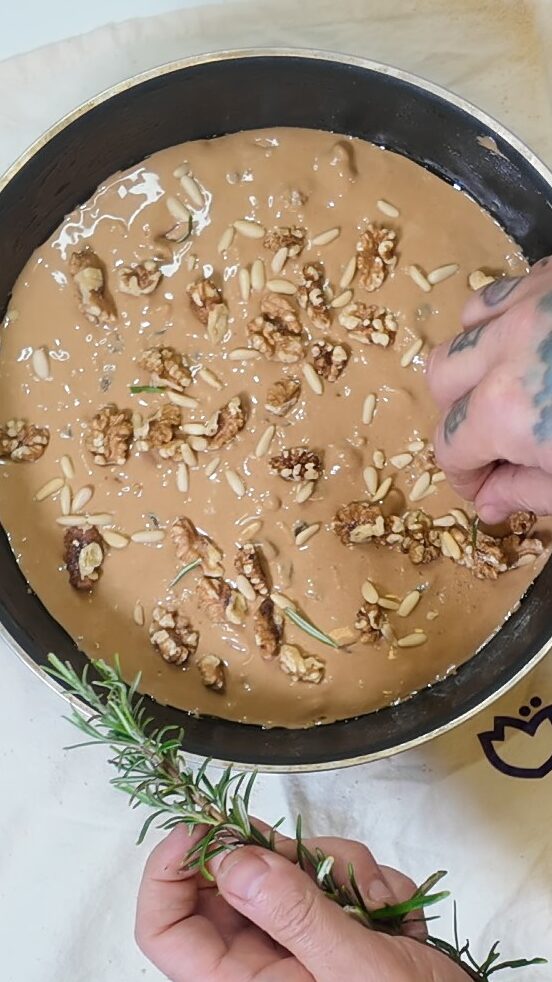
Is Chestnut Cake eaten hot or cold?
Chestnut Cake, or Patùna, is traditionally a dessert that is eaten cold or at room temperature.
It must fully compact after baking to reach the ideal consistency (moist and firm).
We recommend waiting at least an hour before slicing it.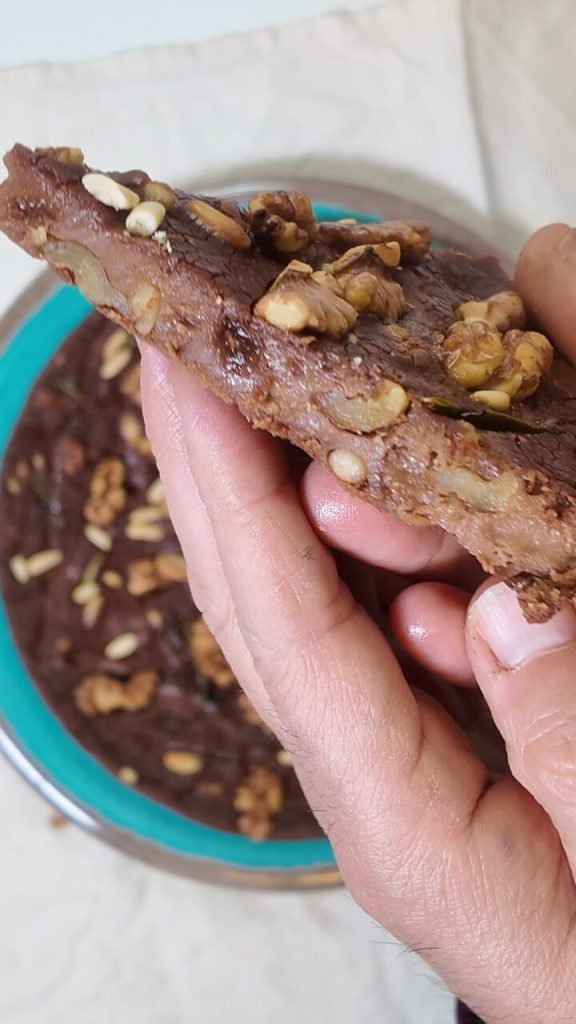
My pan is smaller/larger. How do I adjust the times?
Since Chestnut Cake should maintain a thickness of maximum 0.8 inches, if you use a larger pan, you will need to slightly reduce the baking times.
If the pan is smaller and the layer is higher, you will need to increase the baking by 5-10 minutes.
Always check the surface and crust!