
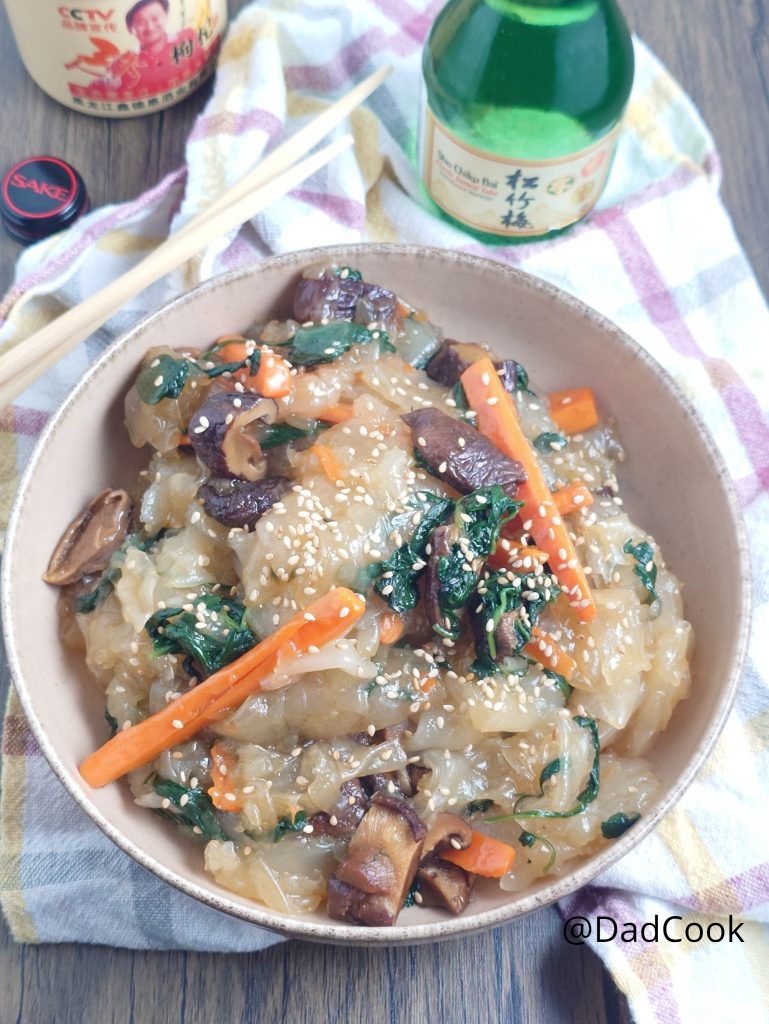
There is a unique dish that embodies the philosophy of Korean cuisine: simple, flavorful, and incredibly balanced.
If you love exotic flavors but are looking for an easy and quick recipe to prepare at home, you’re in the right place! Forget about the usual spaghetti and try the Korean Stir-Fried Rice Noodles, a feast of texture and taste.
We’re talking about a simplified and veggie-friendly version of the famous Korean Japchae, which is usually made with dangmyeon (sweet potato noodles).
We will use convenient rice noodles, perfect for absorbing the soy sauce and the unmistakable aroma of sesame oil.
In less than 30 minutes, you can serve a steaming and colorful bowl, rich in fresh vegetables (carrots and spinach) and Chinese mushrooms.
This Korean recipe is a great solution for a light lunch or a delicious ethnic dinner.
Are you ready to take a trip to Korea with just a few ingredients and even less effort?
Follow all the steps for crispy outside and soft inside stir-fried noodles!
- Stir-Fried Rice Dumplings: Easy and Quick Asian Recipe for a Tasty Dinner!
- Rice Dumplings with Shrimp and Vegetables: The Secret of Chinese Restaurants to Cook Them Perfectly and Tasty.
- Beef Noodles in Teriyaki Style Sauce (Easy and Quick)
- Oven-Baked Pork Ribs: Sweet and Sour Lime Marinade with Soy Sauce (Easy and Tasty Recipe)
- Original Homemade Teriyaki Sauce: The Perfect Japanese Recipe
- Difficulty: Very easy
- Cost: Very economical
- Rest time: 5 Minutes
- Preparation time: 10 Minutes
- Portions: 4
- Cooking methods: Stove
- Cuisine: Italian
- Seasonality: All seasons
- Energy 466.28 (Kcal)
- Carbohydrates 99.72 (g) of which sugars 5.07 (g)
- Proteins 10.78 (g)
- Fat 4.65 (g) of which saturated 0.83 (g)of which unsaturated 1.82 (g)
- Fibers 8.13 (g)
- Sodium 683.01 (mg)
Indicative values for a portion of 325 g processed in an automated way starting from the nutritional information available on the CREA* and FoodData Central** databases. It is not food and / or nutritional advice.
* CREATES Food and Nutrition Research Center: https://www.crea.gov.it/alimenti-e-nutrizione https://www.alimentinutrizione.it ** U.S. Department of Agriculture, Agricultural Research Service. FoodData Central, 2019. https://fdc.nal.usda.gov
Ingredients
- 12 oz g rice paper
- 0.5 oz g dried Shitake or Shiitake mushrooms (Dry weight)
- 2.2 cups carrots
- 5 oz spinach
- 3 tablespoons light soy sauce
- 1 tablespoon soy sauce
- 2 teaspoons oyster sauce
- 2 tablespoons sesame oil
- 4 tablespoons extra virgin olive oil
- 1 tablespoon sesame seeds
- 1 teaspoon honey
Tools
- 1 Wok Lagostina
- 1 Spatula
Steps
Follow these steps to create your Korean Rice Noodles (Japchae) full of flavor
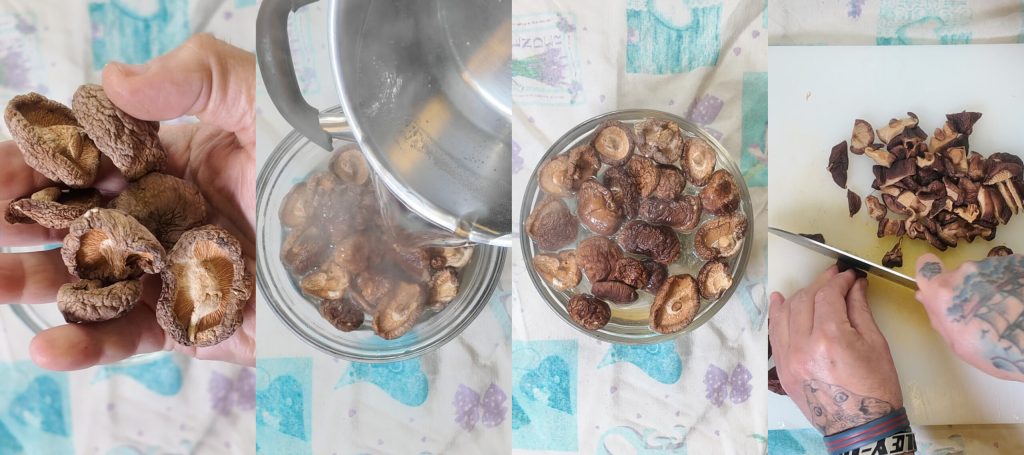
Mushroom Soaking and Preparation:
Start with Soaking:
Place the dried Shiitake mushrooms in a bowl and cover them with boiling water.
Let them soak for about 30 minutes.
This time is crucial because it rehydrates the mushrooms, making them tender, and extracts the rich umami flavor in the water that we’ll use in cooking.
Slice Mushrooms and Carrots:
Drain the mushrooms, squeeze them well, and slice them thinly.
Set aside the filtered soaking water.
Also cut the carrots into strips.
Cooking the Condiment
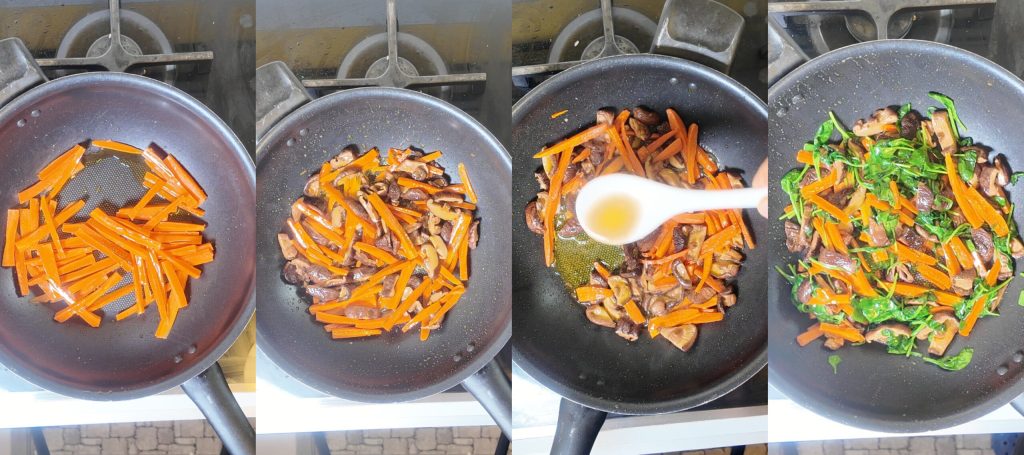
Sauté the Carrots:
Heat the extra virgin olive oil in the pan.
Add the sliced carrots and cook them for about 10 minutes.
Add Mushrooms and Deglaze:
Add the soaked mushrooms.
Let cook for another 5 minutes.
At this point, deglaze everything with a little bit of the soaking water you set aside.
Sauce and Spinach:
Add the spinach leaves, light and dark soy sauce, oyster sauce, honey, and rice vinegar.
Finish the Sauce:
Continue cooking gently, stirring until the spinach is wilted and the sauce is well blended.
Taste and add a pinch of salt only if necessary.
Noodle Preparation and Seasoning:
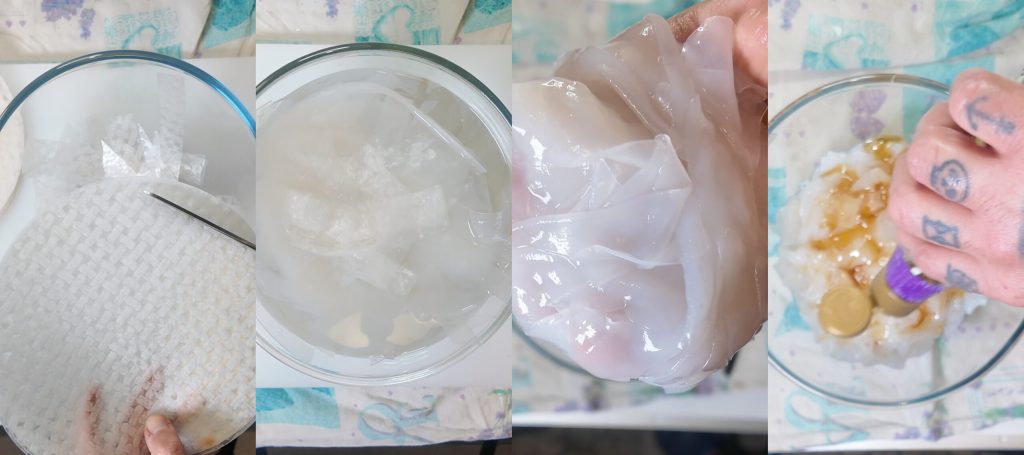
Soften the Disks:
While the sauce cooks, prepare the noodles with the rice paper disks.
Brush the disks with a little water to soften them, preventing them from breaking.
Cut and Hydratea:
Overlap two disks at a time and cut them into strips of your preferred thickness.
Final Soaking:
Place the noodles in a bowl with cold water for 6-8 minutes to complete the soaking.
Drain the water and immediately season the noodles with two tablespoons of sesame oil to make them shiny and prevent sticking.
Final Assembly and Serving
Season the Noodles:
Immediately season the drained noodles with two tablespoons of sesame oil to make them shiny and prevent sticking.
Assembly Off Heat:
Off the heat, add the seasoned rice noodles to the vegetable sauce you prepared.
Mix and Heat:
Toss or stir quickly for a couple of minutes to amalgamate all the ingredients and bring everything to the same temperature.
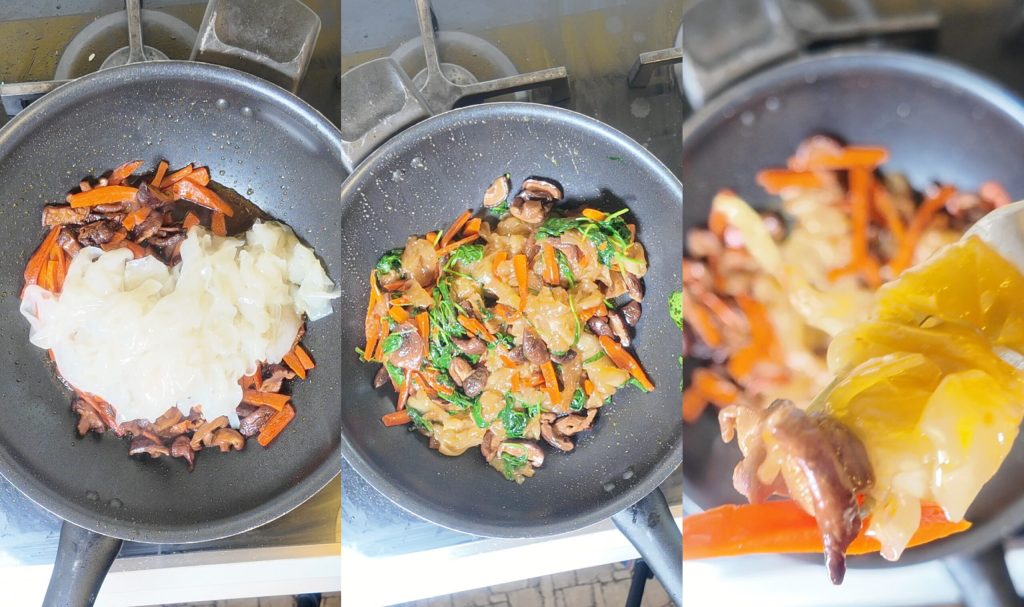
Serve Hot:
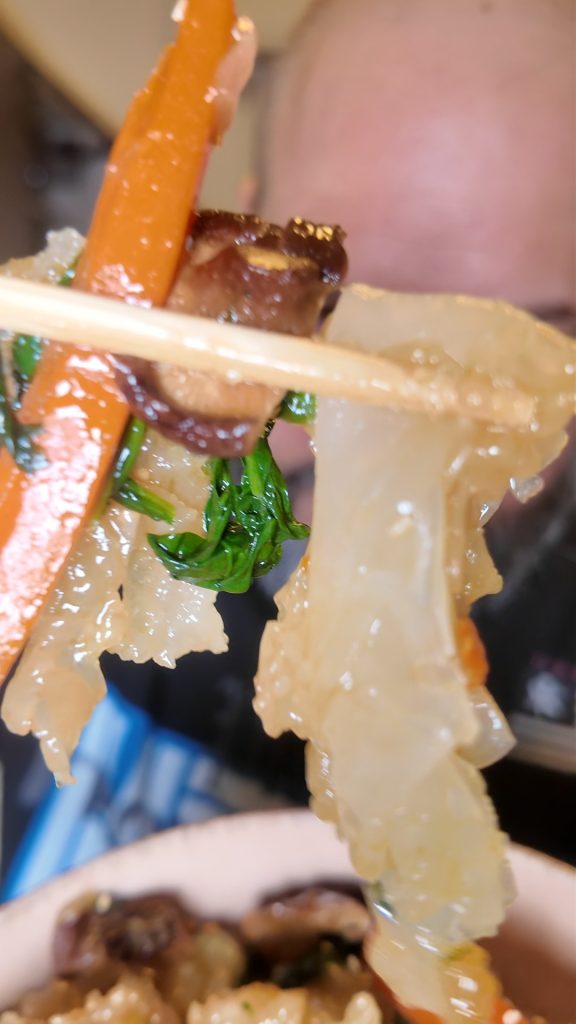
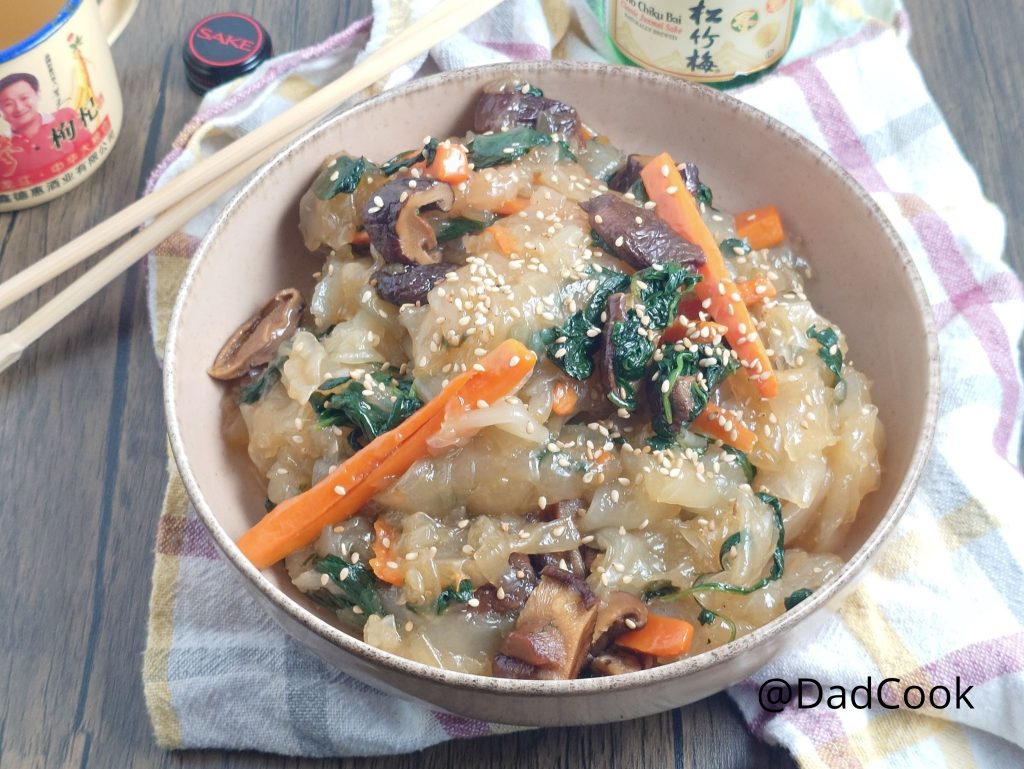
Plate and, if desired, garnish with plenty of toasted sesame seeds.
Enjoy the dish while it’s still nice and hot.
💡 Storage, Tips, and Variations
🌡️ Storage and Reheating
Fridge Duration:
If stored properly, rice Japchae maintains its flavor and texture for 2-3 days in the refrigerator.
Make sure to place it in an airtight container as soon as it has completely cooled.
Enhanced Flavor:
Like many stir-fried dishes with soy-based sauces, the flavor tends to intensify the day after, as the noodles and vegetables better absorb the dressing.
Optimal Reheating:
To reheat the dish so it doesn’t become rubbery, avoid the microwave.
The best method is to stir-fry the Japchae again in a wok or pan over medium-high heat for 3-5 minutes.
If the noodles seem dry, add 1-2 tablespoons of water while frying.
⭐ Tips for Perfect Results
Uniform Cutting:
Slicing the carrots and mushrooms into similar-size strips ensures they cook evenly and enhances the final presentation of the dish.
Don’t Overcook the Spinach:
Baby spinach wilts quickly.
Add them last in the pan to keep them a bright green and preserve their properties.
Sesame Oil is Final:
Remember to add sesame oil (which gives the characteristic aroma) only off the heat and raw.
If cooked too long, it loses its aroma.
Don’t Salt Immediately:
Soy sauces and oyster sauce are already very salty.
Taste the dish only when almost cooked before adding any extra salt.
🔄 Variations and Substitutions
This dish is extremely versatile and adapts to different tastes:
Proteins:
To make the dish complete, you can add 5 oz of marinated beef strips or shrimp.
Cook the proteins separately and add them to the vegetables before adding the noodles.
Noodles:
If you don’t have rice paper disks, you can use dried rice vermicelli.
Vegetables:
You can substitute or add other ingredients like matchstick zucchini, thinly sliced cabbage, or sliced scallions.
Spiciness:
For a spicy touch, add a teaspoon of Gochujang (Korean chili paste) to the sauce, or a pinch of chili powder.
For a spicy touch, add a teaspoon of Gochujang (Korean chili paste) to the sauce, or a pinch of chili powder.
FAQ (Questions and Answers)
Doesn’t the original Japchae use glass noodles?
Yes, traditionally Korean Japchae is made with dangmyeon, the so-called glass noodles made from sweet potato starch.
In this recipe, we’ve used rice paper disks (those for spring rolls) cut into strips as a great and tasty alternative, giving the dish a more gelatinous and transparent texture.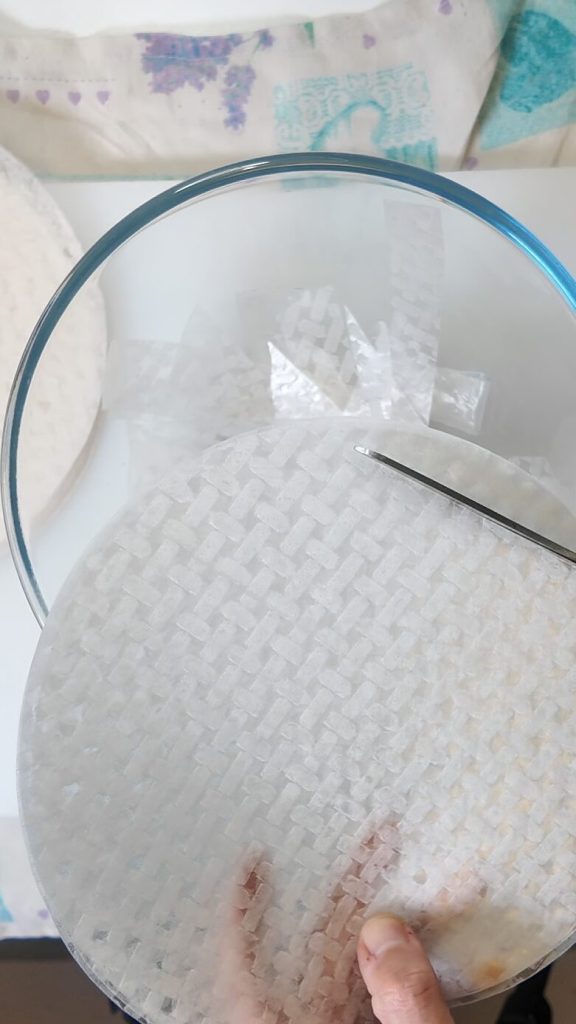
Can I use fresh mushrooms instead of dried ones?
Absolutely!
If using fresh Shiitake or Pleurotus mushrooms, you can skip the 30-minute soaking step entirely.
Add the fresh sliced mushrooms to the pan with the carrots.
In this case, in the sauce, replace the soaking water with the same amount of plain water or vegetable broth to dilute the sauces.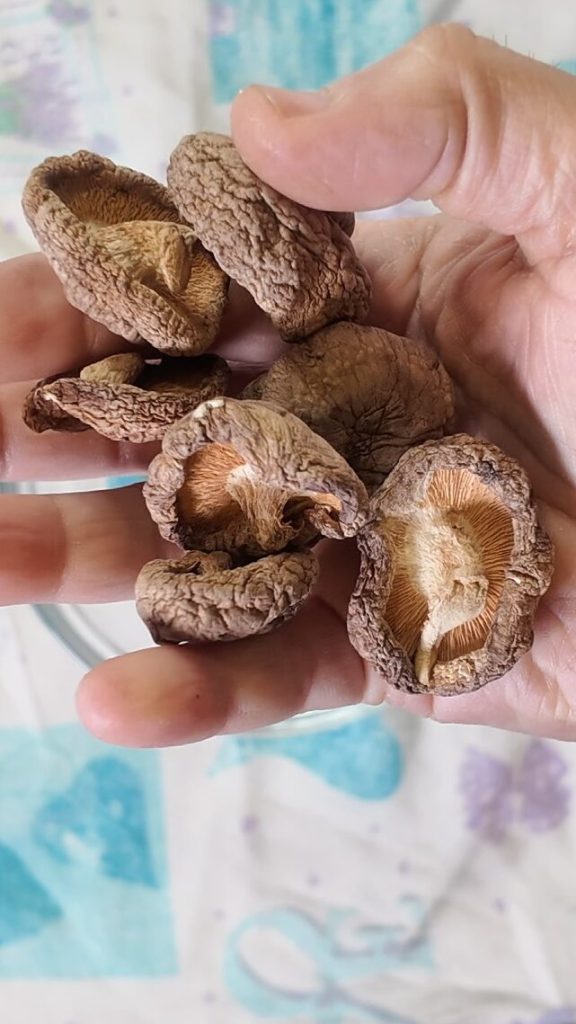
Do rice noodles stick after cooking, is it normal?
Rice noodles tend to be sticky.
The trick to avoid this is twofold:
Do not overcook them (remove from cold water as soon as they are soft).
Season them immediately with a bit of sesame oil right after draining.
This creates a thin insulating layer that prevents sticking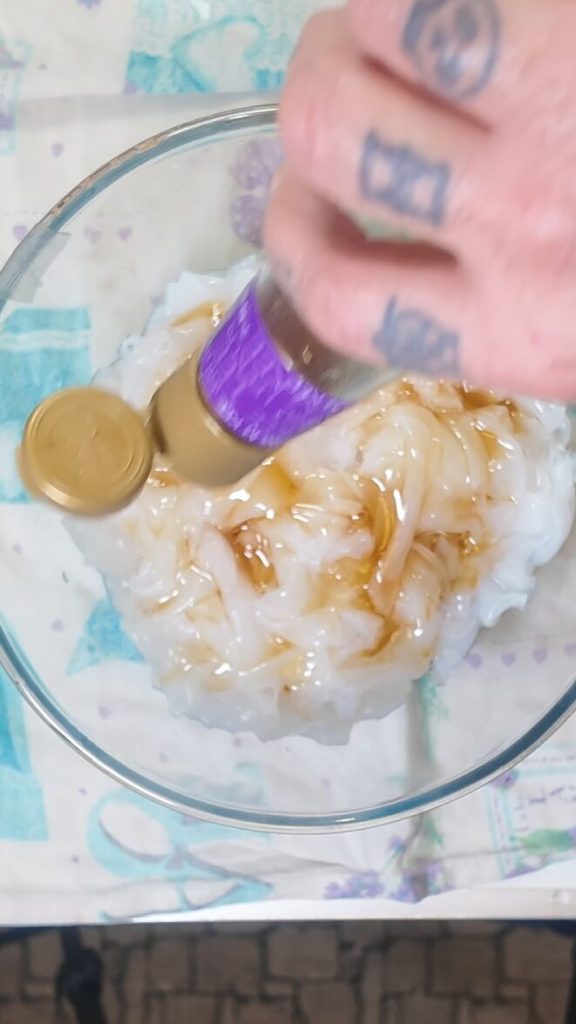
Can I prepare the noodles the day before?
Yes, but it’s recommended to assemble the final dish (combine noodles and dressing) only before serving.
If you prepare only the dressing (vegetables and sauce) and store it in the fridge, it’ll be enough to toss the freshly prepared noodles with the sauce the next day.
If you assemble everything, see the Storage section for reheating tips.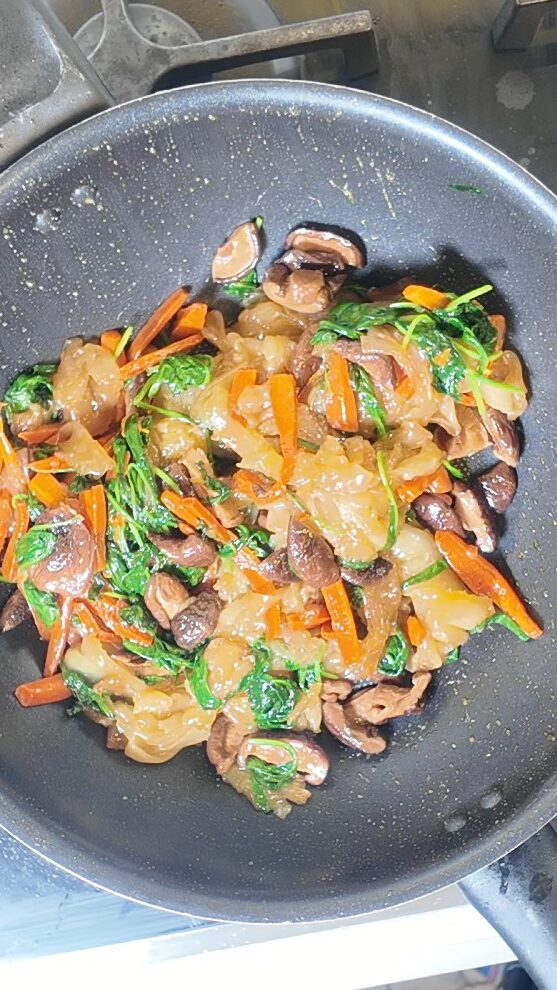
What can I use instead of oyster sauce?
If you’re looking for a vegetarian alternative or don’t have oyster sauce available, you can easily compensate using the ingredients already in the dressing:
For Umami (Flavor):
Add an extra half tablespoon of light soy sauce.
For Sweetness/Viscosity:
Increase the amount of honey in the sauce by another half teaspoon. This way, you balance the flavor without having to resort to hard-to-find ingredients!
