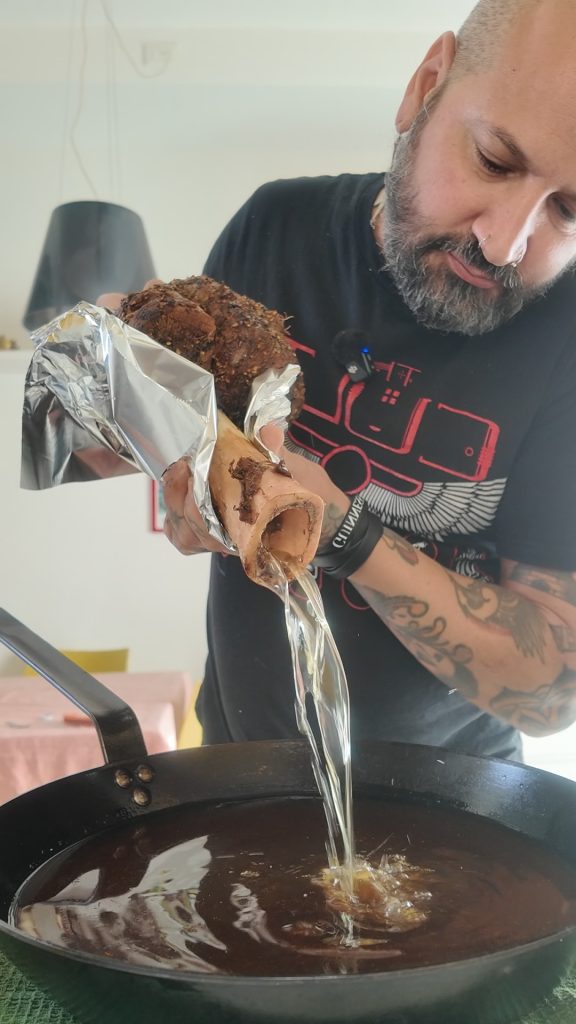
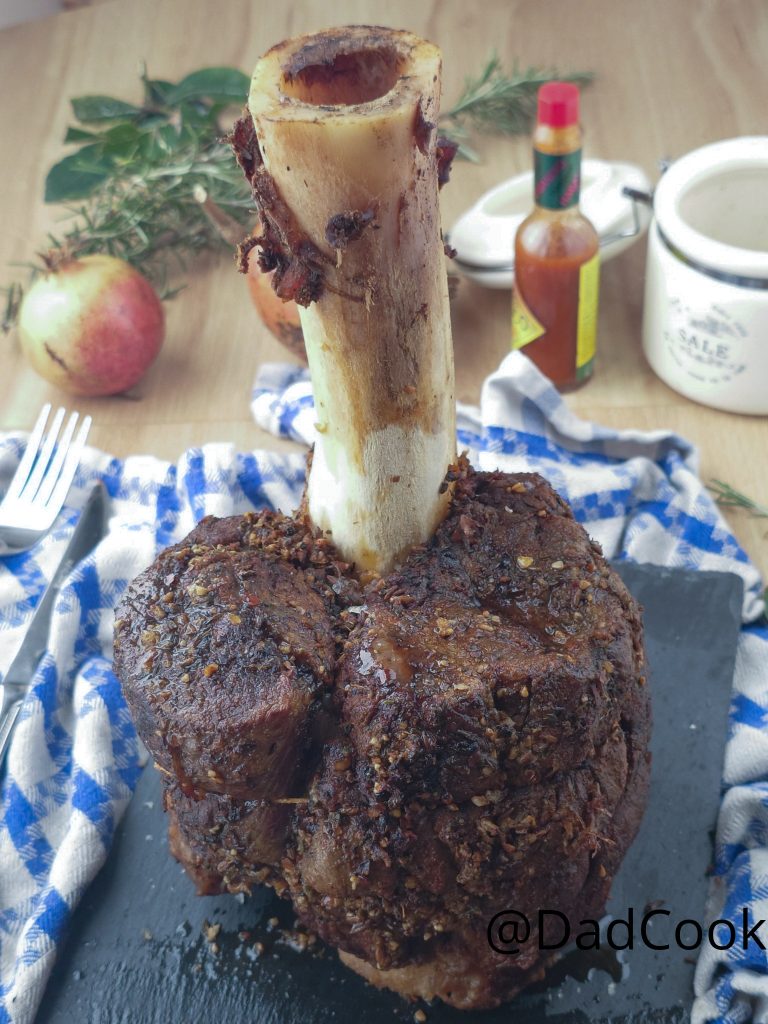
The Beef Hammer (Beef Shank) is a show-stopping cut of meat from the beef shank, known for its rich flavor and the presence of the long bone.
This recipe, inspired by the low & slow technique (low temperature and slow), transforms the naturally tough cut, due to its high collagen content, into an incredibly soft, succulent, and aromatic dish.
With a long oven braise in dark beer and the use of an aromatic Rub, we will achieve a final result worthy of the best barbecues, characterized by a flavorful outer crust and melt-in-your-mouth inner meat, perfect for slicing and serving with its reduced sauce enriched with the valuable marrow.
Get ready to impress your guests with an epic and unforgettable dish, ideal for important lunches!
- Florentine Steak (T-bone) from Bavarian Simmental: Perfect Stove Cooking!
- Florentine Steak (T-bone) from Bavarian Simmental: Perfect Stove Cooking!
- Oven-Baked Pork Ribs: Sweet and Sour Marinade with Lime and Soy Sauce (Easy and Tasty Recipe)
- Beer Pork Ribs: Easy and Quick Recipe (with Video)
- How to Cook Fresh Cotechino
- Difficulty: Very Easy
- Cost: Medium
- Rest time: 30 Minutes
- Preparation time: 12 Hours
- Cooking methods: Oven, Stovetop
- Cuisine: Italian
- Seasonality: All Seasons
- Energy 490.65 (Kcal)
- Carbohydrates 0.95 (g) of which sugars 0.01 (g)
- Proteins 73.61 (g)
- Fat 18.80 (g) of which saturated 6.69 (g)of which unsaturated 8.10 (g)
- Fibers 0.30 (g)
- Sodium 615.65 (mg)
Indicative values for a portion of 250 g processed in an automated way starting from the nutritional information available on the CREA* and FoodData Central** databases. It is not food and / or nutritional advice.
* CREATES Food and Nutrition Research Center: https://www.crea.gov.it/alimenti-e-nutrizione https://www.alimentinutrizione.it ** U.S. Department of Agriculture, Agricultural Research Service. FoodData Central, 2019. https://fdc.nal.usda.gov
Ingredients
- 1 beef shank
- 2 1/4 cups dark beer (Type: Ghisa)
- 1 sprig rosemary
- A few leaves bay leaves
- to taste extra virgin olive oil
- 2 tbsps coarse salt
- 1 tbsp smoked salt
- 2 tbsps smoked paprika
- 1 tbsp black pepper
- 1 tbsp garlic powder
- 1 tsp chili powder (Optional)
Tools
- 1 Pot Agnelli
- 1 Thermometer Inkbird
- 1 Cutting Board Freshmagic
Steps
Preparation and Dry Marinade
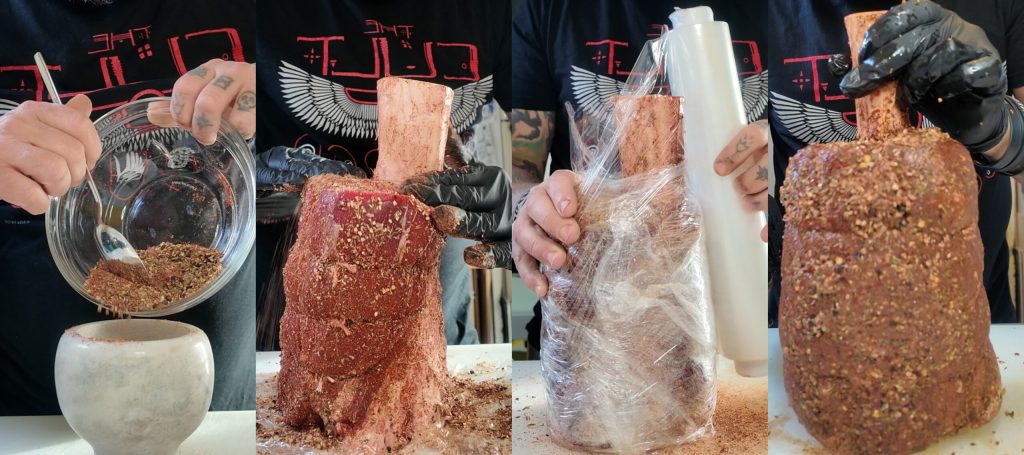
Start by preparing your Rub: in a mortar, crush or mix well the coarse salt, smoked salt, smoked paprika, ground black pepper, and garlic powder.
Thoroughly dry the entire surface of the meat (Beef Hammer) with paper towels.
This step is crucial for browning.
Massage the meat with a drizzle of olive oil and evenly distribute the Rub over the entire surface, pressing well to adhere.
Wrap the well-seasoned Beef Hammer in plastic wrap and let it rest in the refrigerator for at least 8-12 hours (overnight is ideal).
About an hour before cooking, remove the meat from the refrigerator and unwrap it so it can return to room temperature.
Searing and Crust Formation
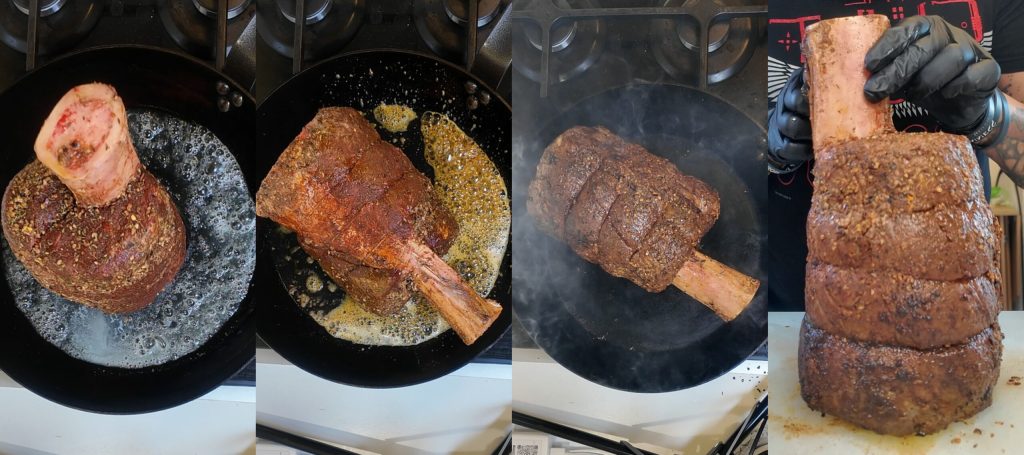
Heat a heavy-bottomed pan (preferably cast iron or steel) over very high heat with a generous drizzle of extra virgin olive oil or butter.
When the pan is scorching, sear the Beef Hammer on all sides.
Start by standing it on the base of the larger bone, then rotate it to seal every part of the muscle mass.
The goal is to create a dark and delicious crust that seals the juices.
The searing should last a total of about 10-15 minutes.
Slow Oven Braise
Preheat the oven in static mode to 300°F.
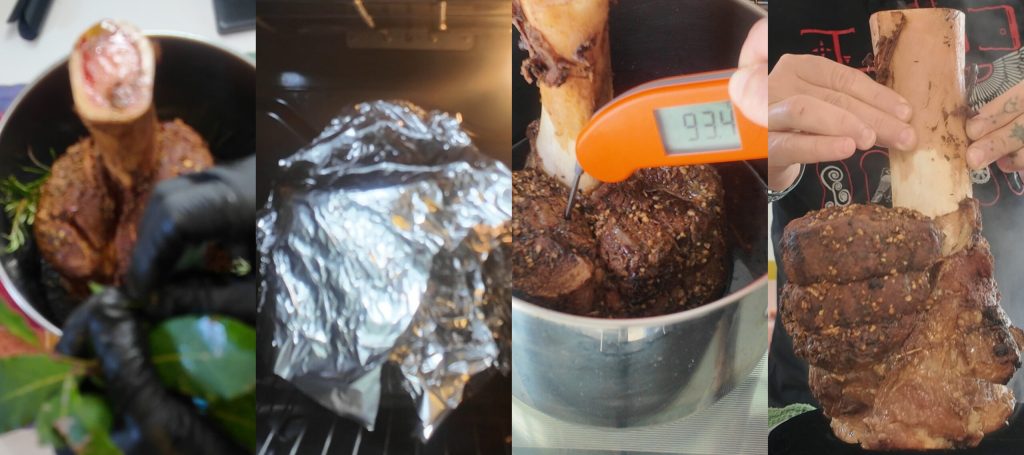
Transfer the hot Beef Hammer to a stainless steel pot and stand it upright.
Add dark beer to the bottom (covering about 1 inch), rosemary sprigs, and bay leaves.
Sealing: To protect the meat, place a sheet of parchment paper over the pot.
Cover the entire pot very tightly with two layers of aluminum foil, pressing the edges to prevent steam from escaping.
The parchment paper will prevent direct contact between the foil and the meat.
Cooking and Temperature Test
Cook in a static oven at 300°F for at least 6 hours, or until the internal temperature of the meat (measured at the center of the thickest part, away from the bone) reaches 198°F – 201°F.
Rest, Slicing, and Marrow Recovery:
Remove the pot from the oven.
Do not open immediately!
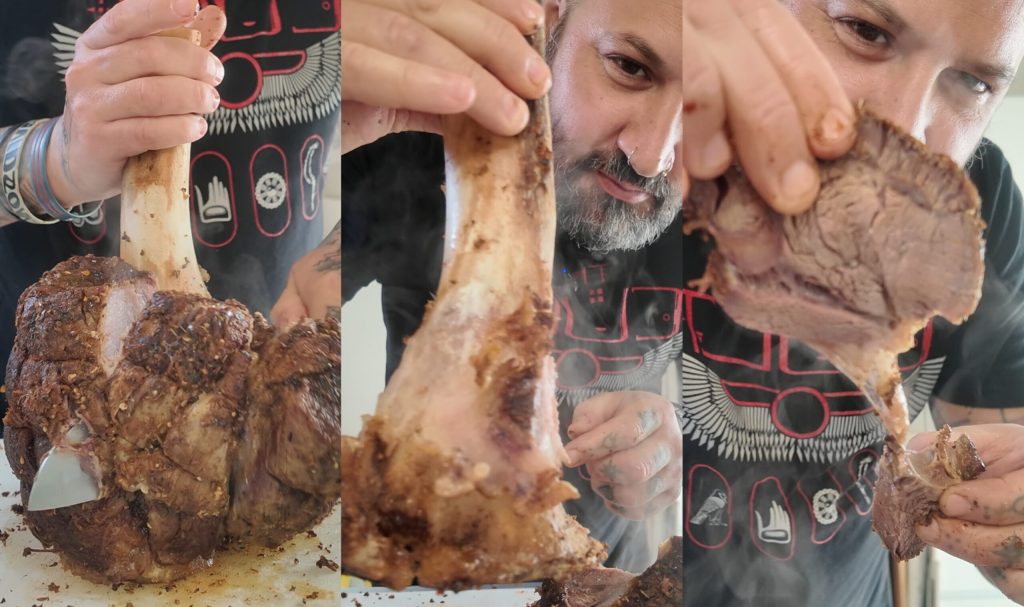
Let the sealed meat rest for 30-45 minutes on the countertop: this is essential for retaining its juiciness.
Carefully open the foil.
Immediately recover the exposed marrow from the bone: it will be tender and liquid.
Set it aside.
Slice the shank to your preferred thickness using a sharp knife.
Making the Recovery Sauce:
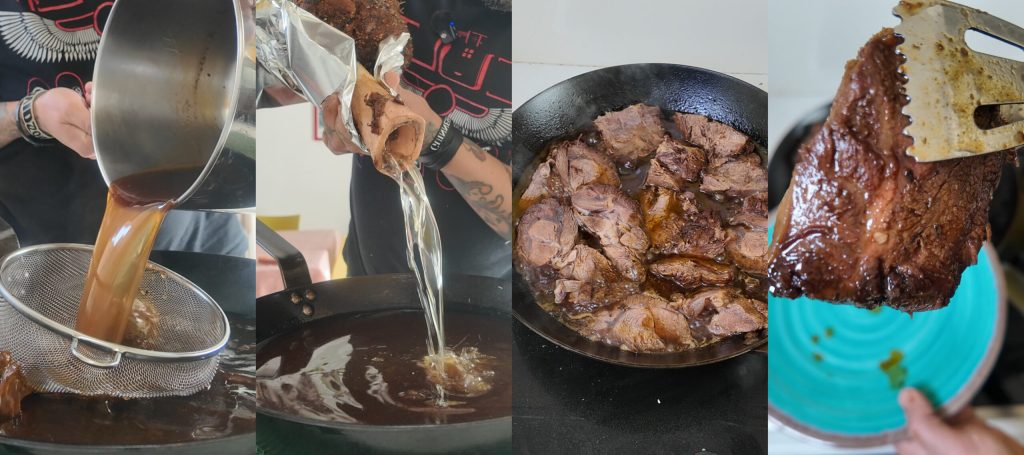
Strain all the cooking liquid left at the bottom of the pot through a sieve to remove the Rub residues and fresh herbs (rosemary and bay leaves).
Pour the strained liquid into a pan and add the recovered liquid marrow.
Bring to a boil over medium-high heat.
When the broth has slightly thickened (the meat’s gelatin will help), return the slices of meat to the pan and briefly pass them through to absorb the sauce well, rendering them incredibly succulent.
Plating and Tasting:
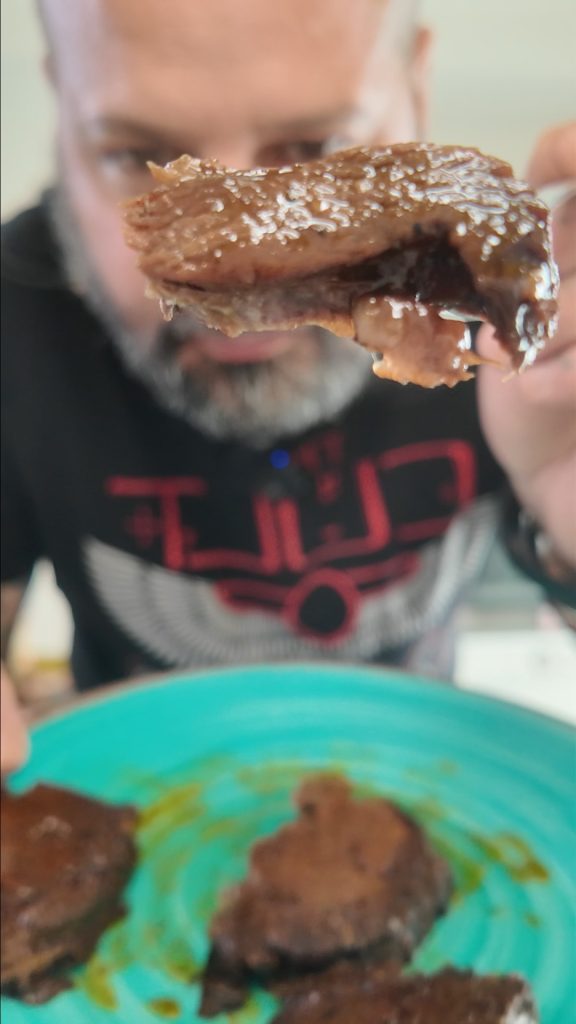
Arrange the Beef Hammer slices on a serving dish, pouring over any remaining rich and succulent sauce.
Plate and enjoy this dish.
Storage, Tips, Notes, and Variations
🌡️ Storage and Reheating
In the Fridge: Cooked and sliced meat can be stored for 3-4 days in an airtight container.
Store it submerged in the cooking sauce to keep it soft.
Freezing: You can freeze cooked Beef Hammer (sliced and with sauce) for up to 2-3 months. Thaw slowly in the refrigerator.
Sauce: The strained sauce (with marrow) keeps well and should be used to reheat the meat before serving.
💡 Cooking Notes and Tips
The Marrow: Do not discard it. Extracted from the bone after resting, it should be mixed into the strained cooking sauce to enrich it with flavor and creaminess.
Perfect Sealing: The use of parchment paper under the foil is crucial: the paper protects the meat, while the foil ensures airtight sealing for a steam cooking that keeps the meat always moist.
Rest: The 30-45 minutes of resting the sealed meat out of the oven is mandatory to redistribute the juices and maximize the succulence of the slices.
🌶️ Variations
Liquids: If you prefer, you can replace the dark beer with a robust red wine (like Aglianico) or with just beef broth.
Flavors: You can customize the Rub by adding a pinch of chili powder for a spicy note.
Sides: Serve the dish with mashed potatoes or creamy polenta, ideal for soaking up the rich sauce.
FAQ (Questions and Answers)
Can I use a smaller cut of meat?
Yes, you can use a smaller beef shank, but keep in mind that the bone-to-meat ratio will be different and the cooking might be less impressive.
The cooking times will need to be reduced. Remember that the Beef Hammer is by definition a large, connective tissue-rich cut.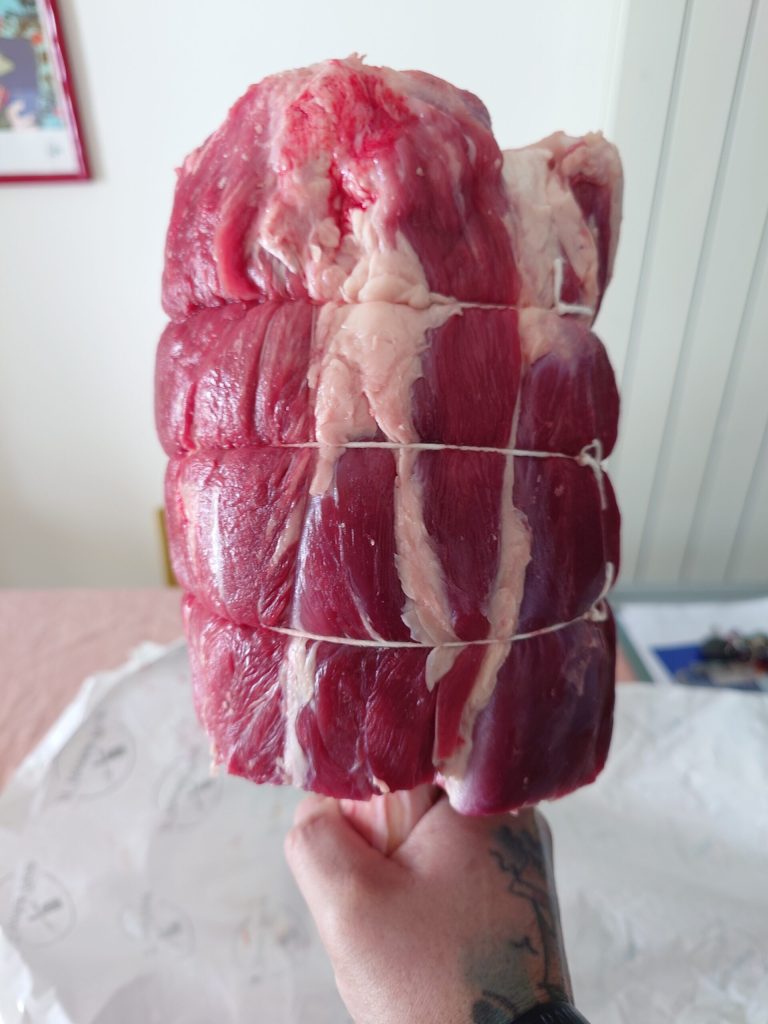
Do I have to use beer?
No, you can replace dark beer with a robust red wine (like Aglianico, Montepulciano, or Barbera), or simply with plenty of beef broth.
Beer or wine add a deeper and more complex flavor to the sauce.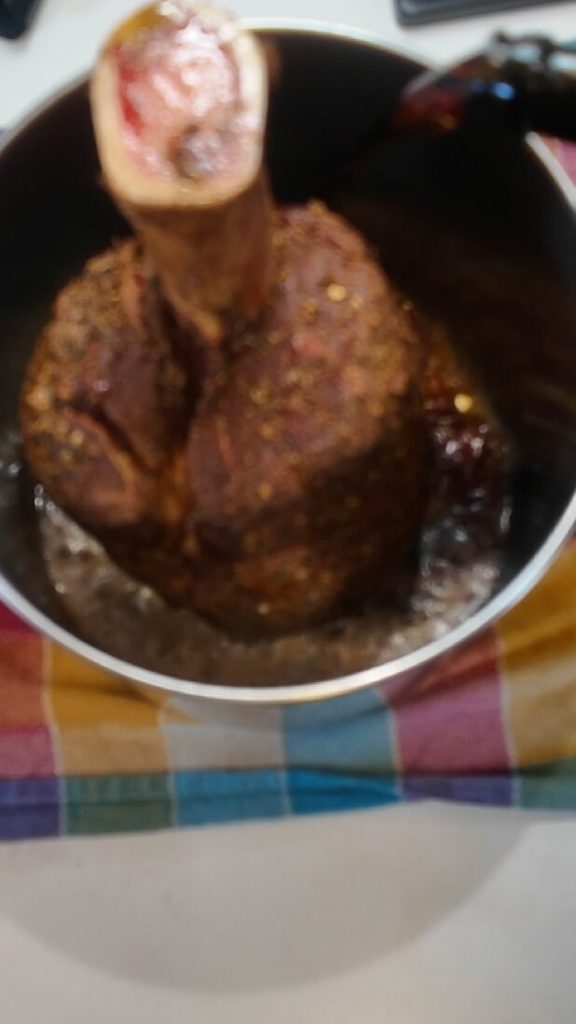
Why is it necessary to use both parchment paper and foil?
We use the double cover for two essential reasons:
Safety and Airtight Seal.
Safety: The parchment paper acts as a protective barrier to prevent direct contact between the salty/acidic meat and the foil, ensuring food safety.
Airtight Seal: The foil, pressed along the edges, ensures a total airtight seal, preventing steam from escaping for always succulent meat.
In summary, parchment paper protects the meat, and the foil guarantees the cooking with always moist meat.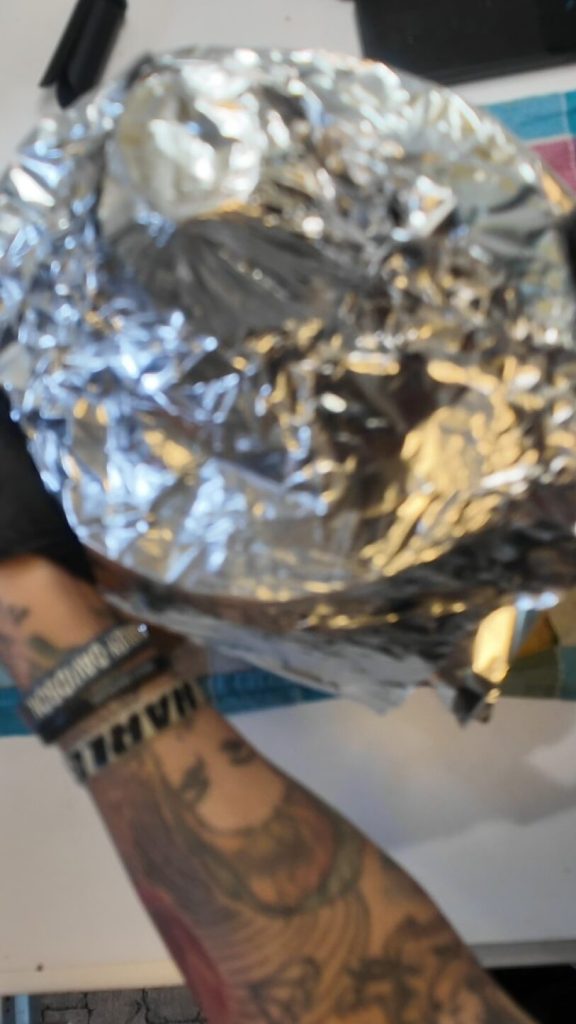
Can I recover the marrow?
How is it used?Yes, absolutely. Marrow is one of the tastiest parts.
Once the meat has rested, extract it with a teaspoon and mix it into the strained cooking sauce.
This will enrich the sauce with intense flavor (umami) and a pleasant creaminess.