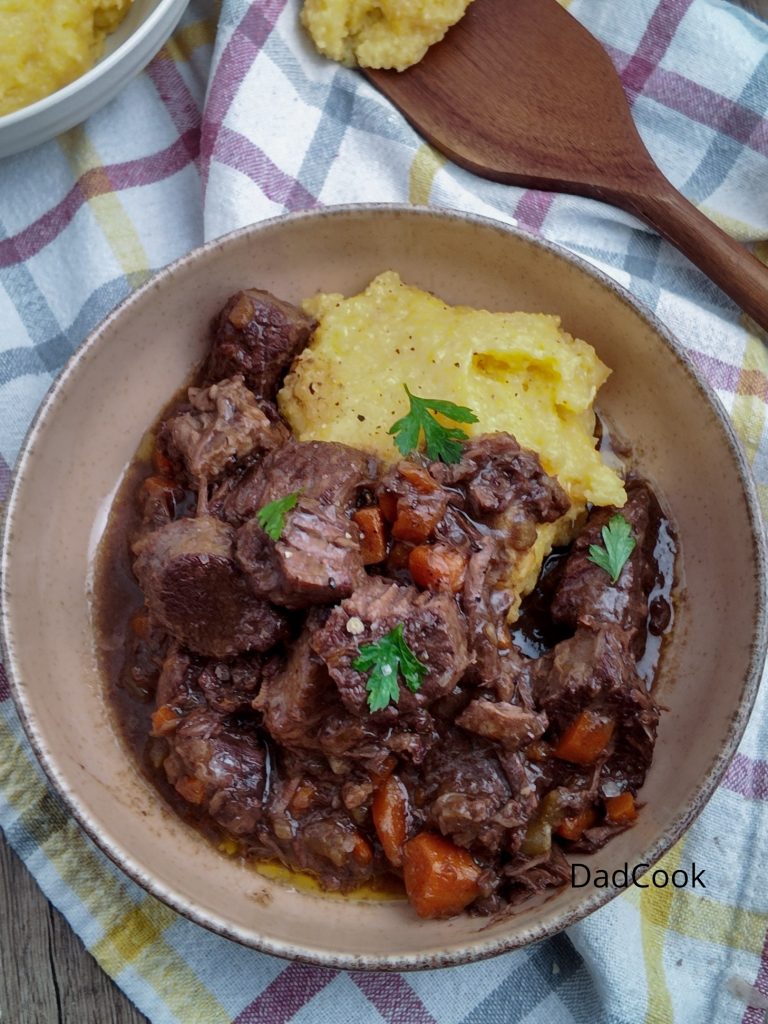
When it comes to comfort food, Beef Stew is undoubtedly a staple of Italian home cooking.
This recipe, simple in ingredients but rich in flavor, demonstrates that the best dishes come from patience and slow cooking.
Forget dry meat: by following the traditional steps and the secret of prolonged cooking over a very low flame, you’ll get a thick and enveloping sauce and cubes of beef so tender they melt in your mouth.
Perfect for warming cooler evenings and ideal to accompany with classic mashed potatoes or rustic polenta, this stew is a journey into the authentic flavors of the past.
- Difficulty: Very Easy
- Cost: Economical
- Rest time: 30 Minutes
- Preparation time: 25 Minutes
- Portions: 6
- Cooking methods: Stovetop, Slow Cooking
- Cuisine: Italian
- Seasonality: Fall, Winter, Fall
- Energy 452.21 (Kcal)
- Carbohydrates 6.11 (g) of which sugars 2.73 (g)
- Proteins 43.53 (g)
- Fat 27.32 (g) of which saturated 11.15 (g)of which unsaturated 13.41 (g)
- Fibers 1.63 (g)
- Sodium 335.17 (mg)
Indicative values for a portion of 430 g processed in an automated way starting from the nutritional information available on the CREA* and FoodData Central** databases. It is not food and / or nutritional advice.
* CREATES Food and Nutrition Research Center: https://www.crea.gov.it/alimenti-e-nutrizione https://www.alimentinutrizione.it ** U.S. Department of Agriculture, Agricultural Research Service. FoodData Central, 2019. https://fdc.nal.usda.gov
Ingredients
- 2.6 lbs beef (Muscle, Chuck, Shoulder Clod)
- 3.2 cups beef broth
- 1.3 cups red wine
- 0.5 cup all-purpose flour
- 3 carrots
- 3 stalks celery
- 1 onion (Large)
- 3 cloves garlic
- 4 leaves bay
- 1 sprig rosemary
- 1 pinch black pepper
- as needed coarse salt
Tools
- Saucepans Vier
- 1 Knife
- 1 Cutting Board
Steps
Preparation of Ingredients and Sauté
The first step is basic preparation.
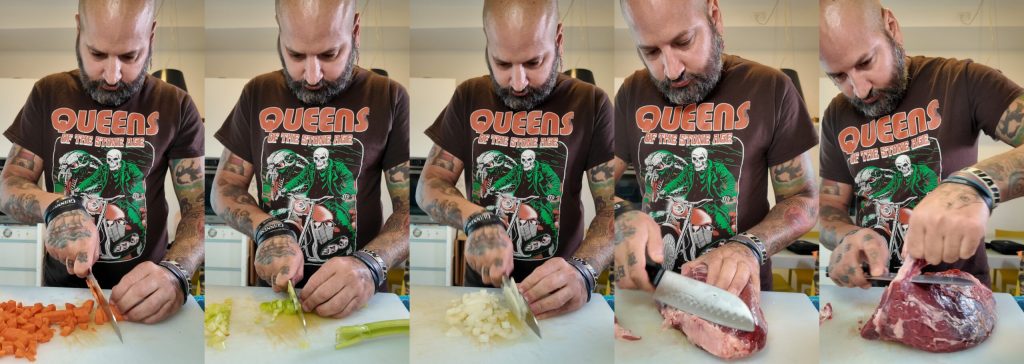
Clean and chop the carrots, celery, and onion for your sauté, ensuring they are all evenly diced.
While at the stove, take the meat and use some paper towels to dry it very well.
If you notice excess fat, remove it: this will help the browning to be more effective.
Cutting and Flour Coating the Meat
Proceed to cut the beef into cubes.
Choose the size you prefer, but remember that thicker pieces (1-1.5 inches) will hold up better during the long cooking.
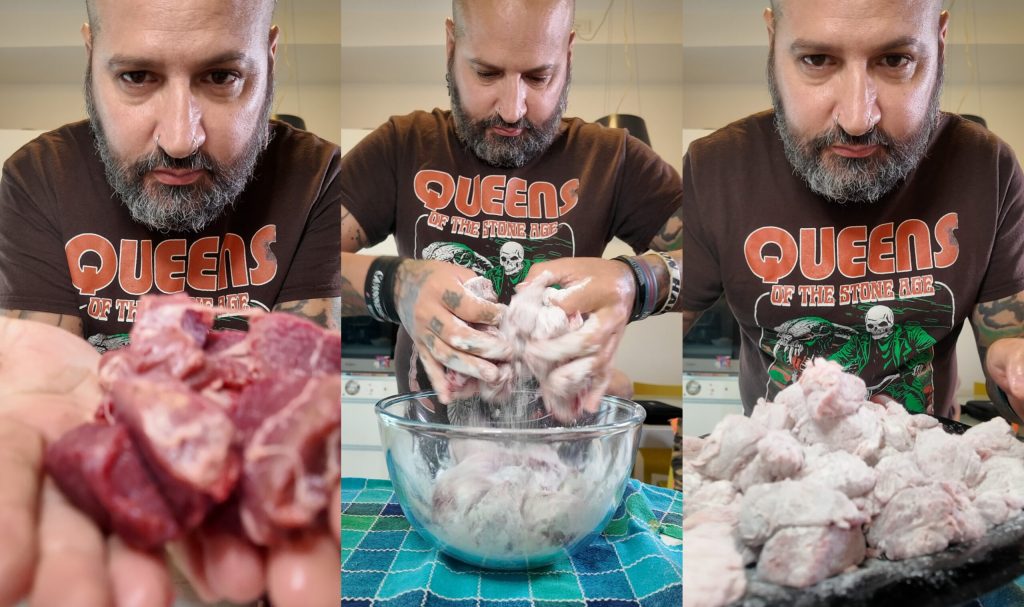
Take the pieces and coat them in flour, ensuring they have just a light dusting.
Always shake off any excess lightly.
Set the meat aside, ready for browning.
Browning and Starting the Sauté
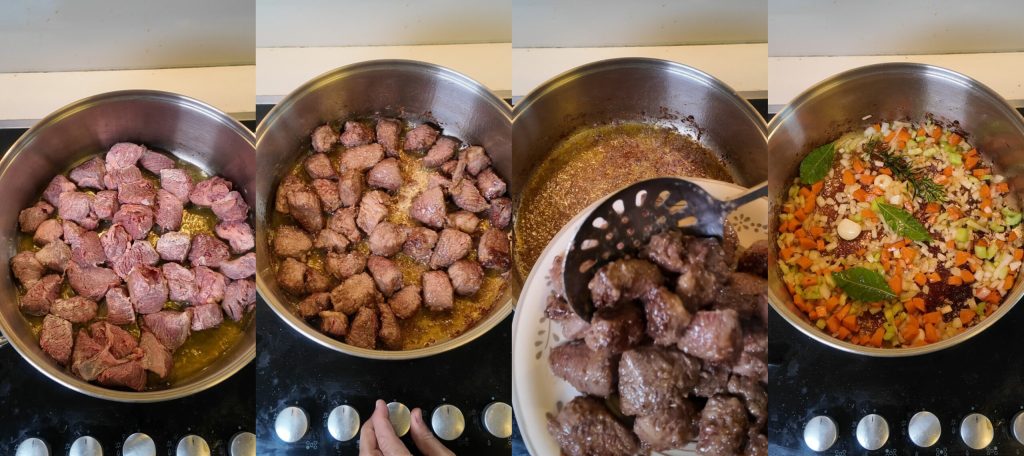
Take a nice large stainless steel pot with a thick bottom; it’s your best ally.Heat the extra virgin olive oil with a knob of butter.
Sear all the meat right away (do it in batches if necessary) until it is well browned on each side.
Once browned, remove it and set it aside.
Don’t worry about the sticky cooking residue left in the pot: that’s gold and will give us the most intense flavor.
Add to the same pot the carrots, celery, onion, whole garlic cloves, broken bay leaves, and rosemary.
Let it sauté gently.
Deglazing, Long Cooking, and Final Touch
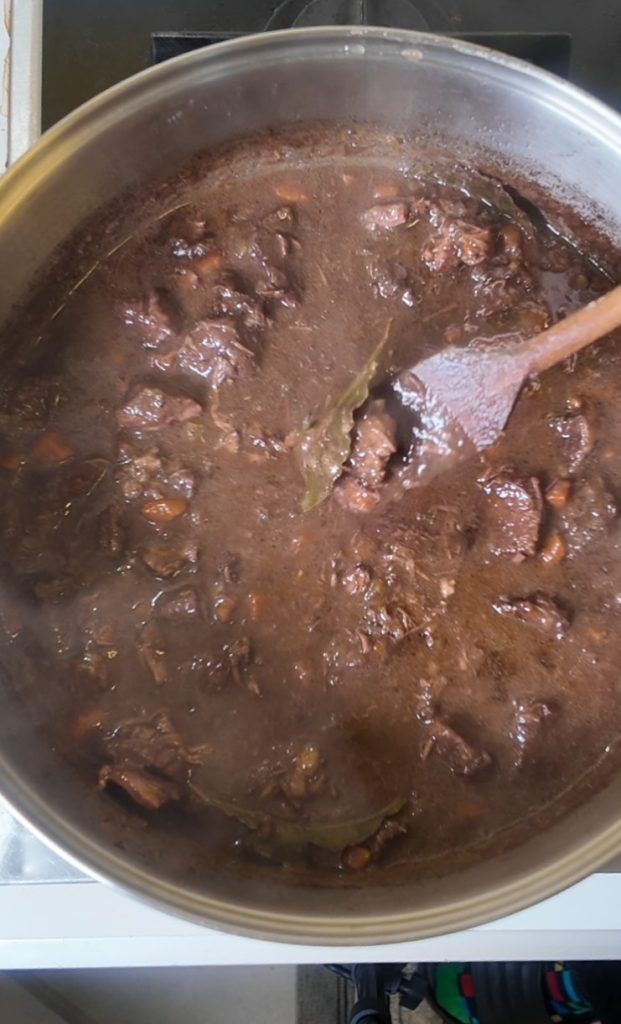
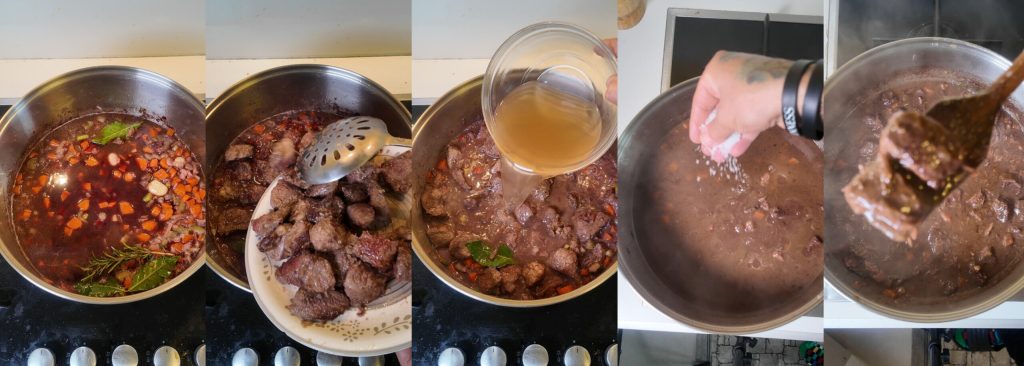
When the sauté is ready, deglaze with the red wine.
You’ll see the sticky cooking residue immediately dissolve and blend with the sauce.
As soon as the alcohol has evaporated, remove the rosemary (as it can become bitter) and add the previously browned meat.
Pour in the hot broth until covered.
Let it cook with the lid on for at least an hour and a half.
But if you have time and want truly exceptional results, let it cook for 3-4 hours until the meat can be cut with a spoon.
In the last half hour, remove the lid, adjust the salt, and let the excess liquid reduce to achieve a creamy sauce.
Tip: If you can, let it rest in the fridge for a whole day and reheat it the next day; the flavor will be incredibly more intense!
Plating and Polenta
It’s time to reap the rewards of your patience!
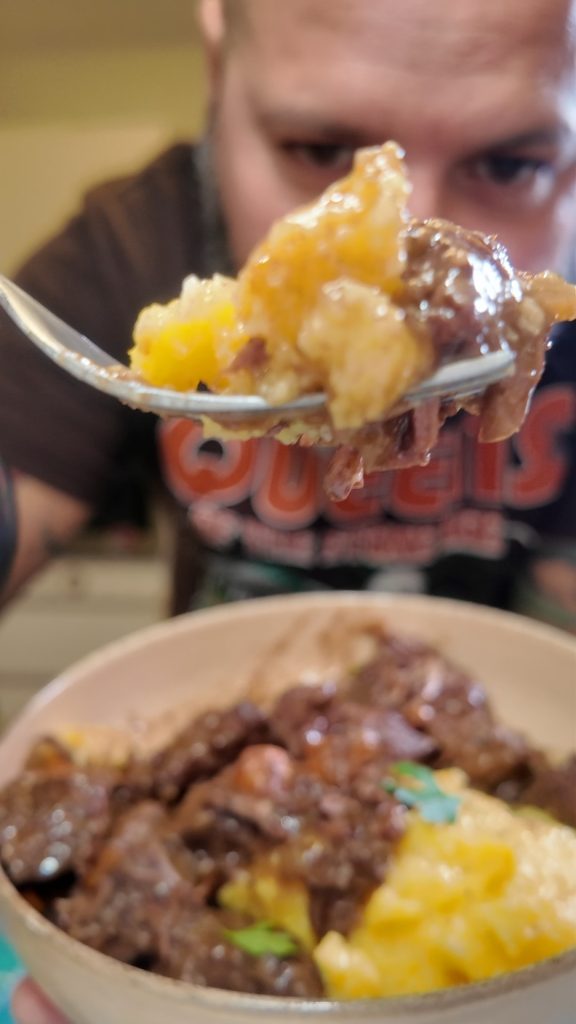
Generously plate the stew, making sure to pour plenty of sauce.
To complete the dish beautifully and honor tradition, serve it with freshly made and steaming hot polenta.
🍝 Storage and Reheating
In the Fridge:
The stew keeps perfectly in an airtight container in the fridge for 3-4 days.
Being a stewed dish, it is often tastier if consumed the day after preparation, as the aromas have time to fully blend.
In the Freezer:
You can freeze the stew once it has completely cooled.
It keeps for about 3 months.
Always thaw in the fridge before reheating.
Ideal Reheating:
Reheat the dish on the stove in a pot.
If the sauce is too thick after resting, add a tablespoon of hot broth to return it to the right creaminess.✨
Tips for a Perfect Result
Long Cooking is Essential:
The real secret to a melt-in-the-mouth result is patience.
Prolonged cooking for 3-4 hours over very low heat is essential to dissolve the collagen in the meat and achieve a naturally thick and velvety sauce.
Deglaze well:
Make sure the wine’s alcohol has completely evaporated before adding the broth.
No Rosemary for Long:
Remove the rosemary sprig after deglazing and before long cooking, to prevent it from releasing an excessively bitter taste into the dish.
Hot Broth:
Always add hot broth to maintain a constant cooking temperature and prevent the meat from hardening due to thermal shock.
🌶️ Aromatic Variations and Side Dishes
Potatoes or Peas: To turn the dish into a richer main course, add cubed potatoes (yellow-fleshed) or peas during the last hour of cooking.
Addition of Tomato:
For a more intense color and slightly sweet-sour flavor, you can add a tablespoon of tomato paste along with the broth.
Spices:
For an extra touch, try adding a hint of sweet paprika or a couple of cloves when adding the broth.
Side Dish:
It is traditionally served with polenta, mashed potatoes, or simply some good homemade bread.
Frequently Asked Questions (FAQ) about Beef Stew
🤔 What is the best cut of meat for stew?
The best cut by far is Beef Shank (or Shin), followed by Chuck (or Shoulder Clod).
Both are rich in connective tissue and collagen which, during long cooking, dissolve.
This process is what makes the sauce dense and creamy and the meat incredibly tender.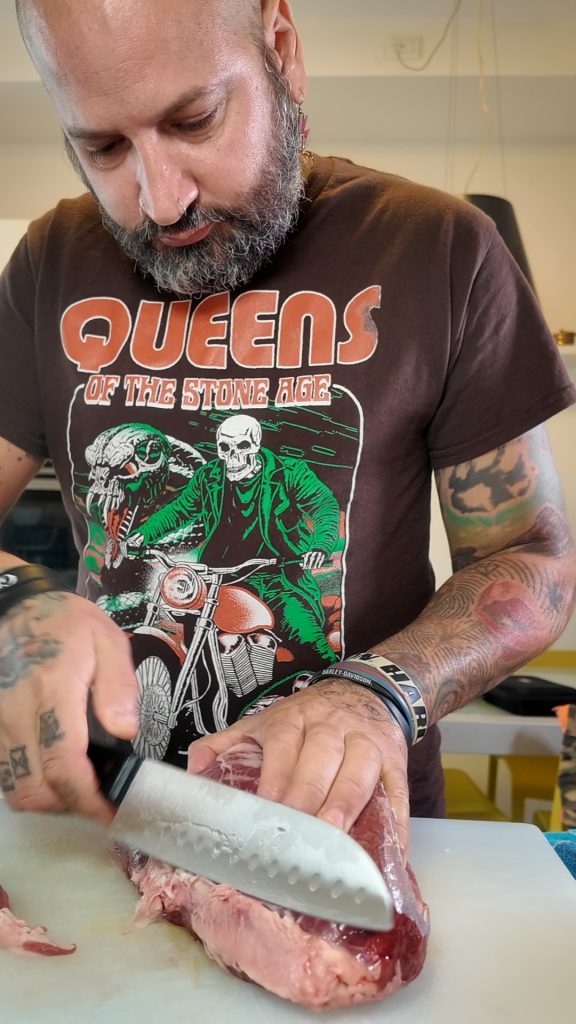
🍷 Can I use white wine instead of red?
Yes, it is possible.
White Stew is made by replacing red wine with a good dry white wine.
The final flavor will be more delicate and less robust compared to the traditional version with red.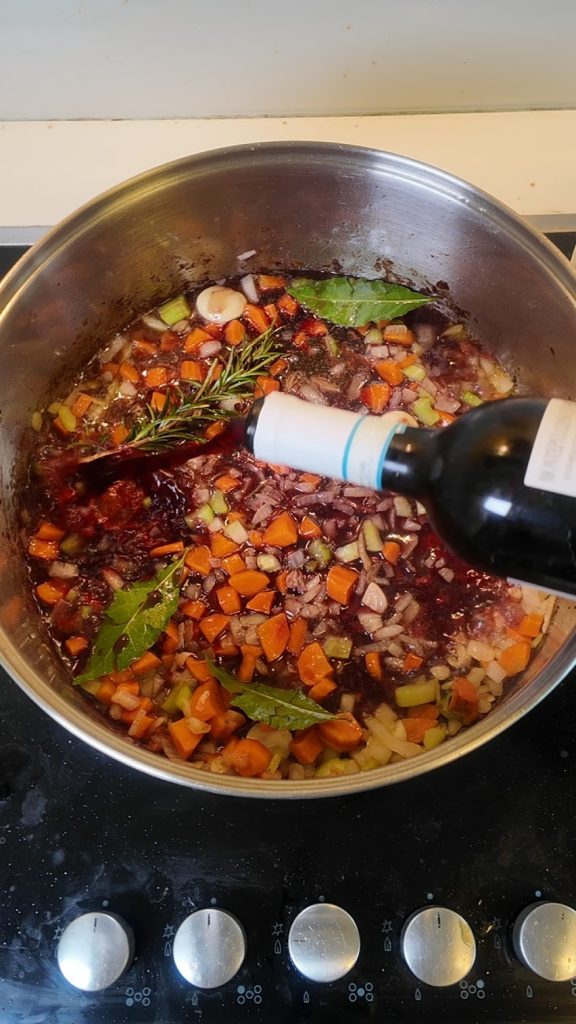
🧂 When should I add the salt?
It’s better to add most of the salt towards the end of cooking, after the first two hours.
Salting too early can cause the meat to release too much water and toughen the fibers.
Additionally, the broth (if not homemade) is already salted, so it’s crucial to taste and adjust only in the last half hour.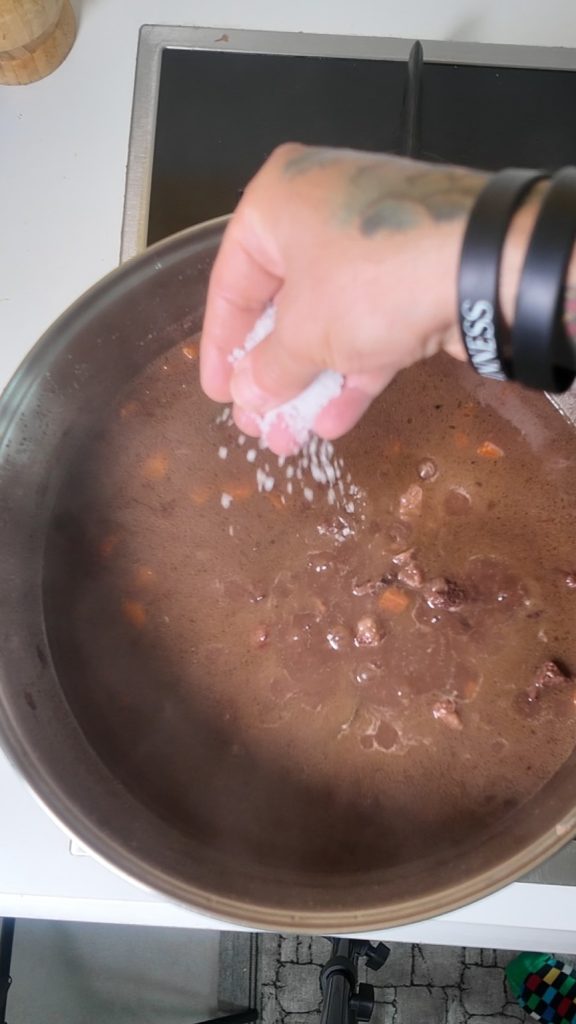
🥩 What should I do if the meat is still tough after an hour and a half?
If the meat is still tough, it simply means it needs more time.
Stew doesn’t have a fixed cooking time: the secret is to cook until the meat is very tender.
Continue cooking slowly, checking the broth level, until you reach the total 3-4 hours needed for the “melt-in-your-mouth” result.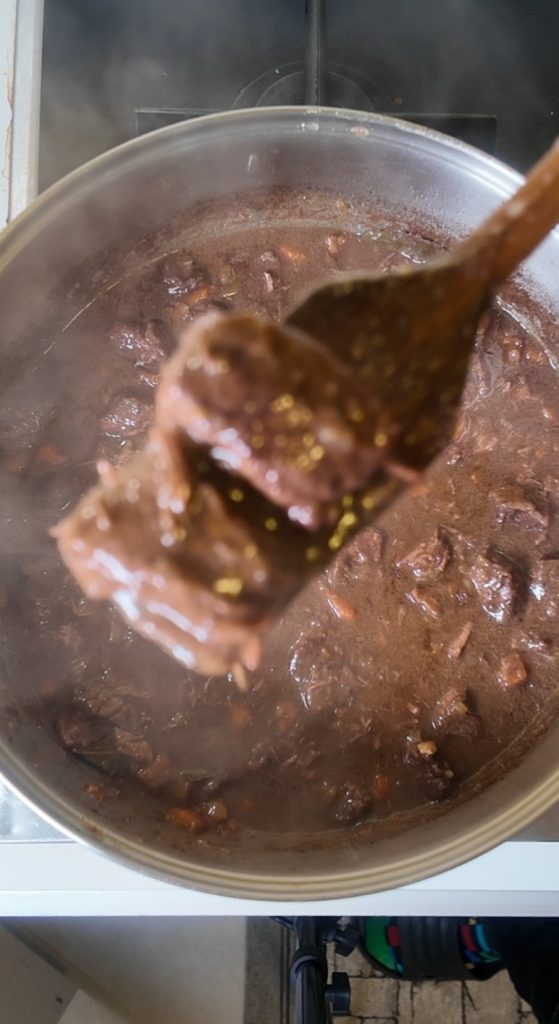
🧄 How can I make the sauce thicker?
If your sauce is too liquid at the end of cooking, you can fix it in two ways:
Reduction: Remove the lid in the last half hour and slightly raise the heat to evaporate and thicken naturally.
Starch: If in a hurry, you can take a ladle of sauce, mix it with a teaspoon of cornstarch or potato starch, and pour the mixture into the pot, stirring until it thickens.