The pasta with Sicilian kohlrabi is a soup linked to the culinary tradition of the Etna area.
The Sicilian kohlrabi is known as the cavolo trunzo of Acireale.
The cavolo trunzo belongs to the Brassicaceae (cruciferous) family along with broccoli and cauliflower.
It is a kohlrabi typical of the Aci area – between Acireale and Catania – on the slopes of Mount Etna and the name echoes a nickname used by Catanese people to tease locals from Aci, roughly meaning: turnip-headed.
It is an ancient variety with a strong, unmistakable flavor.
It is small in size, wrapped in long leaves, and the edible bulb often shows characteristic purple streaks.
Production occurs in two main cycles: in autumn from October to December and in spring from April to June, with harvests that today can even reach three times a year.
It has become a Slow Food Presidia, protecting a historic variety and its link to the territory.
It is used in local traditional cooking and is highly appreciated for its versatility: it is eaten raw in salads or cooked and braised alone or with pasta.
Today we enjoy it in the traditional Sicilian kohlrabi soup with pasta.
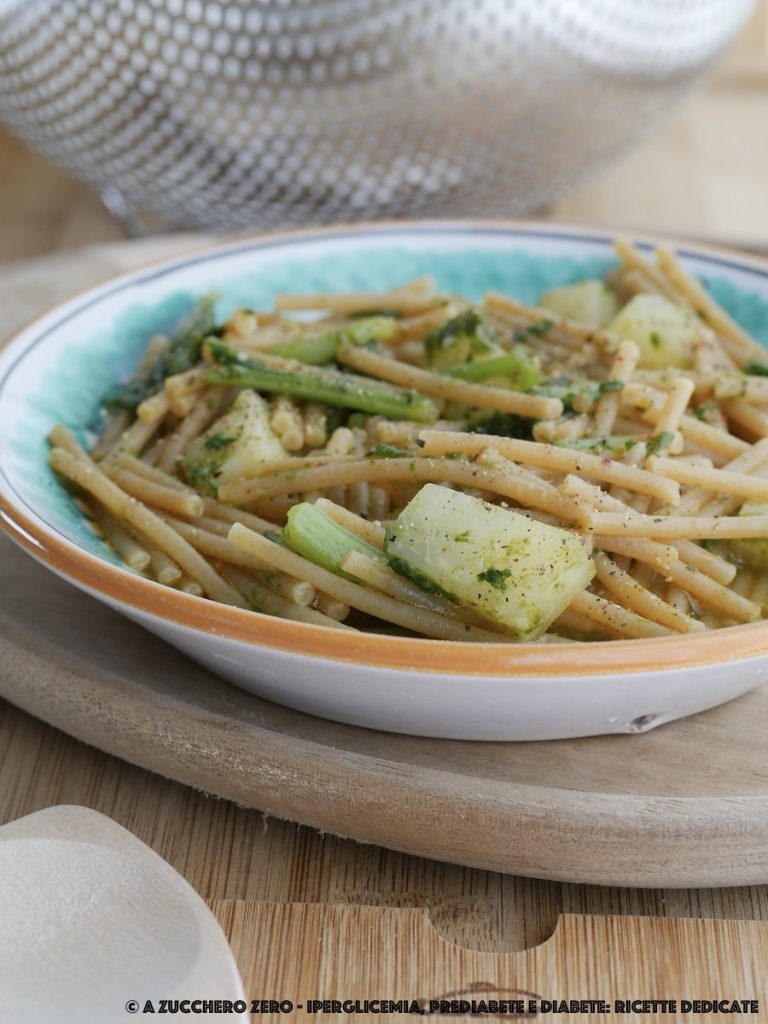
- Difficulty: Easy
- Cost: Budget-friendly
- Preparation time: 10 Minutes
- Portions: 2 Servings
- Cooking methods: Boiling, Stovetop
- Cuisine: Regional Italian
- Region: Sicily
Ingredients
- 4 oz whole wheat spaghetti (broken)
- kohlrabi (including leaves)
- as needed water
- 1 pinch salt
- 1 pinch baking soda
- 1 pinch garlic powder
- 2 dried red chilies (whole)
- 1/3 cup water (about 3.4 fl oz; about 3/4 cup (≈6.8 fl oz) if you prefer a brothier soup)
- as needed tomato sauce (homemade)
- 1 pinch mixed peppercorns (for grinding)
- 1 drizzle extra virgin olive oil (to finish, uncooked)
Suggested Tools
- Knife
- Cutting Board
- 1 Pan with lid preferably glass
Preparation
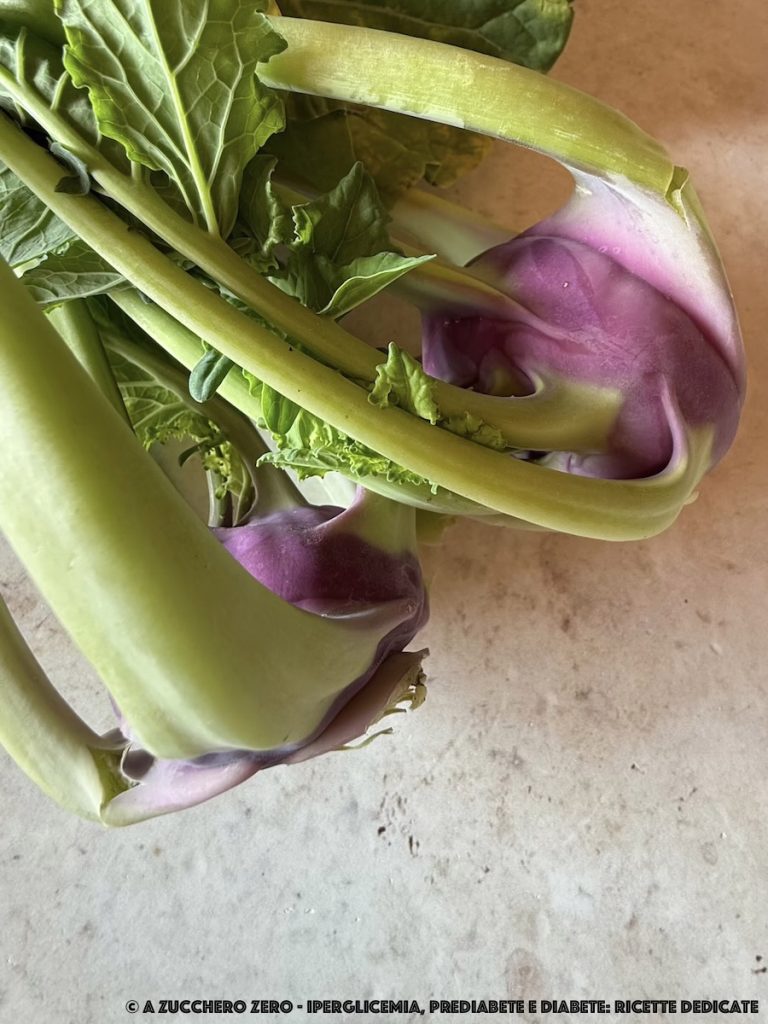
Remove the tough and damaged outer leaves, selecting the small tender inner leaves.
With a knife, peel the bulbs at the base of the kohlrabi and cut them into cubes.
Collect leaves and bulbs in a colander and wash them thoroughly under running water.
When boiling, use as little water as possible to best preserve its beneficial properties.
In a pot, bring salted water to a boil.
Add the leaves and bulbs and a pinch of baking soda so that the leaves keep a bright green color, and cook for about 15 minutes.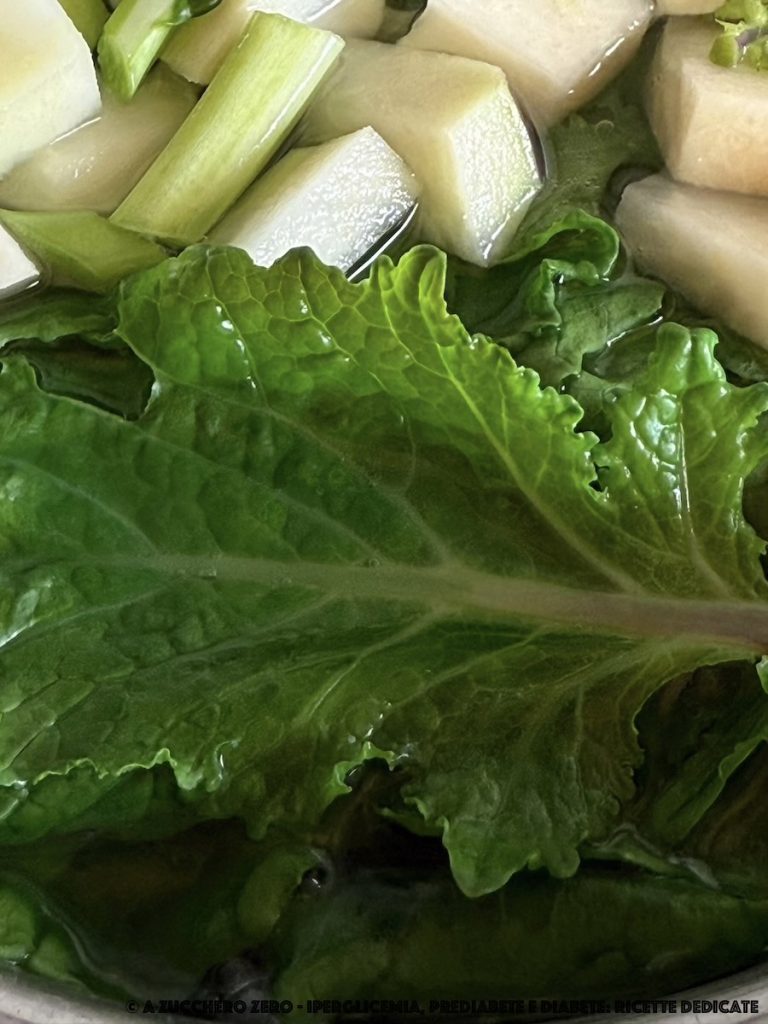
With a slotted spoon, gently lift the leaves and bulbs and transfer them to a plate.
Do not discard the cooking water; we will use it to cook the pasta.
In a pan, heat a sprinkle of garlic powder and a couple of whole dried red chilies.
Add the leaves and bulbs and any liquid released by them onto the plate.
Braise with 1/3 cup of water (about 3.4 fl oz) [about 3/4 cup / ~6.8 fl oz if you prefer a brothier soup].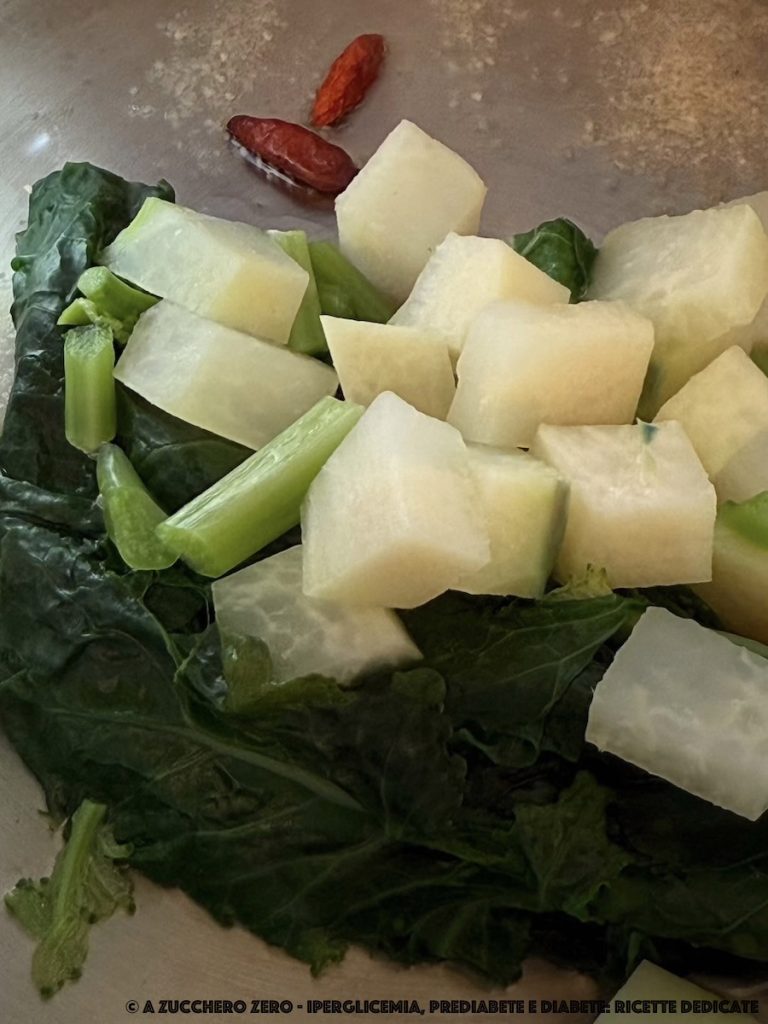
Remove the red chilies from the pan.
Add tomato sauce to taste and stir.
Adjust salt and grind the pepper.
Let simmer a few minutes to blend the flavors.Cook the pasta al dente in the kohlrabi cooking water if you set it aside, drain it and quickly rinse under running water.
Meanwhile, bring the kohlrabi broth back to a simmer.Pour the pasta into the pan with the kohlrabi broth and stir.
Plate.
Grind pepper and drizzle with extra virgin olive oil.Your pasta with Sicilian kohlrabi is ready.
Enjoy your meal!
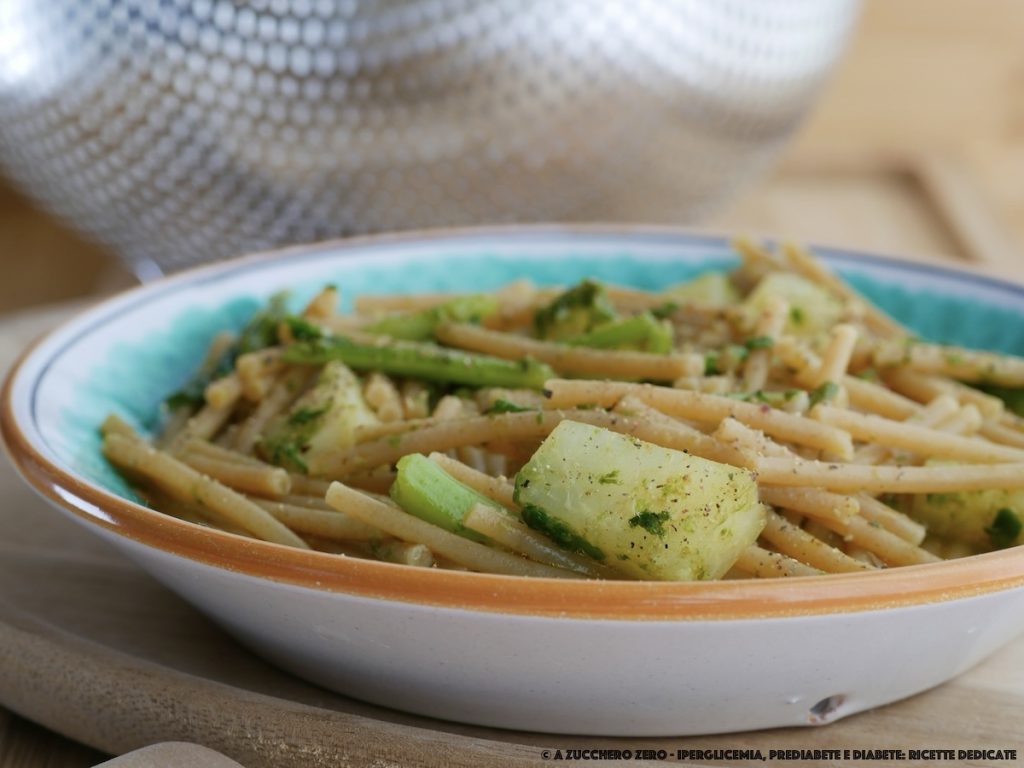
The pasta with Sicilian kohlrabi is a first course and a source of carbohydrates — a vegetarian dish that is easy to balance by adding a protein source and extra vegetables to compose a balanced meal or one-dish plate that helps keep blood sugar stable.
Storage, tips and variations
Also excellent without tomato sauce, served “in bianco” (plain).
Use whole wheat pasta to increase fiber content.
FAQ (Questions & Answers)
How can I substitute Sicilian kohlrabi?
You can substitute it with broccoli, cauliflower or black cabbage (cavolo nero), adjusting the cooking times.