
The layered croissants have a wonderful crispy crust on the outside and a soft inside. They differ from croissants only by the addition of eggs in the dough, but the crunchiness is identical… For this type of preparation, one could talk for days, and everyone would have their say, especially about the various turns to make, but this can vary depending on the type of result you want to achieve, many small and dense alveoli or fewer and larger ones, but the most important thing is the elasticity of the leavened dough and the temperature of the butter for the layering. In this recipe, I made 4 three-fold turns to have more layers. So, arm yourself with time and patience and enjoy your croissants!

- Difficulty: Medium
- Cost: Cheap
- Rest time: 1 Day 12 Hours
- Preparation time: 25 Minutes
- Portions: 9
- Cooking methods: Oven
- Cuisine: Italian
Ingredients
- 4 cups strong flour 13% protein
- 5 oz eggs
- 1/2 cup water
- 1/2 cup clarified butter
- 2 tsp compressed yeast
- 2 tsp diastatic malt extract
- 1/4 cup granulated sugar
- 1 teaspoon vanilla extract
- 1 orange zest
- 1 cup clarified butter for layering
Tools
- Stand Mixer
- Rolling Pin
- Parchment Paper
- Baking Sheet
Steps
First, prepare all the ingredients: the flour, eggs beaten with water, yeast with the malt, sugar, softened but not hot butter mixed with aromas and salt. Take the butter block for layering out of the fridge.
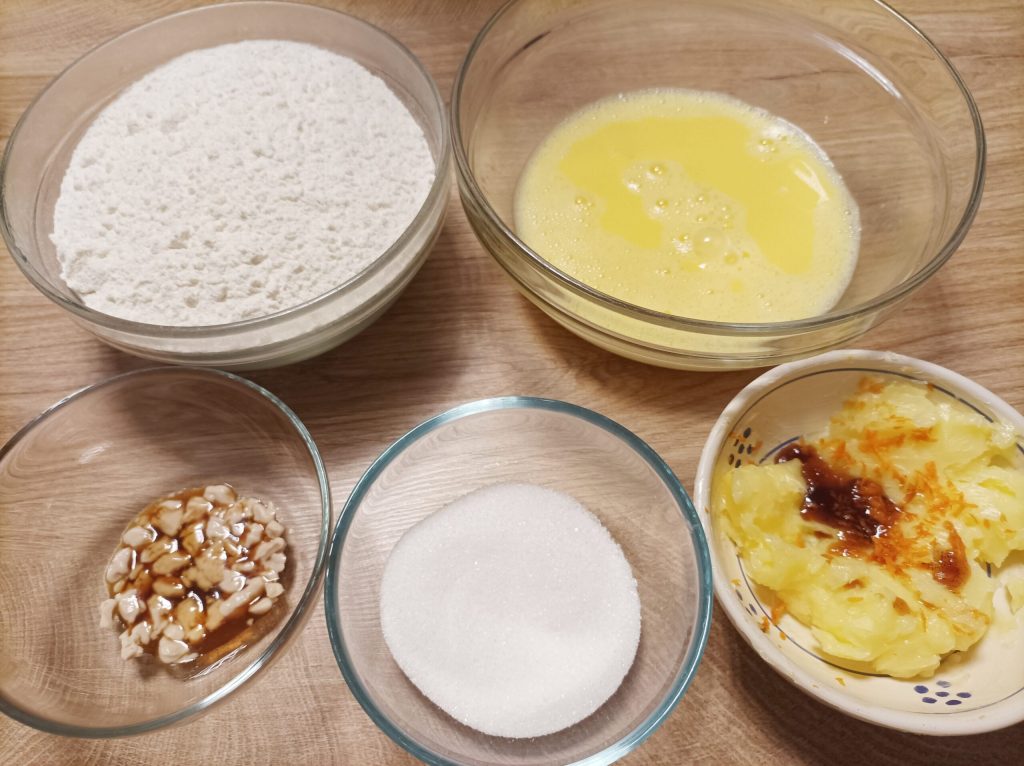
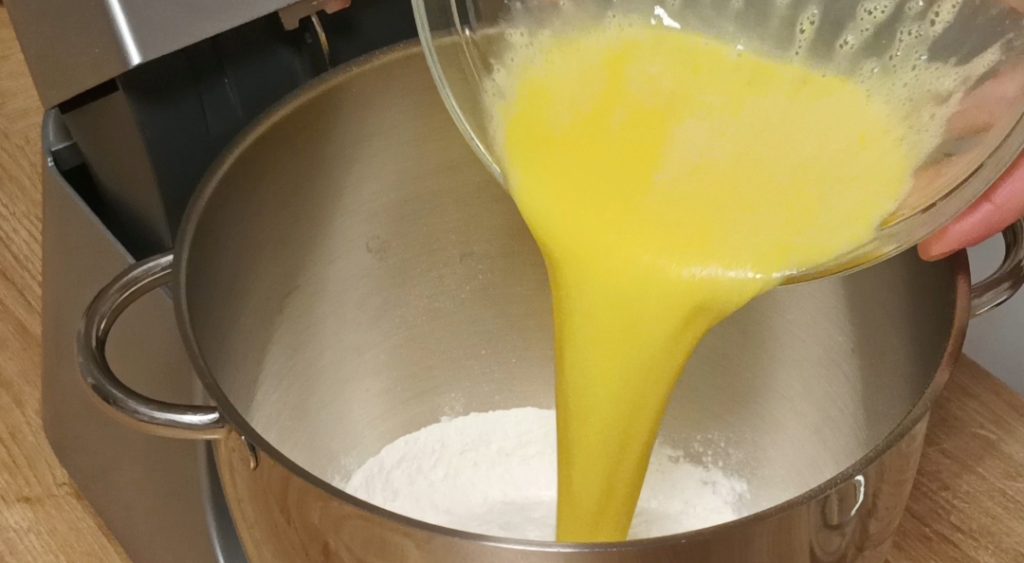
In the stand mixer, first put the flour, eggs with water, yeast with malt, and sugar. Activate the machine with the hook at low speed to absorb the liquids into the flour, working for 15 minutes.
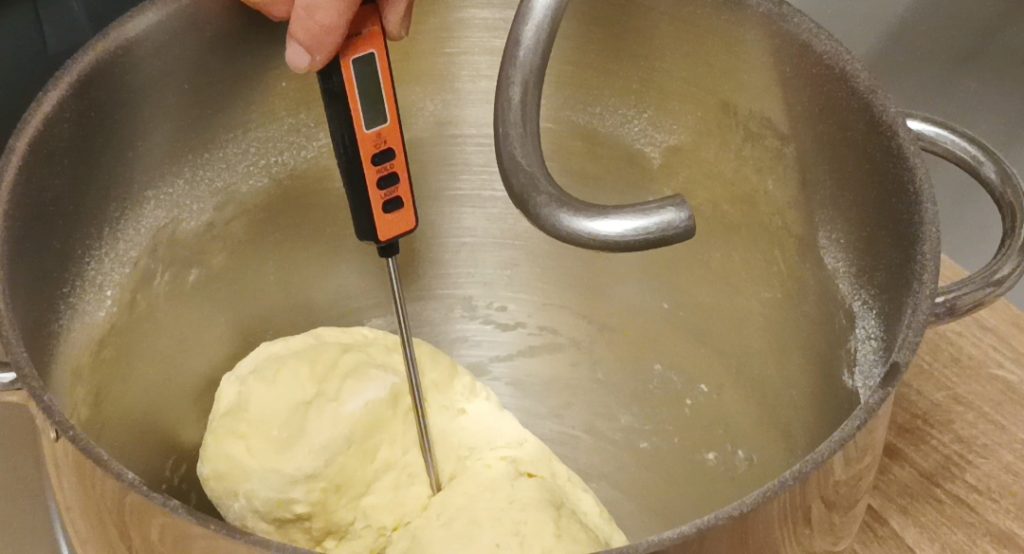
During the working time, measure the temperature, it should not exceed 75°F/77°F. If it’s higher, turn off and let the dough rest a bit.
After a maximum of 15 minutes, the dough will be compact and smooth; at this point, you can insert the butter with the aromas in three times, slightly increasing the speed. (Always be careful with the temperature)
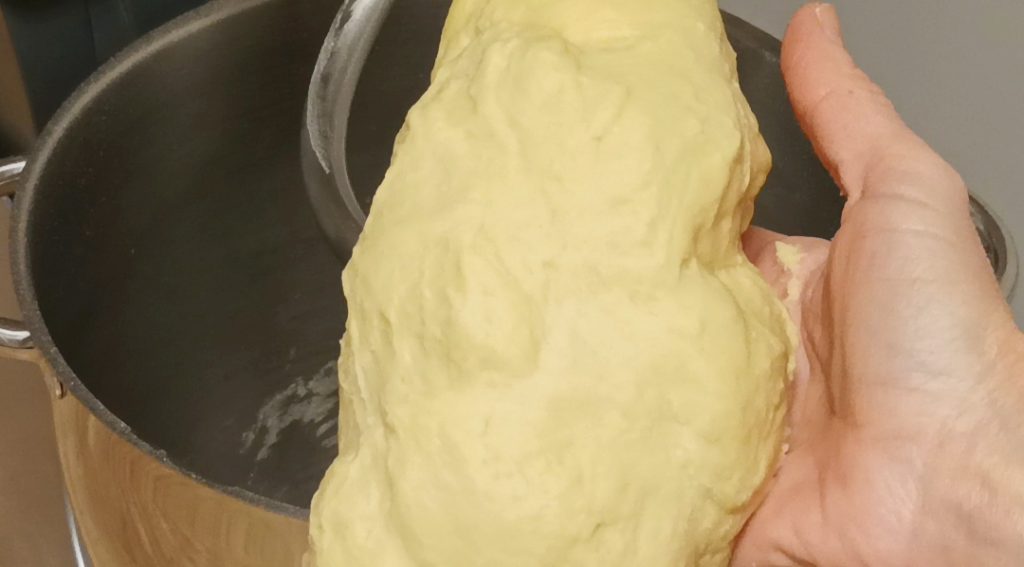
The entire working time should not exceed 25 minutes and the dough should not exceed 79°F.
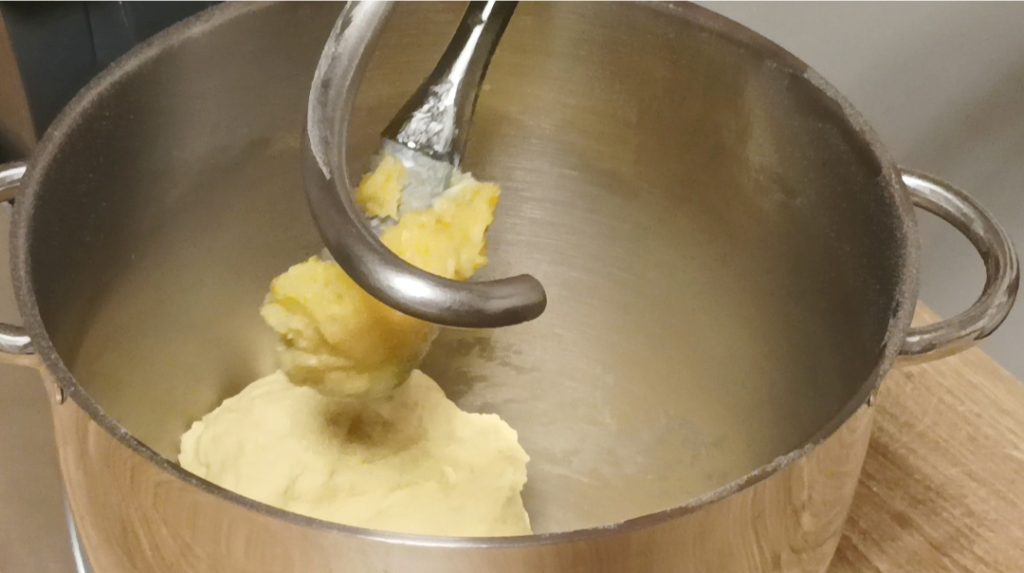
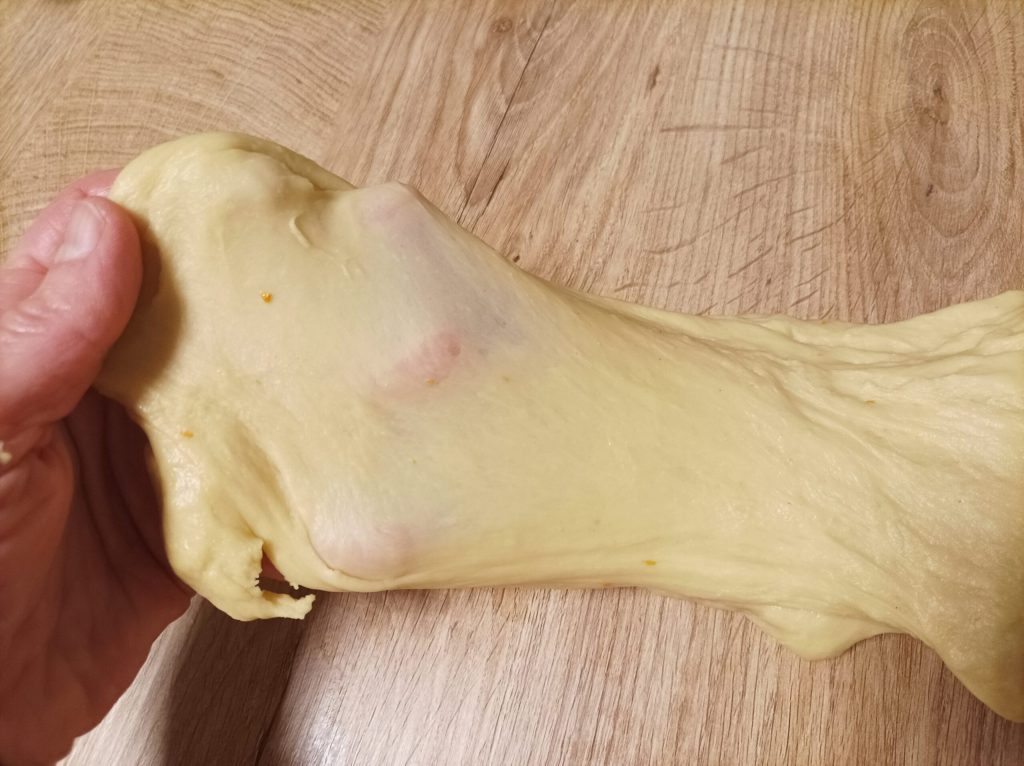
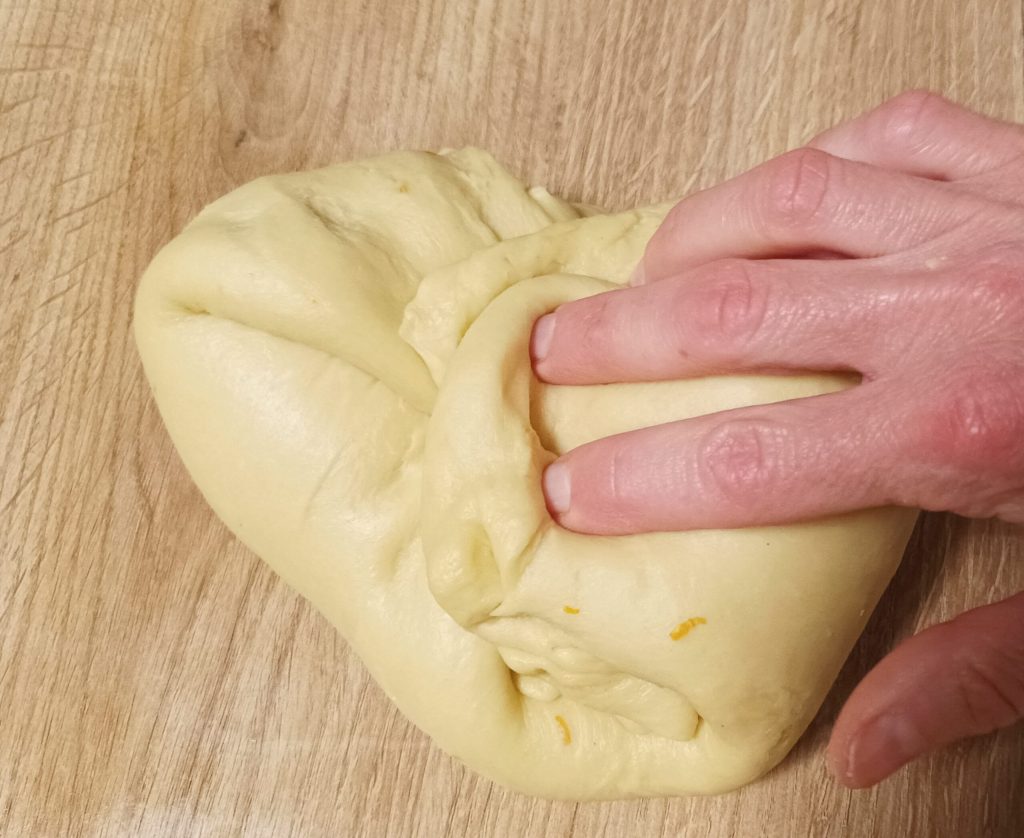
At the end of the process, place the dough on a base, stretch it a little and if it forms a “veil” like in the photo, the dough is well bonded. Then give it some folds, that is, press the dough a bit with your hands and pull the tips bringing them towards the center, then turn it and form a ball.
Cover the dough ball with plastic wrap and let it rise for 1 hour, even 1 hour and a half.
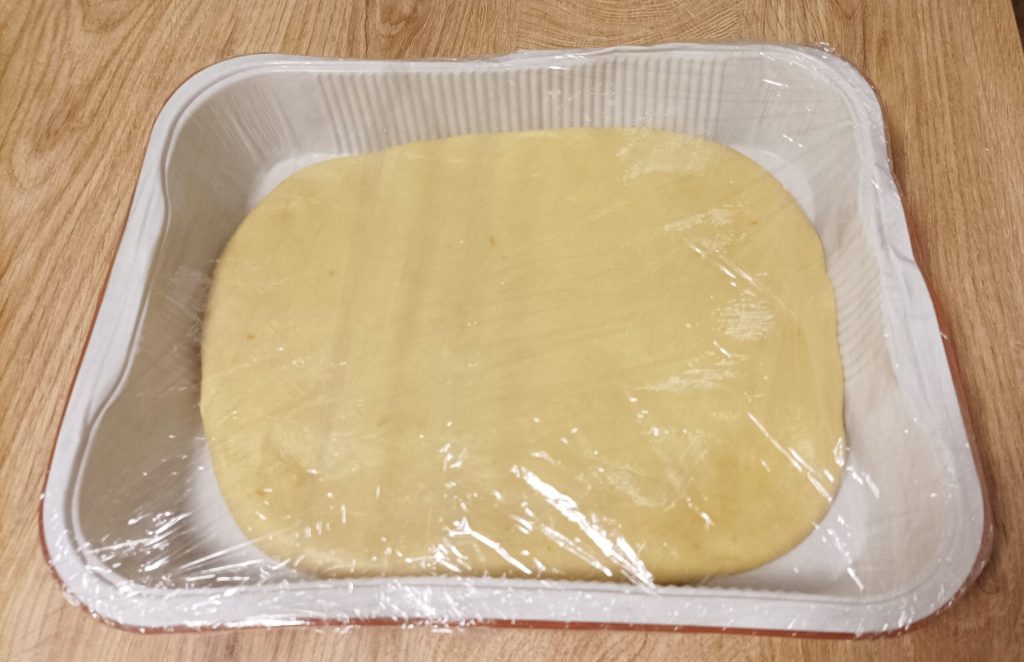
After the rise, take the dough and place it in a greased container, press it a bit, cover it very well with plastic wrap, and place it in the fridge to mature for at least 24 hours.
Take the butter block and place it between two sheets of parchment paper, roll it out until you create a sheet about 0.2 inches thick, then place it back in the fridge until you laminate the dough.
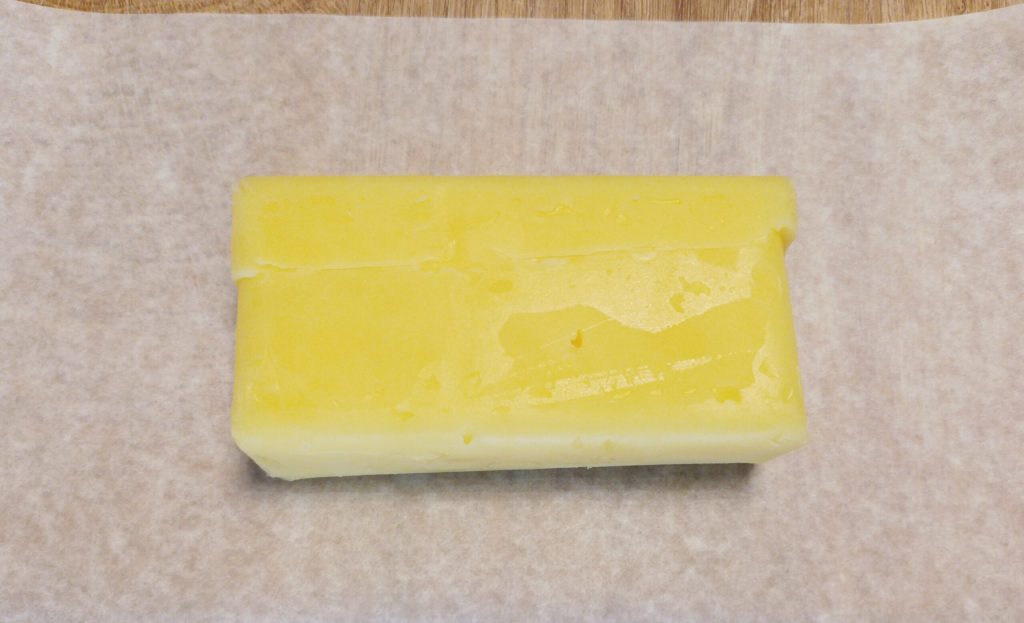
After the 24-hour dough maturation, you can proceed with the lamination.
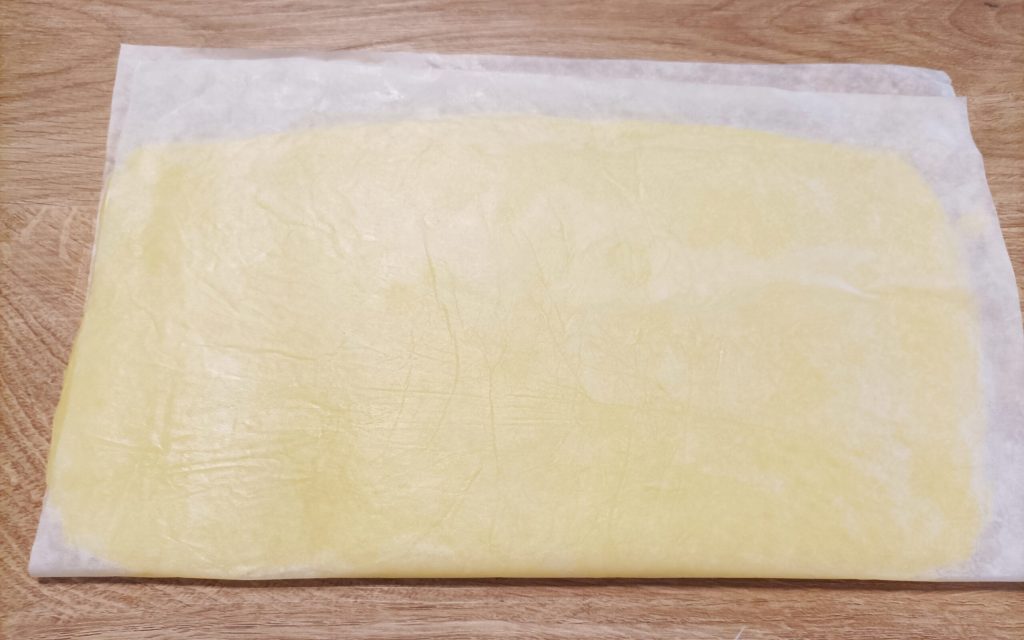
Take the butter sheet out of the fridge about 30 minutes before the dough, it should have a temperature of about 59°F, while the dough needs to be rolled out cold from the fridge.
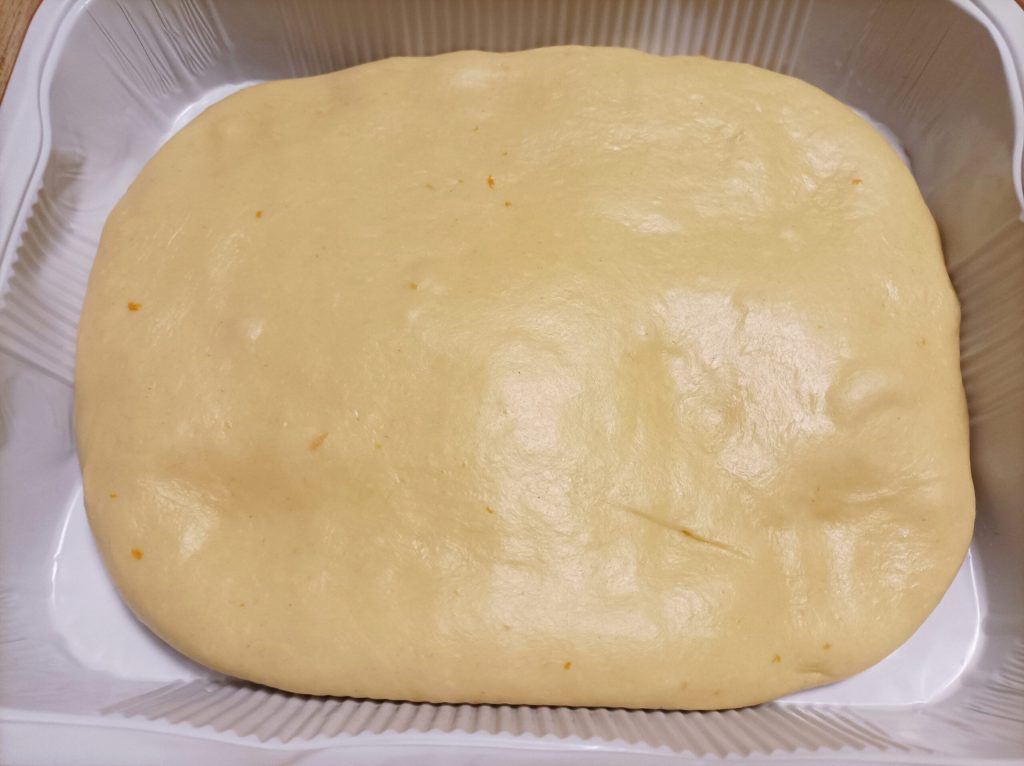
With the help of a bit of flour, roll out a sheet about 0.4 inches thick and then start with the first three-fold turn.
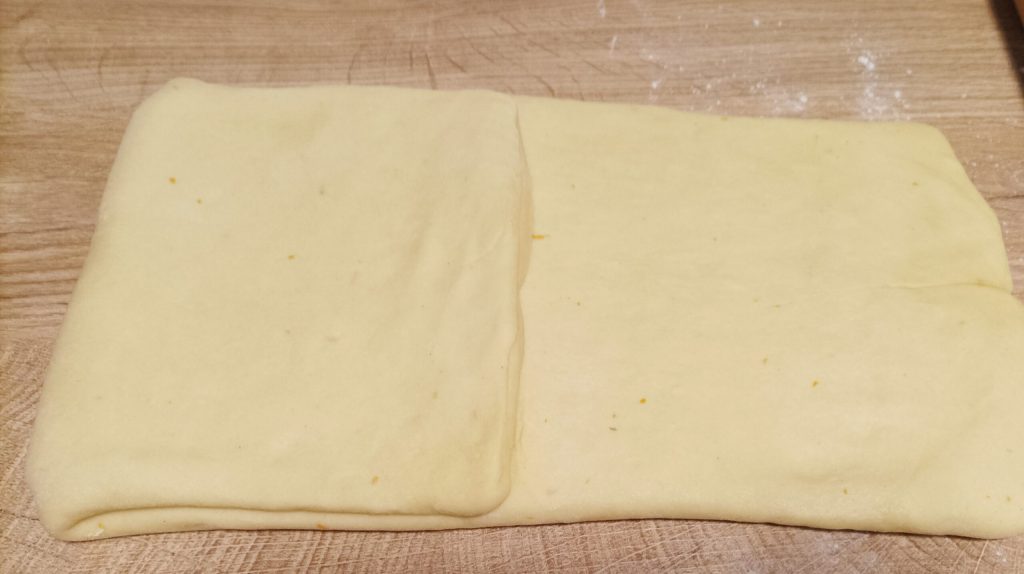
Bring one side towards the center and overlap the other side, you will have formed three folds.
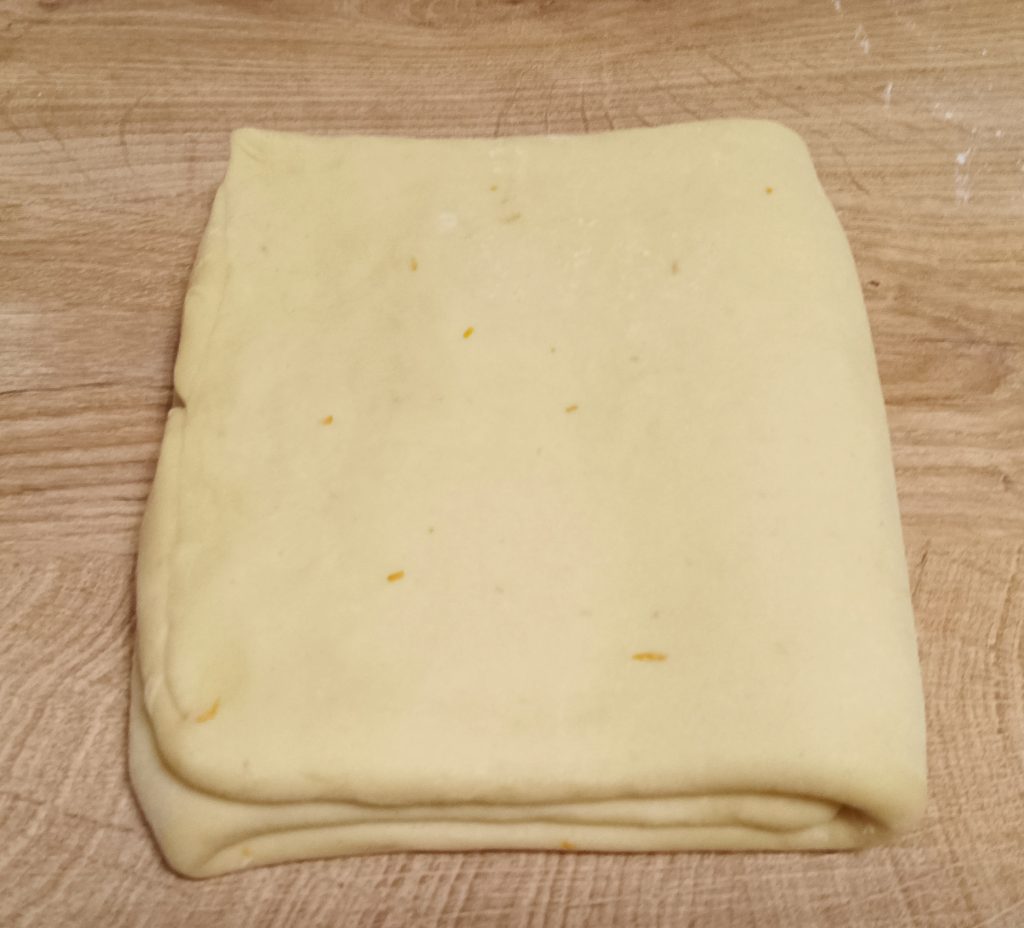
Wrap the dough in plastic wrap and let it rest in the fridge for 30 minutes. Continue for another 3 times with three-fold turns, always with a 30 minutes rest in the fridge.
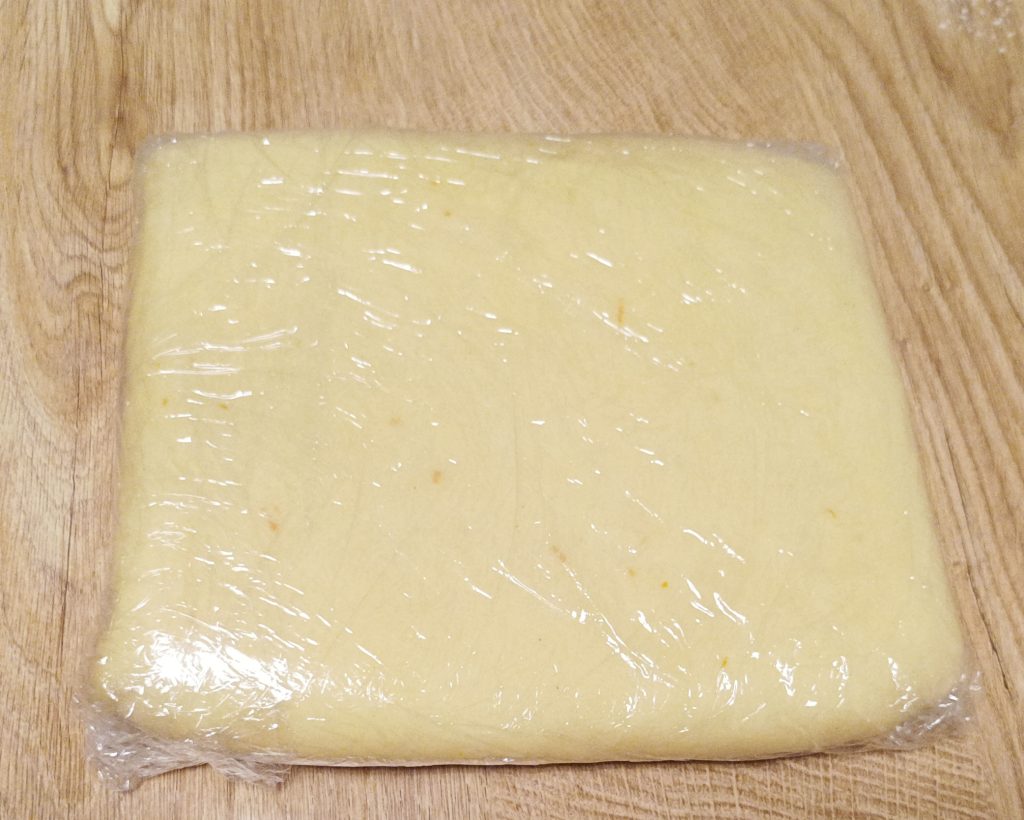
After 4 three-fold turns, the dough is well puffed.
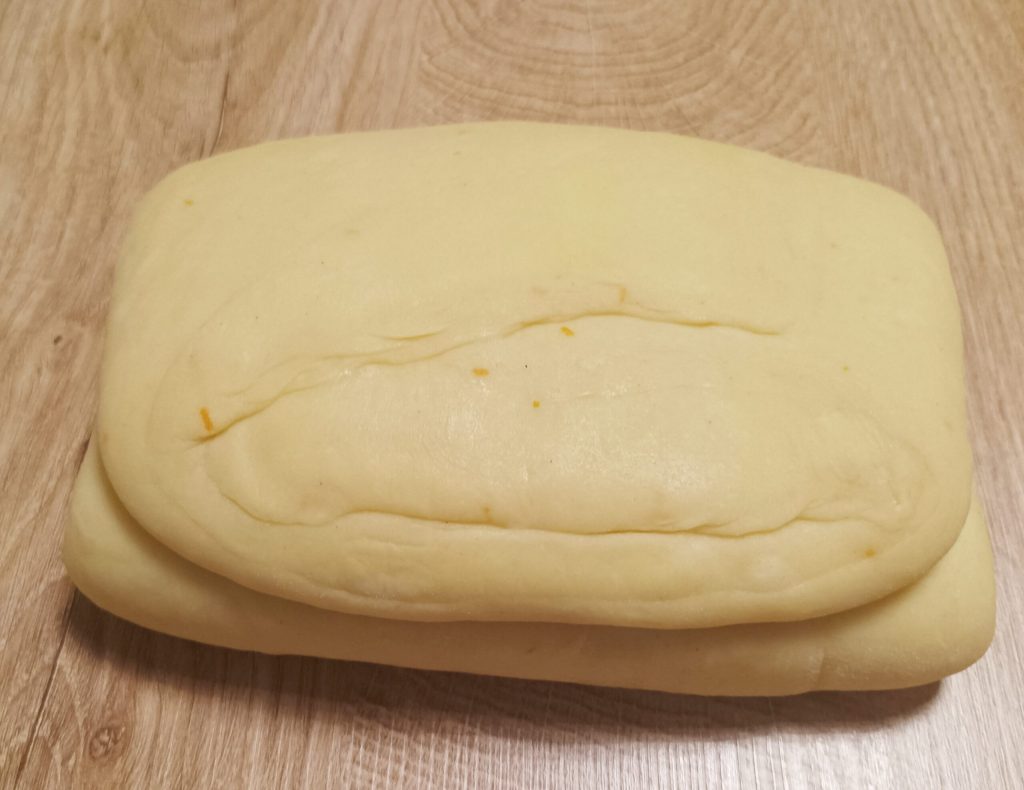
Now you can proceed with preparing the croissants.
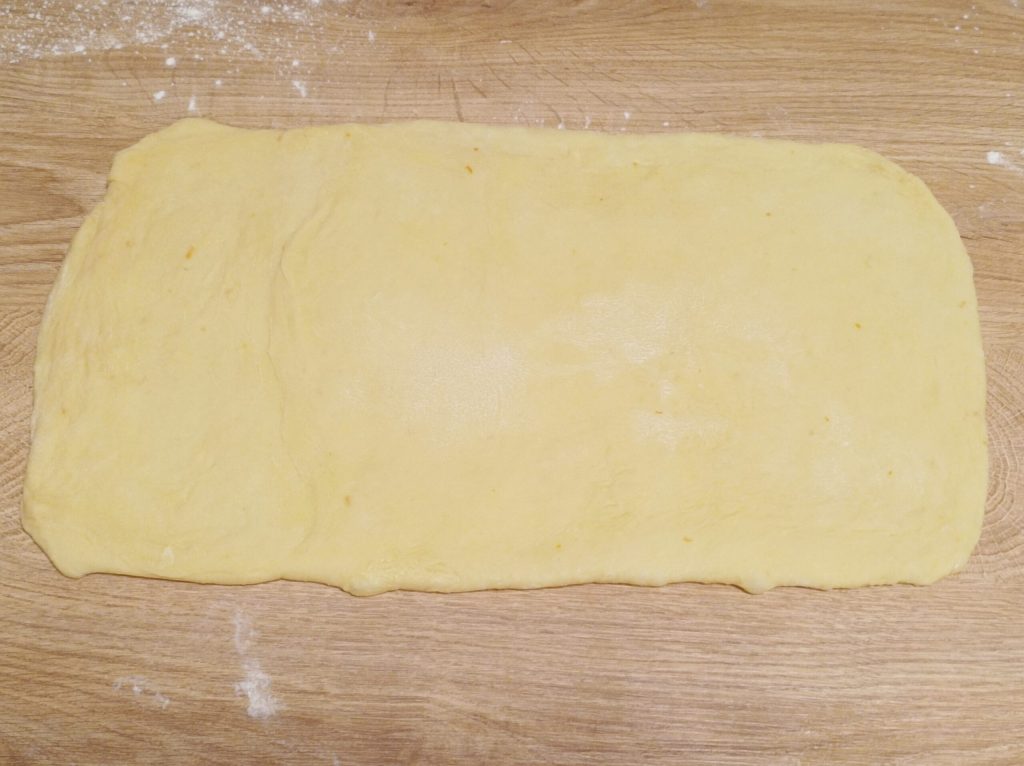
Roll out a rectangle, you will give the measurements, mine was about 11 inches wide for a length of 12.6 inches with a base of 4 inches, to get slightly larger croissants. (If the dough is very resistant, put it back in the fridge to relax, I didn’t have much time, and it got a bit ruined), but don’t worry, the final result is equally great.
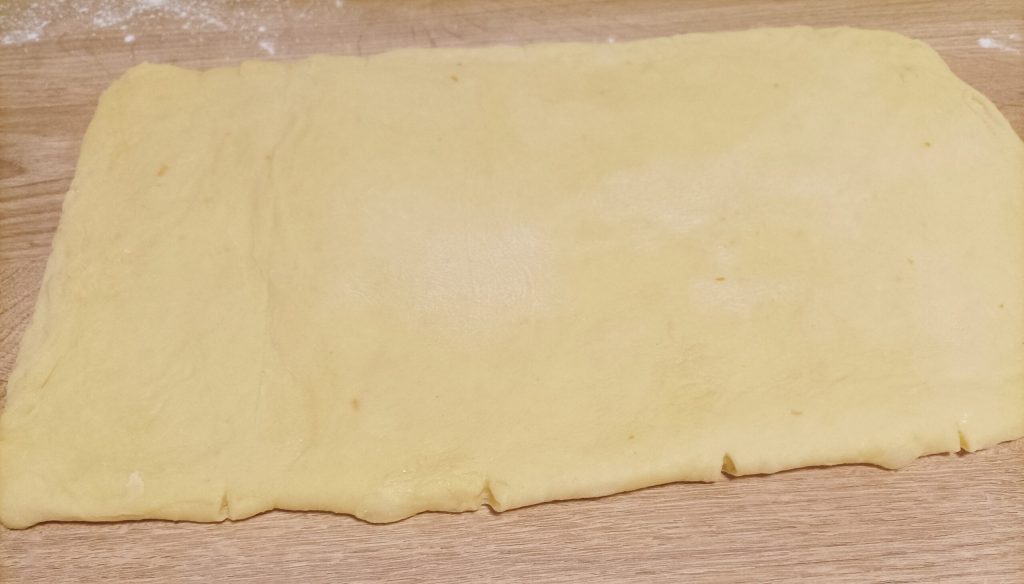
Make small cuts at the base with the measurement you have chosen and then pull triangles.
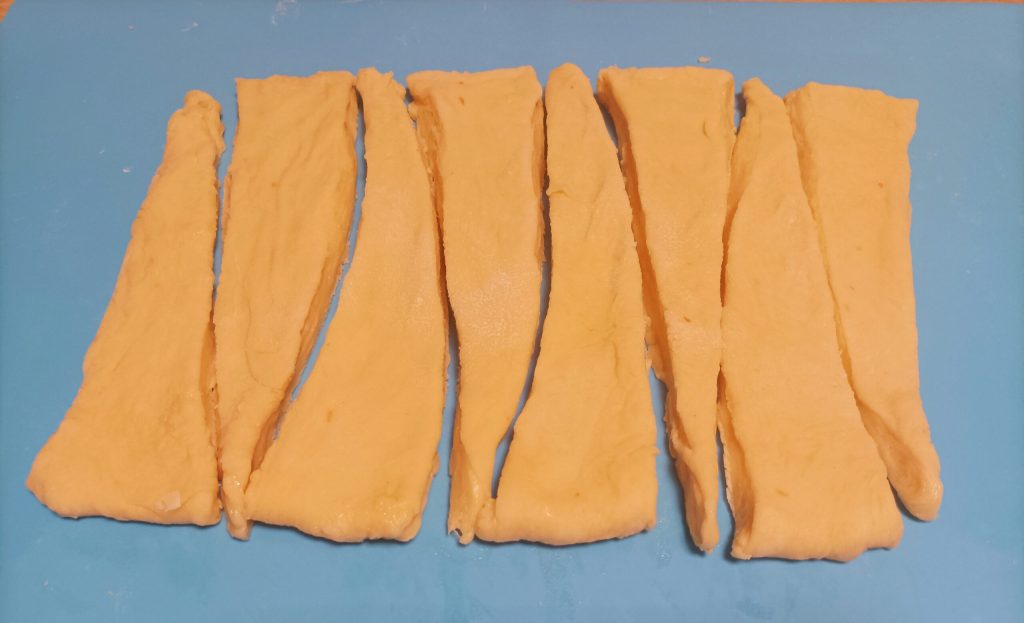
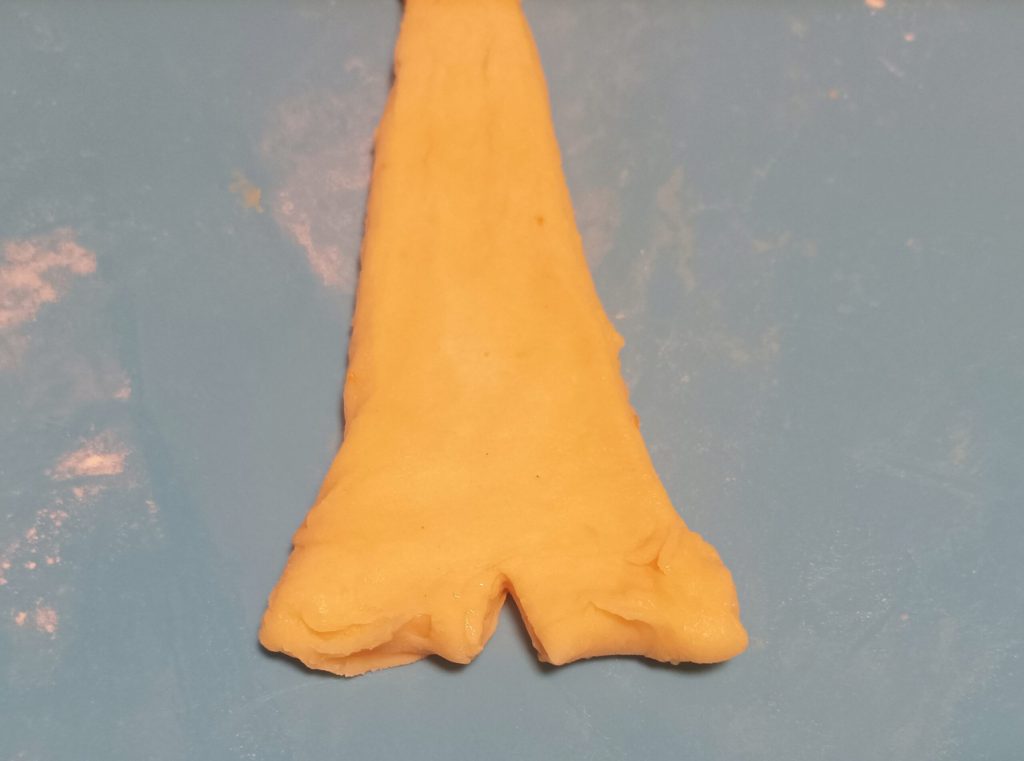
Make a small incision at the center of each triangle and then roll.
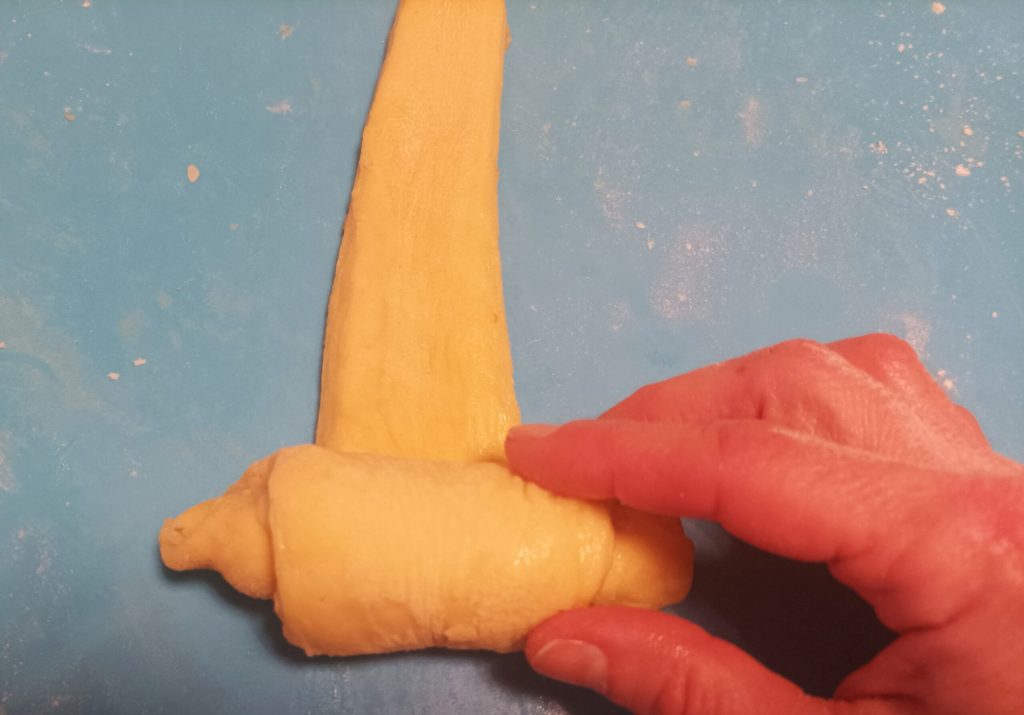
Form your croissants and let them rise until doubled, covered with plastic wrap; the time could be as long as 7 hours as in my case.
The croissants have doubled in volume. Brush them with a beaten egg with a little milk.
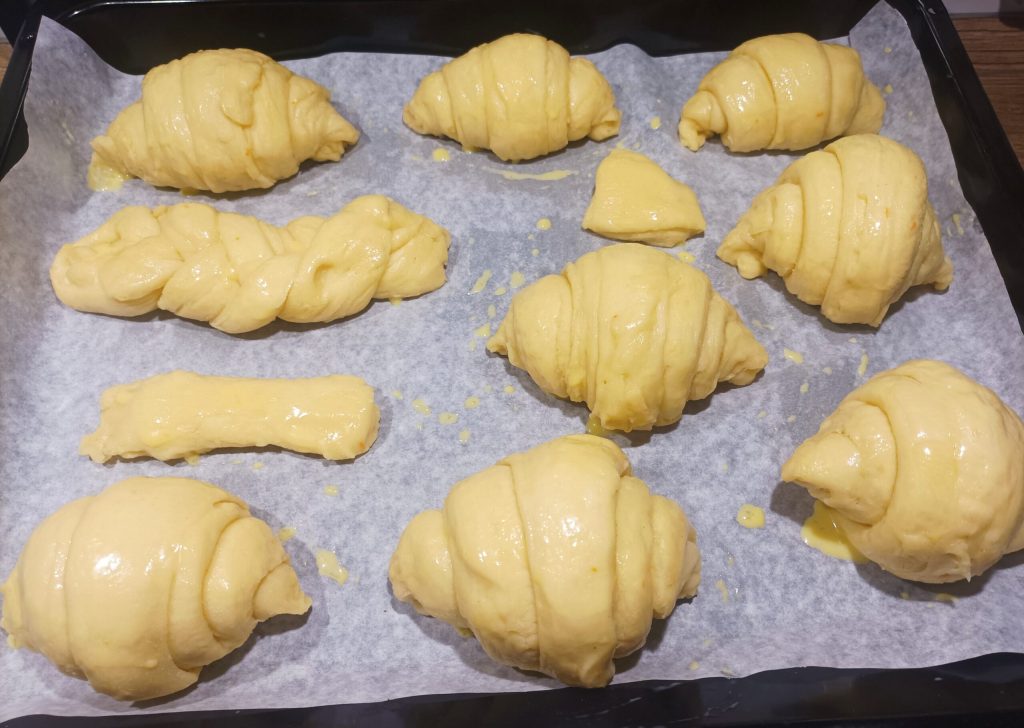
Bake at 356°F in a preheated static oven for 25 minutes, they should puff up and be well browned.

Your layered croissants are ready. What a wonder!!!

Crunchy puff pastry outside and soft inside.
Storage
You can freeze the croissants before the final rise, or you can store them cooked in a paper bag for one day at room temperature. If you want, you can also freeze them after cooking, let them thaw at room temperature, and heat them a few seconds in the microwave.
Tip
The dough with all Manitoba flour will be a bit difficult to work because it will be more resistant when rolling with the rolling pin. To make your work easier, you can cut it with a quarter or half of all-purpose flour.
