
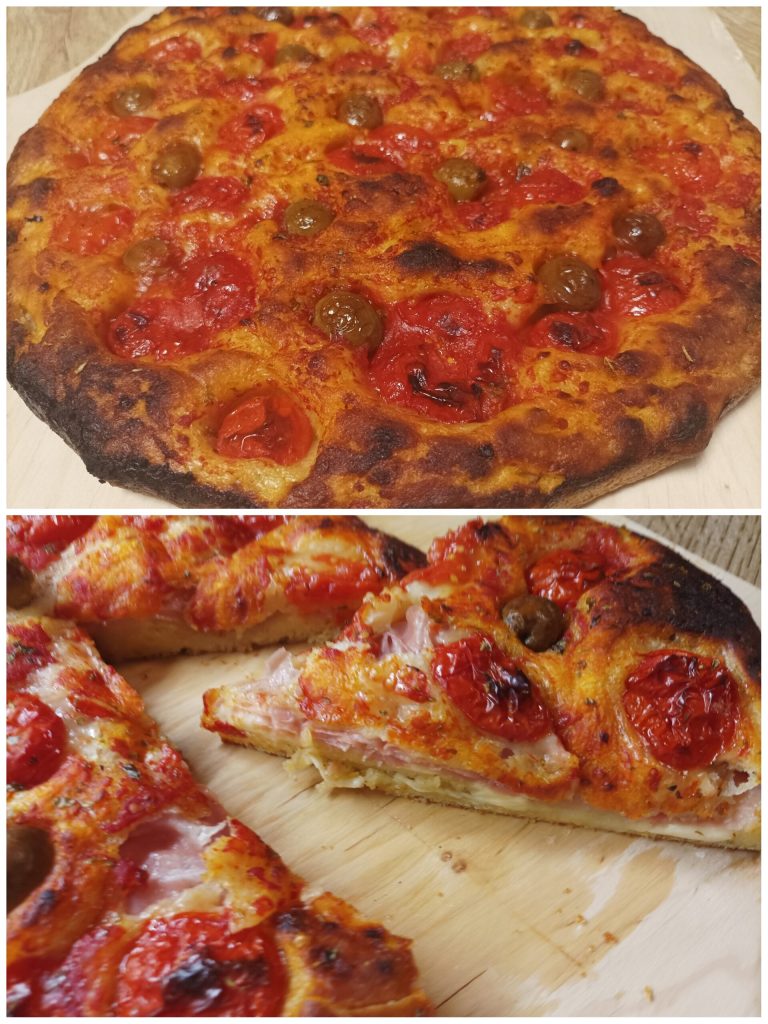
The Barese focaccia is a typical product of Puglia, specifically between Bari, Taranto, and Foggia. It originated in Altamura as a variant of the wonderful semolina bread. Barese focaccia can also be white with oregano and salt, but the traditional one is with cherry tomatoes and Barese olives, typical of our region. In the dough, you can also add boiled potatoes for those who prefer it taller and fluffier, which most of the time is stuffed with mortadella, but the real Barese focaccia is thin and crispy. However, there’s another version of stuffed focaccia, where the filling is cooked inside. The filling can vary widely, with stewed turnip greens, with ham and cheese, or the most known version with mortadella and spicy provolone, which is the version I propose in my recipe. In Bari, there isn’t a specific time to eat focaccia. Entering the bakeries, the smell is so strong it’s impossible to leave without buying a piece. Making it at home is very simple, but the secret lies in the pan used, which is made of iron. This pan must be treated before use; it needs to be “burned” first to make it non-stick. Simply put it in the oven for 5 minutes at 482°F (250°C), or ask a trusted bakery to do it for you, after which it should never be washed, only cleaned with paper, oiled, and stored in a bag. Now I’ll leave you to my focaccias!!!
- Difficulty: Easy
- Cost: Cheap
- Rest time: 3 Days
- Preparation time: 20 Minutes
- Portions: 6
- Cooking methods: Oven
- Cuisine: Italian
Ingredients
For a 13.8 inch (35 cm) pan
- 2 cups all-purpose flour
- 2 cups remilled durum wheat semolina
- 1 tsp malt or honey
- 1 3/4 cups Warm water
- 1 tbsp Salt
- 2 1/2 tsp Yeast
- 5.3 oz cherry tomatoes
- Barese olives as needed
- 3 tbsp tomato sauce
- oregano
- salt to taste
- 1/2 cup Oil for the pan
- 3.5 oz mortadella (approx.)
- 3.5 oz spicy provolone (approx.)
Tools
- Stand mixer Or you can work it by hand
- Baking pan
Procedure
In a stand mixer, place the flours, honey or malt, and crumbled yeast.
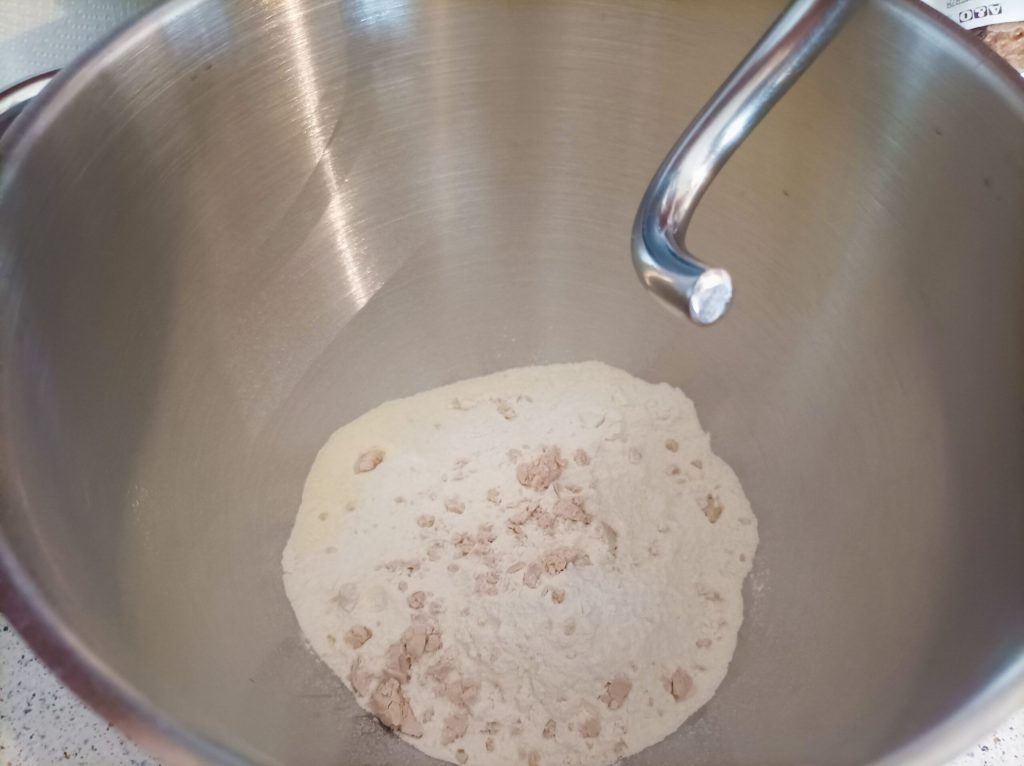
Add the water and start the stand mixer on low speed to hydrate the flours.

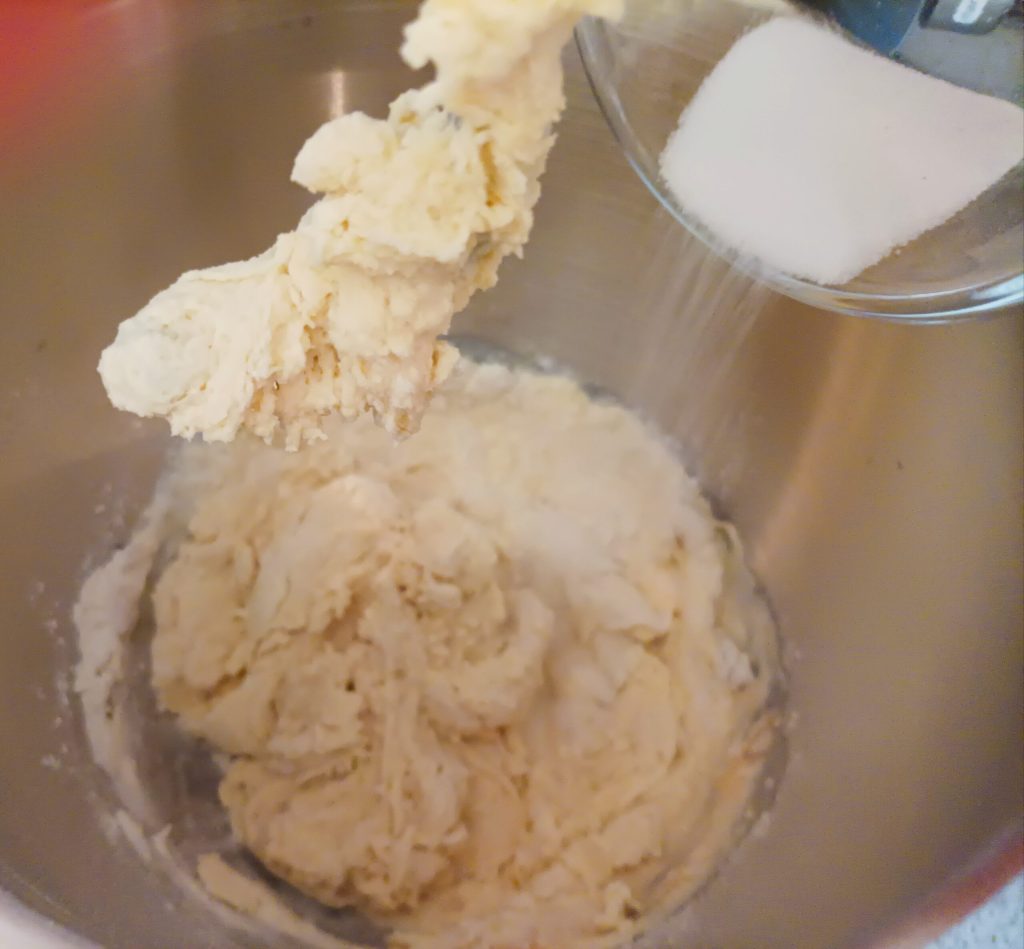
When the dough becomes compact, add the salt and run it again for a few minutes. The dough will be very soft.
Pour it into a container covered with plastic wrap and let it rise for at least 3 hours.

Risen dough.

Pour the oil into the pan and add the dough, spread it by pressing with your fingertips.
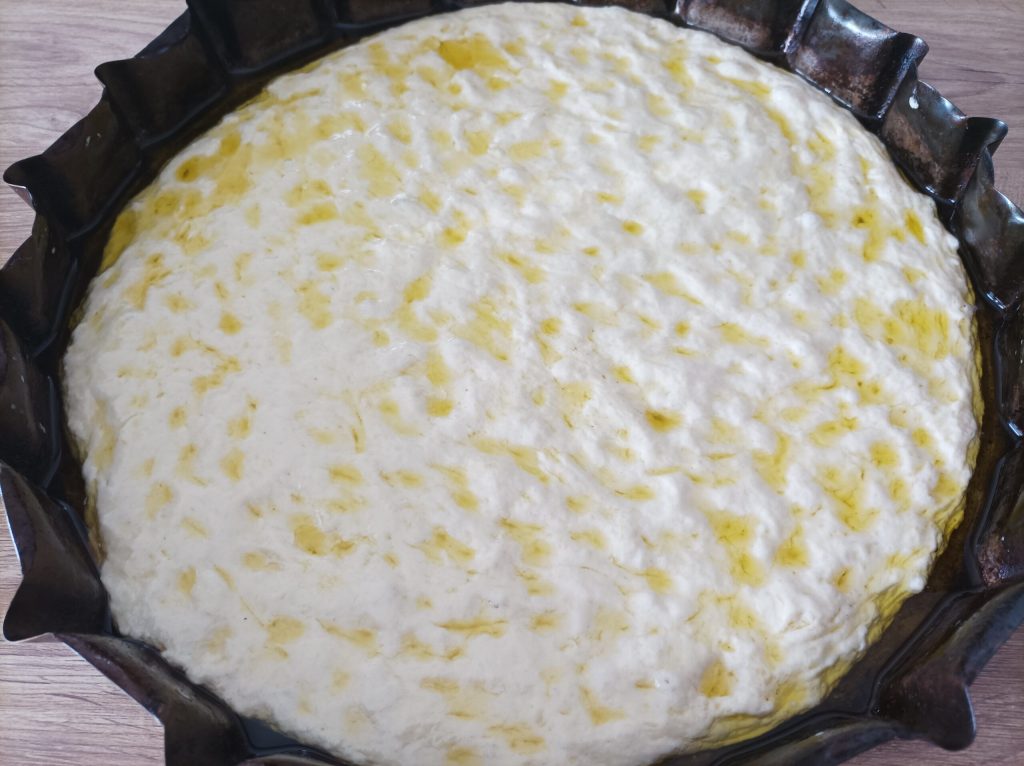
Cover with sauce, cherry tomatoes, olives, salt, and oregano.
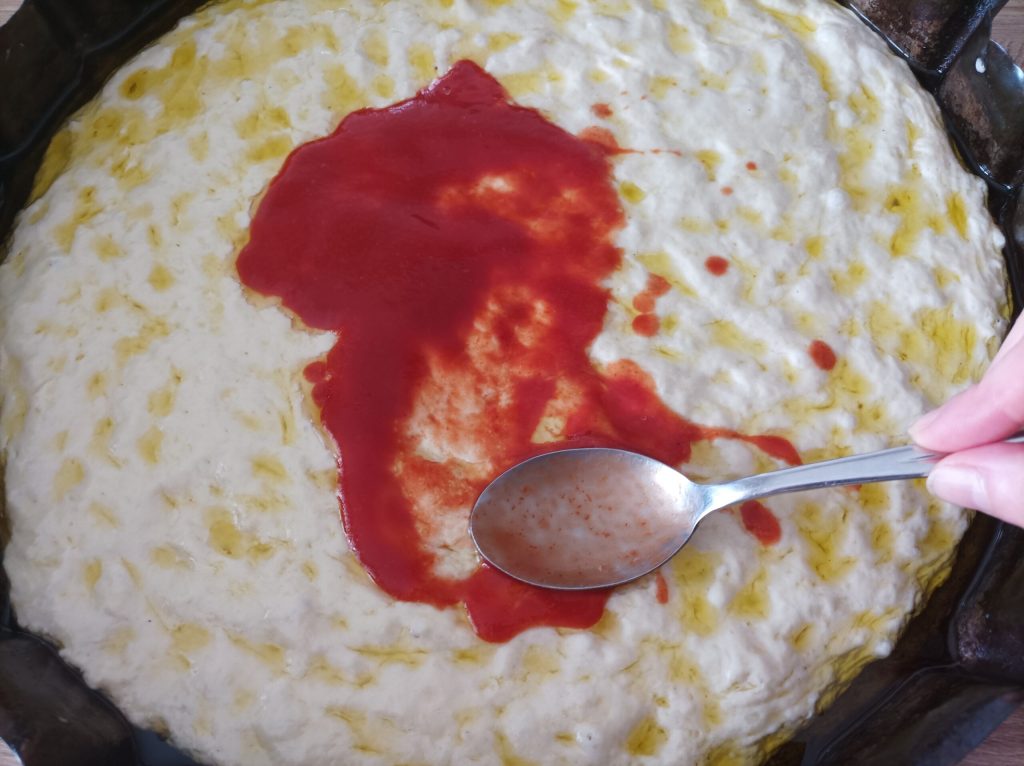
If you want, try the version with mozzarella and mortadella.

Bake in a preheated static oven at 482°F (250°C) for 20/25 minutes at the bottom of the oven, then continue baking in the center.

This is the stuffed version. Spectacular!!!
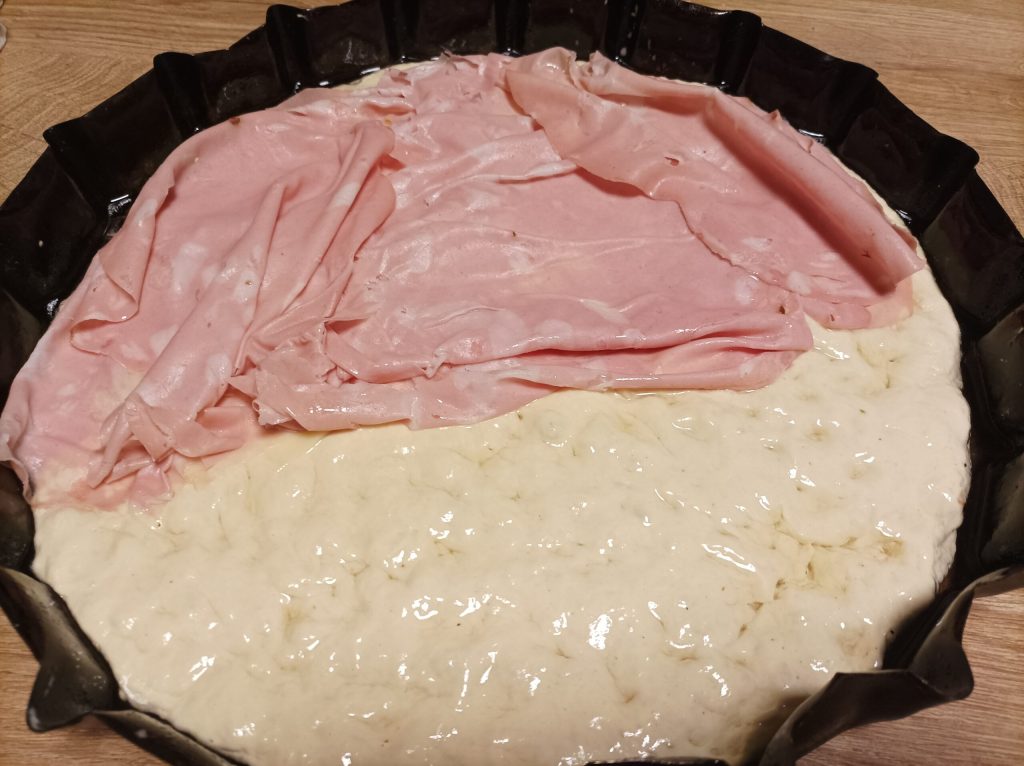
Always the same procedure, spread the dough with your fingers, fill one half and cover with the other part. You need to be a bit quick because the dough is very soft, but don’t worry if it tears a bit, fix it with your hands.

Seal well by pressing always with your fingertips. Now season normally with tomato sauce, cherry tomatoes, olives, and salt.

Bake in the same way and time as the classic one.
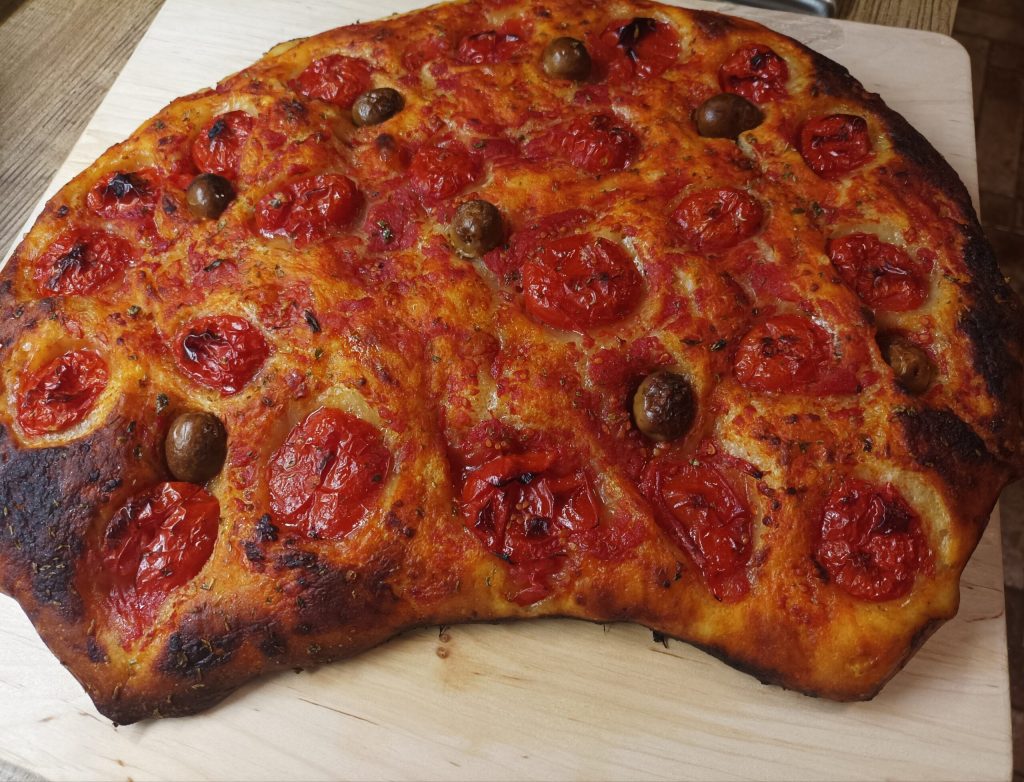
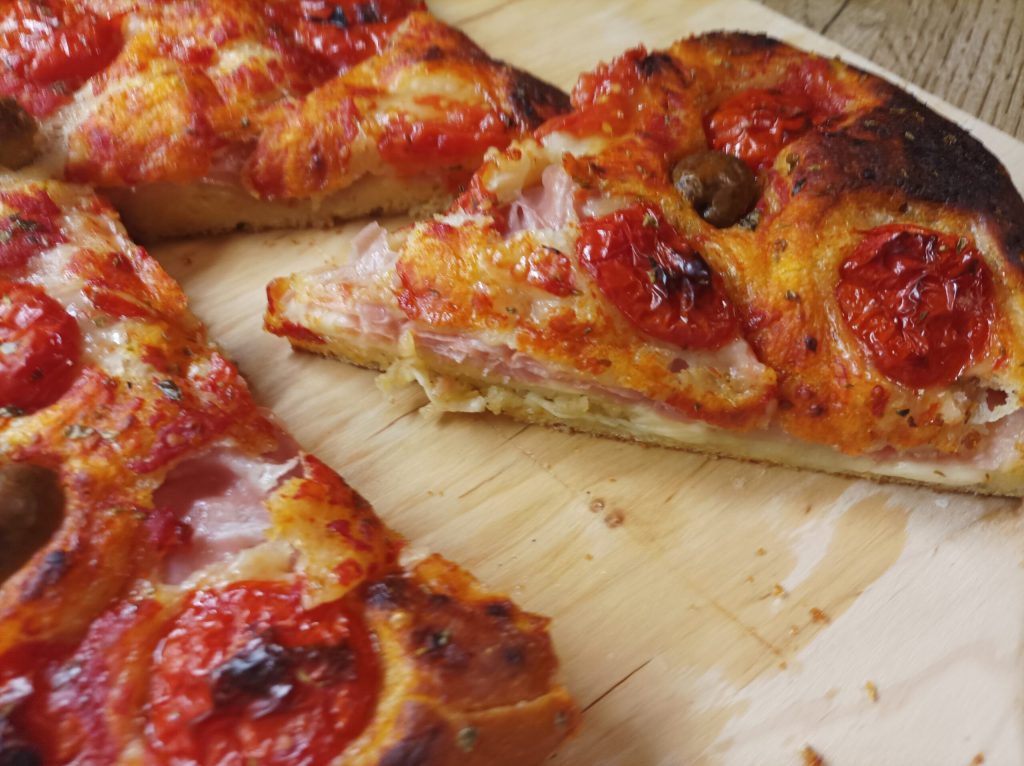
The Barese focaccia is ready!! Classic and stuffed!!!! Absolute delight.
Storage
It’s best to eat focaccia freshly baked, but if any is left over, you can store it for one day wrapped in parchment paper or freeze it for later use. Before serving, heat it in the oven for a few minutes.
It’s best to eat focaccia freshly baked, but if any is left over, you can store it for one day wrapped in parchment paper or freeze it for later use. Before serving, heat it in the oven for a few minutes.
It’s best to eat focaccia freshly baked, but if any is left over, you can store it for one day wrapped in parchment paper or freeze it for later use. Before serving, heat it in the oven for a few minutes.
Advice
For baking focaccia, I recommend using the iron pan to make the real focaccia.
