
Today I leave you my meat ragù recipe, made with the exact same recipe as my mom.
Actually we have the habit of calling it meat sauce and not ragù, undoubtedly due to regional custom. And you? What do you call it where you live?
You know I rarely cook meat now, that’s a fact, but I haven’t become vegetarian — an “accusation” my children often throw at me — so it seems reasonable to present this recipe today, right after the green pepper seitan I posted yesterday.
I stopped buying meat from big retailers many years ago, for several reasons including, but not only, a personal intolerance of intensive farming and the supermarket distribution of animal products. I’m not against supermarkets per se, but I don’t like them applied to some products like meat: seeing trays of cellophane-wrapped meat that possibly remains unsold bothers me, and the same goes for fish.
But I don’t want to get too serious tackling the topic of meat and farming — unfortunately intensive farming is a serious matter.
Back to the recipe, this is my mother’s recipe.
The same recipe made by my mother or by me leads to two similar results, yes, but different. 🙂
Mom’s is out of this world, mine too — let’s not deny it 😇 — but mine is lighter and faster.
By “lighter” I mean “less oil.” By “faster” I mean I don’t agree with the classic grandmother method that calls for very slow cooking for hours on end, because I don’t think it automatically makes it better, and above all I really can’t afford to leave a pan on the stove for hours: I don’t have the time on weekdays and I can’t manage it even on holidays, I confess. But every time I make it everyone appreciates it, even my mom. 😊 This makes me calm and satisfied with my way of cooking.
🌞 Here are some other ragùs of mine, of various kinds:
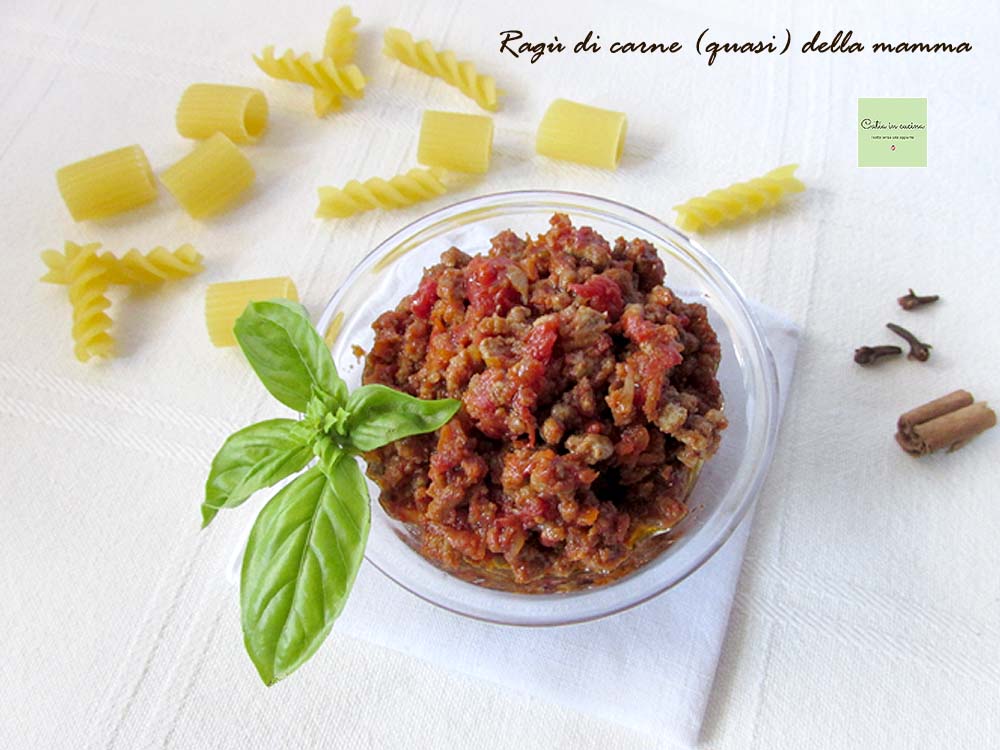
- Difficulty: Easy
- Cost: Medium
- Preparation time: 10 Minutes
- Cooking time: 1 Hour
- Portions: 4
- Cooking methods: Stovetop
- Cuisine: Italian
- Seasonality: All seasons
Ingredients
- 14 oz ground beef
- 2 cups tomato purée (passata)
- 1 carrot
- 1 stalk celery
- Half golden onion
- 1 cinnamon stick (small piece)
- 2 cloves
- 1 small glass red wine (white is fine if you don't have red)
- 1 tablespoon oil
- pepper
- basil or parsley
Tools
- Stainless steel pan
Steps
Chop the onion, carrot and celery. By knife or with a food processor.
Sauté in oil. Decide the amount of oil yourself (are you like me or like our mothers? 😊).
Add the ground meat.
Break up the meat with a fork and stir.
Add the cloves, the small piece of cinnamon and pepper to taste.
Deglaze with the wine and let it evaporate.
👉 When I use cloves and cinnamon I usually use parsley. With basil I prefer to reduce or omit the spices completely.
👉 If the meat ragù is intended to dress gnocchi, then I remove the spices and use rosemary instead of basil or parsley; I really like rosemary in ragù with gnocchi.
☝ When the meat is browned and practically cooked through, those who use salt can add it at this point, but I naturally skip this step.
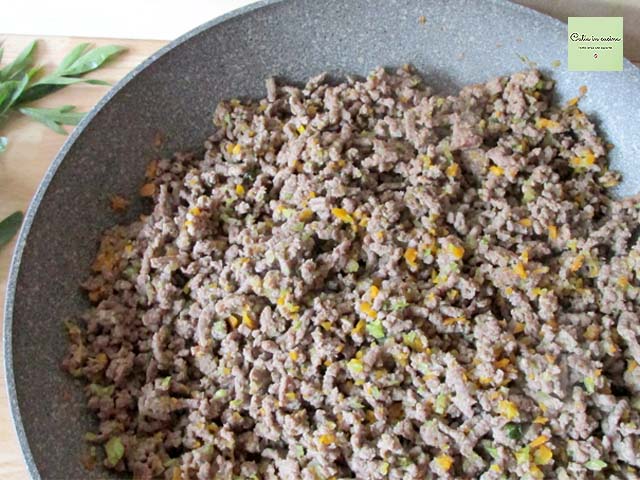
Pour in the tomato purée.
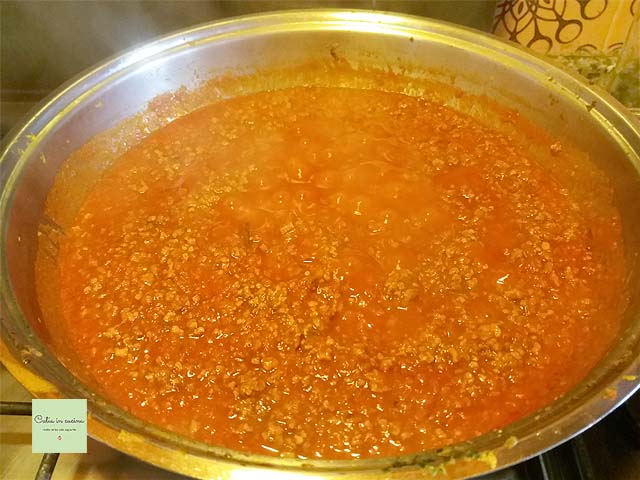
Stir, cover with a lid and cook for half an hour. If you prefer, you can continue cooking for up to an hour, depending also on the type of tomato purée used.
Check occasionally. Using little oil, you will probably need to loosen it once or twice with a few tablespoons of water (perhaps the pasta water).
You can use more or less purée to taste. As you can see from the photos below, the amount of tomato also affects the final appearance.
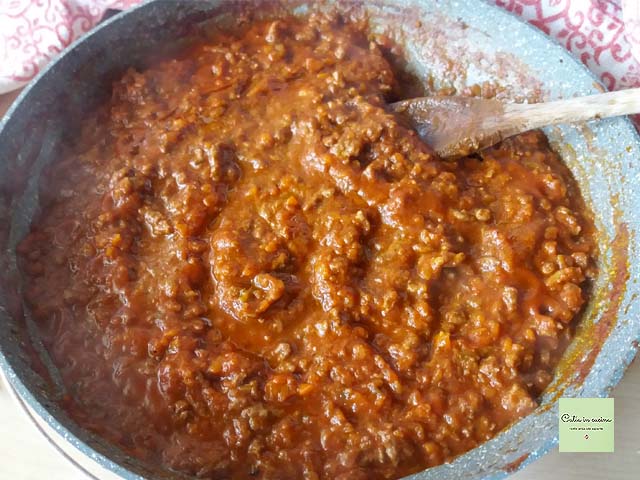
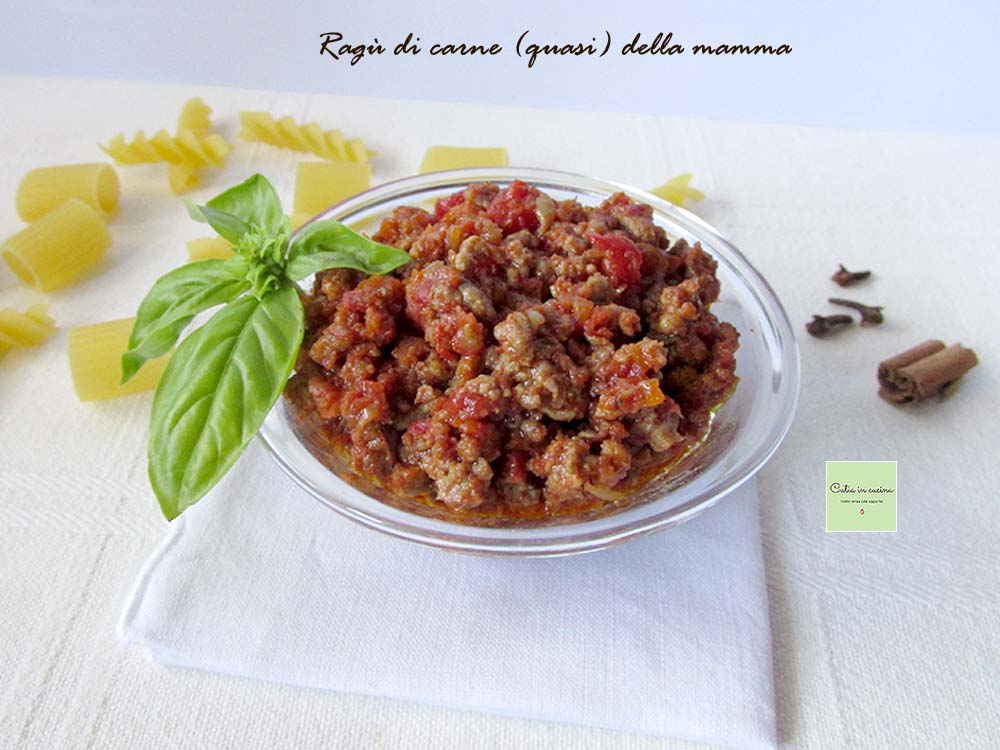
If desired, you can add a drizzle of oil at the end of cooking — better to add a little raw oil at the end than to add more at the sautéing stage.
After this last healthy tip, I can only recommend my meat ragù for your tagliatelle, strozzapreti, lasagna or simply your rigatoni. If you dress gnocchi with it try the rosemary, and then tell me if you like it.
Unfortunately I don’t have a plate of dressed pasta to show you, because after photographing the ragù… my crew wanted to eat! And who can blame them! 😃
Tips without salt
 I remind you that my meat ragù, like all my recipes, is without added salt. 🙂
If you are interested in reducing or eliminating salt, always remember:
▫ Reduce salt gradually; the palate must get used to the progressive reduction without noticing it.
▫ Use spices. Chili, pepper, curry, nutmeg, cinnamon, cloves, cumin…
▫ Use aromatic herbs. Basil, parsley, oregano, thyme, sage, marjoram, rosemary, mint…
▫ Use seeds. Sesame, pine nuts, almonds, walnuts…
▫ Use pungent vegetables or fruit. Garlic, onion, lemon, orange…
▫ Use my salt-free vegetable granulate and gomasio.
▫ Prefer fresh foods.
▫ Avoid boiling in water; prefer cooking methods that preserve flavors (griddle, foil, steam, microwave).
▫ Avoid putting the salt shaker on the table!
▫ Allow yourself an occasional indulgence. It lifts the spirits and helps you persevere.
If you don’t want or can’t give up salt:
▫ You can still try my recipes and salt them according to your habits.
Follow me!
On my new WhatsApp channel and on Instagram, on the Facebook page and Pinterest boards, in my two groups: Il gruppo di Catia, in cucina e oltre and Proprio quello che stavo cercando! and if you like… subscribe to the Newsletter
