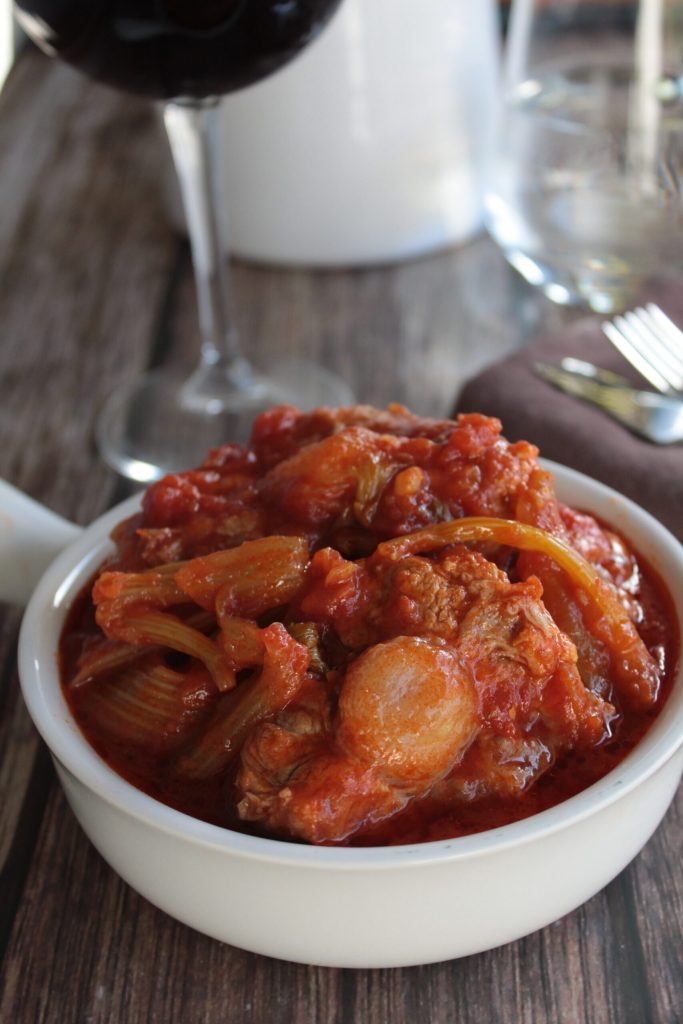
Roman oxtail stew is one of the iconic dishes of traditional Roman cuisine, an ancient, rich, and flavorful recipe that my family has always prepared following my mother’s teachings.
It’s a dish that smells like home, of slow Sundays, and sauce simmering for hours, while the celery releases its aroma, and the meat becomes very tender.
Roman oxtail stew began as a humble dish: it was once made with what were considered “scraps” of adult beef, simple and inexpensive ingredients that, with patience and time, transformed into a real delicacy. In local butcher shops, when they knew you, the tail was sometimes even given away. Today, however, it has become a rarer preparation, to be ordered in advance and at a much higher cost, precisely because it requires long and careful preparation.
Traditionally, beef tail is used, but if we can’t find it, we can easily prepare this recipe with veal tail, choosing slightly larger pieces because the meat is softer. The secret, however, remains the same: slow cooking in the sauce, plenty of celery, and a pinch of chili to make the Roman oxtail stew slightly spicy and irresistible.
It’s one of those dishes that improves the next day when all the flavors meld and become even more intense. Perfect for a special lunch, it requires plenty of bread to soak up the sauce, and as my husband always says – if you’re not messy up to your elbows, you haven’t really eaten the Roman oxtail stew… because it’s one of those dishes you enjoy with your hands, without too much ceremony.
Before moving on to the recipe, here are some other ideas for traditional dishes:
- Difficulty: Easy
- Cost: Economical
- Preparation time: 10 Minutes
- Portions: 4
- Cooking methods: Stovetop
- Cuisine: Italian
- Seasonality: All Seasons
Ingredients
- 2.2 lbs oxtail (beef or veal)
- 35 oz tomato pulp
- 1 stalk celery (large)
- 1 carrot
- 1/2 onion
- salt
- chili pepper (or black pepper)
- 1/2 cup white wine
- extra virgin olive oil
Tools
- 1 Food Processor
- 1 Casserole
Preparation
In traditional Roman cooking, the tail is not immediately put in the sauce.
My mother – like many Roman mothers and grandmothers – taught me that it should first be parboiled, a crucial step to remove excess fat and make the meat cleaner and ready for slow, perfect cooking in the sauce.Bring a large pot with plenty of water and a pinch of salt to a boil.
When the water boils, gently immerse the oxtail pieces and let them cook for 10–15 minutes, adjusting the time based on the size of the pieces.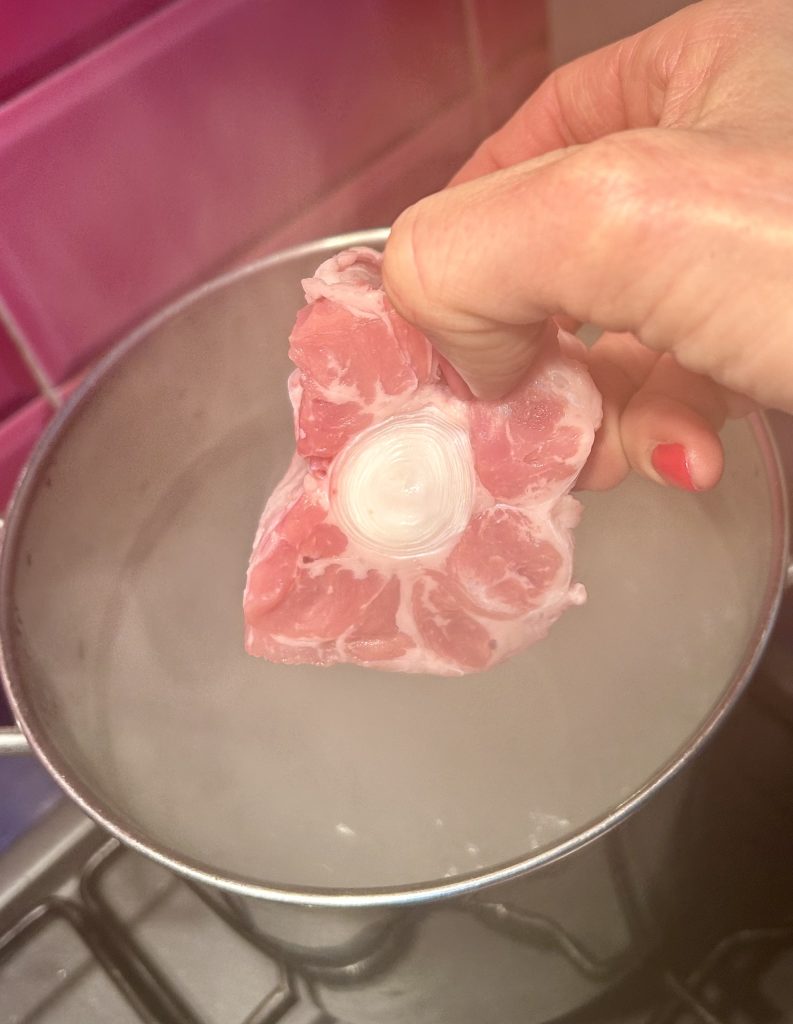
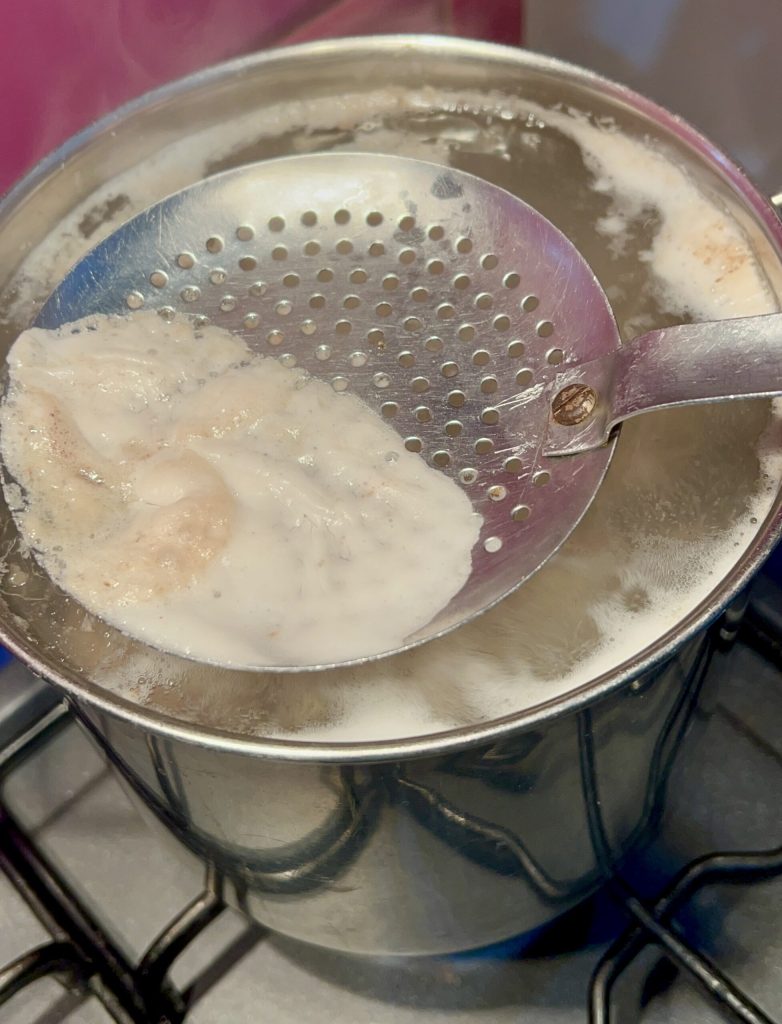
This is not actual cooking, but serves only to purge the meat, removing some of the fat and impurities that will come to the surface.
In a large steel pan, I prepare a nice sauté with carrot, half an onion, and the more tender central part of the celery stalk.
I use the food processor to speed things up, but you can easily chop the vegetables by hand, as long as they are well chopped.
I add two generous rounds of extra virgin olive oil and a bit of chili pepper, then let it gently sauté until the vegetables become soft and fragrant.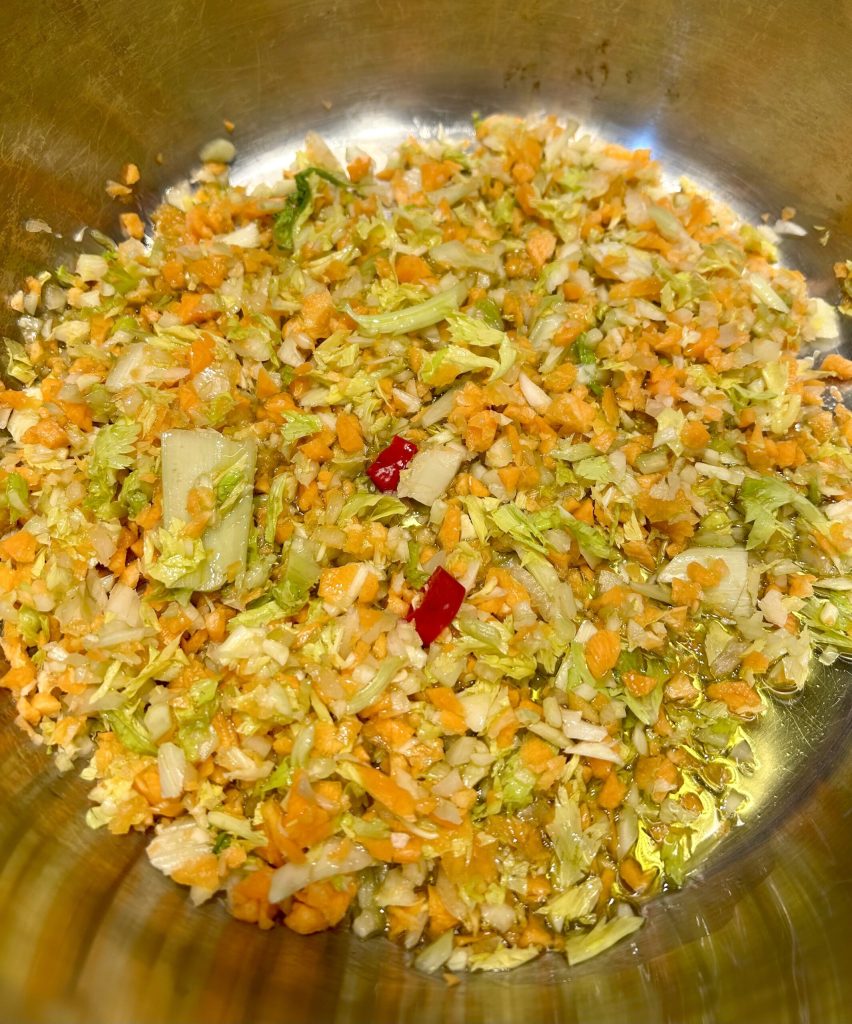
When the sauté is well underway, I add the previously parboiled and drained oxtail pieces to the pan.
I let them sear well on all sides for a few minutes, turning them slowly, so they absorb flavor and color.
This step is important to give character and taste to the meat before the long cooking.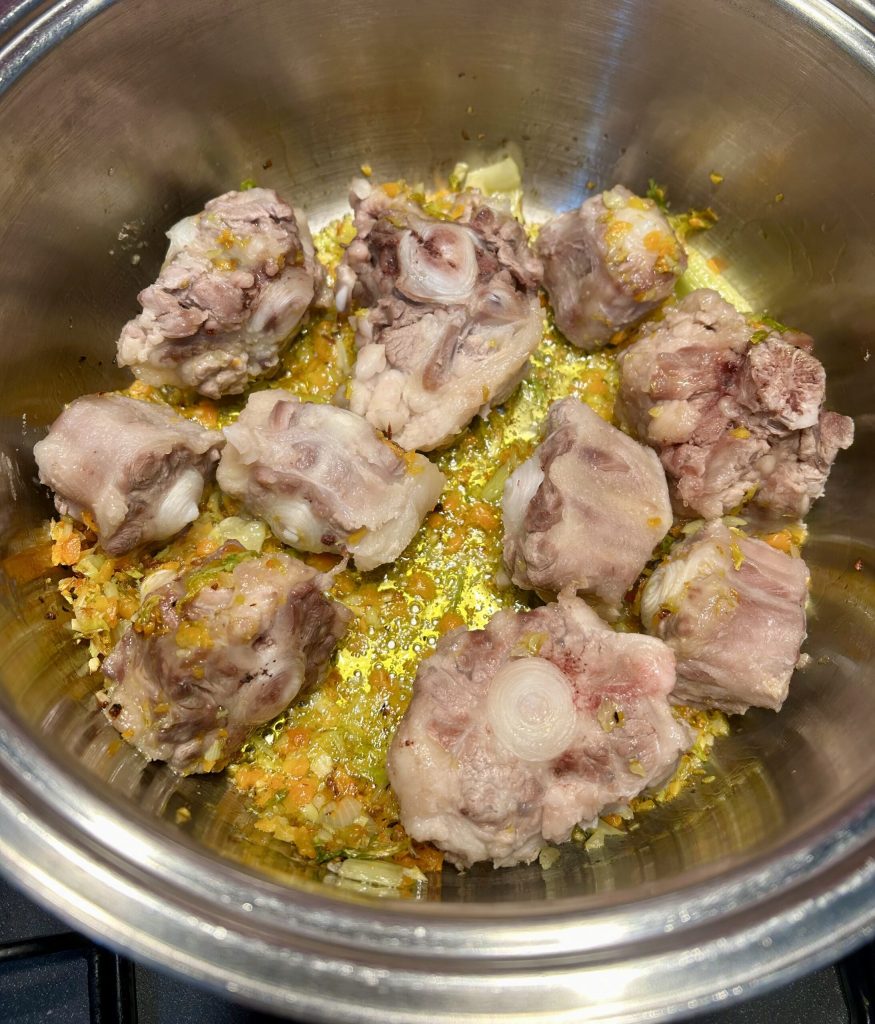
At this point, I add the celery, which I never parboil.
I clean it well, remove the tougher strings, wash it thoroughly under running water, and break it into rather coarse pieces, as it must be felt in the dish.
I add the celery to the seared oxtail, deglaze with white wine, and let the alcohol evaporate completely, always over high heat.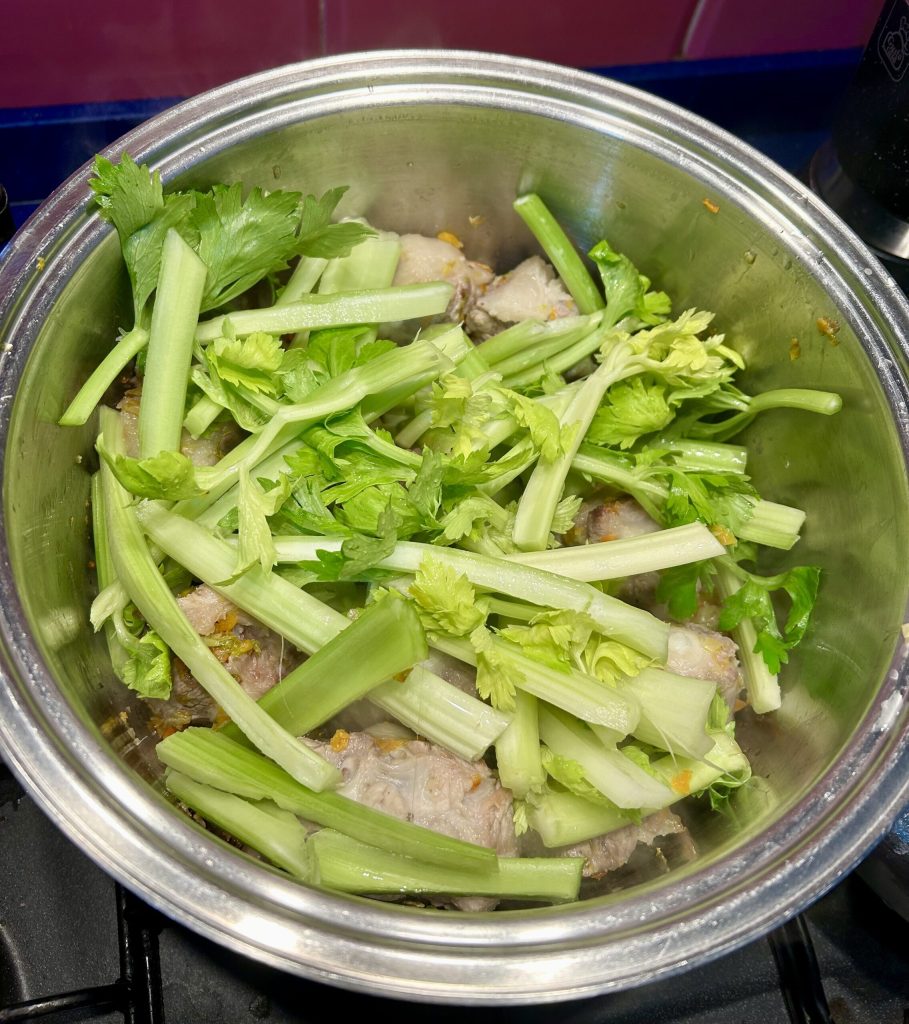
When the wine has evaporated well, I add the tomato pulp, adjust with coarse salt, bring to a boil, and then lower the heat.
The oxtail must cook slowly, with the sauce simmering gently, for about 3 hours, or until the meat is very tender and detaches from the bone.
If at the end of cooking the sauce is not reduced enough, just remove the lid and let it thicken a bit more.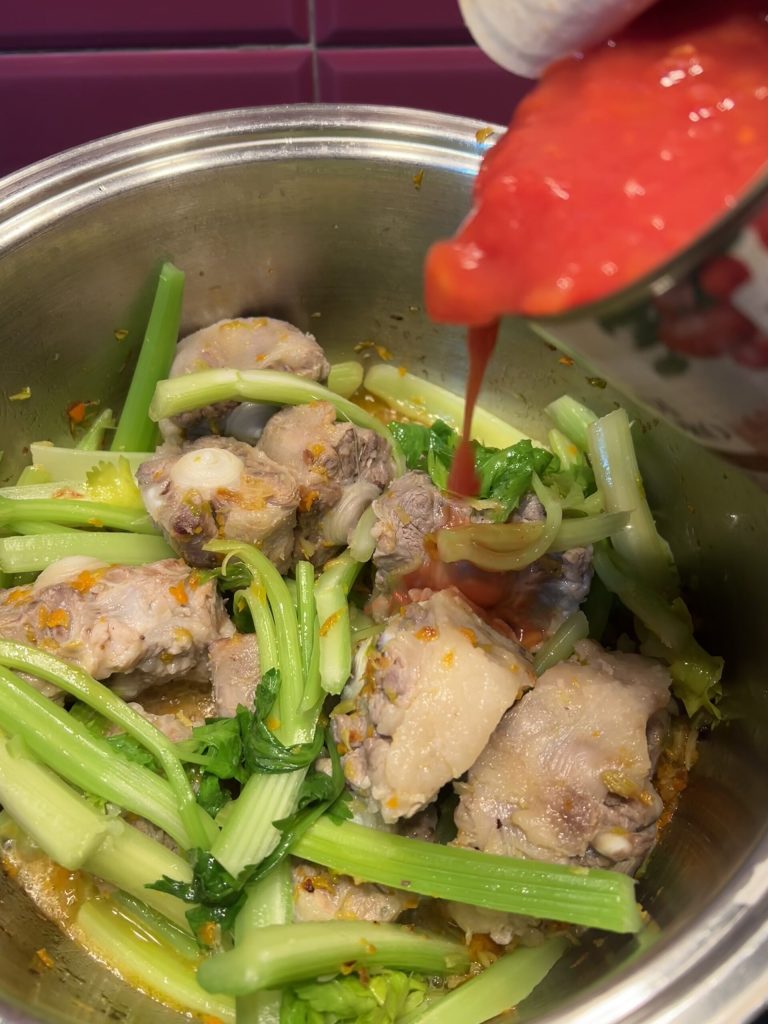
📝 Final Notes and Tips from Aunt Debby
Roman oxtail stew is one of those dishes that gives its best the next day. Preparing it in advance allows the flavors to meld even more, making the sauce more intense and the meat even more tender.
A tip from a Roman grandmother: don’t waste the sauce.
The next day you can use it to prepare a dish of rigatoni with oxtail sauce, one of the most beloved first courses of Roman tradition. Just heat the sauce, add the well-drained pasta, and if you like, a light dusting of pecorino cheese.
And always remember the bread to soak up the sauce: Roman oxtail stew without bread… isn’t the same.
It’s a convivial dish to be enjoyed without haste, and why not, even with your hands: if you’re not messy up to your elbows, you haven’t really eaten it 😉
FAQ (Questions and Answers)
Can I prepare Roman oxtail stew in advance?
Yes, it is highly recommended. Preparing it the day before makes it even better because the sauce becomes more flavorful and the meat more tender.
Can I use veal tail instead of beef tail?
Of course. Veal tail is more tender and cooks slightly faster. Choose slightly larger pieces for a perfect texture.