Easy and Safe Hollandaise Sauce: The perfect balance between technique and taste, making Hollandaise Sauce at home can be daunting, but the secret to avoiding a “curdled” sauce lies in temperature management and emulsification.
Technically, we are creating a warm and stable emulsion between the fats in the butter and the water contained in the yolks and lemon juice.
In this “easy and safe” version, we will use the immersion blender method (or controlled bain-marie) to ensure a velvety texture without the risk of overcooking the yolks.
When it comes to egg-based sauces, food safety is crucial. To serve a safe sauce without turning it into an omelet:
Home pasteurization: Bacteria (like Salmonella) are eliminated if the yolks reach a temperature of about 149°F for at least a couple of minutes.
The residual heat trick: Pouring the hot melted butter (about 176°F) slowly over the yolks while blending, the heat from the fat cooks the yolks just enough to make them safe, keeping the sauce creamy and fluid.
Prepare it and then tell me how you used it, I am always curious to receive your comments and feedback, meanwhile, check out the other perfect sauce recipes for every occasion below.
Then let’s go right below the picture to find out how to prepare the Easy and Safe Hollandaise Sauce.
See you soon with the next recipe, Ana Amalia!
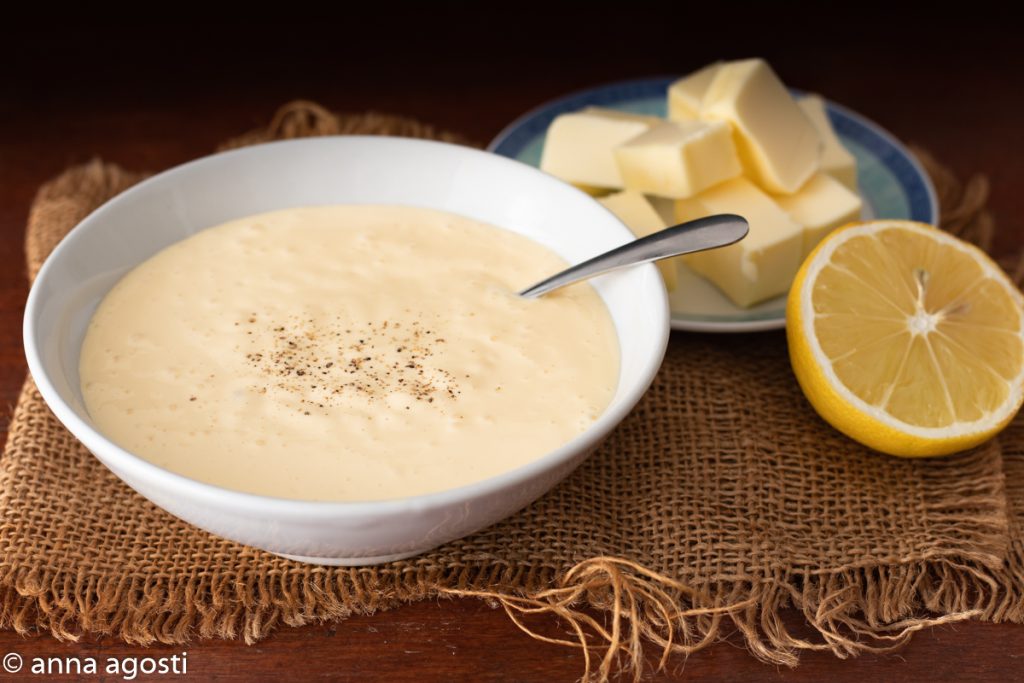
- Difficulty: Medium
- Cost: Very Cheap
- Preparation time: 15 Minutes
- Portions: 4 People
- Cooking methods: Stovetop
- Cuisine: European
- Seasonality: All Seasons
Ingredients for the Easy and Safe Hollandaise Sauce
- 3 egg yolks (from large eggs at room temperature)
- 150 g butter
- 1 tablespoon lemon juice
- 1 pinch salt
- 1 pinch white pepper
- 1 tablespoon water (warm)
Tools
- 1 Thermometer
- 1 Immersion Blender
- 1 Small Pan
Preparation of Easy and Safe Hollandaise Sauce
Prepare the base: In a tall and narrow container (the one that comes with the immersion blender is perfect), put the yolks, lemon juice, salt, and pepper.
Heat the butter: Melt the butter in a small pan until it starts to sizzle (it needs to be very hot, about 176-185°F, but not burnt).
Emulsify: Insert the immersion blender into the container and turn it on. Pour the melted butter in a thin stream, very slowly at first, then in a steady flow.
The magic: You will see the sauce thicken instantly, becoming bright and fluffy. Continue blending until all the butter is incorporated.
Adjust the consistency: If the sauce seems too thick, add a teaspoon of warm water and blend again for a few seconds.
If you need to keep it warm for 15-20 minutes, place the container in a bowl with warm water (not boiling, otherwise it will separate).
A hollandaise sauce is said to be “curdled” when the fat part (the butter) separates from the protein part (the yolk), giving it a grainy or greasy appearance.
This usually happens because the butter was added too quickly or because the temperature rose too high. Don’t throw it away! Here are two foolproof methods:
The ice water trick: If you see the sauce starting to separate, immediately add an ice cube or a teaspoon of cold water and blend at maximum speed. The thermal shock can help recombine the emulsion.
The “New Yolk” method (The most effective):
1. Take a new yolk and put it in a clean bowl with a teaspoon of warm water.
2. Start blending the new yolk and very slowly pour the curdled sauce into it (just as you did with the butter).
The new yolk will act as a “glue” and will rebuild the entire structure of the sauce.
How to Store Easy and Safe Hollandaise Sauce
The golden rule is: it’s best consumed immediately. However, if there’s any leftover, here are the limits:
In the Fridge: It can be stored for a maximum of 24-48 hours.
Beyond this time, the risk of bacterial growth increases and the structure of the sauce starts to degrade irreversibly.
To maintain quality at its best for two days in the fridge:
Airtight Container: Use a glass jar or a well-sealed plastic container.
Plastic wrap contact: To avoid that annoying “film” forming on the surface (caused by oxidation and butter cooling), place a piece of plastic wrap directly on the surface of the sauce before closing the lid.
How to reheat it (without curdling)
This is the most difficult part: in the fridge, the butter solidifies and the sauce becomes as hard as a flavored butter pat. Never use the microwave at full power!
Slow Bain-Marie Method: Place the sauce in a bowl over a small pan with hot water (but not boiling). Stir continuously with a whisk. The heat should be just enough to melt the butter without cooking the yolks.
Add hot water: If it seems too thick or starts to separate when reheating, add a teaspoon of hot water and stir vigorously to “reactivate” the emulsion.
Alternative use: If you don’t want to risk it as a side sauce, use the leftover cold as a compound butter on a hot steak or freshly boiled legumes: it will melt into a delicious dressing.
How to Serve Hollandaise Sauce
Eggs Benedict: The undisputed king. Toasted English muffin, cooked ham (or crispy bacon), poached egg, and a generous pour of Hollandaise.
Steamed Asparagus: It’s the quintessential vegetarian pairing. The sweetness of the asparagus is enhanced by the creaminess of the sauce.
Salmon (Grilled or Steamed): The “good” fat of the salmon and the butter create an incredible blend of flavors, especially if you add a bit of fresh dill.
Beef Fillet: For an elegant dinner, try Hollandaise (or its variant, Béarnaise, with added tarragon) over a beef steak.
New Potatoes: Dress the boiled potatoes while still hot with the sauce instead of the usual oil: they will become a gourmet side dish.
Artichokes: Dipping a boiled artichoke’s leaves directly into hollandaise sauce is a fantastic experience.
Variants
Béarnaise Sauce: It’s the most famous “sister”. It’s made by adding to the base a reduction of vinegar, chopped shallots, black pepper, and most importantly, fresh tarragon. It’s the perfect pairing for grilled meat.
Mousseline Sauce (or Chantilly Sauce): Much lighter and airy. It’s obtained by gently incorporating whipped cream (unsweetened) into freshly made hollandaise sauce. Ideal for very delicate fish or white asparagus.
Maltese Sauce: As I mentioned, it adds juice and grated zest of blood orange. It has a citrus flavor and a fantastic color.
Noisette Sauce: Instead of using simply melted butter, use browned butter (heated until it becomes amber and smells nutty). It will give the sauce a toasted and deep flavor.
Chipotle or Smoked Paprika Variation: For a modern and slightly spicy touch, add a teaspoon of chipotle chili powder or smoked paprika. Perfect for a Tex-Mex-flavored brunch.
Other Recipes
🖥If you want to see more types of recipes you can return to HOME
📲If you don’t want to miss any recipes you can follow me on my Facebook Page, just activate the notifications and you’ll see how many new recipes every day.
Easy and Safe Hollandaise Sauce Recipe FAQ
Can I prepare the sauce in advance?
Hollandaise sauce is at its best when freshly made. However, you can keep it warm for about 30-60 minutes in a thermos or bain-marie (with warm water, never boiling). If it cools too much, the butter solidifies and the sauce loses its texture.
What if the sauce is too liquid?
If after adding all the butter it’s still too liquid, probably the butter wasn’t hot enough or you blended too little. You can try cooking it in a bain-marie for a minute, whisking continuously until it thickens, but be careful not to exceed 149-158°F.
Can I use clarified butter?
Absolutely yes! In fact, many chefs prefer clarified butter because it makes the sauce even more stable and silky, eliminating the watery part of regular butter.
Why does my sauce taste too eggy?
Probably the temperature rose too high and the yolks started to cook (like an omelet). Make sure to balance well with lemon juice: the acidity is meant to cut the egg flavor and the richness of the butter.