
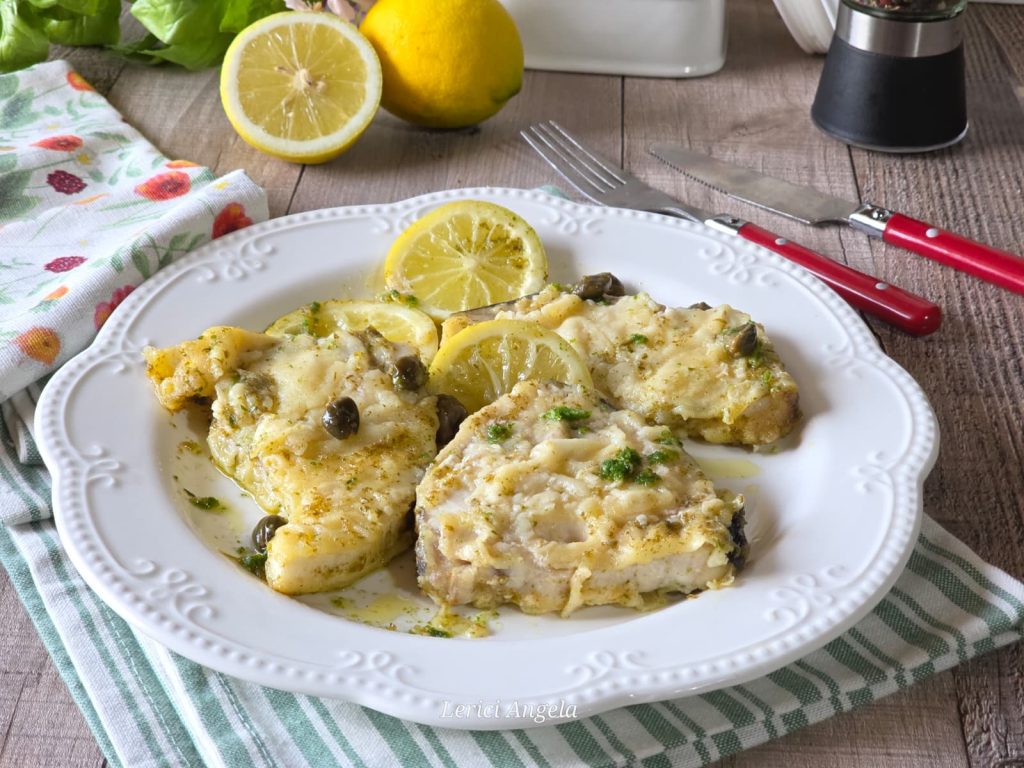
Light Swordfish Scaloppine with Lemon, Capers, and Pepper Mix. Want something light without sacrificing flavor?
Swordfish is a valuable ally in the kitchen: low in fat, rich in vitamins and minerals, it’s the perfect base for a nutritious main course.
It’s a recipe I love to call a ‘luxury dinner saver’: it takes less than 15 minutes to prepare, but has the elegance of a restaurant dish.
If you’re looking for a main course that tastes of the sea, sun, and Mediterranean, my swordfish scaloppine with lemon is the answer.
The delicateness of the swordfish pairs with the zestiness of the lemon, while the addition of capers and a freshly ground pepper mix gives each bite an unforgettable saltiness and character. Light, protein-rich, and fragrant, they’re perfect.
Quick pairing…..
Since the dish is ready in 10 minutes, I suggest preparing a delicious side dish.
Marinated Raw Zucchini
Orange, Fennel, and Salmon Salad To stay on the citrusy and refreshing theme.
- Difficulty: Very easy
- Cost: Medium
- Preparation time: 10 Minutes
- Portions: 4 People
- Cooking methods: Stovetop
- Cuisine: Italian
- Seasonality: All Seasons
- Energy 373.79 (Kcal)
- Carbohydrates 12.24 (g) of which sugars 0.83 (g)
- Proteins 31.68 (g)
- Fat 21.89 (g) of which saturated 4.09 (g)of which unsaturated 6.24 (g)
- Fibers 1.27 (g)
- Sodium 705.95 (mg)
Indicative values for a portion of 200 g processed in an automated way starting from the nutritional information available on the CREA* and FoodData Central** databases. It is not food and / or nutritional advice.
* CREATES Food and Nutrition Research Center: https://www.crea.gov.it/alimenti-e-nutrizione https://www.alimentinutrizione.it ** U.S. Department of Agriculture, Agricultural Research Service. FoodData Central, 2019. https://fdc.nal.usda.gov
Ingredients
Swordfish Scaloppine with Lemon
- 4 slices swordfish (about 700-800g in total)
- 3 lemons
- as needed all-purpose flour
- as needed extra virgin olive oil
- salted capers (1 heaping tablespoon)
- as needed mixed peppercorns
- salt (use sparingly)
- parsley (a bunch)
Tools
- Pan
Steps
Swordfish Scaloppine with Lemon
Place the swordfish slices on the work surface.
If you prefer a more delicate texture and a more elegant presentation, remove the outer skin using a sharp knife.
Pour the all-purpose flour onto a flat plate.
Coat the swordfish slices on both sides, pressing lightly to ensure the flour adheres well, then gently shake off the excess.
Set aside.
Squeeze the juice from two fresh lemons and strain it through a fine-mesh sieve to remove seeds and pulp.
This step will ensure a smooth and velvety sauce.
In a large pan, heat a generous amount of extra virgin olive oil.
When it’s hot, place the swordfish slices in the pan.
Sear them over high heat until the bottom is golden.
Flip the slices over and immediately drizzle them with the strained lemon juice.
After flipping the swordfish slices, add the salted capers (well-rinsed and squeezed) directly into the pan.
Immediately after, drizzle everything with lemon juice. This way, the capers will have time to release their aroma into the sauce as it thickens, without overcooking and losing texture.”
Season with salt, but be cautious, and add your pepper mix.
Continue cooking for about 5 minutes on medium heat: it’s the ideal time for the juice to be absorbed and transform, along with the flour, into a delicious savory cream.
Arrange the scaloppine on a serving plate.
Spoon all the cooking juices remaining in the pan rich with lemon juice and aromas and generously distribute them over the slices.
Parsley is the last touch of freshness and should be added strictly with the heat off, right before serving.
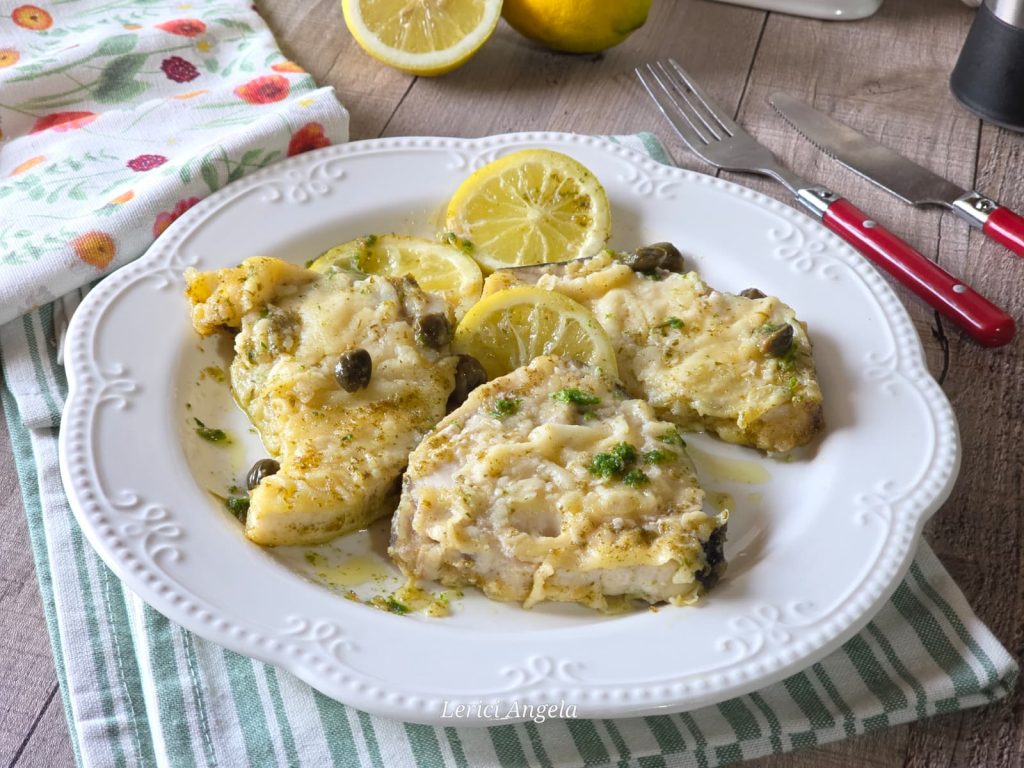
Enjoy your meal.
Tips
Shake off excess flour from the fish after coating. Too much flour will make the sauce sticky; too little will leave it runny.
The butter trick: If you’re not worried about calories, a small knob of butter added along with the lemon juice at the end of cooking creates a shiny and velvety emulsion, typical of high-end cuisine.
Desalting: Always remind readers to rinse capers under running water. If they are salted, soak them for 5 minutes, or the dish will be too salty.
If you want to impress, fry a handful of capers in a little oil until they “bloom” and become crispy, and use them as a final garnish over the soft fish.
As you’ll be using a lot of juice (and maybe even the zest), specify using organic or untreated lemons. The grated peel at the end adds a freshness that juice alone doesn’t provide.
The fish should “sizzle” as soon as it touches the pan. If the pan is cold, the fish releases water and you won’t get the crispy crust!
Once the heat is off, let the fish rest in its sauce for 1 minute before plating; the fibers relax and the flavor evens out.
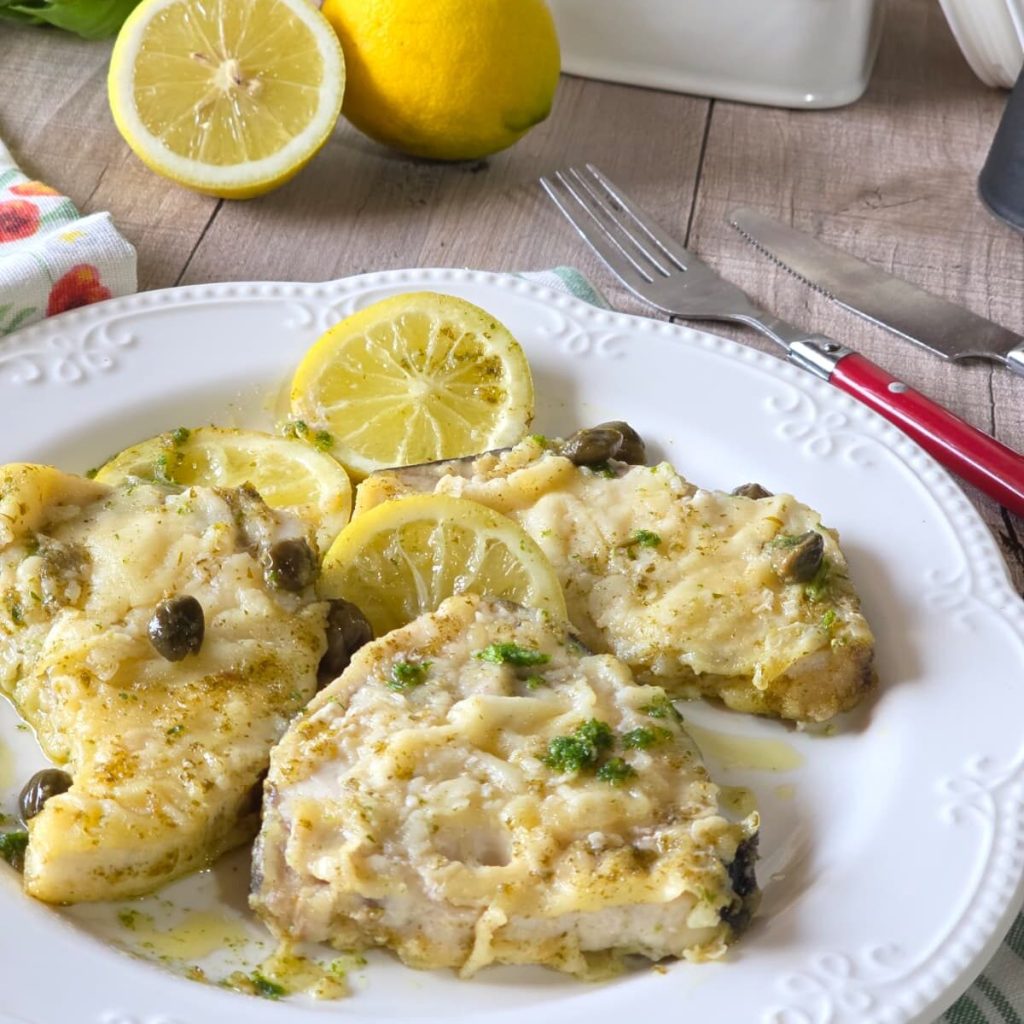
The “Pepper Mix”: A mix (black, pink, green) is not just for flavor but also for aesthetics. The pink pepper, as seen in the photo, looks great against the white of the fish.
Storage
In the fridge: Store the scaloppine in an airtight container with all their sauce. They keep perfectly for 1 day.
How to reheat: Swordfish tends to harden if overheated. The secret is to put it in a pan with a splash of water or lemon juice on a very low flame with a lid, just long enough to warm it without continuing to cook it.
Freezing: Once cooked, I do not recommend freezing it, as the texture of the fish and the lemon sauce would suffer too much.
FAQ (Frequently Asked Questions)
Can I use frozen swordfish?
Slow defrosting: Transfer the slices from the freezer to the refrigerator about 12 hours before cooking. Avoid defrosting at room temperature or under hot water to prevent ruining the fiber texture.
Drying: Once defrosted, the fish will release more water.
Before flouring, pat it dry carefully with paper towels; if it remains moist, the flour will turn to mush, and you won’t achieve the golden crust seen in my photo.
