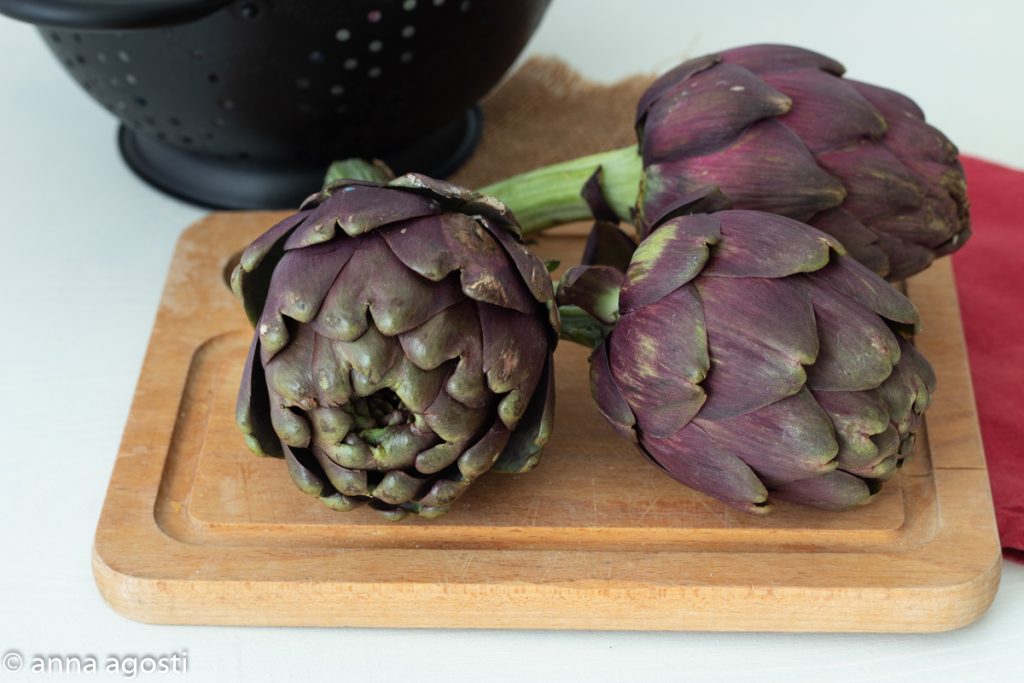
If you’re here, you probably have a bunch of beautiful artichokes in front of you but… a little intimidating, don’t worry, I’ll explain How to clean and cook artichokes.
Don’t be fooled by the thorns and tough leaves: inside that “armored” exterior lies a very tender and tasty heart.
Cleaning artichokes is a ritual that requires a bit of patience, but I assure you that the result is worth every effort.
In this guide, I will explain step by step how to handle them without waste and how to prepare them for your favorite recipes. Once you learn the technique, you’ll never go back!
Cleaning artichokes might require a bit more skill compared to other vegetables, but as you’ll see, it’s an operation within everyone’s reach.
Once you overcome the cleaning hurdle, a world of authentic and genuine flavors will open up to you that only this vegetable can offer.
I hope this guide will be helpful to you and that from now on, you will look at artichokes not with fear, but with the desire to get cooking immediately!
Let me know in the comments what your favorite recipe is and if you have any secret tricks to share.
See you soon with the next recipe, Ana Amalia!
- Difficulty: Medium
- Cost: Economical
- Preparation time: 30 Minutes
- Portions: 8 Pieces
- Cooking methods: Stovetop
- Cuisine: Italian
- Seasonality: All seasons
Ingredients
- 8 artichokes
- 2 lemons
- to taste water
Tools
- 1 Knife paring knife
- 1 Bowl large glass
- Gloves disposable
Steps on How to Clean and Cook Artichokes
For perfect results, cleaning begins with choosing at the market stalls. Here are three little secrets not to go wrong:
– Firm and compact: Grip the artichoke between your thumb and forefinger and press lightly. It should feel firm and not “soft”; the leaves should be tightly closed and pressed together.
– The “crunch” test: Try bending an outer leaf: if it’s fresh, it should snap with a crisp sound (a crunch). If it bends without breaking, the artichoke is old.
– Straight stem and shiny leaves: The stem should be turgid and not wilted, while the color should be vivid, without dark spots or overly yellowed areas.
– The yield: On average, an artichoke has a waste of 50-60%. This means that if you buy 1 kg of whole artichokes, after removing the hard leaves and tips, you’ll have about 400-500g ready to cook.
– Prepare the acidulated water: Fill a bowl with water and squeeze the lemons into it. This will help prevent the artichoke from oxidizing when exposed to air. Wear gloves to avoid having blackened hands!
– Remove the outer leaves: Start by detaching the hardest and darkest leaves at the base (the bracts). Continue until you reach the inner, lighter, and more tender ones.
– Cut the tip: Place the artichoke on the cutting board and cut off the upper part (about 1-1.5 inches), thus eliminating the thorny tips.
– Trim the base: With the paring knife, remove the fibrous outer part of the artichoke bottom and the stem attachment, moving in a circular motion.
– Clean the stem: Don’t toss it! Shorten it and peel it with a peeler or knife to remove the outer fibrous layer until you see the light heart.
– Remove the “choke”: If the recipe requires, cut the artichoke in half or quarters and use the tip of a knife or a spoon to remove the internal fuzz (the choke).
– Immediate immersion: As you clean them, drop the artichokes into the lemon water.
Once cleaned, artichokes are ready to be transformed into extraordinary dishes. The cooking depends greatly on the variety and the cut you’ve chosen:
– Whole: Ideal for slow cooking in a pan with plenty of oil, garlic, and mint, or for stuffing.
– Wedges: Perfect for sautéing in a pan with a drizzle of oil and parsley, becoming a quick and tasty side dish.
– Thin slices: Great for enriching first courses, omelets, or for frying in a crispy batter.
If you’re looking for inspiration on how to serve them, check out my favorite recipes:
How to Store Artichokes (raw and cooked)
If you’ve bought too many artichokes or if some have already been cooked, here’s how to keep them fresh and tasty for as long as possible:
1. Fresh artichokes (not cleaned): If you don’t have time to clean them right away, treat them like flowers! Put them in a vase with the stem immersed in fresh water and store them in a cool place or in the fridge. This way, they will remain firm for 3-4 days. Alternatively, you can put them in a paper bag (like a bread bag) and then in a perforated plastic bag in the vegetable drawer of the fridge.
2. Cleaned artichokes (but raw): As we’ve seen, cleaned artichokes oxidize quickly. If you need to store them for a few hours, leave them in acidulated water in the fridge. If you want to store them for 24 hours, drain them, dry them well, and close them in an airtight container.
2. Cleaned artichokes (but raw): As we’ve seen, cleaned artichokes oxidize quickly. If you need to store them for a few hours, leave them in acidulated water in the fridge. If you want to store them for 24 hours, drain them, dry them well, and close them in an airtight container.
3. Cooked artichokes: Cooked artichokes (pan-fried, baked, or boiled) keep very well in the refrigerator for 2-3 days in a tightly closed container. When consuming them, I recommend heating them slightly in a pan with a drizzle of oil to restore their consistency; avoid the microwave if you want to maintain their crunchiness.
4. Can they be frozen?
Raw: I advise against it, because they tend to turn black and rubbery.
Blanched: The best method! Clean them, blanch for 2 minutes in water and lemon, let them cool, and dry them perfectly. At that point, you can freeze them in suitable bags. They will keep for about 6 months.
Cooked: You can freeze them once ready, but they lose some texture. However, they are excellent for later use in savory pies or soups.
How to clean and cook artichokes – Other recipes
📱If you want to see other types of recipes you can return to HOME
📲If you don’t want to miss any recipes, you can follow me on my Facebook Page, just activate notifications and see how many new recipes are available each day.
FAQ (Frequently Asked Questions) How to clean and cook artichokes
How can I prevent artichokes from blackening my hands?
The simplest way is to wear thin latex or nitrile gloves. Alternatively, you can rub your hands with half a lemon before and during the cleaning: the acid from the lemon creates a natural barrier against the artichoke tannins that darken the skin.
What to do if I don’t have lemons for the acidulated water?
Don’t panic! You can replace the lemon with a spoonful of flour dissolved in water, or use a little white vinegar or crushed parsley stems. Very cold sparkling water also helps slow oxidation.
Does the internal “choke” always need to be removed?
It depends. If the artichokes are very young and small (like the spring varieties), the choke is almost absent and can be eaten. If the artichoke is mature, the internal fuzz is unpleasant on the palate and should be removed with a scoop or a spoon.
Can artichokes be cleaned in advance?
Yes, you can clean them a few hours in advance and store them immersed in acidulated water in the refrigerator. If you need to store them for a whole day, I recommend blanching them for 2-3 minutes in water and lemon, draining them and then storing them in an airtight container.
Which parts of the stem can be eaten?
Almost the entire stem is edible and delicious! You just need to remove the tougher and more fibrous outer part with a peeler until the light green and tender heart appears. It’s perfect for cooking along with the hearts or for making soups and sauces.
Can I freeze raw artichokes after cleaning them?
It’s not recommended to freeze them raw because they tend to become rubbery and dark. The secret is to blanch them for a couple of minutes in acidulated water, let them cool completely, and then freeze them. They will be perfect for your future preparations!
How many should I buy?
Remember that the artichoke has a lot of waste (about 60-70% of its weight). For a side dish that satisfies everyone, always calculate 2 artichokes per person. If you want to use them as a pasta or risotto topping, 1 artichoke per person will be more than enough!