
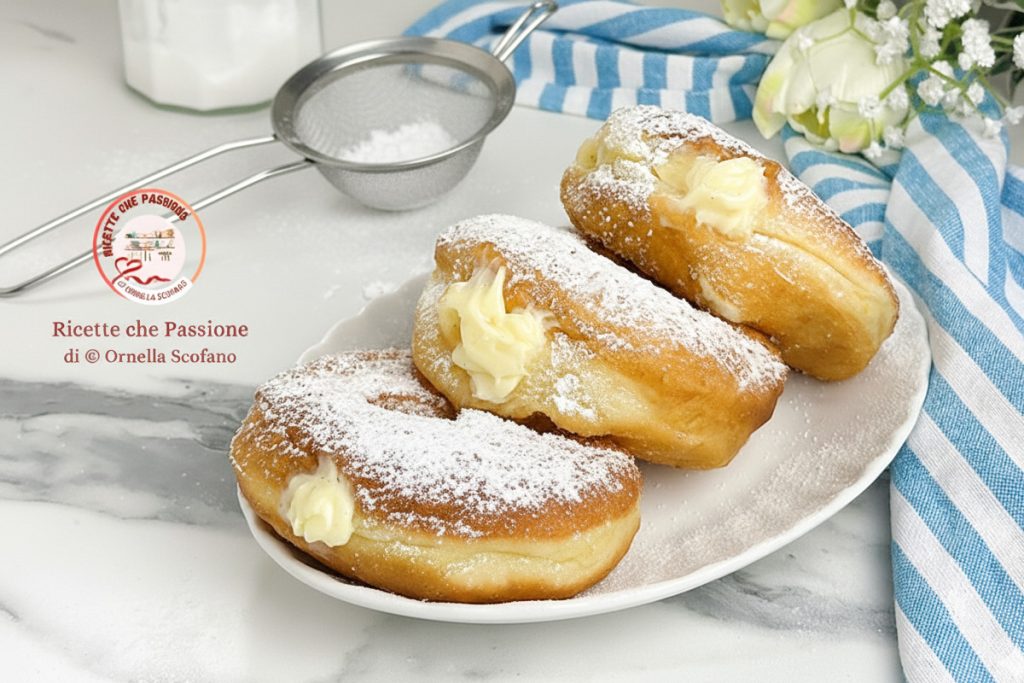
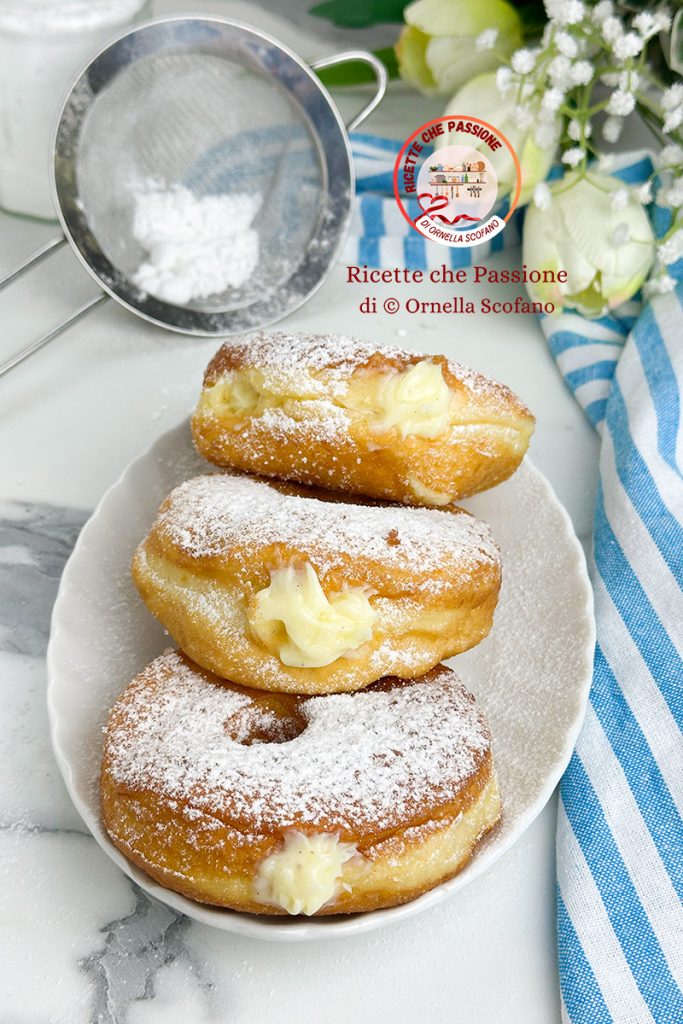
How delicious are cream doughnuts, super soft and delightful, perfect for Carnival and more, they are such a treat, then filled with custard, they’re a real delicacy like in a pastry shop! But tell me, do you call them doughnuts or fritters? The other day I craved some, and since I was out, I stopped by a pastry shop and asked if they have cream fritters? The answer was no, but we have cream cannoli, which turned out to be a pastry roll; hence, I realized that what I call a fritter might be a doughnut for them. This happens in some pastry shops, not all, so who knows if it’s more correct to call them fritters or doughnuts? In doubt, next time I’ll remember to say cream doughnut. And considering their cost, it’s worthwhile to make them at home, a batch with very few ingredients and kneading them by hand is so relaxing.
- Difficulty: Medium
- Cost: Budget-friendly
- Rest time: 4 Hours
- Preparation time: 1 Hour
- Portions: 12
- Cooking methods: Oven, Stove
- Cuisine: Italian
- Seasonality: Carnival, All seasons
Ingredients for Cream Doughnuts
- 2 cups Manitoba flour
- 2 cups all-purpose flour
- 1 cup milk
- 1 medium egg
- 3 tbsps butter
- 3 tbsps sugar
- 1 tsp fresh yeast
- to taste vanilla and orange and lemon zest aromas
- sunflower oil for frying
- to taste powdered sugar for dusting
- 1 pinch salt
- 2 cups milk
- 2 egg yolks
- 2 tbsps sugar (70 g)
- 1/2 pod vanilla
- 4 tbsps wheat starch
Tools for Making Cream Doughnuts
- 2 Bowls
- 1 Small Pot
- 1 Pan
- 1 Kitchen Spatula
- 1 Fork
- 2 Parchment Paper
- 1 Grater
- 1 Rolling Pin
- 1 Work Surface
- 2 Paper Towels
- 1 Plastic Wrap
- 1 Pastry Cutter
- 1 Plain Nozzle
- 1 Piping Bag
Steps to Prepare Cream Doughnuts
Let’s start by preparing the brioche dough with a few eggs, little yeast, and little butter. In a large bowl, dissolve the yeast in lukewarm milk. Stir with a fork, then add the egg and sugar, add the melted butter and the aromas, preferably natural for a better taste. Mix again then add one of the two flours and continue working with a fork. Take a short break.
Add a pinch of salt and part of the other flour to work with the fork as long as possible. When the dough becomes stiffer, continue by hand until you add all the flour. Work on a surface, even taking breaks, to get a well-kneaded dough that is not sticky. Put it back in the bowl, cover with plastic wrap, and let rise in a warm place. Ideally in the oven with the light on and a pot of boiling water. In 4 hours, the dough rises perfectly. Without heat, it will take longer.
Take the risen dough and make 2 turns of folds, as indicated here reinforcement folds.
Let the dough rest another half hour in the warm, then take it again and roll it out with a rolling pin on a floured surface. Get a sheet about 1/2 inch thick using little flour to avoid sticking. Then with a pastry cutter of 10 cm, cut the doughnuts. With a pastry nozzle, cut out the center hole.
As you prepare the doughnuts, place them on large squares of parchment paper on the baking sheet, so you can easily lift them once they have risen. Let them rise again in the warm for about an hour until they are nicely puffed.
Meanwhile, prepare the custard so it has time to cool.
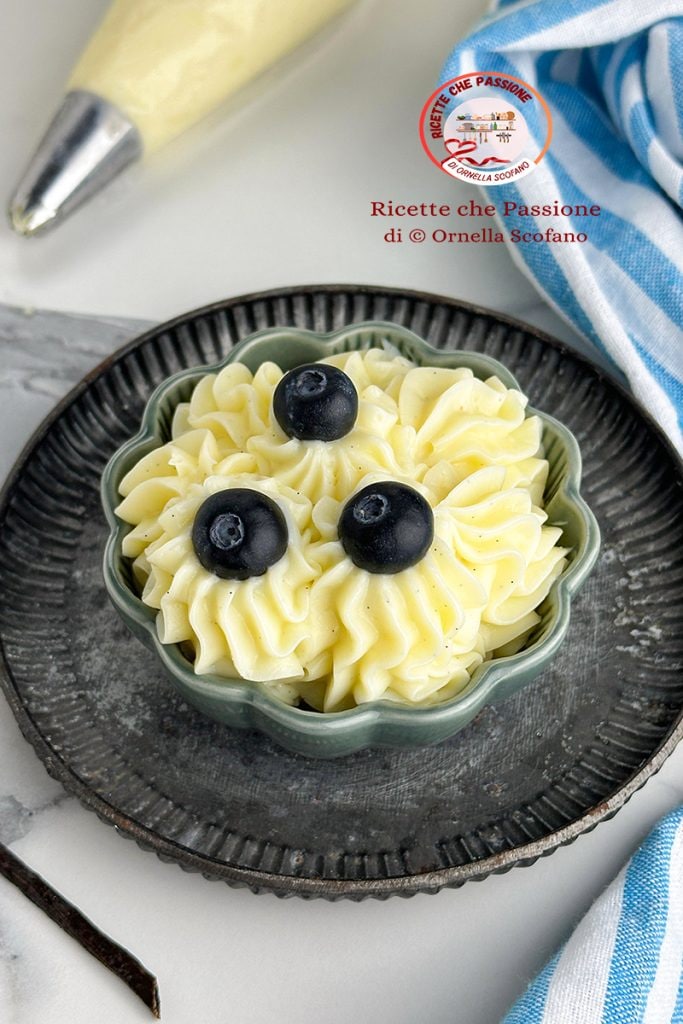
For the custard, use the vanilla pod, half is enough for half a liter, so cut it in half and open it, to extract the seeds that you mix with sugar.
In a small pot, heat the milk with the vanilla pod emptied of the seeds. In a non-stick pot, prepare the cream.
In the pot, put the sugar with the starch and mix, add the 2 yolks and start mixing to get a cream without lumps, add a little milk to get a nice smooth cream, then gradually add all the milk from which you remove the vanilla pod.
Cook, always stirring, until boiling. When the cream is nice and thick, put it in a bowl and cover with plastic wrap in contact.
Put plenty of oil in the pan and fry the risen doughnuts, lowering them into the hot oil with all the parchment paper, which will detach, and you can pull it up with tongs. Let the doughnuts brown on both sides as they float in the hot oil at about 340°F.
When golden, dry on paper towels.
Let cool a bit, then fill with custard, using a piping bag with nozzles, you can pierce them with a well-pointed nozzle, making multiple holes, or simply cut them in half and fill with cream as is often done in pastry shops. Then dust with powdered sugar. If you want to make the cream more indulgent, you can add 200 g of whipped cream. Or you can also prepare a mascarpone custard, or a quick mascarpone cream or a chocolate cream.
