
The Sicilian quince paste is a type of hard jam made with quinces, a simple yet truly delicious dessert. In the countryside, we have many quince trees and, as tradition goes, around mid-October, dad picks the fruits and mom prepares the jam and quince paste for the whole family. This time, we made it together over the weekend, and here I am sharing with you our family recipe, with all the tips and advice for making a perfect Sicilian quince paste, without needing to coat it in sugar once it’s ready (unfortunately, I couldn’t record a video because I lacked equipment, and I couldn’t even take step-by-step photos, but trust me, I’ll explain it really simply, as always). This is a step that I believe ruins the quince paste, it is not a jelly candy to be “sugared,” but a simple, homemade, and genuine dessert, in which you should savor the firm yet creamy texture and the taste of the fruit. Let’s make this delicious preserve together!
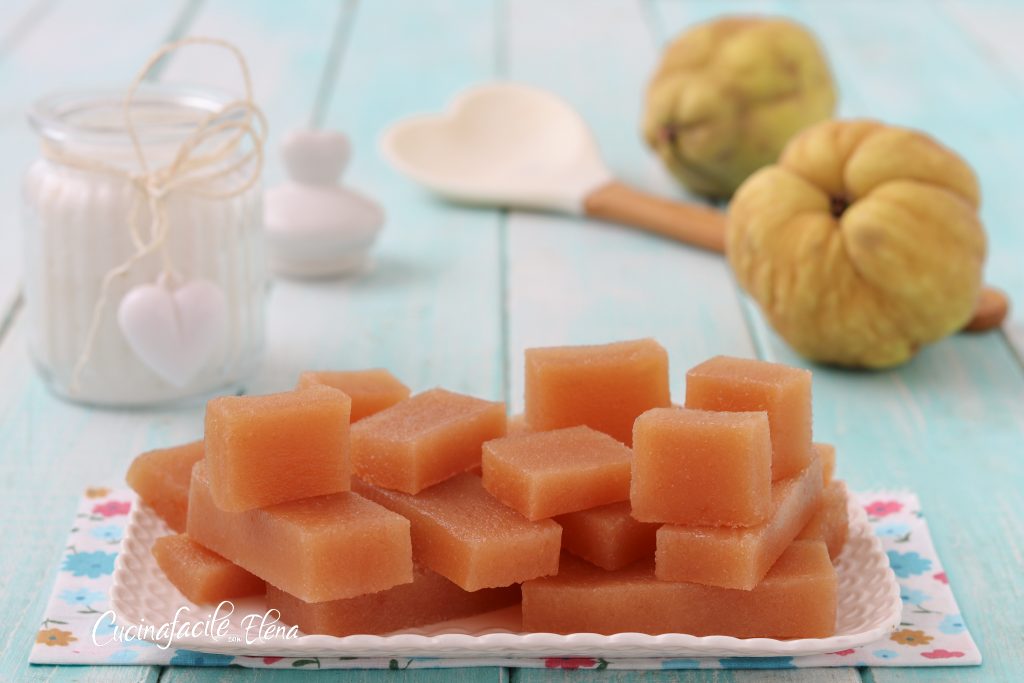
- Difficulty: Easy
- Cost: Economical
- Rest time: 1 Day
- Preparation time: 10 Minutes
- Cooking methods: Stovetop
- Cuisine: Italian
- Seasonality: Autumn, Winter
Ingredients
- 3.3 lbs quinces
- 3.1 cups sugar
- 1 lemon
Steps
Sicilian quince paste is easy to make, but the process is a bit long, yet don’t worry, the final result will be amazing!
Start by brushing the quinces well, the skin must be perfectly clean. Remove the stem and leaves if present.
Cut each quince in half, then into 4 and then into 8 pieces, remove the core and, as you cut them, place them in a bowl with cold water and half a lemon (both the juice and the squeezed lemon), as you do for artichokes, this way they won’t turn black. Do not remove the skin now.
Once all the quinces are cut, drain them and put them in a large pot, add enough water to cover them and the juice of half a lemon, this way they won’t darken while cooking.
Cover with a lid, bring to boil and let the quinces cook for 25-30 minutes, they will be ready when you can pierce them with a fork.
At this point, drain the cooked quinces thoroughly, remove the skin and pass them through a food mill, you should get a smooth and homogeneous puree.
Now, weigh the puree, the amount of sugar indicated in the recipe refers to the weight of the puree, so 700g of sugar for every kg of puree, not 700g of sugar for every kg of quinces (that’s why I mentioned a kg and a half of quinces in the recipe and not a kg, between waste and cooking, we’ll arrive more or less at that weight and amount of sugar, but always weigh everything and, if necessary, adjust the sugar amount proportionally).
After weighing the puree and determining the correct sugar amount, place the two ingredients in a saucepan (preferably large and wide, this way the quince paste will cook better, the water will evaporate sooner, and it will solidify perfectly), mix them and let them cook for about 45 minutes, stirring occasionally, the Sicilian quince paste will be ready when the mixture comes away from the sides.
We have reached the final step: once cooked, transfer the Sicilian quince paste into the molds you prefer. We almost always use a glass container (although we have many molds, even antique ones, but it’s more practical this way :D), but pudding molds or Martorana molds (if you are Sicilian like me and/or have them) are also fine, and let it cool for an entire day. Once it is well set, you can unmold it, cut it into pieces, store it, and enjoy it.
We don’t like to coat them in sugar, but I leave that choice to you; rather, if it turns out slightly sticky, let it dry in the sun, this way, you’ll also prolong its preservation.
Advice:
Sicilian quince paste can be stored at room temperature for up to a month. Very important, never seal it hermetically, as the lack of air would cause it to mold. Instead, place it in a container and cover not with the lid, but with plastic wrap pierced with a toothpick, or under a food cover/kitchen umbrella. If you don’t have a food mill, use a kitchen sieve or a large strainer, I wouldn’t recommend a hand blender, blender, or other appliances as they might incorporate too much air.
* This article contains affiliate links
