
Carnival Doughnuts: How to Achieve Bakery Softness:
The Neapolitan Doughnuts are a masterpiece of balance: they must be light, fragrant, and, most importantly, maintain their perfect shape during frying. Often the issue isn’t the recipe, but the handling.
In this guide, we see how to prepare an impeccable dough and how to use a small technical trick (much loved by professionals) to transfer them from the work surface to the pan without ruining them.
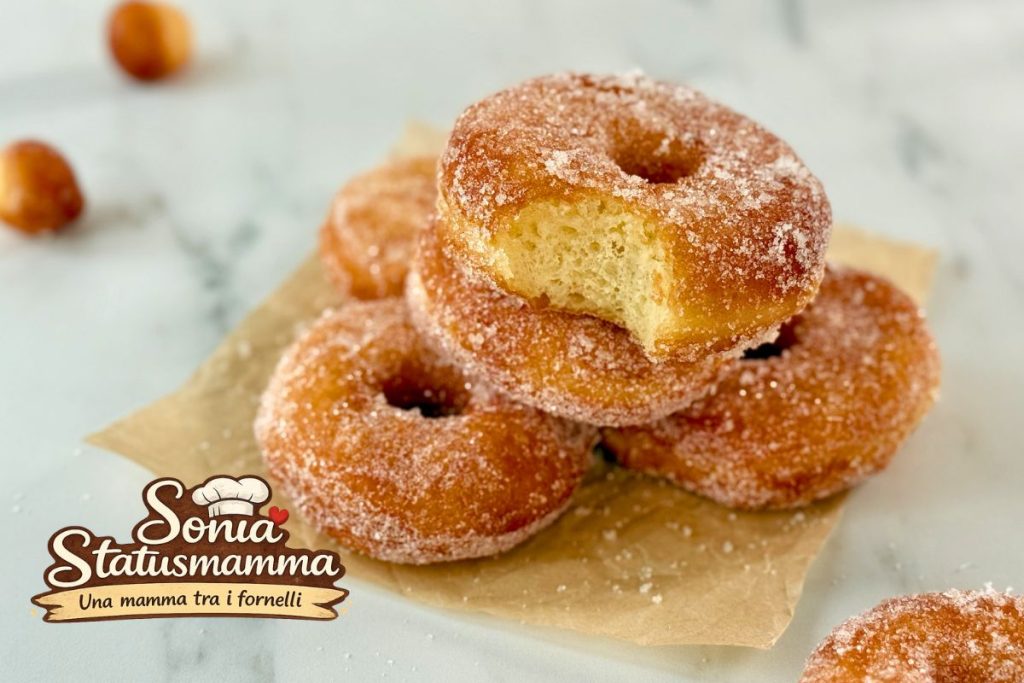
- Difficulty: Easy
- Cost: Economical
- Rest time: 2 Hours
- Preparation time: 15 Minutes
- Portions: 20
- Cooking methods: Stove
- Cuisine: Italian
- Seasonality: Carnival, All Seasons
- Energy 126.92 (Kcal)
- Carbohydrates 19.97 (g) of which sugars 0.78 (g)
- Proteins 3.63 (g)
- Fat 3.79 (g) of which saturated 2.29 (g)of which unsaturated 1.25 (g)
- Fibers 0.85 (g)
- Sodium 1.55 (mg)
Indicative values for a portion of 55 g processed in an automated way starting from the nutritional information available on the CREA* and FoodData Central** databases. It is not food and / or nutritional advice.
* CREATES Food and Nutrition Research Center: https://www.crea.gov.it/alimenti-e-nutrizione https://www.alimentinutrizione.it ** U.S. Department of Agriculture, Agricultural Research Service. FoodData Central, 2019. https://fdc.nal.usda.gov
Ingredients
The magic of doughnuts begins with a simple yet carefully chosen pantry. The secret lies not only in what we put in the bowl but in the perfect balance between the strength of the flour and the softness of the potato. Here’s everything you need to turn your kitchen into a Neapolitan bakery.
- 2 cups cups Manitoba flour
- 2 cups cups all-purpose flour
- 1 cup cups potatoes (boiled)
- 100 ml milk (lukewarm)
- 6 tbsps tbsps butter
- 5 g active dry yeast (dehydrated)
- 1 lemon zest
- 1 orange zest
- 2 eggs
To calculate the final weight, we must sum all the ingredients (raw weight) and add the absorption of the oil and final sugar.
Calories: 231 kcal
Fats: 9.8 g
Carbohydrates: 32.2 g
of which Sugars: 8.4 g
Proteins: 4.5 g
Fibers: 1.2 g
Tools
To achieve perfect and stress-free doughnuts, make sure you have these tools at hand:
- 1 Mold doughnut mold
- 1 Potato Masher potato masher
- 1 Parchment Paper parchment paper
- 1 thermometer
- 1 Pot frying pot
- 1 Slotted Spoon frying slotted spoon
Steps
Don’t worry: making doughnuts at home is much easier than you think. The secret is to have a bit of patience with the rising and to handle the dough with the delicacy it deserves. Follow these steps, and you’ll see the satisfaction of watching them puff up in the oil like golden clouds!
The Perfect Dough: Dissolve the yeast in lukewarm milk. In a stand mixer (or a large bowl), combine the flours, potatoes, eggs, sugar, and aromatics. Start kneading and only when the mixture has taken shape, add the butter in small pieces little by little.
Chef’s Tip: Do not add more flour! If the dough seems sticky, keep working it until it detaches from the sides.
The First Waiting: Cover the dough and let it double in size in a warm place (the oven turned off with the light on is ideal) for about 2 hours.
We Form the Doughnuts: Roll out the dough (thickness 0.4-0.6 inches) and cut out the doughnuts.
The Real Secret: Place each doughnut on an individual square of parchment paper. Let them rise again for 45 minutes.
The “Light” Frying: Heat peanut oil to 356°F. Dip the doughnut with all its parchment paper: after a few seconds, it will detach on its own, and you can remove it with tongs. This avoids touching the dough and deflating it!
Sugar Galore: Roll them in granulated sugar while they’re still hot to make sure it adheres perfectly.
The Secrets for a Bakery Result
Which Potatoes to Use? Choose old or red potatoes: they are low in water and will make the dough elastic and not sticky.
Temperature is Everything: If the oil is too hot, they burn on the outside and remain raw inside. Use a kitchen thermometer!
Creative Recycling: Do not immediately re-knead the “central holes”. Fry them as they are: they will become sweet balls (the famous “scugnizzi”) that will disappear in a second.Chef Tips to Stand Out
Cold Potatoes: It’s crucial that they are thoroughly cold before adding them to the flour, otherwise they’ll “scorch” the yeast and gluten network, ruining the texture.
Sugar and Cinnamon: The classic mix includes a hint of cinnamon in the finishing sugar. That spicy touch is what makes the doughnut unforgettable.The Dough: (Keep your ingredients, they’re excellent).
Protected Rising: Always cover with a damp cloth to prevent a dry “crust” from forming on the surface, which impedes growth.
The Square Method: Instead of lifting the risen doughnuts with your hands (risking leaving fingerprints or deflating them), cut squares of parchment paper and place each doughnut on top.
Why Do It? This method allows the doughnut to slide into the hot oil without touching it. The paper will detach on its own after a few seconds: just remove it with tongs.
Controlled Frying: Never exceed 356°F. If the oil smokes, the doughnut will be bitter and dark.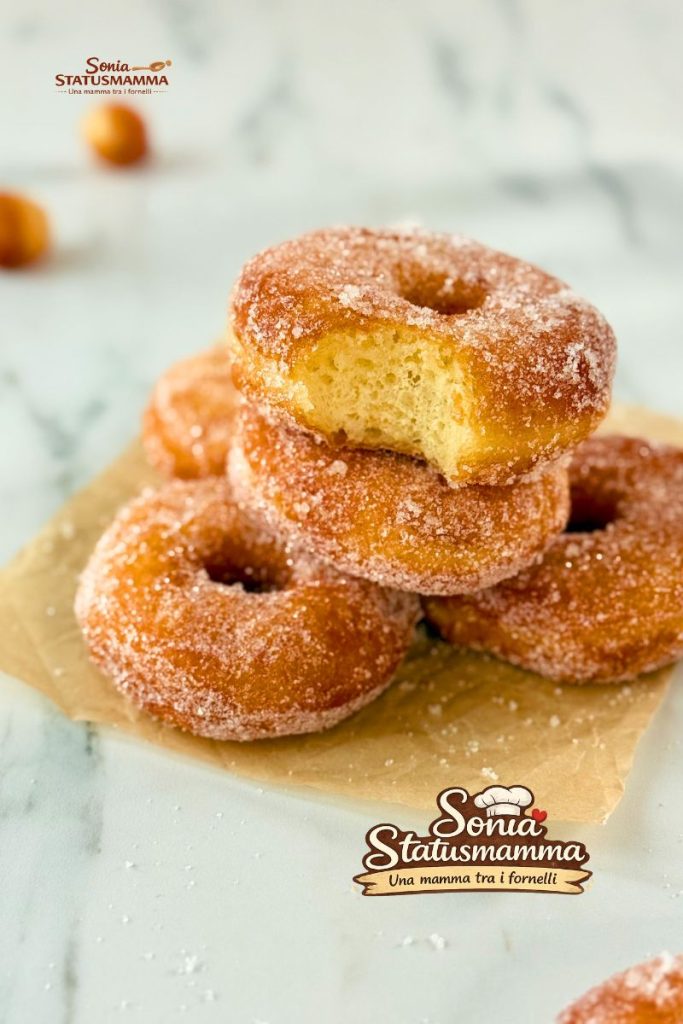
Want perfect doughnuts? Discover how to prepare the traditional dough with potatoes and the trick for light, golden, and flawless frying.
Doubts and Curiosities: Your FAQs
1. Why are potatoes added to the dough? The starches in the potato retain moisture, keeping the doughnut soft for days, unlike flour-only doughs that harden quickly.
2. What do I do if the dough is too sticky? Lightly grease your hands with a bit of butter or oil. Do not add flour or you’ll lose the typical lightness of the true Neapolitan doughnut.
3. How to store them for the next day? In an airtight container. The trick? Heat them for 10 seconds in the microwave before eating: they’ll return as if they were just fried!
Soft Neapolitan Doughnuts Recipe: The Method for a Bakery Result.
Doubts and Curiosities: Your FAQs
Dough too sticky? Afraid they’ll become hard the next day? You’re not alone! We’ve gathered here the answers to the most common questions to help you overcome every little hitch and guarantee a top-notch result on the first try.
1. Why are potatoes added to the doughnuts’ dough?
Potatoes aren’t used to add flavor but to modify the texture. The starches in the potato retain moisture within the gluten network, making the doughnut incredibly soft, and most importantly, able to stay soft much longer compared to a dough made with only flour.
2. What can I use if the dough is too sticky?
It’s the greatest temptation, but don’t add flour! Doughnut dough must be hydrated. If it sticks too much to your hands, slightly grease them with a bit of oil or melted butter. By working the dough with patience, the gluten will develop, and the dough will become smooth and elastic without the need to weigh it down with more flour.
3. How to store doughnuts for the next day?
The best way is to seal them in a food bag or an airtight container once they are completely cool. The small chef’s trick? Before eating them the next day, pass them through 10-15 seconds in the microwave: the heat will awaken the potato starches, and the doughnuts will return to being clouds, just like freshly fried.
If you want to receive my new recipes every day in advance, you can follow them on my WhatsApp channel in real-time.
Follow me on FACEBOOK and on INSTAGRAM and on YOUTUBE VIDEO TUTORIALS to not miss new recipes
If you like to pin, don’t miss the photographed recipes on PINTEREST!
TO RETURN TO THE HOME CLICK HERE !
